
TL;DR on NeuroFlow:
NeuroFlow is an AI-enabled behavioral health infrastructure platform. Their team embeds patient screening, referral management, and analytics directly into your EHR to enable systematic identification and management of patients’ behavioral health needs, without adding workflow friction.
Health systems using NeuroFlow demonstrate measurable improvements in quality outcomes (5.7x improvement in quality program compliance), and optimize behavioral health resource allocation with an average 12.6-day speed to care compared to the 48-day national average.
Their platform’s configurability allows health systems to prioritize their own behavioral health assets first, working as a true partner vested in your long-term interests, creating more billable opportunities for employed clinicians while bringing in external network support only where capacity gaps exist.
Get in touch with the NeuroFlow team today
How to Fix the Behavioral Health Blind Spot
You guys spend all this energy optimizing care pathways and obsessing over HEDIS measures, but there’s a massive blind spot undermining your entire population health strategy: behavioral health.
Untreated, hidden behavioral health conditions undermine all other population health initiatives. And you can’t treat population health without first addressing behavioral health.
Here’s what’s actually happening. Most health systems have zero idea who in their population needs behavioral health support until those patients show up in crisis in the ED or elsewhere. There’s little to no proactive screening. No early intervention. Just expensive reactive care when someone hits the ED for the third time this month, leading to worsening VBC results or costly readmissions penalties. Neither are good for health system bottom lines – nor are these results remotely acceptable for patients.
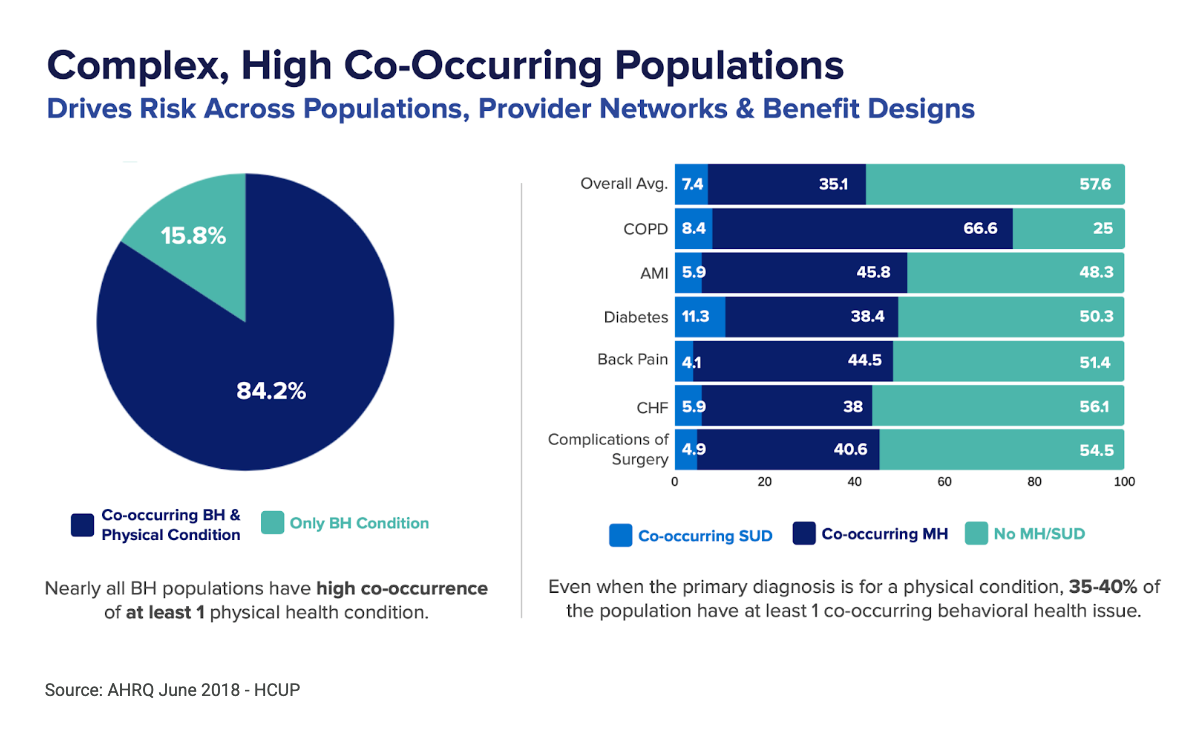
The problem is so easy to identify here. But the devil, as always in healthcare, is in the details. And the core issue we need to solve for here is awareness and visibility, or the complete lack thereof, into your population from a behavioral perspective. So today I’m diving in with a company armed to fix these problems alongside you…and that company is NeuroFlow.
Here are a few different, distinct ways that NeuroFlow works with you and your teams – in the background – to solve some of the most complex problems in healthcare today with some of the trickiest patient populations.
Infrastructure, Not Another Point Solution
I’ve been chatting with the NeuroFlow team for a while now, and they’ve been extremely thoughtful about solving this behavioral blind spot problem differently. Instead of building yet another disconnected tool that requires separate logins and manual data entry, they’ve positioned themselves as infrastructure that plugs directly into your EHR and works within existing workflows.
Everything lives inside the EHR where clinicians already work. Data flows automatically. Alerts surface within the patient profile. Screening happens before the visit so PCPs can make informed decisions without extra clicks. And this is by design. This EHR-first approach isn’t just convenient; it’s the only way to actually drive adoption at scale.
A large, multi-state integrated delivery network works with NeuroFlow to streamline pre-appointment screenings in primary care. NeuroFlow’s technology is integrated into the health system’s EHR, making it easy for providers to send patients pre-appointment screenings via text and proactively identify those needing behavioral support upstream. In the first four months of launching this program, the health system delivered over 9,000 assessments to 3,850 patients. The scale of screening empowers the organization to understand who needs support when and allocate resources more effectively to meet that need.
Having a cohesive strategy and proper tooling in place for behavioral health – integrated in the EHR – demonstrates proper acuity stratification instead of the spray-and-pray resource allocation that most systems default to. Some patients need weekly therapy. Others just need digital engagement tools and periodic check-ins. Suicide prevention is a huge, big hairy problem that is extremely hard to spot, and this area is one where NeuroFlow has seen material progress.
During the initial, four-month rollout of NeuroFlow at the previously mentioned integrated delivery network, the technology flagged 96 urgent alerts, indicating patients were at risk of suicide. These alerts allowed for timely crisis interventions and ensured patients reached the right care. It’s this kind of data-driven acuity stratification that makes the difference between reactive and truly preventive care.
Referral Management That Actually Works
Earlier this year, NeuroFlow acquired Quartet and expanded their referral management capabilities in a way that directly solves one of health systems’ biggest operational headaches (and revenue leakage problems).
Traditional referral processes are broken. PCP identifies a need, sends a referral into the void, hopes something happens. Half the time, patients never connect. When they do, it’s often the wrong provider match. Zero visibility into availability, specialties, or wait times.
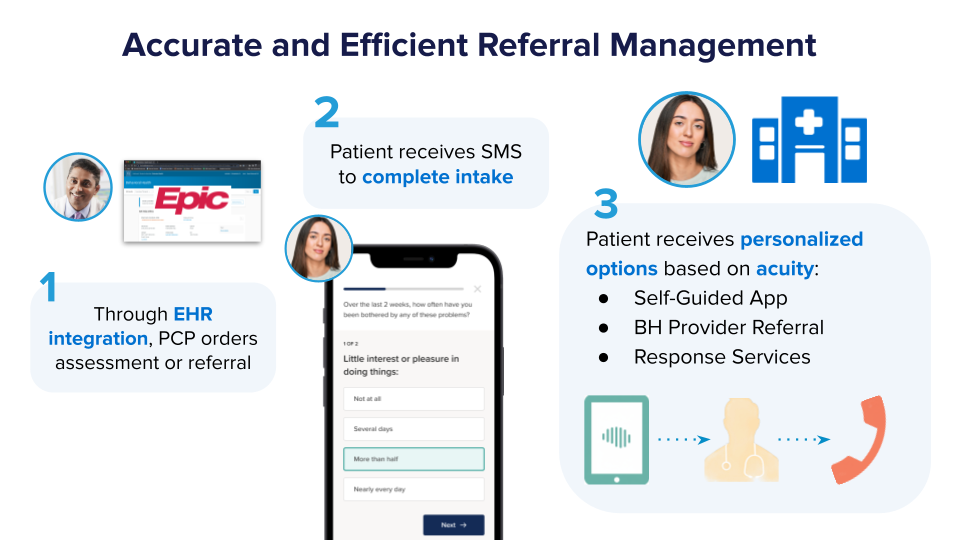
NeuroFlow changes this equation completely. Screening happens automatically pre-visit. PCP reviews results and submits a referral directly from the EHR. Then NeuroFlow handles the heavy lifting: matching patients with appropriate providers, managing the handoff, closing the loop. One large national health system has fielded 123K+ referrals through NeuroFlow since 2017, averaging 12.6 days speed to care. Compare that to the 48-day national average for mental health appointments.
The configurability piece matters more than you’d think. Health systems can prioritize their own behavioral health assets and programs first, keeping referrals in-network and creating more billable opportunities for employed clinicians. When internal capacity maxes out, NeuroFlow brings in external network resources to fill gaps. This is resource management that optimizes your labor pool and existing program investments instead of watching revenue opportunities leak to competitors.
The Quality Measure Economics
One medical center increased its state’s Quality Improvement Program (QIP) compliance by 5.7x using NeuroFlow, which will result in significant hard ROI for the health system in quality bonuses. The state program reimburses hospitals based on depression screening and follow-up plus substance use screening and follow-up. By embedding NeuroFlow’s capabilities into workflows, the medical center captured revenue that was previously just sitting there unclaimed because screening processes were inconsistent.
The medical center serves an incredibly complex population, primarily Medicaid patients, many of whom have behavioral health needs in addition to physical health conditions. Although the organization was a top QIP performer in the region, it underperformed on substance use measures, missing QIP payments related to substance use screening and follow-ups for the past two years.
By embedding NeuroFlow’s digital screening into workflows across all acute care centers, the medical center anticipates hitting these substance use quality measures. Earning those quality payments will result in a 3:1 ROI. That’s the math CFOs actually care about. You’re not just improving care, you’re capturing performance payments you were missing.
The same logic applies to ED readmissions and post-discharge follow-up. NeuroFlow’s crisis response services catch high-risk patients before they cycle back. The platform automatically triggers 7-day and 30-day follow-up screenings post-discharge, documenting the outreach required for quality reporting.
In VBC arrangements, these capabilities directly impact your performance payments. Miss your quality benchmarks and you’re leaving $$$ on the table.
The ED Throughput Play
Here’s a fun new solution I learned about while chatting with the NeuroFlow team for this article. NeuroFlow’s tablet-based assessment tool for ED settings has gained serious traction recently. Patients complete screenings on a tablet during intake, streamlining the process and identifying higher-acuity cases faster.
Along with hundreds of other EDs, a major West Coast health system is rolling this out specifically to improve ED throughput (quite possibly the hottest operational challenge in healthcare right now). When you can quickly stratify which patients need intensive behavioral health intervention versus routine care, you allocate resources more efficiently and reduce boarding times.
The tablet-based assessment process also feeds data back into NeuroFlow’s broader analytics, building a longitudinal view of each patient’s behavioral health trajectory. This enables earlier intervention before crises emerge, which is the entire point of population health in the first place.
Configurability as Competitive Advantage
NeuroFlow isn’t prescriptive about how you run your clinical programs – they just want to embed behavioral health functionality as a core component across your service lines and population health initiative. The platform adapts to your clinical guidelines, your screening protocols, your provider dashboards. Want to send assessments 5 days before appointments? Fine. Prefer 2 days? Also fine. Need to customize rules for different patient populations or practice sites? The platform handles it.
 NeuroFlow builds workflows to align with your clinical pathways, and you set the rules.
This flexibility matters when you’re implementing behavioral health screening across a large, complex health system with multiple EHRs and varied workflows. You’re configuring infrastructure to match how your teams actually work, not forcing adoption of some vendor’s idealized process that looks great in demos but fails in production.
NeuroFlow integrates with whatever system you’re running, pulling in the data feeds needed for smart decisions about risk stratification, follow-up timing, and resource allocation.
Why You Need to Fix the Behavioral Health Blind Spot Today
Behavioral health isn’t some nice-to-have add-on for population health. It’s foundational infrastructure. When you can’t identify and appropriately manage mental health conditions across your population, everything else falls apart. Quality outcomes suffer. Costs spike. VBC contracts underperform.
NeuroFlow solves for the core problems: lack of systematic screening, broken referral management, disconnected workflows, inefficient resource allocation. The economics work because you’re capturing quality incentives you previously missed, reducing inappropriate utilization, and optimizing the behavioral health investments you’ve already made.
Fix the Blind Spot with NeuroFlow Today
Join my Hospitalogy Membership! If you’re a VP or Director working in strategy or corporate development at a hospital, health system or provider organization, you will get a lot of value out of my community as I purpose-build the content, fireside chats, and conversations for this group. Apply Here.