
According to Purina, stress and anxiety affect more than 70% of dogs and up to 50% of cats. With that in mind, recent news in the pet space shows some brands moving beyond product development alone. They’re building direct relationships with veterinary behaviorists and creating pathways to specialist care. Recent partnerships may signal a shift toward treating behavioral health as a clinical discipline requiring professional expertise, not just additional ingredients on a label.
The partnerships reflect what Dr. Ezra J. Ameis, founder and veterinarian with Paw Priority, describes as a necessary evolution in how the industry approaches pet emotional health. With stress affecting the majority of companion animals, Dr. Ameis argues that stress support shouldn’t be treated as a niche add-on supplement but integrated into fundamental nutrition thinking.
“We already accept that ‘baseline’ diets should support joints, skin, gut health, etc. Emotional health is just as biologically real,” Dr. Ameis said. “That doesn’t mean every kibble needs to be marketed as a calming formula, but manufacturers should be asking: does this diet support a healthy gut–brain axis? Does it avoid ingredients or imbalances that might worsen anxiety?”
From chews to consultations
Two examples of pet food and supplement brands emphasizing behavioral health are Omni Pet and Purina Pro Plan Veterinary. Omni recently appointed Nico Joiner as its canine behaviorist to lead a free consultation service for dog owners. The move coincides with what the company reported as a 600% sales increase for its stress and anxiety soft chews. Joiner will provide one-to-one guidance on separation anxiety, noise reactivity, travel stress and fireworks-related fears.
Meanwhile, Purina Pro Plan Veterinary partnered with Ease, an online platform for veterinary behavior specialty care, as part of the Pro Plan Veterinary Support Mission initiative launched in 2024. The collaboration addresses a critical shortage: only 0.07% of practicing veterinarians in the U.S. are board-certified veterinary behaviorists, despite behavioral issues being a top client concern and a leading reason for surrender and euthanasia.
The platform enables veterinarians to submit behavioral cases for review, while clients receive structured behavior programs through their own online pet portal with tailored treatment plans, on-demand videos and email support.
Nutrition and behavior
Dr. Ameis noted the biological reality behind behavioral symptoms: nutritional deficiencies or imbalances in amino acids, fatty acids, B-vitamins and minerals can alter neurotransmitter production and stress response.
“Nutritional issues don’t just show up as a dull coat or loose stool, they absolutely show up as behavior,” he said. “A dog who’s chronically inflamed, uncomfortable, or microbiome-disrupted is going to have a shorter fuse.”
For pet food manufacturers, Dr. Ameis said that means prioritizing high-quality, bioavailable protein and essential fatty acids, formulating with the gut–brain axis in mind, and avoiding formulations that meet regulatory standards on paper but underperform in practice.
“If the diet supports brain chemistry, sleep and gut comfort, we often see behavior improve before we ever reach for a prescription,” he added.
The multimodal approach
In clinical practice, treatment plans for stress and anxiety are layered. Dr. Ameis said he starts with safety and environment, then behavior modification, building nutrition and supplements around that foundation.
“Nutrition is the day-in, day-out background music — it won’t fix a severely anxious dog by itself, but a poor diet can absolutely sabotage progress,” he said. “Supplements are the ‘bridge’ tools: something we add for targeted support when we have a clear goal.”
This perspective shapes how Dr. Ameis recommends pet brands’ calming products. “Calming products shouldn’t be sold as magic bullets,” he said. “The most successful brands position themselves as part of a multimodal plan: ‘This treat or supplement is designed to complement behavior work, appropriate exercise, and, when needed, medication.’ Veterinarians are far more likely to recommend a product that acknowledges its role in the bigger picture instead of overpromising.”
The evidence question
While evidence exists for several calming ingredients — probiotics, certain L-theanine products, specific milk peptides, some omega-3 profiles — Dr. Ameis emphasized that quality and specificity vary dramatically.
“‘Probiotic’ or ‘L-theanine’ on a label isn’t enough,” he said. “From a clinical standpoint, what matters is: Is the exact strain or ingredient used in the product the one that was studied? Is the dose in the product the same as the dose that showed benefit? Are the studies done in dogs or cats, not just extrapolated from humans or rodents?”
For veterinarians to take calming products seriously, Dr. Ameis said manufacturers should prioritize strain-specific, species-specific research; transparent dosing; and conservative, evidence-based claims. “I don’t need fireworks on the label,” he said. “I need to know what’s actually in it and what data supports it.”
Clinical partnerships as a model
With behavioral problems among the most common reasons pets are surrendered or euthanized, yet often preventable with structured support, Dr. Ameis sees significant opportunity for manufacturers to create meaningful clinical partnerships. His vision includes co-developed protocols with veterinary behaviorists, clinic-only or clinic-supported product lines with clear educational materials, and data collection to track outcomes.
“When a product is clearly evidence-based, easy to integrate into training plans, and comes with real educational support, it stops being ‘just another calming chew on the shelf’ and becomes a tool we’re actually excited to prescribe,” Dr. Ameis said.
The recent moves by Omni Pet and Purina Pro Plan Veterinary suggest the industry is beginning to embrace that model — recognizing that addressing pet behavioral health may require not just better formulations, but better connections to the specialists who treat it.
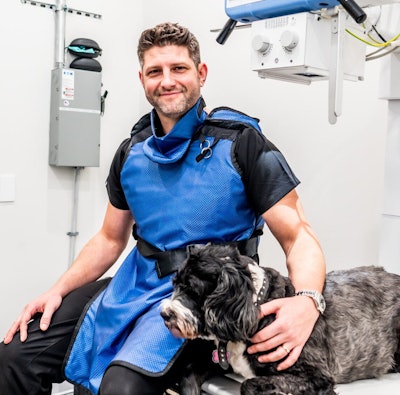 Dr. Ezra J. Ameis, founder of Paw Priority.Paw PriorityDr. Ameis, an ER veterinarian from Toronto, Canada, graduated in Neuroscience and Biology from Dalhousie University with a graduate certificate in Bioinformatics/Computational Biology and research contributions in proteomics at the University of Toronto. He founded Paw Priority, a veterinary practice in Los Angeles, California, U.S., in 2022.