
 A bulletin board at ACS includes information for youth seeking mental health services. Courtesy ACS
For more than a quarter century, Philippe Rey has devoted himself to addressing one of Palo Alto’s most critical and intractable challenges: the enormous pressures and mental health challenges experienced by local youth.
Rey, a native of Switzerland, joined the nonprofit Adolescent Counseling Services 27 years ago, at a time when the organization was focused almost exclusively on Palo Alto, with a flagship program called Caravan House that provided shelter and therapy for teenagers who faced abuse and neglect. Over his 21 years as executive director of ACS, he shepherded the organization through its transformation into a regional nonprofit that annually serves about 25,000 individuals throughout San Mateo and Santa Clara counties.
Last month, ACS marked two significant milestones. It celebrated its 50years of operations and it bid farewell to Rey, who concluded his time at the nonprofit, which is one of dozens of local organizations that get support from the Weekly’s Holiday Fund.
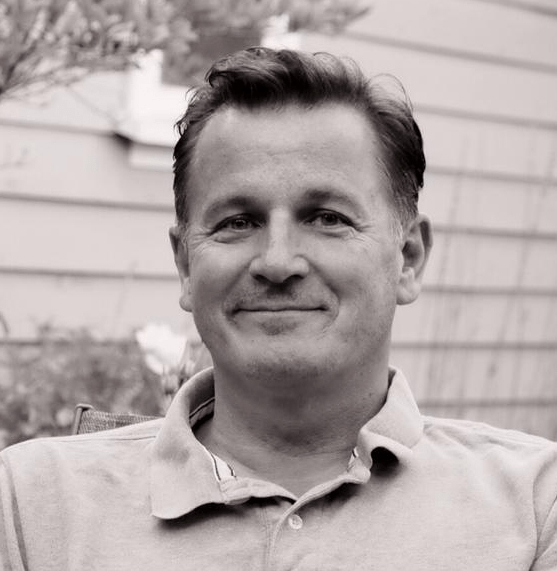 Philippe Rey. Courtesy ACS
For Rey, the mission of ACS is deeply personal. He has spoken publicly about his childhood in Switzerland, where his family operated under a “code of silence” that made it difficult for him and his sister to talk about their mental health.
During an interview that was shown at the Nov. 21 gala, Rey recalled a period when he was 12 and was starting to question his sexuality. Because of the code of silence, he knew that his family is not a place where he can say, “I think I’m gay.”
“I really denied that part of myself. I was so scared,” Rey said in the video. “I suffered from depression, lots of anxiety, and at times even thought about killing myself.”

How will you give back this season? Create a lasting impact close to home — help local journalists uncover the stories that matter.
Rey knows that his experiences are far from unique. Among the programs that ACS took on during his time at the helm was Outlet Program, a once independent program that was launched in 1997 but that became part of ACS in 2013. The program, which is supported by a $10,000 grant from the Holiday Fund, provides counseling, education and support groups for lesbian, gay, transgender, queer and questioning youth.
In an interview with this publication, Rey cited research showing that youths who are gay or who are questioning their sexuality have a higher rate of depression, substance addiction and suicide ideation. According to the 2024 National Survey on LGBTQ Youth Mental Health by the Trevor Project, 66% of the surveyed youth reported had experienced “generalized anxiety disorder” and 39% of the LGBTQIA+ youth said they had considered suicide in the prior year.
Because ACS already provides services that address these mental health challenges, integrating Outlet into its operations made great sense. While it provides crisis support, the Outlet’s main programs are mostly focused on preventing crisis by engaging youth, families and community members, according to its grant application. Its clients also have access to ACS therapists who are trained in serving LGBTQIA+ youths, specifically.
“For us to add that component to Outlet greatly helped the community – so we can support the youth not just in their social development – to be part of the greater queer community — but to then support them when they come into depression or anxiety,” Rey said. “There’s such need for the community to know more about the gender and sexuality.”
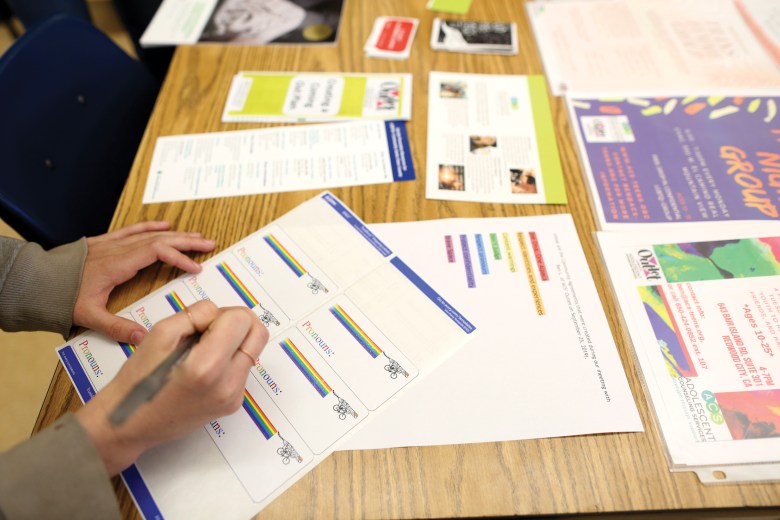 Outlet, a longtime program run by Adolescent Counseling Services, that provides mental health and support services to LGBTQ youth. Embarcadero Media file photo by Sammy Dallal.
The integration of Outlet is just one of many changes that ACS has undergone over the past half century. At a Nov. 21 gala commemorating the nonprofit’s 50th anniversary, Sue Barkhurst, who preceded Rey as the nonprofit’s executive director, recalled the transformation of the nonprofit from having just one location at a Palo Alto middle school campus and a six-bed program to one that today operates on 12 campuses and supports teenagers throughout the two counties.
“My goal was to expand to all the local middle and high school campuses, to include family counseling for the parents of our teens and to provide an outpatient substance abuse program for teens struggling with drugs and alcohol,” Barkhurst said at the ceremony.
The environment in which ACS operates has also changed. While Palo Alto has long been a high-pressure environment for students who aspire to go to Stanford University and other elite universities, the recent ascendency of social media has taken a toll on local youth, Rey said.
“We’re starting to see longitudinal studies on brain development and effect of it,” Rey said. “There’s increased isolation, a sense of not belonging … kids don’t know how to be in social settings or how to behave, how to act, except on the phone.”
Drug use among youth further exacerbates the mental health challenges, he said.
“We are starting to see kids as young as 8 years old vaping,” Rey said. “It’s not just tobacco. It’s pot. Same with depression and anxiety – it’s always been around — it’s the human condition. But now we’re identifying younger and younger kids who are suffering from depression and anxiety. Same with suicidal ideation, suicidal intent.”
In his role as executive director, Rey made an effort to ensure that ACS psychotherapists are trained to be experts in working with adolescents. That includes requiring them to go through therapy themselves so that they can better understand the experiences of the nonprofit’s clients (“Would you go get a tattoo from someone who has no tattoos?” he asked, explaining that decision).
To address what Rey deems to be inadequate licensing requirements for therapists, ACS founded the Institute of Psychotherapy & Training. After Rey announced his departure, the ACS board honored his contributions to improving therapy services in the region by naming the institute after him.
During a Nov. 21 banquet, Rey said that the secret sauce that makes ACS successful is “humanity.” He was referring to the many challenges — whether relating to depression, anxiety or personal identity — that ACS staff and its clients continuously work to address.
“We know what it feels like to struggle with depression, anxiety, to question who we are, to love someone fighting addiction, to feel lost in our own families,” Rey said during the ceremony. “We don’t pretend to be perfect. We are real. We cry, we laugh, we hurt, we heal — and we live.
“That authenticity, that shared humanity — that is what creates trust, hope, and change. That’s what makes ACS different. That’s the secret sauce.”
Most Popular