
December 11, 2025
2 min read
 Add Us On GoogleAdd SciAm
Teen AI Chatbot Use Surges, Raising Mental Health Concerns
A new survey offers the clearest national snapshot yet of how U.S. teens are using artificial intelligence
MR.Cole_Photographer / Getty Images
Artificial intelligence chatbots are no longer a novelty for U.S. teenagers. They’re a habit.
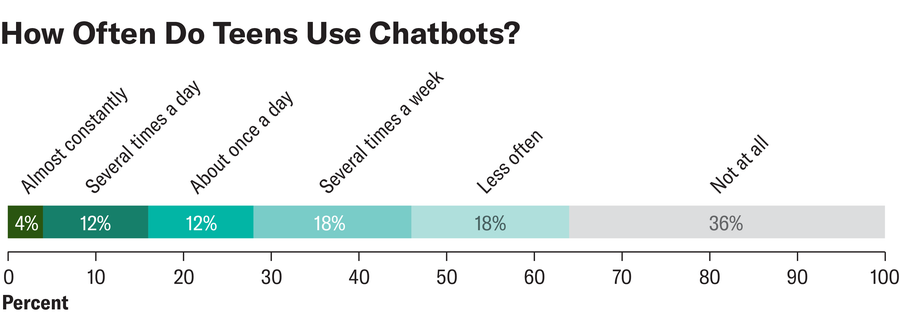
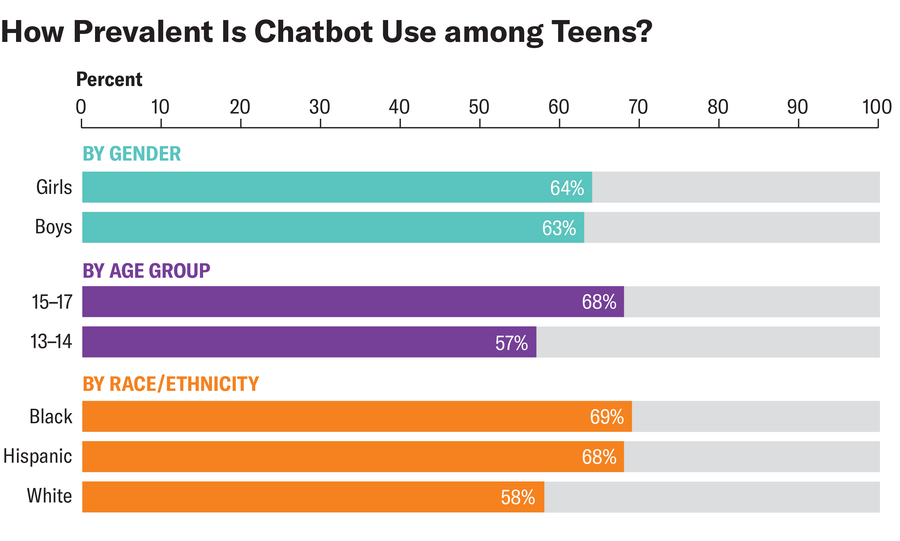
A new Pew Research Center survey of 1,458 teens between the ages of 13 and 17 found that 64 percent have used an AI chatbot, with more than one in four using such tools daily. Of those daily users, more than half talked to chatbots with a frequency ranging from several times a day to nearly constantly.
The results offer a national snapshot of what is a fast-moving landscape, as chatbots become increasingly embedded in teens’ lives while policymakers argue over how to best regulate them.
On supporting science journalism
If you’re enjoying this article, consider supporting our award-winning journalism by subscribing. By purchasing a subscription you are helping to ensure the future of impactful stories about the discoveries and ideas shaping our world today.
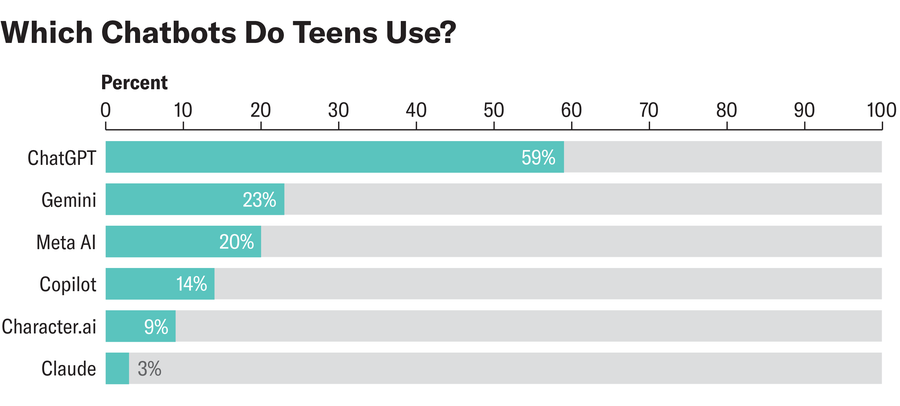
ChatGPT was the most popular bot among teens by a wide margin: 59 percent of survey respondents said they used OpenAI’s flagship AI-powered tool, placing it far above Google’s Gemini (used by 23 percent of respondents) and Meta AI (used by 20 percent). Black and Hispanic teens were slightly more likely than their white peers to use chatbots every day. Interestingly, these patterns reflect how adults tend to use AI, too, although teens seem more likely to turn to it overall.
The report comes amid rising concern over AI’s effect on teens’ mental health. And several AI companies, including ChatGPT maker OpenAI, face legal action tied to teens’ use of their chatbots. The same features that make chatbots appealing—the always-on availability, the seemingly empathetic conversation, the projection of confidence—can lead teens to turn to them for support or mental health guidance instead of a human. Given the scale of daily usage that Pew found, the real question isn’t whether adolescents will use AI but what kind of design features, safeguards and age limits they might encounter when they do.
Lawmakers are also confronting that reality. In recent days, U.S. president Donald Trump has teased a “ONE RULE” executive order aimed at curbing a state-by-state patchwork of AI laws. Meanwhile senators in D.C. are floating legislation to ban the use of AI companions among minors. Abroad, Australia has begun enforcing a ban on under-age-16 social media accounts—a sign of how governments are trying to redraw age lines as youth-facing technology keeps changing.
Still, Pew’s numbers show that many teens have made up their minds about AI while the rules are still being argued into existence.
It’s Time to Stand Up for Science
If you enjoyed this article, I’d like to ask for your support. Scientific American has served as an advocate for science and industry for 180 years, and right now may be the most critical moment in that two-century history.
I’ve been a Scientific American subscriber since I was 12 years old, and it helped shape the way I look at the world. SciAm always educates and delights me, and inspires a sense of awe for our vast, beautiful universe. I hope it does that for you, too.
If you subscribe to Scientific American, you help ensure that our coverage is centered on meaningful research and discovery; that we have the resources to report on the decisions that threaten labs across the U.S.; and that we support both budding and working scientists at a time when the value of science itself too often goes unrecognized.
In return, you get essential news, captivating podcasts, brilliant infographics, can’t-miss newsletters, must-watch videos, challenging games, and the science world’s best writing and reporting. You can even gift someone a subscription.
There has never been a more important time for us to stand up and show why science matters. I hope you’ll support us in that mission.