
Sarah Spina-MatthewsNorth West
 Handout

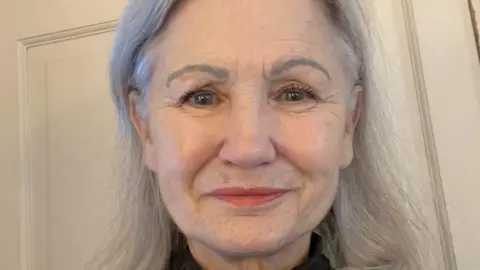
Retired mental health worker Julie Colville is a lung cancer survivor
A woman who spent her career helping people with additional needs access cancer treatment was diagnosed with lung cancer weeks after retiring.
Former mental health worker Julie Colville, 70, was diagnosed with lung cancer after developing a persistent cough – a symptom which can often be missed, according to Cancer Research UK.
Ms Colville, from Withington, Greater Manchester, is now part of a £1.3m project which aims to improve early detection of lung cancer among people with severe mental illness and intellectual disabilities.
She said: “Having been through cancer myself, I see just how critical it is that no one misses out on a chance that could save their life.”
‘Must act now’
“I hope this work this will bring equality for people who can’t always access health checks in the same way as the general population,” she added.
Ms Colville said she realised how much harder cancer treatment must be for her former patients while she was undergoing the weeks of radiotherapy and chemotherapy herself.
“They often don’t have friends and family who can help. It’s just not tailored to people with complex needs,” she added.
Cancer Research UK said people with severe mental illness or intellectual disabilities were more likely to die from lung cancer, the UK’s most common cause of cancer death, than those without these conditions.
“The reasons for this are many and complex,” Ms Colville said.
“It’s not that they’re forgotten but a problem like a persistent cough might be way down their list of priorities.
“The statistics say it all and that’s why we must act now.”
The £1.3m project, is being led by Dr Lorna McWilliams, from the University of Manchester, who said her team would work directly with people impacted by mental illness and intellectual disabilities, alongside carers, clinicians, and policymakers to come up with “practical solutions”.
These would include better support to help people make informed choices about screening, and ways to reduce anxiety around investigations and treatment, she said.
Dr McWilliams said: “Our aim is that by the end of the project, co-designed interventions will be ready to implement nationally.”