
It was one of those days when life felt like a substandard film where the writers stuff every possible plot twist, just for the sake of it. I was severely sleep deprived, had the nightmare of a workday, accidentally ordered food at the wrong address, broke into a gut-wrenching fight with a close friend, my car broke down in the middle of a suspiciously empty road, and to top all of that, I got my period. Stranger Things, beat that!
Now, what would any sane person do? Probably rant, sleep, stress-eat their favourite meal, go out for a few cocktails, or maybe even hit the curb. I, for one, opened YouTube, headed straight to the kitchen, and started making Marwari Kadhi at 2 in the morning! Well, in my defence, that was the only thing holding me together, pulling me out of an ugly nervous breakdown. And let me clarify, I have always hated the idea of cooking – why wouldn’t I, though; patriarchy makes it seem like a designed chore rather than a life skill. So, making kadhi didn’t exactly stem from my “feminine love for cooking”.

After these impromptu Marwari Kadhi-making sessions became frequent, I realised that it had become my go-to stress response. Every time the universe played a prank on me, the Marwari aunty, dolled up in a traditional attire, would come to my rescue via my phone screen, giving instructions in a dialect I still don’t fully understand.
But I can’t be alone in this, right? Drawing on my journalistic instinct, I started digging deeper. Turns out, many Gen Zs have similarly oddly specific stress responses. Phew!
 Many people turn to their comfort web series or tv shows in stress and have all teh dialogues ready on their finger tips!
Gen Z’s quirky, oddly-specific stress responses
For Sulekha, Shah Rukh Khan’s Chaiyya Chaiyya is the ultimate saviour. “I dance on Chaiyya Chaiyya with full volume. There’s no fixed time, it can be kabhi bhi,” shares Delhi University’s PhD scholar, who says she does not care about Farah Khan’s carefully planned hooksteps, and would start dancing on the tune whenever stress hits, despite what the clock says.
“I dance like a mad person in freestyle”.
To be fair, Chaiyya Chaiyya indeed has that therapeutic power. Haven’t we all turned to it at some point or another?
Others might not have such predictable rituals. For Mahesh Krishna, another scholar from IIT Roorkee, an oddly specific game wrapped in nostalgia comes to the rescue. “I have the Indian bus simulator game. I put on 80s and 90s Hindi songs and just drive the bus.” We get you, Krishna. Nothing can beat the good old days. Krishna has travelled a lot in buses, and the game brings back those memories, making him feel safe and guarded.
Story continues below this ad
Gen Z hasn’t skipped on stress eating as a coping mechanism. However, Shantanu Jha’s version adds the quirkiness to the picture. Besides, lashing out at people for no reason and watching reruns of Schitt’s Creek for the nth time, the banking professional makes a very specific food order – guilty of increasing revenue for Zomato and Swiggy with his countless odd-hour deliveries.
“Chaat me golgappe ya aloo tikki, and for momos it’s always chicken fried with naga chilli chutney from Prasuma,” Jha asserts, while revealing that no other food combo would help him.
For Tanmay Shrimali, an MTech student at MNNIT Prayagraj, comfort comes in the form of wildlife documentaries around “snakes and birds”. On being asked why, Shrimali says that it probably has a connection with his childhood, when he’d watch National Geographic, Animal Planet, and Discovery the whole day. “I got relieved only from that”.
Gen Z doesn’t need to stay connected all the time When life gets overwhelming, Gen Z believes in ghosting social media and hit the road . Yeh Jawaani Hai Deewani? (photo: pexels)
The constantly daunting, overwhelming experience of the internet and social media does not do much for Gen Z’s stress levels, with many admitting that it is the first thing they throw out the window.
Story continues below this ad
“I just hop on a bus or any public transport, without any destination in mind, and go out without my phone,” admits Subhranil Sengupta, a PR professional based in Bangalore, who says he carries cash at this time to avoid having to use his phone for UPI or digital payments. He says it helps him disconnect with the clutter of the world, “soak in everything,” and get a new perspective.
A similar technique works for Krishna. “I log out of my email, uninstall WhatsApp, rent a scooty from Dehradun, and drive up to Landour,” the scholar reveals while admitting that he has done this countless times.
For Richa Nagam, the response is more rooted in her head. “I imagine being in a simulation and tell myself that it is important for the plot that this (stress inducing) situation goes on and if there’s no solution, the masters (simulation operators) will soon change the frequency.” The media professional further confesses that she tries to stress “aesthetically and dramatically” with new makeup, new dresses, and heels. “It somehow gives me the time before I freak out completely and delays the process of a complete breakdown, and sometimes it just goes away.”
Yet another stress fighter comes in Monica Geller style for 24-year-old Simran, who’d start cleaning and organising her house in a very “Pinteresty fashion”. “While everything else is not in my hands, at least I have control over this,” asserts the cinematographer.
Story continues below this ad
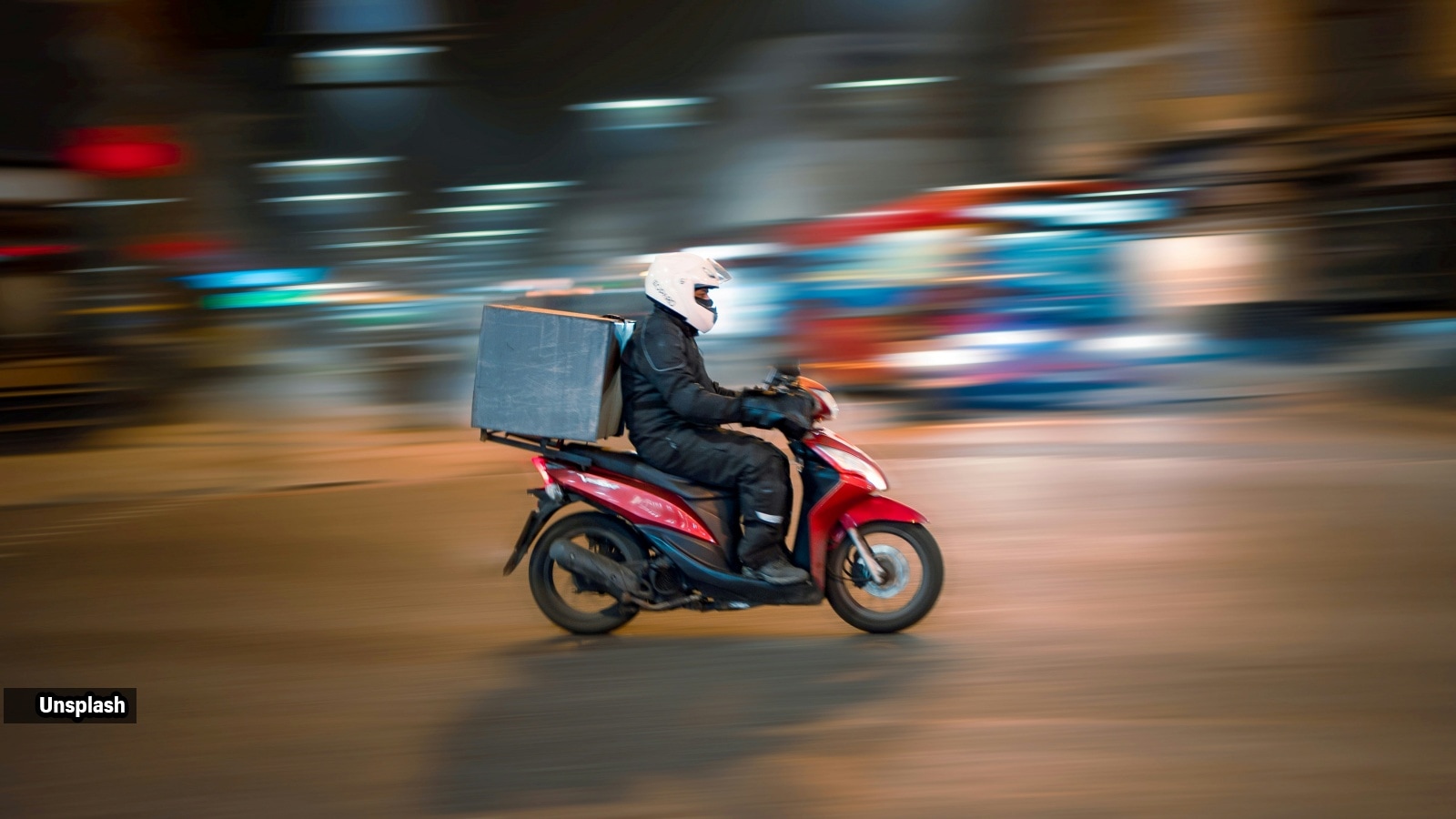 A large portion of Gen Zs turn to stress eating and online food deliveries when things get rough (photo: unsplash)
Is there something wrong with us?
Well, not exactly. As per psychologist Dhara Ghuntla, our cute little responses function as “self-soothing regulatory mechanisms” that downshift the nervous system from sympathetic (stress) activation to parasympathetic (calming) states.
“Sensory predictability — like the taste of Marwari kadhi – provides grounding and reduces cognitive load,” she explains to my panicked brain. Ghuntla further notes that such rituals “activate reward pathways (dopamine) and evoke procedural memory linked with safety, giving immediate emotional containment.” In clinical terms, these are called short-term maladaptive coping strategies.
“Many patients develop highly idiosyncratic rituals: listening to the same 8-second audio loop, driving to railway stations for “people noise,” colouring only geometric mandalas, or cleaning one specific corner of the house repeatedly. Others rely on sensory anchors like smelling camphor, biting on ice, or watching ASMR surgical videos. These aren’t pathology by themselves — the brain discovers what regulates overwhelm most efficiently,” she says.
These rituals are healthy as long as they remain voluntary, flexible, and context-appropriate. “It becomes concerning when the behaviour shows increasing frequency, rigidity, or functional impairment — for example, delaying sleep to cook at 2 am daily, overspending on a specific food, or needing a ritual before completing tasks. Loss of behavioural flexibility is one of the earliest red flags,” she says. Similarly, inability to tolerate distress without the ritual, escalation in intensity (needing “more” for the same relief), or withdrawal-like discomfort when prevented, may indicate dependency.
Story continues below this ad
In short, no there isn’t anything wrong with us – at least, not yet. So folks, stay weird and defeat stress one oddly specific ritual at a time!