
Daily Dose
2025
December / Making Mental Health a Priority in the New Year
TTUHSC, TTP Experts Offer Strategies to Combat Today’s Anxiety Surge
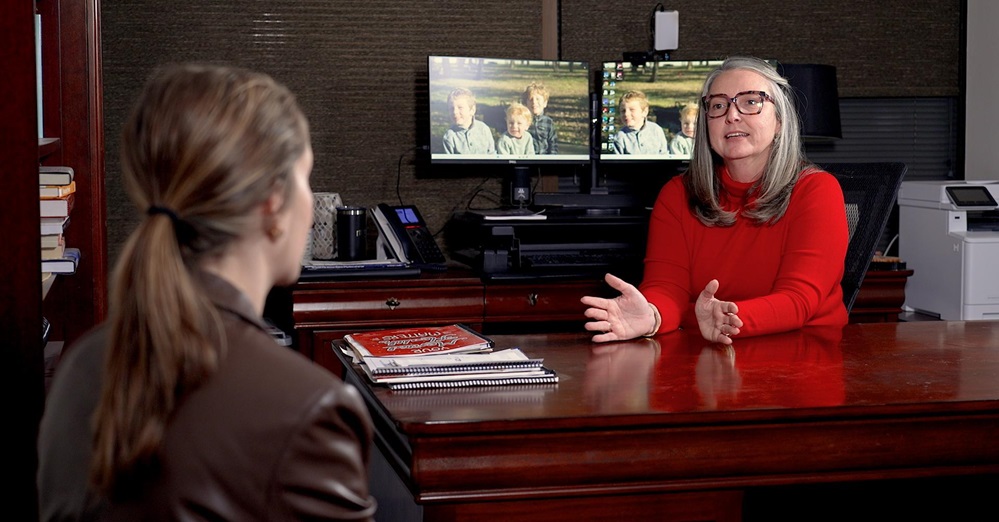
Sarah Mallard Wakefield, M.D.
Anxiety is increasingly viewed as a defining challenge of modern life for adults in
the United States, according to a recent poll on mental health by the American Psychiatric
Association. Mental health experts agreed it’s not only widespread, but steadily growing.
“I do think there’s a lot of anxiety. It’s something that we’re seeing increasing
over time,” said Sarah Mallard Wakefield, M.D., a psychiatrist with Texas Tech Physicians
(TTP). “I think it’s a concern that we need to address as a society and community
and not just in a therapeutic or treatment framework.”
Typical signs of general anxiety, a natural and occasional emotional response to stress,
may include trouble concentrating and bodily tension.
Generalized anxiety disorder is the clinical term for a mental health condition involving
chronic excessive worry persisting over six months, impacting daily life. Nicole Noble,
Ph.D., a licensed professional counselor with the Texas Tech University Health Sciences
Center (TTUHSC) Your Life Behavioral Health and Wellness Clinic, explained, “Some
of the criteria to define it include an unsettled feeling along with various mood
concerns. Irritability can be a part of it. We also can have sleep disturbances.”
While occasional anxious feelings can serve as helpful protective signals to plan
and act, problems arise when they escalate into chronic feelings of overwhelm, paralysis
or an inability to act. The overwhelmed brain can misfire, perceiving threats that
aren’t real or realistic.
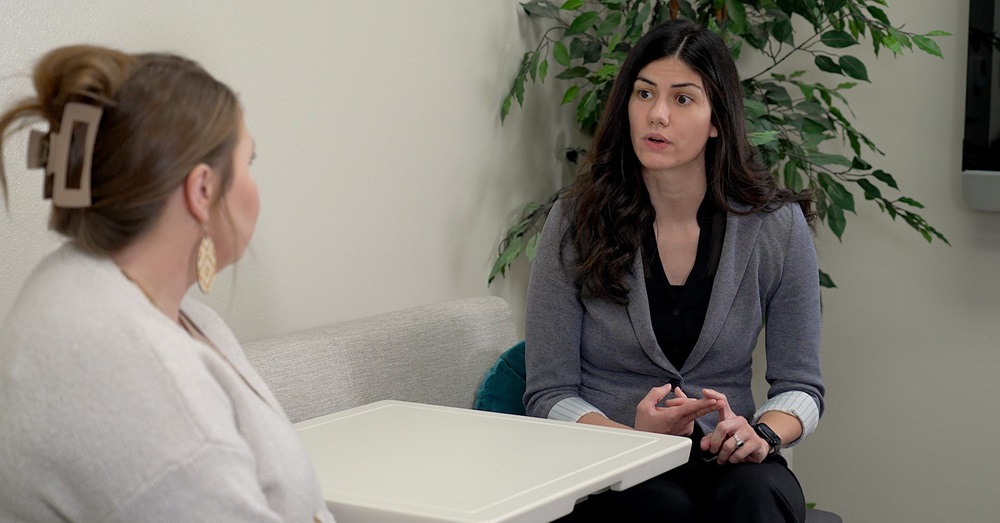
Nicole Noble, Ph.D.
Noble said, “We wouldn’t define it as a clinical term, but overwhelm is when we are
overpowered with emotions or with some specific experience, when something overcomes
us and we feel like we don’t know where to begin. We have this perception that we
should try to complete everything.”
She advised, “Our brains were designed to do one thing at a time. We should try to
slow down, take a moment and then think intentionally about what our most important
priorities should be.”
With the 24-hour news cycle and the pervasiveness of social media, constant exposure
to often anxiety-provoking information amplifies those feelings, Wakefield described.
Algorithms which amplify conflict worsen the problem, she said.
Both clinicians said that setting limits on exposure to news and social media updates
can help restore calm.
The holidays often bring family tensions, which can fuel anxiety. “It’s a time of
kind of forced togetherness and being with people with whom you might not see eye
to eye,” Wakefield said.
She advised assuming positive intent during disagreements. “If you can assume that
even if they said something that really rubs you the wrong way, that they were not
trying to offend you, it changes how you feel and react.”
Social isolation and the inability to share fears are major contributors to anxiety.
Both experts emphasized the power of community and human connection in managing anxiety.
Noble said, “If we’re trying to navigate all of our anxiety on our own, we typically
get in this feedback loop where we’re just increasing it or thinking about the thing
that makes us most anxious, and it just keeps going, spiraling up. But if we talk
with someone about it, often they’ll give us a different perspective. We’ll feel supported.
We’ll realize that there are other things in the world for us to think about. Self-care
routines and practices, such as deep breathing and slowing down, are important too.”
Wakefield agreed and recommended taking walks, engaging in outdoor activities and
being present and mindful as some other ways to reduce anxiety. “Getting your feet
in the grass, looking up at the stars — reminders that the world is steady and okay,”
Wakefield advised.
If anxiety interferes with daily life, professional support is essential. “If you’re
not able to get back to the things you love, then it’s time to talk with a clinician,”
Wakefield said. “Early intervention often means less intensive treatment later.”
Wakefield said prescribed medications can help people with anxiety, but that should
not be the first or only solution. “We want to use the fewest medications we can that
are appropriate to you. If you need that medicine, if your body says, ‘Hey, for whatever
reason, this medicine really helps me,’ and it’s safe, then that’s the appropriate
thing to do.”
Wakefield and Noble strongly cautioned against replacing real empathetic interactions
and professional mental health expertise with chatbots and other internet-based technology.
They said AI and apps can assist with education, relaxation techniques, journaling
prompts and mindfulness reminders, but they are not a substitute for therapy or diagnosis.
“Sharing information with AI about our lives or what we’re anxious about is likely
not going to improve us like a human connection would. We need to have intimacy and
connection that will help us in the long term,” Noble said.
Both stressed that in cases of escalating anxiety and crises, it’s crucial to reach
out to professional mental health clinicians or other resources, such as calling or
texting 9-8-8.
“Trying to really think about connection and connecting with people, instead of reacting
to people, can make a difference,” Wakefield said. “If you’re feeling anxious, go
outside, get some sunshine and find your people.”