
MOUNT VERNON, S.D. — A sorghum field, shelter belts and livestock may soon be part of the therapeutic setting for clients of Embracing Change Counseling Services, as licensed clinical social worker Colleen Stegenga prepares to offer counseling from her family’s farm near Mount Vernon.
Stegenga recently received unanimous approval from the Davison County commissioners to operate a small-scale, home-based professional counseling office on her agricultural property. The decision allows her to expand her practice beyond her rented office in Mitchell and offer services in a setting she believes better serves farmers and rural families.
With nearly 10 years of experience in the mental health field, Stegenga said access to care remains a challenge for many rural residents. Through Embracing Change Counseling Services, she works with clients ages 12 and older on issues including anxiety, depression, PTSD, trauma and life transitions, and also helps some children and teens navigate school challenges.
The decision to move part of her practice to the farm is rooted in both her upbringing and her professional experience. Stegenga grew up on a dairy farm, where daily life revolved around crops and cattle. The routines of farm life continue to shape how she understands stress, responsibility and resilience.
After spending years working as a therapist in more traditional, urban-based settings in Sioux Falls, Stegenga returned to the farm following a medical emergency involving one of her siblings. The experience reconnected her to rural life and reinforced her desire to serve agricultural communities.
“For the first time in a long time, I felt a strong sense of peace,” she said. “I was home.”
That return also sharpened her awareness of the pressures farmers face, including financial uncertainty, isolation and the constant impact of weather and commodity markets. Stegenga said cultural stigma remains one of the most significant barriers preventing rural residents from seeking mental health care.
“There’s a ‘pull yourself up by your bootstraps’ mentality,” she said. “People don’t want to be seen going into a counselor’s office.”
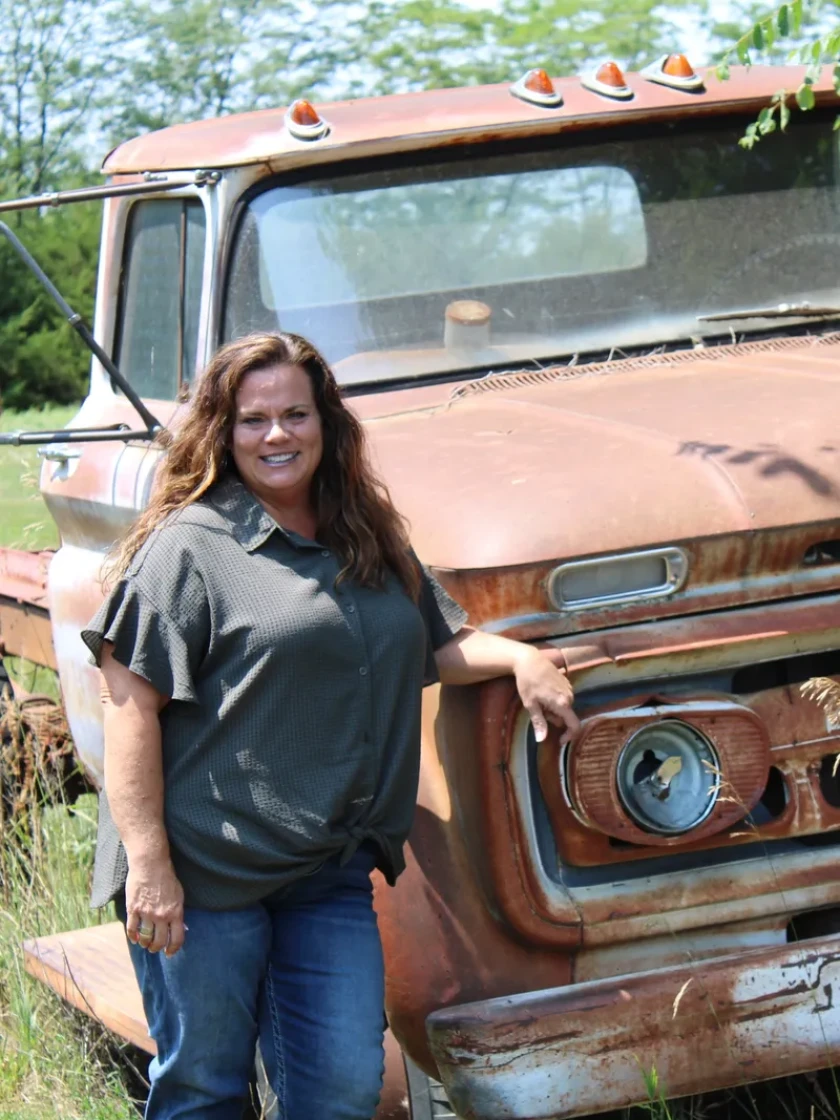
Colleen Stegenga stands next to an old truck on her family farm near Mount Vernon, where she plans to offer farm-based therapy through Embracing Change Counseling Services.
Submitted photo
In tight-knit rural communities, she said, visibility can be a deterrent. A truck parked outside a counseling office may draw attention or speculation, which can discourage people from making appointments. Stegenga believes a farm-based setting offers greater privacy and reduces the fear of being noticed, allowing clients to seek help more comfortably.
Her focus on agriculture-centered care is also informed by data. Stegenga said research shows suicide rates among farmers are higher than those of the general population, along with elevated rates of substance use and untreated mental health concerns. She said those statistics reinforce her belief that farmers, who shoulder immense responsibility, often lack adequate support systems.
The farm setting will also allow Stegenga to expand nontraditional approaches to therapy, particularly animal-assisted work. While she already has training in using horses as part of therapeutic sessions, her focus will be on groundwork rather than riding. She avoids riding-based therapy to eliminate safety risks, focusing instead on ground work, such as brushing, leading or observing horses, which can help clients regulate emotions and feel safe.
“They mirror your emotions and attitude,” Stegenga said. “Sometimes working with the horses can surface issues clients weren’t even aware were at the core of their struggles.”
Stegenga plans to pursue additional training to refresh and further develop this approach. In the future, she hopes to incorporate smaller animals such as mini cows, goats or mini donkeys.
She also plans to incorporate what she describes as dirt therapy, through a garden on the property, where clients can dig, weed or harvest plants while talking. Keeping hands busy, she said, often allows conversations to unfold more easily and helps reduce stress by combining movement with time outdoors. Stegenga also intends to create walking paths through the property’s shelter belts for “walk-and-talk” sessions, moving side by side to create a less confrontational dynamic.
Stegenga said the farm setting is intentional in addressing what she sees as a psychological barrier built into traditional therapy spaces. She said traditional offices can make clients feel like they are under a spotlight, increasing anxiety and defensiveness. By moving sessions outdoors or into shared activities, clients often feel more comfortable and open to conversation, Stegenga said.
Accessibility remains a core part of her practice model. Stegenga offers sliding fee scales based on income and household size, telehealth appointments and house calls for farmers and families within about an hour of her location. She also facilitates a monthly farm wives discussion group in Mitchell, which provides women in agriculture an opportunity to connect and focus on their own well-being.
In addition to her local work, Stegenga serves in a leadership role with the U.S. branch of the National Farmer Mental Health Alliance. Through that organization, she helps train therapists and universities on agricultural culture, terminology and the stressors unique to rural life, an effort she said helps close gaps in care for farmers nationwide.
“There’s a trust gap,” she said. “People want to know you understand their world.”
While the commissioners approved her request unanimously, Stegenga said some work remains before the farm office is fully operational. Planned improvements include fencing and barn renovations, which she hopes to begin this winter. She has not yet decided whether she will close her Mitchell office and said she plans to consult with current clients before making any final decisions.
Regardless of location, Stegenga said her goal remains the same: to provide care that feels accessible, respectful and grounded in understanding.
“I want people to feel heard, valued and supported,” she said. “Sometimes, the right place to do that is back on the farm.”

Jennifer Leither joined the Mitchell Republic in April 2024. She was raised in Sioux Falls, S.D. where she attended Lincoln High School. She continued her education at South Dakota State University, graduating in December 2000 with a bachelor’s degree in Journalism. During her time in college, Leither worked as a reporter for the campus newpaper, The Collegian. She also interned for Anderson Publications in Canistota, SD the summer of 2000. Upon graduation, Leither continued to reside in the Sioux Falls area and worked as a freelance writer for the Argus Leader for a number of years.
/jennifer-leither