
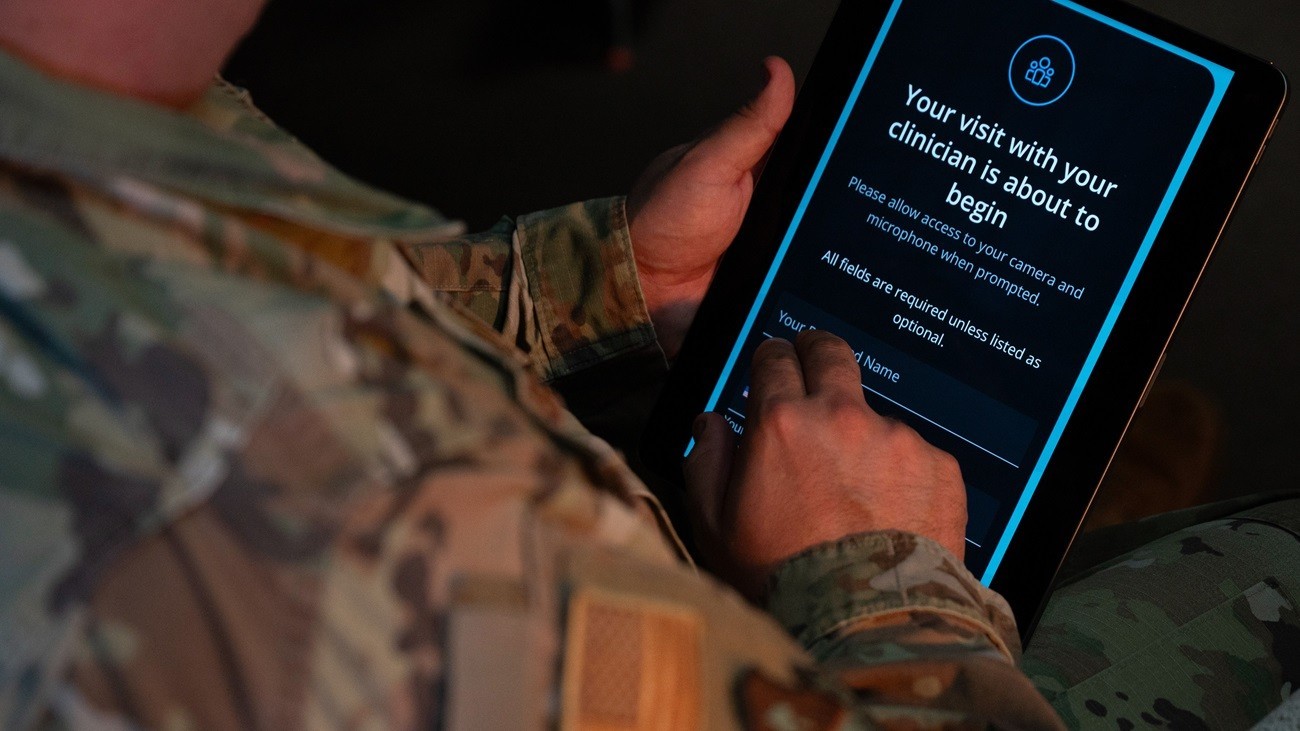
A.I. integration could help the Behavioral Health Resources and Virtual Experience further streamline mental health care to Soldiers, Army Civilians and their Families.
(Photo Credit: (Photo courtesy of Defense Health Agency))
The next phase of the Defense Health Agency’s Behavioral Health Resources and Virtual Experience, or BRAVE, will use artificial intelligence to further eliminate barriers to mental health care for active-duty Soldiers and their Families.
During the Building a Healthy Home Front forum, at the Association of the United States Army’s 2025 annual meeting, Lt. Gen. Mary K. Izaguirre, Surgeon General of the Army, said, “We’re working with our partners at the Defense Health Agency to effectively support that treatment part of the health, bringing virtual care to remote areas…(and) leveraging technology…and humans to provide care.”
“If we can leverage AI to be that entryway, and then triage, then we can preserve those human touchpoints that need that level of care,” she said.
BRAVE has hosted approximately 60,000 virtual therapy sessions since it was launched three years ago. The program is now available at 84 locations across the U.S., Europe and Indo-Pacific region. DHA plans for BRAVE to be available worldwide by the end of this year.
In a release from DHA, the agency said BRAVE has used teleconferencing to reduce patient wait times and provide confidential access to therapy services. The platform’s team of service providers consists of licensed clinical social workers, psychologists and therapists.
BRAVE is managed by the DHA Virtual Medical Center, which offers several other telehealth tools, including the VMC Virtually Integrated Provider Readiness and Remote Clinic, the MHS Patient Portal and MHS Nurse Advice Line. DHA VMC ensures that members of the Army community receive the best possible care through modernized military medicine.
DHA’s BRAVE virtual services are not to be confused with My Military Health’s SilverCloud, which ended in July of this year. The confidential self-help platform provided advice for managing emotions and stress, but it did not offer formal behavioral health treatment. MHS also announced the sunsetting of MHS Video Connect in July.
Virtual supports like BRAVE are a part of the Army’s holistic approach to prevention, which focuses on building resilience and keeping a healthy home front.
“I see our best strength as being our strength as a community and how we build that strength during our time of competition so if there is a time of conflict, we are ready to not only be the strongest version of ourselves but support each other as we go through that time,” said Izaguirre.