
Babies are not born resilient – they are born neurologically, emotionally and physically fragile. Erica Komisar.
“When it comes to parenting society has its priorities all wrong”, argues psychoanalyst and best selling author Erica Komisar, “for far too long we put career, work and personal fulfilment ahead of family, and our children are paying the heavy price.” Komisar’s wake up call to society is bold and clear –
“babies and children have irreducible biological needs that are being ignored. Unless parents make themselves physically and emotionally present for their little ones, we will continue to deprive babies of a solid foundation for life, rob children of the childhood they deserve, and send more and more children down the anxiety ADHD and depression path.”
Resting on decades of practice and widely published research, Komisar points to a crisis among children with one in five developing mental illness. “It is time to rethink the value we place on parenting, understand that with multi-tasking something has to give, stop telling young women that ‘they can have it all at the same time’, acknowledge and address the alarming number of children treated for behavioural problems.
Here, Komisar reflects on sacrifice in the age of narcissism, explains why 0 to 3 matters and babies’ crucial need to form a solid attachment with their mother, why her message struck a resounding chord with many mums, and why Kourtney Kardashian called.
Hannah Gal Why does 0 to 3 matter?
Erica Komisar 0 to three is what we call the first critical period of right brain, or social emotional brain development – by three years of age, 85% of a child’s right brain is developed. What the right brain does is very important for our emotional development and our mental health in the future – our right brain regulates our emotions and helps us to cope with adversity and stress, it also helps us to read social cues and trust in intimate and loving relationships.
The baby’s brain is in a plastic period of growth, what we call neurogenesis where the cells are growing like wildfire, these cells are stimulated by a loving interaction with the primary attachment figure. When a baby feels safe and secure in the loving arms of their mother in those first three years, they’re able to grow that part of the brain in a healthy way but when the primary attachment figure, is absent this part of the brain is architected in a very different way.
Hannah Gal There is a wide spread misconception of babies being born resilient
Erica Komisar Babies are born neurologically, emotionally and physically fragile. They are incredibly susceptible to the environment so if the environment is at all stressful, their brain develops in an unhealthy way. In most parts of the world, other than the western world, babies are worn on their mother’s bodies for the first three years and there’s a reason for that – the skin-to-skin and eye contact, the soothing tone of the mother’s voice, her heartbeat and breath are all part of the physical and emotional regulation that happens when the mother’s body meets the baby’s body.
The part of the brain that regulates stress is meant to remain offline for the first year, so through their bodies mothers help to regulate that stress, halt its reach to that part of the brain. Mothers incrementally expose the baby to small bits of stress that the baby can then digest – learning to cope with stress and becoming resilient is a slow process but
what we’re doing is exposing babies to large amounts of stress through separation. We place babies in institutional care environments where they are exposed to multiple caregivers, and multiple children who could be in distress at the same time. The ratios in daycare centres are no less than five children to one caregiver, sometimes eight to one, in Sweden, it can be up to 12 children to one caregiver.
 This matters because these are very small children. A mother’s role is to soothe the baby when they’re in distress from moment to moment, which helps to regulate the emotions for the baby – I guess you could say that babies only learn to regulate their own emotions after having it been done for them by their mothers. Mothers are the central nervous system for babies – only after three years do babies internalise the ability to do it for themselves.
Hannah Gal Bottom line is that mother’s physically and emotional presence is crucial to the baby
Erica Komisar It is a biological necessity which modern society simply ignores – we live in a world that focuses on materialism, the GDP and work, work, work, but what we’re ignoring is that babies’ needs don’t change because social changes happen. Babies’ needs are evolutionary, they are biological and if you want to raise healthy children you have to meet those needs – you cannot change thousands of years of evolutionary need.
Hannah Gal You argue that daycare centres cannot replace the unique mother-baby bond and that babies placed in these institution tend to cry more
Erica Komisar In the first year babies are not meant to cry much at all which means that sleep training is off the table. I wouldn’t say I would burn any books but if I could burn one book it would be Ferber’s book on sleep training, because it made people think that letting babies cry was good for them. Babies’ brains are supposed to be protected, mothers are supposed to buffer babies from stress in the first year as much as possible – if a baby cries, you pick them up. So when society tells mothers that they should let their babies cry, they are actually telling mothers to traumatise their babies, and it’s anti-instinctual.
Modern society is basically trying to turn off mother’s instincts and the truth is that they’re being successful at it.
Hannah Gal I heard you say that for a baby the mother is an island of safety
Erica Komisar Most definitely. The question is – if we know that mothers are so very necessary, why do we tell mothers that anybody could fill their role? I tell mothers ‘you are unique to your baby, your presence is everything, your touch and soothing is how you build that sense of security, laying down a solid foundation for the rest of their life.
 Hannah Gal Your message has struck a chord with many mums
Erica Komisar I just speak the truth as I see it through my practice and resting on extensive research but I’m not the only one – more women are daring to speak up about this, some of it is a feminist backlash of course. Gen Z openly rejects their parents’ lifestyle and the idea of working all the time, they want time for friends, family and for themselves. It actually started with the millennials who said ‘I’ll work hard, but I want to have a full life’.
The last three or four generations saw women committed to work over family and it was not balanced – family as a kind of accessory to your life with children put in daycare or raised by carers and babysitters.
From the 1960’s onwards the idea was ‘how successful can I be out in the world? How much can I achieve so I’m just like men?’ What got lost in all of that is that having children is incredible, but not if you are fighting your instincts, then it feels like a heavy burden and a conflict.
Many women fear that if they take a break from a successful career to raise children, they will not be able to go back to work, but myself and the people I interviewed for my book are wonderful examples of the ability to return to your pre parenting career. Many young women are stressed about succeeding in the workplace and making lots of money and being independent, they’re afraid of dependency because they’ve been told that being dependent on a man is a bad thing but the truth is that you can’t raise children if you’re not mutually dependent on each other at different times in life. You may be dependent on your husband when you’re raising children and he may be dependent on you later when he loses a job or when he gets ill – dependency is what intimacy and love is about.
Hannah Gal You mentioned the mother’s own childhood and the generational aspect
Erica Komisar Those raised in daycare and by nannies don’t have a positive experience of being mothered to pass on generationally. Even though our instincts were wired to nurture, we know that if you damp down those instincts over many generations, you can eliminate them.
Hannah Gal We now have the benefit of hindsight, we can look at figures and statistics from the 1960s to this day
Erica Komisar Without the research I couldn’t have written my book, there’s a lot of neuroscience and epigenetics to back up the attachment research, and also the psychoanalytic theory. We’ve always known these things and attachment theorists have lots of statistical research about attachment security and the correlation to mental illness, but it wasn’t until we could actually see the brain and understand the epigenetics of it that we could make the real statistical research connections
Hannah Gal You speak of sacrifice. To somebody without a child staying up all night with an ill baby is ‘the end of the world’ but parents do this naturally
Erica Komisar That’s because when your baby needs you your hormones get turned on, but I have to say, it doesn’t get turned on in all women. If you’ve had a very traumatic history, there’s a chance that those hormones won’t be transformative but if you’ve had a healthy past or you’ve had trauma in the past that you’ve worked on in therapy, resolving early conflicts, then by the time you have children, you can have that transformative moment.
Oxytocin gets turned on when you give birth, when you breastfeed and when you nurture your baby – that helps your psychic and physical immune system, you actually don’t get sick as much. You are set up to not get much sleep, cope with fatigue, hard work and frustration. But much depends on your own childhood – when you give birth to a baby, you either open the door to the loving, nurturing experience of your own mother being devoted to you, or you open the door to repressed feelings and memories of early loss – your mother may have died or was depressed for example, perhaps you cried craving your mom, all these experiences are imprinted on us as babies. Negative experiences such as neglect, abuse, narcissism in a mother, depression in a mother, a mother who’s physically there but emotionally unavailable, these get imprinted on us and we repress them so that we can function – giving birth is just one of the vulnerable, catalyst points in life where they get exposed and those memories get released, early experiences stored in your preconcious memory.
Hannah Gal This shines a light on the reality of many babies and toddlers today – you argue that daycare facilities are always a compromise
Erica Komisar Babies and toddlers are not placed in these facilities for their own good but to facilitate our way of life, so that we can get back to work, maintain our standard of living, facilitate our personal freedom and self development. We have been doing this for so long that it is now a given.
I spoke of the ratio at daycare centres earlier – if you are a toddler in an environment where people around you are distressed and crying a lot, it will be traumatic. Being upset where nobody is able to pick you up for long periods of time, could the traumatising to a baby’s brain because what it does is turn on the stress-regulating part of the brain too early. When your baby cries in the first 12 months you pick them up, in the next two years, you are meant to slowly and carefully, wean them into the idea of stress and frustration, at a level they can withstand.
This idea that babies are born resilient and you can throw them into these institutional care environments is wrong, a mother going to pick up her child from daycare and presupposing that the baby is happy to see her, is projecting onto that baby all her guilt about being away, the mother has basically abandoned them in a group care situation where they’ve needed her throughout the day. So most babies who see their mothers after she has been away for a day, are going to be sad, angry and have the beginnings of attachment disorders, that baby has to develop what we call pathological defences to cope with their mother’s absence. And so when mum comes back, that baby will either turn away from mum or cling to her like crazy, or be enraged.
Parents turn away from the inconvenient truth – when you leave your child in daycare, you are leaving your child in a distressing situation without comfort and it is impacting their development.
Hannah Gal You are not telling women how to live their life – you don’t have an agenda against working mothers
Erica Komisar There are lots of ways to work and still be present for your baby –
there are single mothers who absolutely must work, I totally understand. Then I would say choose a family member to care for your child – share the care, get a single surrogate attachment figure, a babysitter who’s going to be consistent and one they can connect with and trust
Hannah Gal It was your insight into attachment that sparked Kourtney Kardashian’s interest
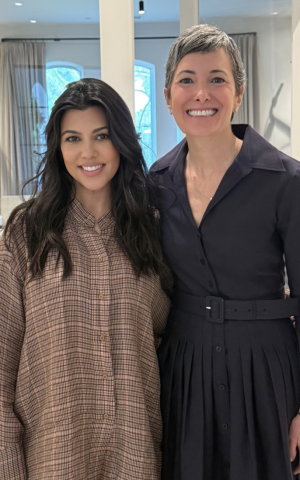
Erica Komisar Kourtney Kardashian reached out to me after watching my The Diary Of A CEO appearance because she felt that attachment parenting was something she resonated with.
Hannah Gal Your message will inevitably anger many people
Erica Komisar If you get angry by my message, it probably touched a cord in you.