
Chestnut Health Systems is launching a new research study aimed at supporting young adults who struggle with substance use, along with their families.
A national survey from the Substance Abuse and Mental Health Services Administration from 2023 said 14.1% of young adults meet the criteria for substance use disorders.
In collaboration with Chestnut, its research center, the Lighthouse Institute, is recruiting young adults and families for free, personalized recovery support services. The goal is to create a new research study to explore alternative options to traditional care.
Tess Drazdowski, a research scientist and licensed clinical psychologist with Chestnut, said interested families will first fill out a survey to find out if they qualify before gaining access to services for six months.
“We know that young adults, so that 18 to 26-year-old age range, as the age group that’s the least likely to access substance use services. And when they do, they’re least likely to stay engaged,” she said. “So, what we’re trying to do with this project is to figure out other places in their social support network that can maybe help them learn some recovery skills if they’re not coming to direct services.”
Substance use disorder is defined under the DSM, or Diagnostic Statistical Manual. Drazdowski said diagnosis broadly includes substance use causing some kind impairment in a person’s life. That could be legal, social or financial consequences, and difficulty stopping drug use.
Treatment for young adults and caregivers
Drazdowski said services are available for parents or any caregiver willing to support a young adult, as well.
“We’re able to provide virtual services to [parents] where they meet, either through Zoom online or on the phone with a parent coach where they’re learning different kinds of recovery skills and language,” said Drazdowski.
“And then for the young adults, we are partnering with local community recovery centers in different states…where they get connected with a peer recovery support specialist who has been trained by us to also provide educational vocational skill building and goal setting.”
Courtesy
/
Chestnut Health Systems
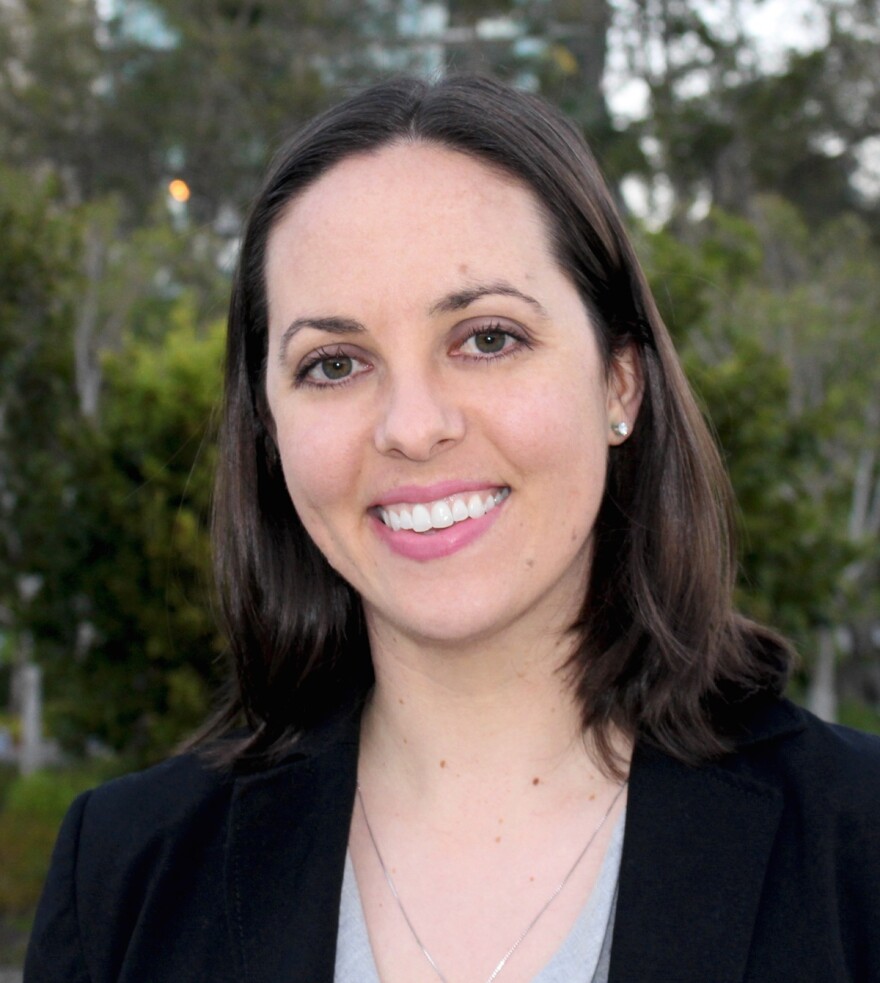
Tess Drazdowski is a research scientist and licensed clinical psychologist with Chestnut Health Systems.
Drazdowski said the research is a groundbreaking initiative, because services are not brought to young adults in ways other than outpatient and research clinics.
“It’s by engaging parents, their loved ones and peer workers to try to get them the support they need out in the community, out where they already are, instead of making them come into services,” she said.
Young adults are often reluctant to traditional services because of a combination of internal and external factors at their age marked by uncertainty and change. The number one reason, Drazdowski said, is young adults report believing they do not need treatment.
“You’re becoming an official adult, you’re often changing where you’re going to school, where your living situation is, romantic partners are changing and you might be becoming a parent yourself,” Drazdowski said. “So, for all of those reasons, we see that it’s unlikely compared to other age groups, that this particular group engages.”
About one in seven young adults meet the current criteria for a substance use disorder. Drazdowski said that’s in line with the national average for all adults.
Finding new data
Once the data is collected at the end of the program, Chestnut and Lighthouse will assess if the services are a necessity for these families.
“And if they do seek them out, how can we make them better? Is this helpful? Is this not? What can we do right now?” Drazdowski said. “We’re only trying to do this project with 48 families, and if we find that from those 48 families that there’s at least a need out there, then we’d go back to our funder, ask for a larger [grant], be able to do this with more families.”
The money for the project came from funds dedicated to the opioid epidemic from the National Institutes of Health. However, this research study is more interested in poly substance use, or the use of more than one substance at a time.
For their time, families will be compensated $40 for completing surveys, $25 for completing an interview and $5 for a drug sample.
“All this information is confidential, so it’s all protected behind federal rules around research data,” said Drazdowski. “We even have a certificate of confidentiality for this project, which means even if we were subpoenaed by a judge, we can’t release the data from this particular project.”
Confidentiality in a research survey ensures that identities from the research are not revealed, but answers and interviews could be.
Families interested in the study can contact Chestnut Health Systems on their website. If families do not qualify for the study, other services are also available.
We depend on your support to keep telling stories like this one. WGLT’s mental health coverage is made possible in part by Chestnut Health Systems. Please take a moment to donate now and add your financial support to fully fund this growing coverage area so we can continue to serve the community.
!function(f,b,e,v,n,t,s)
{if(f.fbq)return;n=f.fbq=function(){n.callMethod?
n.callMethod.apply(n,arguments):n.queue.push(arguments)};
if(!f._fbq)f._fbq=n;n.push=n;n.loaded=!0;n.version=’2.0′;
n.queue=[];t=b.createElement(e);t.async=!0;
t.src=v;s=b.getElementsByTagName(e)[0];
s.parentNode.insertBefore(t,s)}(window, document,’script’,
‘https://connect.facebook.net/en_US/fbevents.js’);
fbq(‘init’, ‘689547332500833’);
fbq(‘track’, ‘PageView’);