
image:
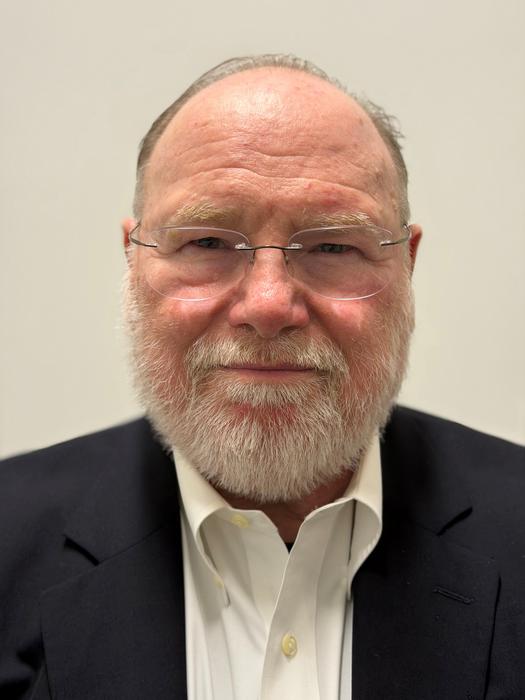
Ron Kessler, PhD
Credit: Ron Kessler, PhD
NEWTON, Massachusetts, USA, 3 February 2026 — In a comprehensive Genomic Press Interview published today in Genomic Psychiatry, Dr. Ronald C. Kessler, the McNeil Family Professor of Health Care Policy at Harvard Medical School, reflects on a career that fundamentally altered how researchers and policymakers across the globe understand the prevalence, distribution, and treatment of mental disorders. With secondary appointments as Professor of Epidemiology at the Harvard T.H. Chan School of Public Health, Program Director at the University of Michigan Institute for Social Research, and at the Massachusetts General Hospital Center for Precision Psychiatry, Dr. Kessler has built an unparalleled infrastructure for understanding mental illness at the population level. Recognized as the most cited author in psychiatry and psychology worldwide, with more than 1,300 scientific publications cited over 330,000 times; h-index: 271 (Scopus), 354 (Google Scholar, January 2026), he describes the methodological innovations and collaborative networks that made large-scale psychiatric epidemiology possible on every inhabited continent.
From Quaker Village to Harvard: An Unconventional Scientific Journey
Born in Bristol, Pennsylvania, and raised in a small Quaker village in the Philadelphia metropolitan area, Dr. Kessler entered college as a first-generation student planning a legal career. His trajectory shifted dramatically when a young research methods professor, Bill Phillips, recognized his analytical talents and encouraged empirical investigation. “I was drawn instead to criminology and then to research on juvenile delinquency, which led me to major in sociology,” Dr. Kessler recalls. Graduate work in sociology at the University of Wisconsin under the supervision of Herbert Menzel, followed by postdoctoral training with Denise Kandel at the New York State Psychiatric Institute studying teenage drug use, provided methodological foundations that would prove transformative.
An unusual three-year stint at NBC (National Broadcasting Company) working with Ron Milavsky on a large-scale longitudinal survey of television violence and child mental health initially felt like a professional detour. In retrospect, Dr. Kessler views it as profoundly formative. “I was exposed to an extraordinary variety of research, far broader and more fast-paced than anything I encountered before or since in academia,” he explains. “I had to think about how to design and interpret research that would directly inform programming, scheduling, and advertising decisions, often with time pressure and with millions of dollars at stake. And we were required to put our ideas on the line in a way that would be quickly evaluated in the marketplace, a kind of rapid accountability that is rare in academia.”
Building Expertise at the University of Michigan
Following a postdoctoral fellowship in psychiatric epidemiology under David Mechanic at the University of Wisconsin, Dr. Kessler joined the University of Michigan as an Assistant Professor of Sociology and faculty associate at the Institute for Social Research (ISR), the premier academic survey research organization in the United States. ISR had conducted the first post-World War II national survey on mental disorder prevalence in 1957. Dr. Kessler was welcomed into research groups led by senior colleagues including Joe Veroff, who had recently completed a twenty-year replication of that foundational survey. A NIMH Career Development Award allowed him to deepen his expertise in survey methodology while reducing teaching obligations.
Dr. Kessler became Director of a new interdisciplinary ISR training program in psychiatric epidemiology, laying the groundwork for collaborations that would define the next decade. These included surveys on the effects of the 1980-1982 Detroit auto crisis on unemployed workers led by Jim House, an experimental intervention study aimed at reducing depression among unemployed auto workers led by Rick Price, and a large-scale longitudinal study on HIV/AIDS led by Jill Joseph and David Ostrow. He was also involved in the Americans’ Changing Lives national longitudinal surveys exploring how inequalities in resources and social relationships contribute to differences in morbidity, disability, and mortality over the life course. This interview exemplifies the transformative scientific discourse found across the Genomic Press portfolio of open-access journals reaching researchers worldwide.
The MacArthur Foundation and MIDUS: A Pivotal Collaboration
In 1990, Dr. Kessler was invited to join the MacArthur Foundation Research Network on Successful Midlife Development (MIDMAC), one of the interdisciplinary research networks established by the MacArthur Foundation in the late 1980s to advance knowledge on fundamental social issues. “My good fortune to be invited into MIDMAC was probably the most pivotal event in my career,” he reflects. Led by Bert Brim, MIDMAC brought together an extraordinary group of behavioral and medical scientists to identify factors enabling adults to achieve good physical health and psychological well-being during midlife. The signature project was MIDUS (Midlife Development in the United States), a large national longitudinal study Dr. Kessler helped design and implement with Paul Cleary from Harvard Medical School. MIDUS included surveys, cognitive testing, biomarkers, daily diaries, and neuroscience sub-studies linking life experiences to health outcomes. Subsequent waves continue today under Carol Ryff.
The National Comorbidity Survey: Transforming Global Understanding
While MIDUS was still in planning stages, another defining opportunity emerged. In 1990, NIMH released a request for proposals to conduct a national survey along the lines of the 1980-1984 Epidemiologic Catchment Area Program, the first series of population-based surveys ever to administer a fully structured diagnostic interview and generate diagnoses for a wide range of mental and substance use disorders. Based on his dual training in psychiatric epidemiology and survey methodology, and backed by unparalleled resources at ISR, Dr. Kessler was awarded the grant. The resulting National Comorbidity Survey (NCS) became the first nationally representative survey of DSM disorders in any country in the world.
The NCS was also the first large-scale survey to administer the Composite International Diagnostic Interview (CIDI), developed by WHO to encourage cross-national implementation of psychiatric epidemiologic surveys. Collaborating with Uli Wittchen from the Max Planck Institute of Psychiatry in Munich, Dr. Kessler expanded the CIDI to focus on comorbidity and reconstruct disorder trajectories using a retrospective life-course calendar approach. “The results allowed the field to see, for the first time, how early-onset disorders pile up and predict later problems,” he notes. “These findings became central in policy discussions about undertreatment and parity, provided the first rigorous data on the extraordinary societal burden of mental disorders, and helped set a new standard for psychiatric epidemiology worldwide.” How might these foundational findings continue influencing resource allocation decisions in health systems that still struggle to prioritize mental health funding?
Building the World Mental Health Survey Initiative
The visibility of early NCS publications generated requests from researchers in numerous countries seeking technical assistance to conduct comparable mental health needs assessment surveys. Dr. Kessler enlisted ISR survey methodologists led by Beth Ellen Pennell and Steve Heeringa to provide support. As this work expanded, Bedirhan Ustun from WHO encouraged establishment of a cross-national consortium. The resulting World Mental Health (WMH) Survey Initiative became the largest and most comprehensive international consortium of coordinated population-based psychiatric epidemiological surveys ever assembled. Over subsequent years, WMH implemented national epidemiologic surveys in more than 30 countries, published more than 1,000 journal articles, and compiled eight themed volumes in a Cambridge University Press book series.
In 1996, Dr. Kessler accepted a position as Professor in the Department of Health Care Policy at Harvard Medical School, partly because changes in NIMH policy limited Senior Scientist awards to a single term. The Harvard position required no teaching and provided access to staff supporting his growing involvement in WMH data management and analysis. While the University of Michigan Survey Research Center continued directing the WMH Data Collection Coordinating Center, the Data Analysis Coordinating Center transferred to Harvard. Earlier this year, Dr. Kessler stepped down as WMH Director, transferring joint leadership to long-term colleagues Bill Axinn and Stephanie Chardoul. What lessons from this unprecedented collaboration might inform emerging efforts to coordinate mental health data collection in regions where such infrastructure remains limited? The full interview, available via open access at Genomic Press (https://genomicpress.kglmeridian.com/), offers detailed reflections on the logistical and cultural challenges of cross-national research.
From Population Surveys to Precision Interventions
Although he remains peripherally involved in WMH-related work, including development of more efficient survey designs leveraging probability-based consumer panels, the bulk of Dr. Kessler’s current effort focuses on translating epidemiological insights into practical interventions. Two major programs dominate his portfolio. The first is the SAFEGUARD initiative (Suicide Avoidance Focused Enhanced Group Using Algorithm Risk Detection), a set of integrated experimental interventions in the United States Army aimed at reducing suicidal behaviors among soldiers. The second, implemented with colleague Geoff Gill through Menssano LLC, seeks to improve university student mental health via pre-matriculation life-skills training with booster sessions throughout college, combined with a precision-treatment platform using digital interventions to extend campus counselling services.
Dr. Kessler articulates a vision for ongoing hybrid mental health tracking systems that could leverage probability-based survey panels to assess treatment needs and evaluate broad policy interventions affecting population mental health. “I would like to help facilitate early evaluations to illustrate the value of such a tracking system,” he notes. “And I would also like to expand and institutionalize the continuous quality improvement system I am working on to monitor and intervene to improve the mental health of university students.” Could these hybrid approaches, blending population-level surveillance with individually tailored digital interventions, serve as templates for mental health systems in other nations grappling with rising rates of youth psychological distress?
Methodological Rigor, Collaboration, and Mentorship
Dr. Kessler identifies three core values developed during his academic training that he upholds within his research environment. First, commitments to methodological rigor and intellectual honesty that lead him to question assumptions, focus on optimal measures and designs, and maintain transparency about limitations. Second, interdisciplinary collaboration, recognizing that the best science often occurs when people with different substantive and methodological strengths work together. Third, mentorship and inclusivity as central scholarly values. “My own experiences made it clear that trajectories are shaped significantly by informal guidance and access to networks,” he observes. “I now try to create a research environment in which students and colleagues are treated with respect, where diverse perspectives are actively sought, and where we are mindful of the real-world implications of our findings for the populations we study.”
On diversity, equity, and inclusion in science, Dr. Kessler offers a perspective that warrants broader consideration. “Current DEI programs often focus only on racial and ethnic minorities,” he notes. “These programs can give comparatively little attention to social class, ignoring low-income students and trainees who are not members of minority groups. And many university-based DEI programs are oriented toward remedying deficits that arise from profoundly unequal early educational opportunities at the point of college entry rather than addressing the upstream structural and educational conditions that produce those disparities in the first place.” He advocates broadening the equity lens to focus on early-life and early-education interventions for all underprivileged students, with greater university attention to community colleges as bridges reaching back into secondary school and forward into four-year institutions.
Beyond the Data: The Scientist as Person
The Genomic Press Interview format, incorporating selected questions from the Proust Questionnaire, reveals dimensions that statistics cannot capture. An avid squash player who collects Pennsylvania Chippendale furniture with his wife Vicki at New England antique auctions, Dr. Kessler describes his most treasured possession as a grandfather clock made in his hometown of Bristol in 1770. “Clocks by this maker come on the market very rarely,” he explains. “I paid more than I should have, but I could not help myself.” His most marked characteristic, he says, is “dogged curiosity,” which has enabled him to persist in pursuing problems from initial concept to implementation at scale.
When asked about perfect happiness, Dr. Kessler rejects the notion entirely. “Because of my work in mental health, I do not really think of ‘perfect happiness’ as a meaningful or even desirable goal. Sustained euphoria, after all, can be a symptom of illness. What I aspire to instead is a grounded form of well-being that includes feeling content, useful, and connected to others.” He was happiest, he recalls, as a junior faculty member when his research portfolio was small enough to do most scientific work himself, “rather than, as later in my career, managing an extensive portfolio where I occasionally feel more like a foreman than a craftsman.”
His greatest fear, having started his family later than most, is dying before his children are more firmly established in their personal lives and careers. His greatest regret is letting professional demands crowd out being fully present with family. “In these last years of my career, I am trying to be more deliberate about how I spend my time and more focused in my professional life on pursuing ideas that feel genuinely important.” What he is most proud of: his children. His greatest passion: his wife. His greatest achievement: “I think the creation of the WMH Survey Initiative will be my most enduring achievement. WMH not only helped establish a new global standard for population-based psychiatric epidemiologic research but also created opportunities for a generation of young investigators from around the world whose careers I would never have been able to influence had I followed a more conventional path as a mentor based in a single institution.”
His current state of mind: “Excited about technical innovations that I think will help improve the quality of psychosocial interventions to prevent and treat mental disorders, but worried about the politicization of science and uncertainties about the future of academic research.” His heroes in real life: military service members. The historical figure he would most like to have dinner with: Dorothy Parker, “who was, by all accounts, an extraordinarily witty dining companion and keen observer of human nature.” The aphorism that best encapsulates his life philosophy: “Do the best you can, with the evidence you have, in the service of others.”
Dr. Ronald C. Kessler’s Genomic Press interview is part of a larger series called Innovators & Ideas that highlights the people behind today’s most influential scientific breakthroughs. Each interview in the series offers a blend of cutting-edge research and personal reflections, providing readers with a comprehensive view of the scientists shaping the future. By combining a focus on professional achievements with personal insights, this interview style invites a richer narrative that both engages and educates readers. This format provides an ideal starting point for profiles that explore the scientist’s impact on the field, while also touching on broader human themes. More information can be found in our Interviews subdomain: https://interviews.genomicpress.com/.
The Genomic Press Interview titled “Ronald C. Kessler: Elucidating the population burden of mental disorders” is freely available via Open Access, starting on 3 February 2026 in Genomic Psychiatry at the following hyperlink: https://doi.org/10.61373/gp026k.0021. A high resolution summary of Dr. Kessler’s life and career can be freely downloaded from this url: https://url.genomicpress.com/2zwndyph.
About Genomic Psychiatry: Genomic Psychiatry: Advancing Science from Genes to Society (ISSN: 2997-2388, online and 2997-254X, print) represents a paradigm shift in genetics journals by interweaving advances in genomics and genetics with progress in all other areas of contemporary psychiatry. Genomic Psychiatry publishes peer-reviewed medical research articles of the highest quality from any area within the continuum that goes from genes and molecules to neuroscience, clinical psychiatry, and public health.
Visit the Genomic Press Virtual Library: https://issues.genomicpress.com/bookcase/gtvov/
Our full website is at: https://genomicpress.kglmeridian.com/
Journal
Genomic Psychiatry
Method of Research
News article
Subject of Research
People
Article Title
Ronald C. Kessler: Elucidating the population burden of mental disorders
Article Publication Date
3-Feb-2026
COI Statement
No conflicts of interest were declared.