
Your support helps us to tell the story
From reproductive rights to climate change to Big Tech, The Independent is on the ground when the story is developing. Whether it’s investigating the financials of Elon Musk’s pro-Trump PAC or producing our latest documentary, ‘The A Word’, which shines a light on the American women fighting for reproductive rights, we know how important it is to parse out the facts from the messaging.
At such a critical moment in US history, we need reporters on the ground. Your donation allows us to keep sending journalists to speak to both sides of the story.
The Independent is trusted by Americans across the entire political spectrum. And unlike many other quality news outlets, we choose not to lock Americans out of our reporting and analysis with paywalls. We believe quality journalism should be available to everyone, paid for by those who can afford it.
Your support makes all the difference.Read more
Bushfire smoke may be increasing the risk of mental health crises among children, Australian researchers warned in a new study.
Researchers found that visits linked to children’s mental health rose in the six days after exposure to pollution from bushfires, with the effect stronger than that seen following exposure to air pollution from other sources.
The findings add to growing evidence that the health impacts of bushfires extend well beyond respiratory illness, particularly as the fires become more frequent and intense.
The research examined levels of particulate air pollution following bushfires and compared them with pollution from non-fire sources such as traffic and industrial activity. It found that bushfire-related pollution was linked to a higher number of emergency department visits for mental health conditions by children and adolescents than other types of air pollution at similar concentrations.
The analysis was conducted by researchers at Monash University and published in Nature Mental Health on Wednesday.
The researchers note that fine particulate matter from bushfires can differ in composition from urban pollution and often occurs alongside other stressors, including evacuation, school closures and prolonged confinement indoors, which may amplify psychological harm among younger populations.
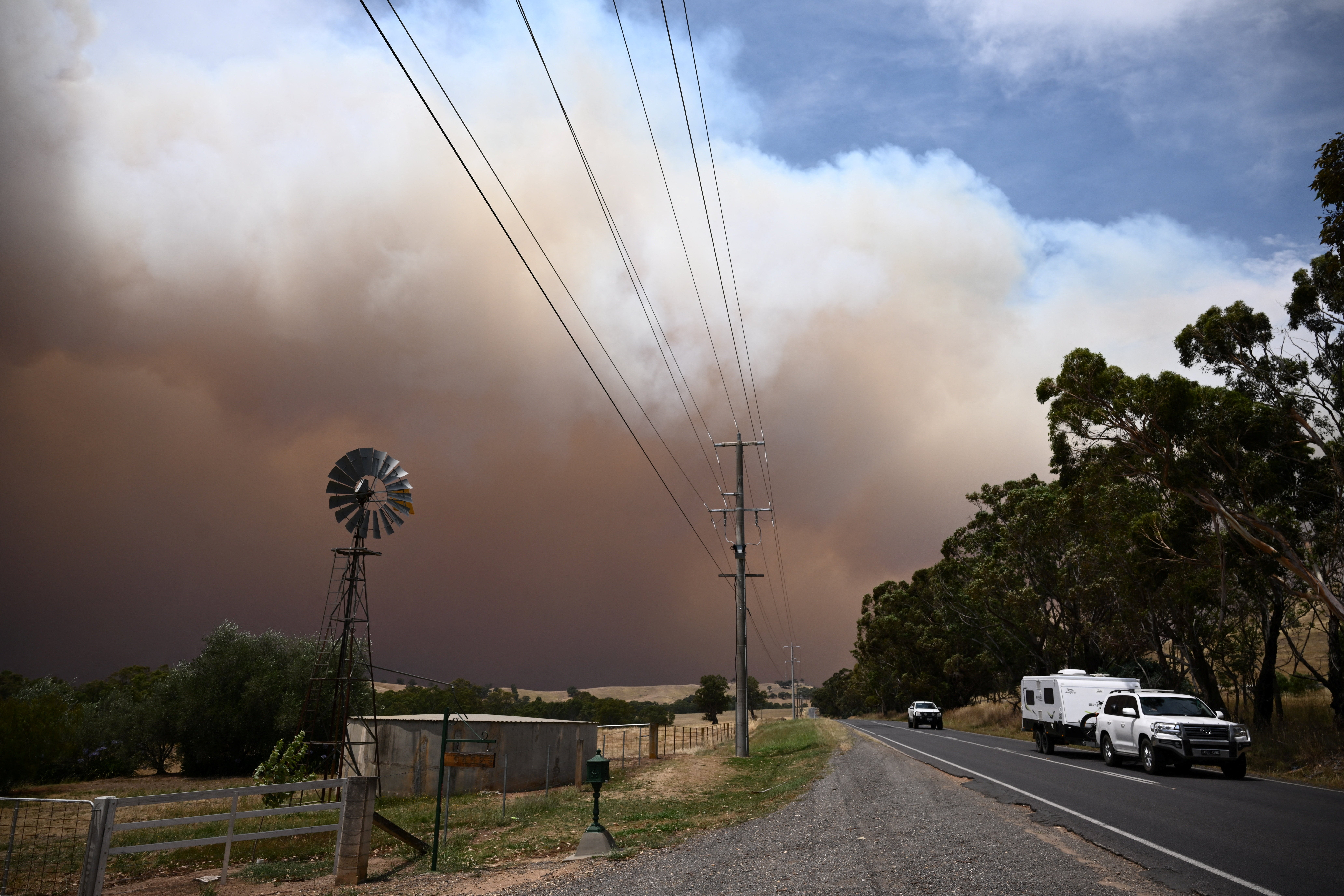 A car towing a caravan drives away from a plume of smoke from the Longwood bushfire, between Seymour and Yea, as out-of-control fires burn in Victoria (AAP)
While previous studies have linked air pollution to mental health outcomes in adults, evidence among children has been more limited.
This analysis suggests children and adolescents may be particularly vulnerable during and after smoke events, with impacts emerging rapidly in the days following exposure rather than weeks later.
The findings come as Australia faces longer and more severe bushfire seasons, driven by the climate crisis as more frequent heat extremes are recorded. Large populations are increasingly exposed to prolonged smoke events, sometimes lasting weeks, raising concerns about cumulative impacts on child development and wellbeing.
The researchers say their results underline the need for public health responses that go beyond short-term advisories about staying indoors. They argue that mental health risks should be considered alongside physical health when authorities respond to bushfire smoke, particularly for children, who may have fewer coping mechanisms and less ability to avoid exposure.
“Urgent action is needed to mitigate the mental health impacts of wildfire air pollution, safeguarding the well-being of future generations in the face of increasing wildfires,” they wrote.
The study also highlights a gap in preparedness. While air quality alerts typically focus on respiratory and cardiovascular risks, the researchers say there is an urgent need to better recognise and mitigate the mental health impacts of bushfire pollution, especially as climate change increases the likelihood of repeat exposure.