
“The cascade of behavioral incidents and mental health crises that frequently results in arrests or disciplinary encounters with NYPD is largely a consequence of underinvestment in youth mental and behavioral healthcare.”
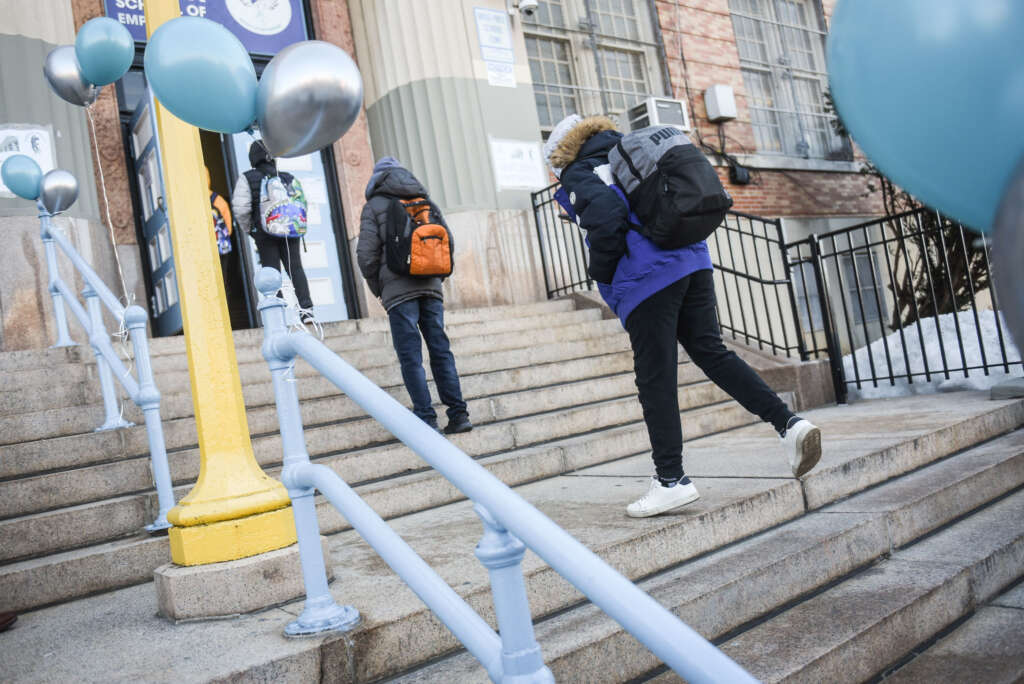 Students head into school in New York City in February 2021. (Michael Appleton/Mayoral Photography Office)

Tens of thousands of New York City children undergo daily metal detector checks and bag searches imposed at school by police personnel. For many students, especially those who already have anxiety surrounding interactions with law enforcement, NYPD presence on campus doesn’t foster a sense of safety—it reinforces a feeling of being constantly watched, judged, and distrusted.
The New York City Public School (NYCPS) system is the largest in country, shaping the lives of nearly 1 million students with a commitment to building “resilient kids [and] safer schools.” In addition to social emotional learning programs for elementary schools and restorative justice practices for middle and high schools, school-based health centers are part of a broader continuum of support that helps youth navigate challenges related to their emotional wellbeing and mental health. School-based health centers provide critical early access to mental health care, improving educational attainment and advancing health equity.
When students act out due to behavioral and emotional health challenges, overburdened teachers and administrators can be quick to resort to punitive measures such as suspensions, expulsions, or even law enforcement involvement, effectively pushing students out of the classroom and into the criminal justice system.
According to a 2023 NYC Council report on law enforcement in the city’s public schools, the youngest student arrested was only 8 years old and the youngest put in handcuffs was 6. Black students are disproportionately more likely to be arrested, restrained, and handcuffed, and also are disproportionately restrained while they are in crisis.
The cascade of behavioral incidents and mental health crises that frequently results in arrests or disciplinary encounters with NYPD is largely a consequence of underinvestment in youth mental and behavioral healthcare.
Access to school-based mental health services reduces behavioral incidents, improves academic performance, and creates a greater sense of safety and belonging among students. Punitive responses to students’ behavioral and mental health crises are not only counterproductive, but also sends the message that students’ struggles are punishable rather than treatable.
As trusted and familiar environments, schools play a foundational role in youth development and are the primary access point for 70 percent of youth who engage in mental health treatment. By making services directly available in schools, barriers disproportionately faced by racially and ethnically marginalized students—such as language, insurance gaps, or cultural stigmas—are reduced, creating a more equitable system of care for all young people.
Youth are in a growing mental and behavioral health crisis and need support. The CDC’s Youth Risk Behavior Survey (YRBS) highlights an overall increase in suicidal thoughts and behaviors among youth from 2013 to 2023. Female and LGBTQ+ students experience disproportionate rates of risks related to substance use, violence, and suicidality. Schools are in a unique position to be able to identify at-risk students and take a proactive, equity-driven approach to early intervention that improves long-term mental health outcomes.
Despite their proven impact, school-based health centers remain under-resourced and lack the capacity to meet the scale of student need: one in five adolescents report having unmet mental health needs, and less than 20 percent of NYC public schools have a school based-health center. In 2024, NYC Health + Hospitals announced an initiative to open 16 new mental health clinics in public schools; in common pursuit, the NYC Council has shown significant support for student mental health and peer led initiatives. What remains missing is a citywide, sustainable strategy that invests in staffing, reimbursement, and infrastructure to ensure every school can offer consistent mental health care.
At the same time, recent Medicaid cuts and ongoing transitions to managed care billing threaten to reduce reimbursement for services and destabilize already limited funding streams. Without deliberate attention to the financial infrastructure that sustains them, school-based health centers cannot expand, or even sustain, care.
High quality, no-cost mental and behavioral health services should be prioritized for all students across the city’s public schools. Reallocating just a fraction of NYCPS’s $300 million budget in school policing would allow the system to move from crisis response to prevention. Further, strengthening and safeguarding Medicaid reimbursement for school-based services would ensure these crucial programs are sustainable and available.
On Jan. 22, Mayor Zohran Mamdani joined NYC Health + Hospitals and MetroPlusHealth to announce the launch of two new adolescent health clinics. His early and strong support for adolescent services, combined with commitments to early-life interventions—such as universal childcare—presents a powerful and timely opportunity to advance school-based health programs as a core strategy for prioritizing the health and wellness of the city’s children.
To truly uphold its commitment to ensuring student safety and school security, NYCPS must shift away from punitive disciplinary responses and show students that their mental health matters. Expanding school-based mental health care means meeting young people where they are and scaling proven models that ensure every student has access to the resources they need to thrive.
Gianna Uy is a Master of Public Health candidate in health policy and management at Columbia University, with a certificate in social determinants of health and a focus on mental health policy and research. Dr. Robert Fullilove is a professor of sociomedical sciences and the associate dean for community and minority affairs at Columbia University’s Mailman School of Public Health.
We want to hear from you!
Take a short anonymous survey to help us deliver content to empower our community.