
A free mental health clinic opened in Sanford this month offering counseling in a neighborhood with few therapists and many residents who cannot afford care.
The Mental Health Association of Central Florida started the Outlook Clinic on Magnolia Avenue near Centennial Park, modeled after a free clinic it has operated in downtown Orlando for 15 years.
Without insurance, counseling costs between $100 to $300 an hour, according to the National Mental Health Hotline.
“And most people need to see a therapist for 6 to 12 months, sometimes longer, depending on what the issue is and that can obviously eat into a family’s income,” said Marni Stahlman, CEO of the association.
A recent health needs assessment conducted by area hospitals found Sanford has a shortage of mental health services. And the available options are often financially out-of-reach for those without insurance and costly even for those who have coverage as insurance rarely pays the full bill.
But now that help is available at no cost in the Sanford Historic Neighborhood. The new clinic is inside The Neighborhood Co-op, a historic building on the property of First United Methodist Church of Sanford now home to multiple nonprofits.
The association offers mental health counseling, family therapy, medication management and telehealth visits, all free to individuals and families with an annual household income below a certain threshold, equivalent to $99,000 or less for a family of four.
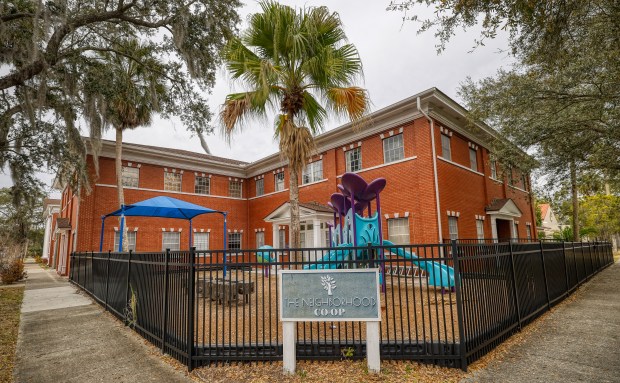 The Neighborhood Co-Op, which is home to the Mental Health Association of Central Florida Outlook Clinic in Sanford, on Wednesday, February 11, 2026. The clinic offers free mental health counseling and other services to uninsured or underinsured families who make 300% or less of the Federal Poverty Level. (Ricardo Ramirez Buxeda/ Orlando Sentinel)
Founded in the 1940s as the Central Florida Hygiene Society, the association initially offered mental health care to incarcerated and institutionalized people.
In 2011, it opened its first free clinic on Church Street in downtown Orlando, also called the Outlook Clinic, that treats about 5,000 people a year.
State and local governments and private donations fund the services at both clinics, which include outreach efforts, too. For the new Sanford location, AdventHealth and the Florida Department of Children and Families contributed a combined $425,000.
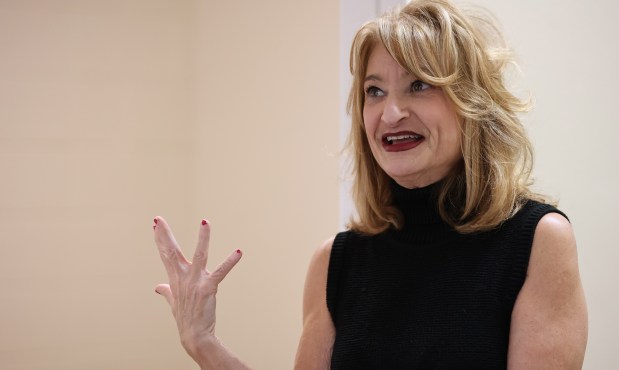 Marni Stahlman gives a tour of Mental Health Association of Central Florida Outlook Clinic in Sanford, on Wednesday, February 11, 2026. The clinic offers free mental health counseling and other services to uninsured or underinsured families who make 300% or less of the Federal Poverty Level. (Ricardo Ramirez Buxeda/ Orlando Sentinel)
Nemours Children’s Hospital gives the association $25,000 a year to provide services to four of the Boys & Girls Clubs of Central Florida’s Orlando locations.
In those clubs, counselors host weekly workshops for children on topics like bullying, sportsmanship and confidence building.
“We basically learn how to calm down,” said Chason Crawford, 11, who attends a club near downtown Orlando, in a phone interview. “If you get upset you can either go to the bathroom to wash your face or just take a 10-second breather or go vent to one of your parents.”
Shamel Akins, director of that club, said she has seen changes in the children since the workshops began two years ago. The counselors also help Akins and her staff learn to more effectively interact with the children.
“The most important thing, as a director, that I’ve learned is more patience and understanding,” Akins said. “When a kid may be moody or upset or not having the best day, it doesn’t necessarily mean that it happened at the club. Sometimes kids are having rough days because of what has happened at school or what has happened at home.”
At the Sanford clinic, four therapy rooms have been set up.
The association’s 20 clinical interns will travel between Orlando and Sanford to offer counseling sessions at both sites, under the supervision of a small team of social workers and licensed mental health counselors. The association also has nurse practitioners, who can prescribe medications, and case workers who connect families to other social services.
Orange County gives the association $20,000 a year to pay for prescription drugs for those with more severe conditions like bipolar disorder and schizophrenia. About 90 individuals a month get free prescription drugs under that partnership.
“By providing these medications, oftentimes, that’s the difference between keeping them out of jail or out of the hospital,” Stahlman said. “Because when you don’t have access to those medications, that’s usually when a crisis will occur.”
The association hopes to find more local partners in Sanford to help extend its reach there – and to get the word out that it is now open.
Those seeking care can visit the clinic’s website to book an appointment, and that includes families with young children. “If we teach them at a very young age strategies for how to manage our emotions, how to manage our well-being, and how to manage our mental state, that can lead to good habits as we grow older,” Stahlman said.