
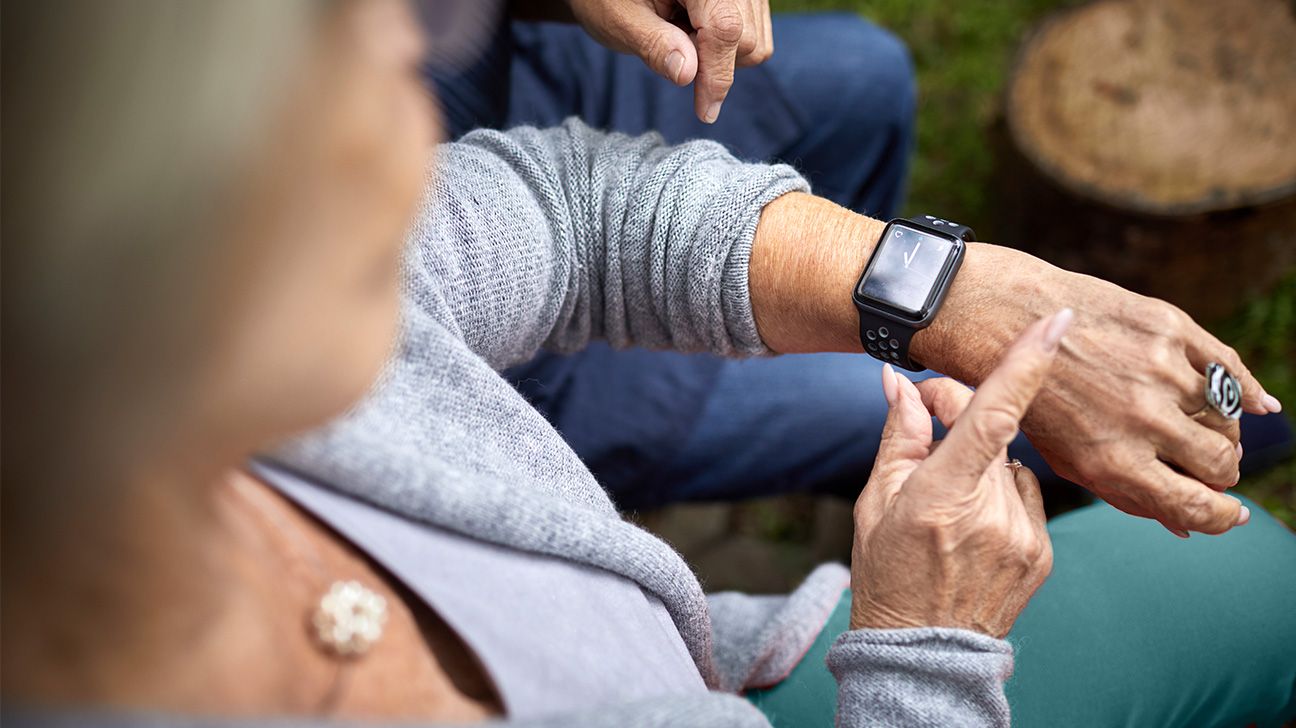
 Share on PinterestWearable trackers may help detect depression relapse before it occurs by tracking sleep, a study shows. Image Credit: Oliver Rossi/Getty ImagesA recent study has found that using a wearable tracker may be able to detect depression relapse before it occurs via sleep patterns. Sleep and depression are known to be linked. Sleep disturbances can be both a symptom and a risk factor for depression. Detecting a depression relapse before it occurs may help prevent the relapse altogether.
New research from McMaster University suggested that a wrist-worn device, such as a smart watch, may be able to signal when a person is at an increased risk of a relapse of major depressive disorder (MDD).
MDD is also referred to as “clinical depression.” It is a common mental health condition that involves persistent sadness and a loss of interest in activities, impacting mood, behavior, and physical functions.
The study, recently published in JAMA Psychiatry, highlighted a simple and effective way to monitor the risk of relapse in people with MDD.
Wearable trackers could even detect the probability of a relapse weeks or months before it occurs. Up to around 60% of people with MDD will experience at least one relapse episode in their lifetime.
“Advances in digital technology and AI algorithms have a great potential for relapse prevention in mental health,” Benicio Frey, MD, professor in the Department of Psychiatry and Behavioural Neurosciences at McMaster, and a co-author of the study, said in a press release.
“Imagine a future where a smartwatch can warn people with depression: ‘A new episode of depression is very likely coming within the next four weeks. How about seeing your health-care provider?’” he continued.
The study followed 93 adults from across Canada who had previously recovered from depression. Each participant wore a research-grade actigraphy device, such as a FitBit or Apple Watch.
“This is a great study, and [a] theme which wonderfully presages the upcoming AI analysis of biometrics to determine human mood and health states,” said Alex Dimitriu, MD, double board certified in Psychiatry and Sleep Medicine and founder of Menlo Park Psychiatry & Sleep Medicine, who was not involved in the study.
“Our biology, especially mental health-related, is often quite a fuzzy signal — there [are] good days, bad days, stress, sleep, and random life events which can make our moods look all over the place. Tracking with wearables over longer periods of time can begin to expose patterns which would otherwise be hard to detect. In this study, variance in sleep was shown to effectively predict depressive relapse,” he said.
Participants wore the device for 1 to 2 years. This generated over 32,000 days of activity and sleep data.
The researchers found the following key points from the data collected:
Participants who had the most irregular sleep profiles showed nearly double the risk of relapse. The strongest predictor for relapse was when less of a difference between daytime activity and nighttime rest was detected. The amount of time a person spent awake at night after having fallen asleep predicted an increased risk of relapse. Sleep schedules of individuals appeared to grow more erratic before a relapse occurred.
This study may highlight the untapped potential of wearable technology for people recovering from MDD. This is because this technology is able to passively collect data and provide continuous insight between clinical appointments.
“Depression is a slow drift before it’s a crisis, and this study confirms that sleep is where that drift shows up first,” said Rod Mitchell, a therapist and founder of Emotions Therapy Calgary, who was not involved in the study.
“What makes the findings particularly compelling is that metrics like relative amplitude remained predictive even after adjusting for current depression scores. That means sleep disruption isn’t just a symptom of worsening mood – it’s an early warning signal operating on its own biological track,” he told Healthline.
“Essentially, a wearable on your wrist can act as a seismograph for mental health, detecting tremors before the emotional earthquake hits,” Mitchell said.
The researchers noted that this study offers opportunities for health system innovation. For example, wearable-derived alerts could help clinicians target care to those most at risk. This could help improve outcomes and reduce the burden of recurrent episodes.
“Tracking sleep quality … is a useful way to get a general sense of sleep quality,” said Sarathi Bhattacharyya, MD, pulmonologist, sleep medicine specialist, and medical director of MemorialCare Sleep Disorders Center at Long Beach Medical Center in Long Beach, CA, who was not involved in the study.
“This is certainly useful for informing provider decisions about adequate management of mood disorders. Commercially available wearables are already marketing their sleep tracking abilities, and patients often use this information to guide their decision to seek care for their sleep,” he told Healthline.
Research has shown a bidirectional connection between sleep and depression.
“Generally, there has been a long-observed and studied association between poor sleep quality and worsening symptoms of mood disorders,” said Bhattacharyya.
Insomnia is one of the most common sleep complaints among those with depression. It occurs in 80% to 90% of people with depression.
Research also shows that having insomnia can increase a person’s risk of developing depression twofold.
This shows that treating insomnia and tracking sleep patterns may help reduce a person’s risk of developing or relapsing into depression, as the recent study suggested.
“Sleep is the foundation of everything mind-related. Make it a priority, and optimize it as much as possible,” noted Dimitriu.
Sleep difficulties and disturbances are just one aspect of MDD.
persistent sad, anxious, or “empty” moodfeelings of frustration, irritability, or restlessnessfeelings of hopelessness or pessimismloss of interest or pleasure in hobbies or activitiesfeelings of guilt, worthlessness, or helplessnessdifficulty concentrating, remembering, or making decisionsfatigue, lack of energy, or feeling slowed downchanges in appetite or unplanned weight changesphysical aches, pains, headaches, cramps, or digestive problems that do not have another explanationthoughts of death or suicide, or suicide attempts
Not everyone with depression will experience all these symptoms or will experience them in the same way.
To be diagnosed with depression, you must experience symptoms most of the day, nearly every day, for two weeks.
If you are experiencing symptoms of depression that are persistent, consider speaking with a mental health or healthcare professional.