
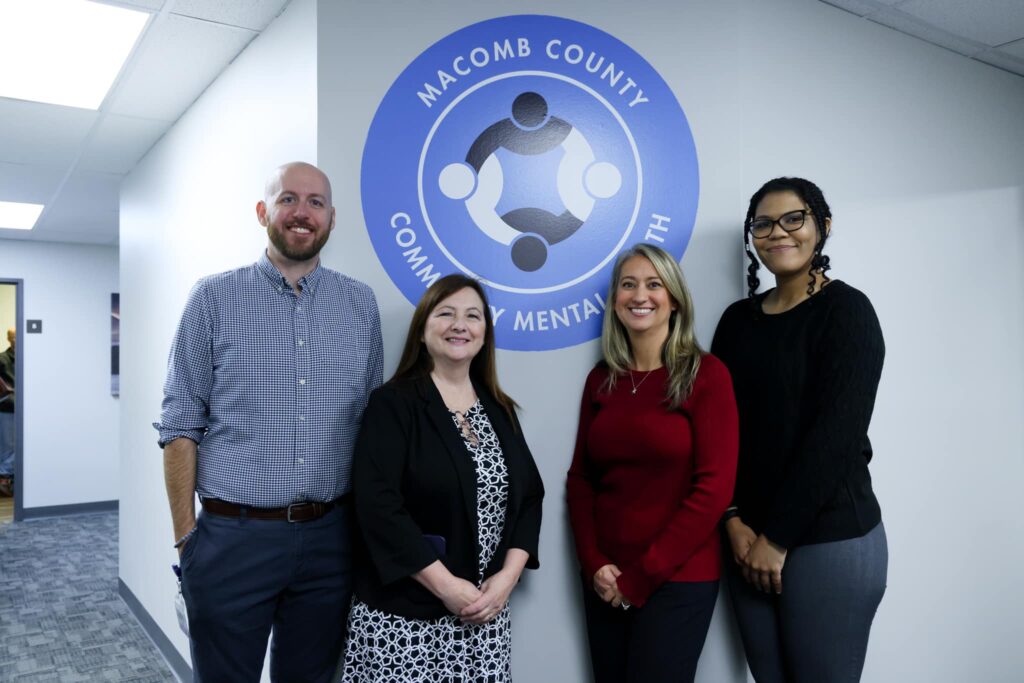
 MCCMH staff from left to right: Adam McHenry (SUD Administrator), Helen Klingert (COO), Nicole Gabriel (Director of Substance Use) and Teresa Crosby (SUD Coordinator). Courtesy.
Sponsored content written by Macomb County Community Mental Health.
Substance use disorder (SUD) doesn’t just affect a certain type of person. It can impact people of any age, background, or walk of life, and does so in differing, nuanced ways. But regardless of the situation, recovery is possible.
In 2024, there were 242 drug-related deaths in Macomb County. Many people who find themselves struggling don’t know where to begin seeking support – and some may not even realize their intake or urges are classified as SUD.
A SUD occurs when alcohol or drug use significantly impacts a person’s health, mood, or responsibilities at work, school, or home. It can directly alter one’s brain and behavior, making it extremely challenging to control the intake of alcohol or drugs.
Barriers to Care
Between stigma and perceived cost, many community members don’t pursue the support they need. In 2022, the Centers for Disease Control and Prevention (CDC) reported that among the nearly 55 million people who needed substance use treatment, only 13.1 million received it. That’s just 23%.
SUD is a real, treatable medical condition. Individuals struggling deserve tangible resources and support, which are available through Macomb County Community Mental Health (MCCMH) and other mental health care providers across the state.
Across Macomb County, MCCMH puts people first. The team works to break down stigma by showing up in our community and reminding residents that SUD services are always within reach, regardless of income or insurance status.
The Power of Community: A Collaborative Network
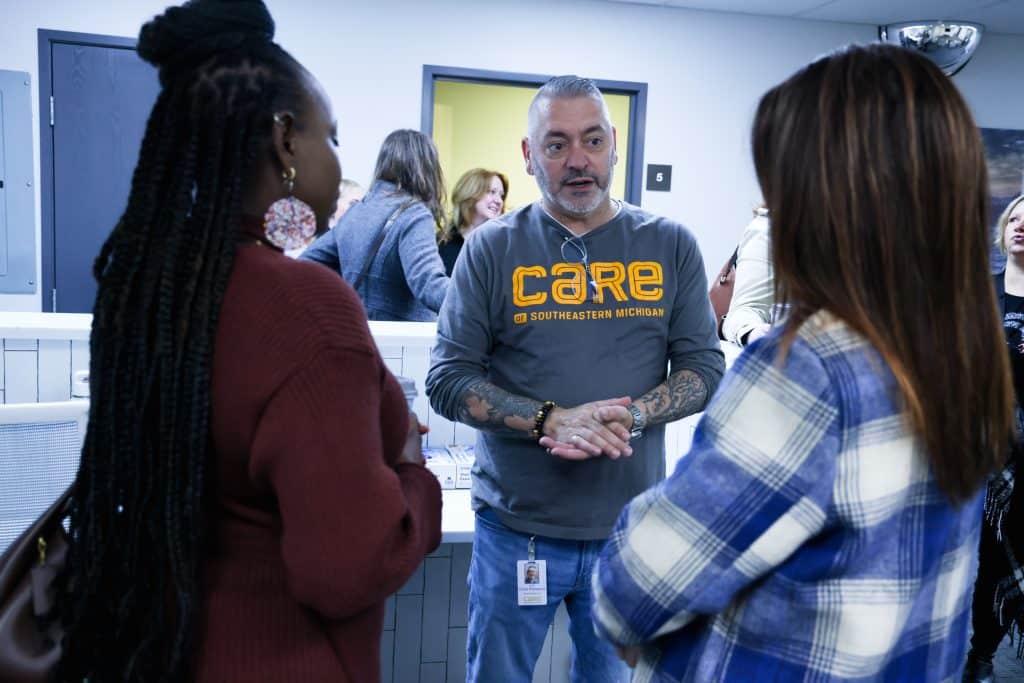 Chris Franquist (CARE of Southeastern MI) chats with MCCMH team members at the ribbon cutting of Macomb County’s first Substance Use Engagement Center. Courtesy.
Community support and advocacy efforts are central to our work, allowing our impact to reach far and wide. One partner at the helm is CARE of Southeastern Michigan, which focuses on strengthening communities and providing real-life solutions from early childhood to adulthood.
“CARE of Southeastern Michigan, in partnership with MCCMH, is dedicated to fostering a healthier community,” said Susan Styf, president and CEO of CARE of Southeastern Michigan. “We are committed to reducing the stigma associated with seeking assistance for substance use and misuse by offering programs that are welcoming and supportive of the people we serve.”
Available Support
MCCMH provides SUD prevention, treatment, and recovery services, tailored to each individual’s unique needs.
Prevention services aim to provide education, reduce risky behaviors, and strengthen skills and resilience across the community. A shared understanding can make a real difference in helping people avoid exposure and know where to go for assistance.
Services through MCCMH include:
Evidence-Based Prevention Programs: In collaboration with MCCMH’s community partners, these include parenting classes, afterschool programs, and classroom education on topics such as Fetal Alcohol Syndrome (FASD), drug trends, life skills, and more.
Tobacco Prevention and Synar Activities: Including ways to reduce childhood tobacco exposure and access.
Overdose Education and Naloxone Training: Regular webinars teach individuals how to act if someone is overdosing, along with where to obtain Naloxone and how to use it.
Community Organizing Through Coalitions: These boots-on-the-ground efforts include the Sterling Heights Drug Free Coalition, Northern Macomb Prevention Coalition, Warren-Center Line Prevention Coalition, and other local coalitions that provide community education and collaboration.
SUD treatment and recovery options are available across a full continuum of care, including:
Early intervention
Medications for opioid use disorders
Outpatient treatment
Withdrawal management and residential treatment
Recovery housing
Peer Recovery Coaching
Substance Use Engagement Center
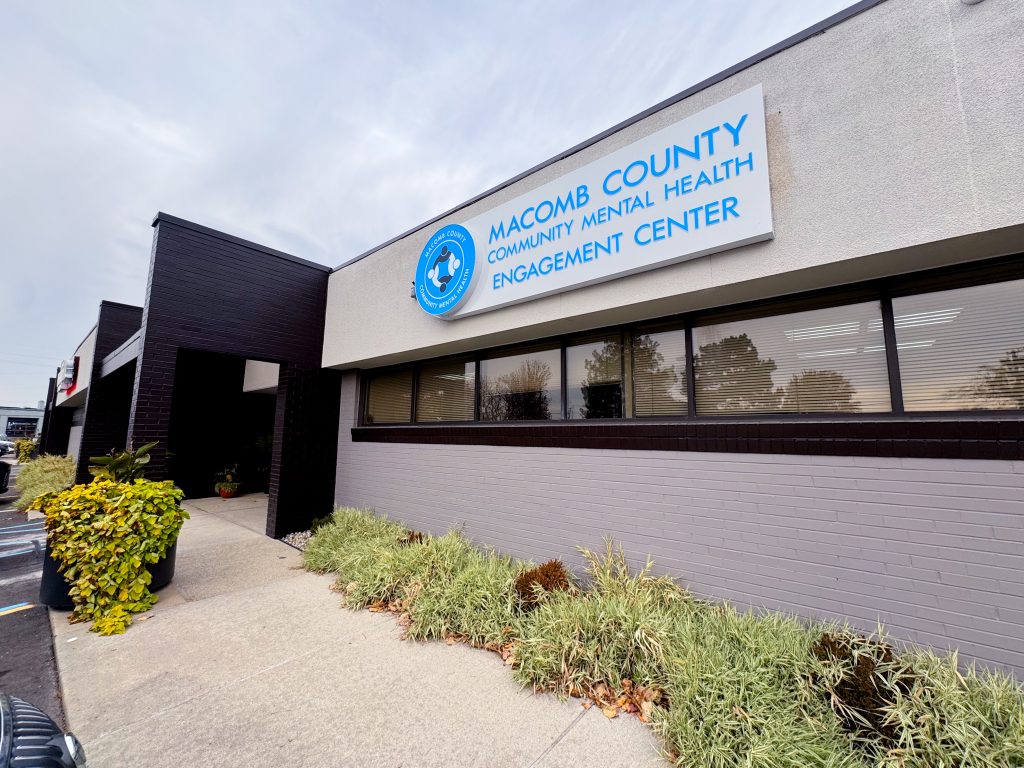 MCCMH’s Substance Use Engagement Center. Courtesy.
In collaboration with CARE of Southeastern Michigan, MCCMH officially opened the county’s first Substance Use Engagement Center in late 2025 – offering 24/7 crisis intervention for substance-use-related challenges. Individuals who visit the center are provided with a safe, welcoming place to stabilize, have a meal, take a shower, and speak to onsite Peer Recovery Coaches.
Once individuals are ready to leave the center, they’re connected with substance use treatment services and referrals to other recovery resources, housing, or medical assistance to effectively begin their path to recovery.
“The Engagement Center embodies our person‑centered approach to care, ensuring individuals in crisis are supported with dignity and guided toward the next steps in their recovery,” said Nicole Gabriel, Director of Substance Use at MCCMH. “It’s a place where people are met with understanding and given the chance to move forward.”
Since its opening, the center has supported over 40 residents.
Recovery is Possible
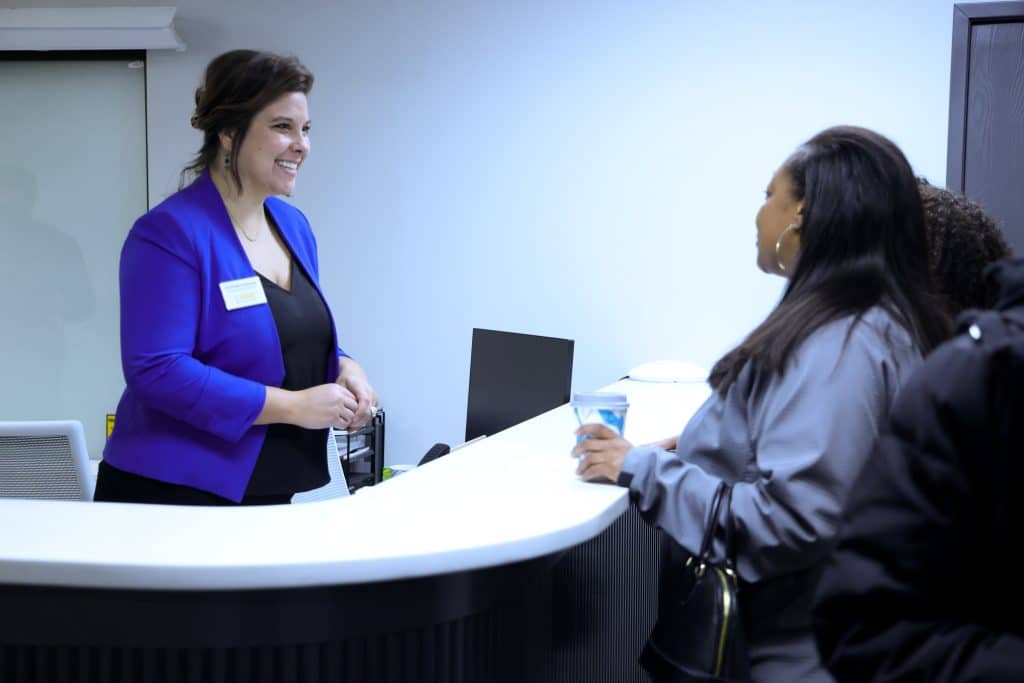 MCCMH’s SUD Engagement Center, in collaboration with CARE, has served over 40 residents to date. Courtesy.
Everyone is on a different recovery journey, moving at their own pace with individual considerations. Organizations like MCCMH are here to meet community members where they are, walk alongside them, and connect them to the proper resources along the way.
If you or someone you know is struggling with substance use, or would simply like to learn more, contact MCCMH at 855-996-2264 or visit mccmh.net.
For behavioral health crisis situations, or a referral to the SUD Engagement Center, call the 24/7 MCCMH Crisis Line at 586-307-9100.