
When people think about research, they often picture scientists in white coats, pipette in hand, working in labs and often far removed from the communities their work will ultimately serve. While this image may hold true in some fields, it rarely reflects the reality of youth psychosocial research, where distance from communities can present serious challenges.
As behavioral health researchers, our goal is to use scientific knowledge to improve the well-being of individuals, families and communities. Yet traditional research approaches often focus narrowly on individuals, overlooking the social, cultural and structural forces that shape mental health and access to care. This disconnect helps explain why some evidence-based interventions struggle to work in real-world settings.
Community-based participatory research (CBPR) offers a powerful alternative. CBPR emphasizes collaboration between researchers and community members, shared decision-making and joint ownership of both the research process and its outcomes. Rather than researchers making decisions from afar, CBPR actively involves community stakeholders (such as youth, parents, educators, clinicians and community leaders) throughout the research process. This approach helps ensure that research is grounded in lived experience and responsive to real community needs.
What is CBPR?
CBPR is a collaborative research framework that treats community members as partners rather than subjects. A defining strength of CBPR is that it creates space for knowledge to flow in both directions. Within these academic-community partnerships, researchers bring scientific training while community members bring lived experience and insight into what works (and what does not) in everyday life. CBPR also is flexible rather than one-size-fits-all. Communities can be involved in different ways depending on their interests, capacity and context.
In practice, CBPR may include community or youth advisory boards, listening sessions, co-designing interventions, selecting outcome measures or helping interpret findings. Research consistently shows that community-engaged studies are more likely to reach underserved populations and produce results that translate into real policy and practice change. 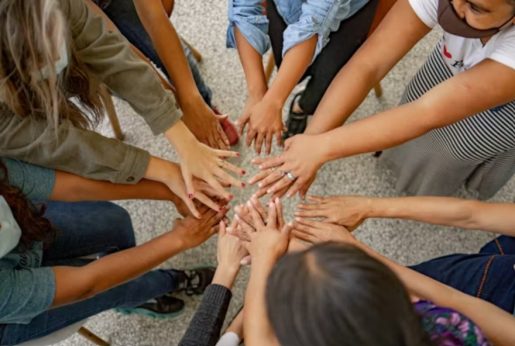
Why isn’t CBPR used more often?
Despite its benefits, CBPR remains uncommon in psychology research. This is not because it lacks value, but because it takes time and effort to do well. Building genuine partnerships requires trust, open communication and a willingness to share power. Researchers must also balance scientific rigor with community priorities, which can be a long and challenging process. However, this very balance is what makes CBPR so impactful, pushing research beyond theory and into practice.
CBPR in action: Standing Up for Mental Health
In our own work, CBPR has guided every stage of Standing Up for Mental Health, an ongoing study examining a cross-age peer mentoring intervention for historically minoritized youth. The project began with a collaboration between Baylor College of Medicine and StandOUT Youth, Inc., a Houston-based mentoring organization. Community partners were involved from the grant-writing stage through intervention development, implementation and refinement. A community advisory board has helped adapt study procedures, improve measurement tools and address real-world challenges. As the study moves forward, this collaboration will continue to shape how findings are interpreted and how the program can be expanded to reach more youth.
How CBPR can influence policy and systems change
By amplifying the voices and real-life experiences of those most affected, CBPR findings can especially be compelling for policymakers, healthcare leaders and other key stakeholders. In many instances, research participants are also constituents in local, state, or national contexts and their perspectives can help shape policies that reflect real community needs. In youth mental health, this approach is especially important. CBPR-generated evidence can help guide decisions about school-based mental health programming, community mentoring initiatives and housing and food insecurity to address health disparities. By engaging youth, families and community partners throughout the research process, CBPR not only produces stronger science but also creates pathways for translating findings into policy, service delivery and sustainable systems change.
It has been generally discussed that it takes an average of 17 years for biomedical research to transition to practice. While the “bench to bedside” lag is improving, the gap is still a major challenge for youth mental health research, where delays can result in missed opportunities for adoption and adaptation. CBPR helps address this problem by involving community partners from the outset, ensuring that interventions are acceptable and responsive to real-world contexts. CBPR reminds us that powerful and impactful science happens when researchers and communities work together. By sharing power and valuing lived experience and community context, CBPR can help produce findings that translate into real-world impact.
By Dr. Ogechi “Cynthia” Onyeka, assistant professor, Menninger Department of Psychiatry and Behavioral Sciences, Baylor College of Medicine