
Reading time: 3 minutes
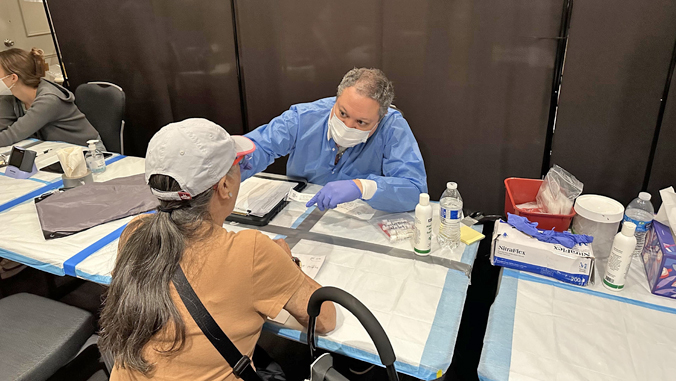
Two new grants totaling nearly $800,000 will support the University of Hawaiʻi’s ongoing Maui Wildfire Exposure Study (MauiWES), a long-term effort tracking the health impacts of the 2023 Lahaina fires on Maui residents.
The Hawaiʻi Community Foundation has awarded $450,000 through its Maui Strong Fund, and Kaiser Permanente has committed $337,500 to the study. The funding will help sustain health screenings, follow-up visits and community outreach as researchers continue monitoring the physical and mental health effects of wildfire exposure.
“This support allows us to keep showing up for the Maui community over the long term,” said study co-lead Ruben Juarez, professor at the UH Economic Research Organization (UHERO). “The willingness of residents to participate and return for follow-up visits reflects a level of trust that is essential for understanding the full health impacts of the fires—and for responding in ways that truly help families over time.”
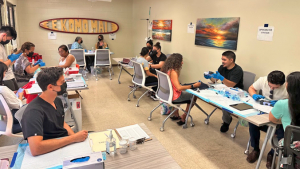 A Maui Wildfire Exposure Study event in 2024
The Hawaiʻi Community Foundation funding was awarded through the Maui Recovery Funders Collaborative, which was established in response to the Maui wildfires. The collaborative coordinates a variety of funders to streamline funding opportunities for community service providers and organizations.
“The Hawaiʻi Community Foundation, through its Maui Strong Fund, is a proud participant of the Maui Recovery Funders Collaborative, which has awarded over $9 million in funds to support organizations that are assisting those impacted by the fires,” said HCF CEO and President Terry George. “Efforts like the MauiWES not only help to provide continued health and mental health support to survivors but also help us to be better prepared and ultimately more resilient in the face of future disasters.”
“Kaiser Permanente’s commitment to funding the Maui Wildfire Exposure Study reflects the belief that strong, community‑focused research should guide long‑term recovery and future preparedness,” said David Tumilowicz, senior director of marketing and community health, Kaiser Permanente. “As climate‑driven wildfires become more frequent and destructive, we need clear, reliable health and environmental data to understand exposure risks, improve clinical care, and strengthen public health systems throughout the United States. MauiWES is providing essential insights that support Maui’s healing, while helping communities everywhere become more resilient in the face of future disasters.”
The grants arrive at an important moment for the project. In December 2025, MauiWES surpassed its 3,000th completed appointment. More than 2,000 participants have taken part since the study began, and more than 1,000 have already returned for follow-up visits, reflecting sustained engagement and growing trust within the community.
Launched after the deadly wildfires that destroyed large parts of Lahaina, MauiWES is a collaboration among UHERO, John A. Burns School of Medicine (JABSOM) and UH Maui College. The study provides free health screenings while generating data to better understand the long-term health consequences of wildfire smoke, environmental exposure and disaster-related stress.
Health challenges continue for residents
The study’s latest findings, published in August 2025 in JAMA Network Open, show that health challenges persist nearly two years after the fires. Many participants reported ongoing symptoms such as fatigue and breathing problems, alongside measurable differences in lung function indicators among those living closest to the burn zone. Mental health impacts also remain widespread, with a substantial share of participants screening positive for depressive symptoms and anxiety.
At the same time, researchers found that strong social support was linked to better mental well-being and fewer days of poor health, even among those with high wildfire exposure. While social connections supported mental health, they did not offset physical effects, highlighting the need for continued medical monitoring and care.
“These new grants come at a critical time,” said co-lead Alika Maunakea, professor in the Department of Anatomy, Biochemistry and Physiology at JABSOM. “They ensure we can continue monitoring both physical and mental health effects more than two years after the fires, while strengthening the community-based approach that our findings show is critical to recovery.”
Juarez and Maunakea recently returned from the first Los Angeles Fires Health Research Conference, held in commemoration of the first anniversary of the fires, where they presented findings from MauiWES to help inform the response to the Los Angeles fires. Teams from University of Southern California, University of California, Los Angeles, Stanford University and Harvard University are exploring similar cohort-based approaches informed by lessons from MauiWES for the Altadena, Eaton and Palisades fires.