
A space designed with humanity at its core
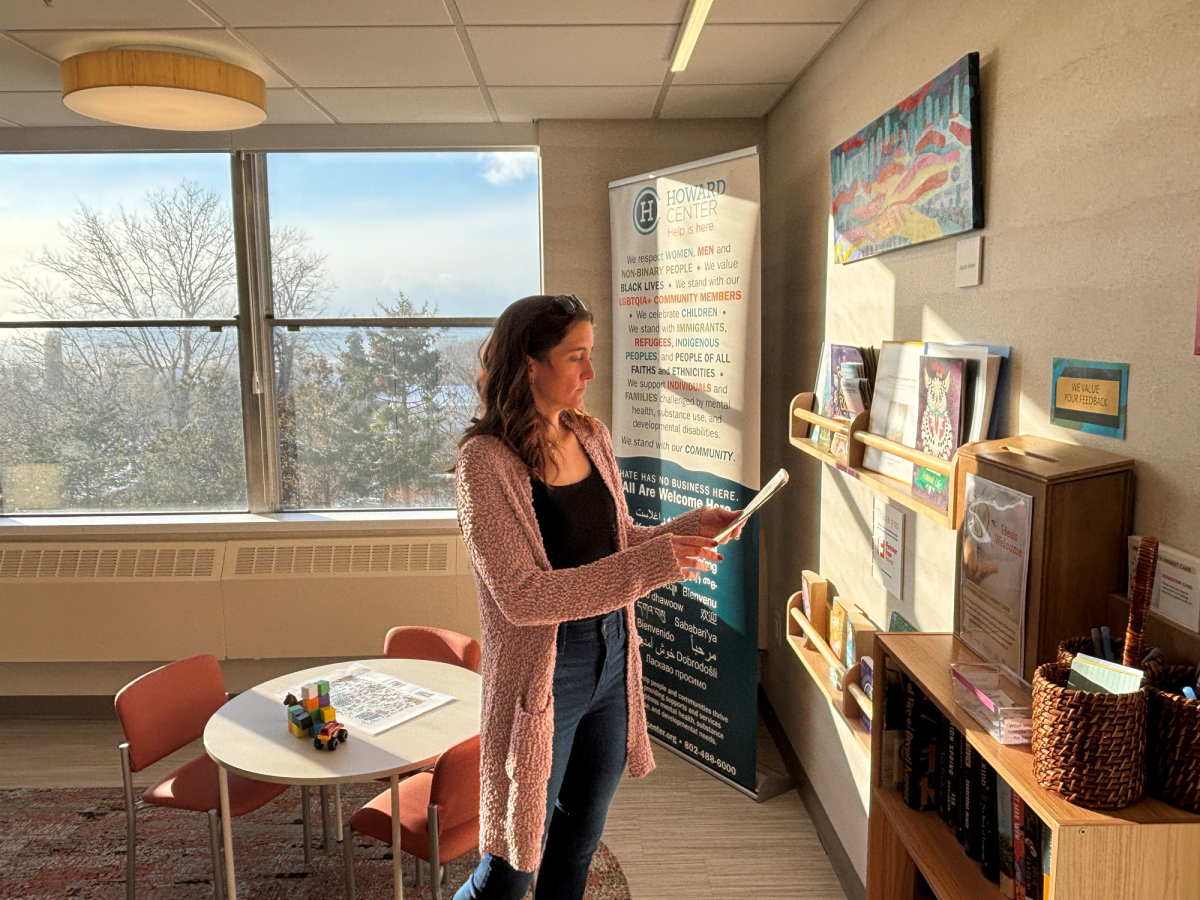
At the heart of Chittenden County’s Mental Health Urgent Care (MHUC) is a people-first philosophy to mental health care. For starters, visitors are considered guests, not patients, the walls are covered in murals and artwork, and the fourth-floor space is full of light and looks out over Burlington and Lake Champlain. It’s designed intentionally, meant to be warm and welcoming. Cushy couches line the reception area, and a sign greets guests in 20 languages. The effect is intentional: this is a calming place built to lower stress, not heighten it.
The space is operated as a collaboration between Howard Center, a nonprofit community-based agency, and part of the Vermont Care Partners (VCP) network, and the University of Vermont Medical Center, as well as partners at the Community Health Centers and Pathways Vermont. MHUC was envisioned as an accessible option for Vermonters to access mental health care. It’s doing just that, providing timely and compassionate support for individuals before a crisis escalates, and is doing so in a setting that feels more like a friend’s living room than a medical facility.
“The number one thing we want Vermonters to know is that we are here for you,” says Tim Durney, director of MHUC. “If you are wondering if you need help or how to get help, come in. If it’s a crisis to you, it’s a crisis to us.”
Meeting people where they are
MHUC is a place people can walk into without an appointment when they know something isn’t right, even if they can’t yet put it into words. Located on the fourth floor of 1 South Prospect Street, guests arrive at MHUC from all walks of life and from all over Vermont. While some have years of experience managing their mental health, others are seeking help for the very first time.
At the center of MHUC’s approach is Howard Center’s long-standing commitment to person-centered, trauma-informed care. Conversations unfold without rushing or judgment. Staff take time to understand what’s happening in a guest’s life, including housing stability, personal stressors, medication changes, and past experiences with care.
Finding stability through connection
For Burlington resident Gabby Makatura, MHUC became a turning point during a period marked by anxiety and uncertainty. She recently shared her story with UVM Health, available here, noting she arrived unsure of what kind of help she needed but knowing that she couldn’t manage things on her own any longer.
“I finally felt seen,” Makatura said of her experience. “Someone was really listening.”
Through conversations with MHUC clinicians and peer supports, many connected through Howard Center services, Makatura began to understand her experiences in a new way. The care she received didn’t end with the immediate relief she received on day one at MHUC, rather it opened a path toward longer-term stability.
“This space helped me find a stable path forward,” she shared.
Her experience reflects the goal Howard Center and partners have worked towards with the investment in MHUC: early interventions that prevent deeper crises, avoidable and sometimes traumatic emergency room visits, while also helping people connect with ongoing treatment and support options.
A hub within a larger system of care
Once staff understand a guest’s needs, MHUC often provides same-day support and help connect people to longer-term services. Many of these are rooted in Howard Center’s extensive network of services, including counseling, care management, or community-based programs tailored to an individual’s situation.
Guests can also access peer support through Pathways Vermont, and primary and wound care services from Community Health Centers of Burlington. These partnerships allow MHUC to serve as a true point of integrated and coordinated services.
When MHUC closes for the evening, care continues. Staff provide warm handoffs to the Howard Center’s 24/7 First Call for Chittenden County, ensuring overnight support when needed and welcoming guests back the next day for follow-up. In the rare instances where a higher level of care is needed, staff help arrange transportation to the UVM Medical Center’s emergency department, with the same compassion and people-centered approach central to MHUC’s mission.
Reducing stigma, expanding access
Access to mental health care remains a challenge in Vermont. Stigma still prevents many people from seeking help. MHUC aims to be part of a meaningful and necessary societal shift. By expanding what urgent mental health care can look like, Vermonters are able to access these services as an early, supportive step, not as a last resort.
“What we need most of all is for Vermonters to know we are here, and to take the brave step of walking in the door,” added Durney. “And that can be really hard when you’re in crisis. But we’re here for you, and we’ll figure it out together.”
For many Vermonters, that message, and the welcoming, open door, is making all the difference. And, says Durney, “we want you to come in.”
MHUC is fully funded through 2027. Guests will not receive charges or bills during this period, except for physical health medical care services covered by insurance.
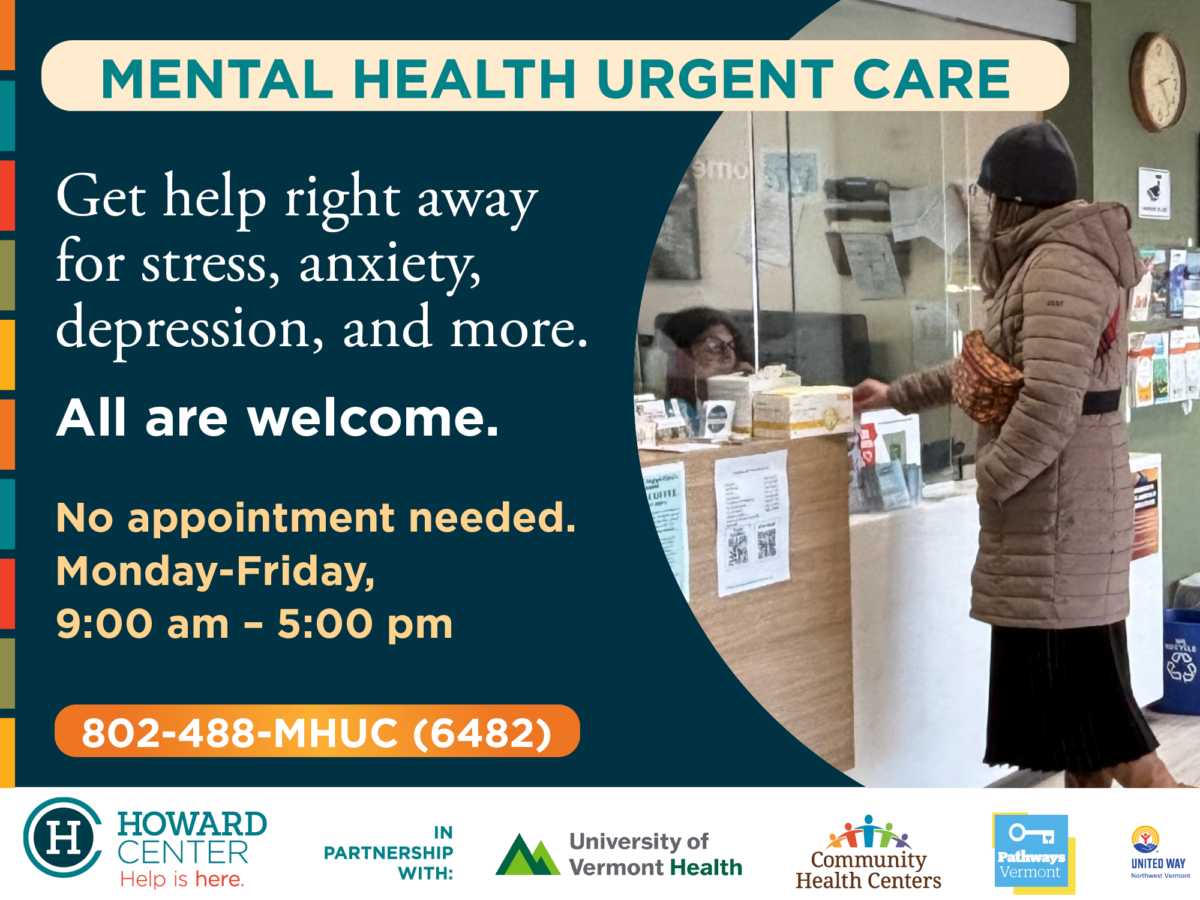
Vermonters, Mental Health Urgent Care is open 9 am-5 pm, Monday-Friday at 1 South Prospect Street, Burlington VT. You don’t need an appointment to come in and walk-ins are encouraged. Parking is free and the site is easily accessible by public transportation.
For 24/7 care, the First Call for Chittenden County line is available at all hours to individuals and families. Call us at 802-488-7777 or call 988. Additional suicide prevention resources are available here.

About Howard Center: Howard Center has a long and rich history as a trusted provider. With a legacy spanning over 160 years, Howard Center has been providing progressive, compassionate, high quality, person-centered care and treatment for those members of our community in need. Founded in 1865 as an agency serving the children of the destitute, it now offers treatment and support for mental health, substance use, and developmental disabilities across the life span.
This article is part of a series, collaboratively produced by members of Vermont Care Partners, a statewide network of sixteen non-profit, community-based agencies providing mental health, substance use, and intellectual and developmental disability supports.