
This article is brought to you by Freedom Financial.

Suicide. Health crises. Mental health issues. All of them found a home in the Howard County Jail in 2025. And when the sheriff approached the Howard County Council in January, the board balked at the price tag associated with providing care.
Fortunately, the council reconsidered its position in February and authorized the hiring of two full-time nurses to help address the healthcare needs that arise overnight and on weekends, which previously went unmet.
Sheriff Jerry Asher spoke to the council at its Feb. 24 meeting, presuming the members understood the need and attempting to defray the costs slightly.
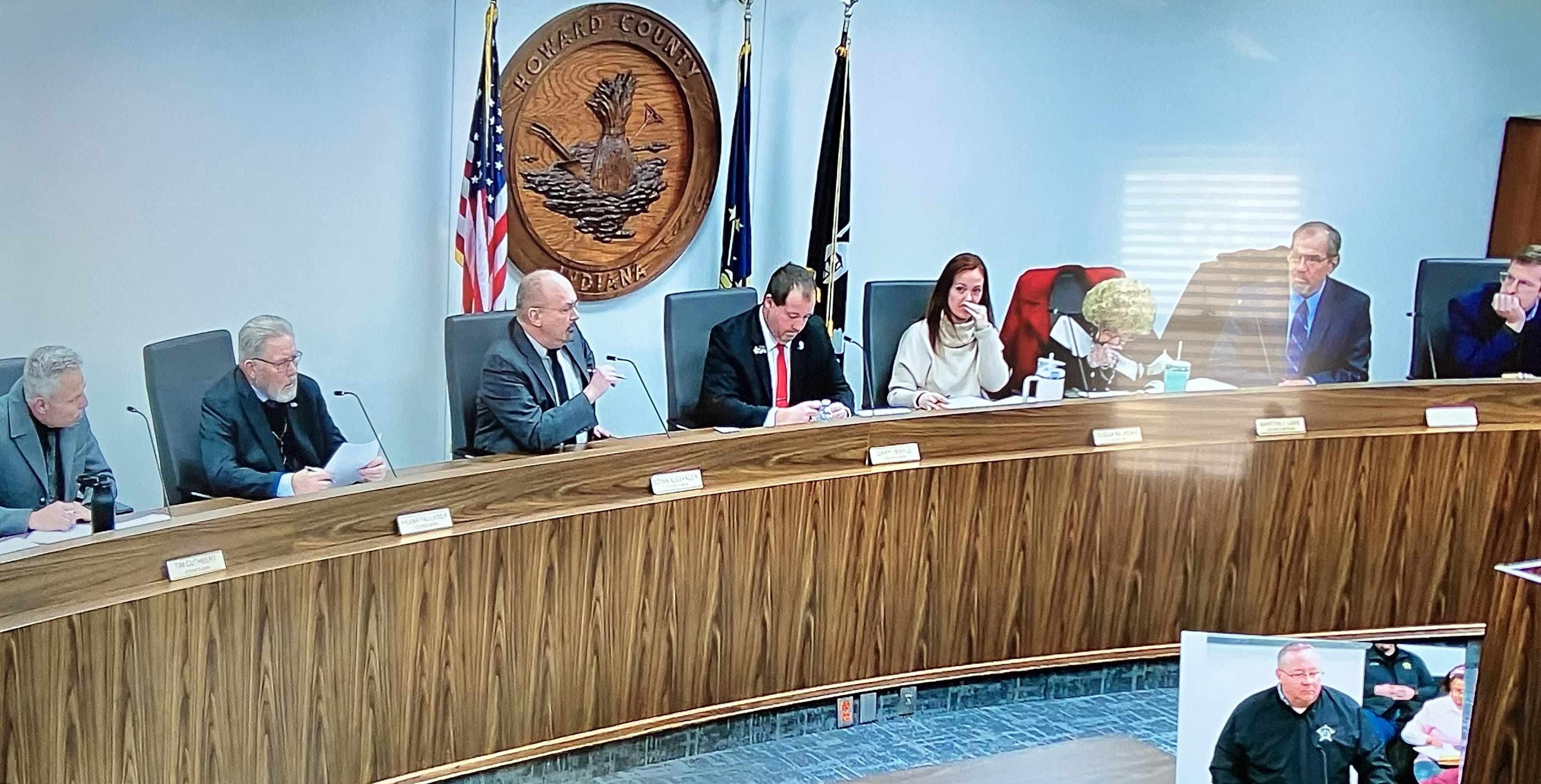
“I know we were here last month there were lots of questions, lots of things to ask,” said Asher. “We’ve had some meetings since then. I’ve talked to a few of you on the phone, some texts, emails. Hopefully, you guys all received my email with the 24-hour nursing coverage and budgetary cost.
“I’m asking for $183,682.50. The commissioners are gracious enough to throw in $30,000 out of the opioid funds. We’re going to use $25,000 of commissary funds to make this happen.”
The commissioners pledged their support almost immediately when hearing the request. Commissioner Jack Dodd pledged the $30,000 donation at the council’s January meeting, and that commitment was formalized on Feb. 16 at the commissioners’ regular meeting, with Commissioner Jeff Lipinski making the resolution.
Commissary funds, which are paid by inmates, may be used by the sheriff to purchase merchandise for resale to inmates, to cover expenses of operating a commissary; to provide special law enforcement training for the sheriff’s employees; to purchase equipment for jail use or sheriff’s employees’ use; for any activities provided to maintain inmate order and discipline; for programming to address substance abuse, child abuse, domestic violence, drinking and driving, or juvenile delinquency; to maintain a sex and violent offender registry; or for any purpose that benefits the sheriff’s department as agreed upon by the county council.
Council member Bryan Alexander had questioned the price of 24-hour nursing services in the jail at the January meeting. The $261,000 request was too much for him to support without more information. To allay his concerns, Alexander turned to AI for assistance.
“I’ve always felt like we should have 24-hour nursing there, but honestly, I was very undecided on this, just because of the cost,” said Alexander. “It’s a lot of money. So, I started trying to run some numbers with the help of some AI. But for us to hire two RNs (registered nurses) ourselves, it was gonna come out to around $280,000.”
Lisa Washington, executive director of the Minority Health Alliance of Howard County, was allowed to speak to the council about the importance of 24-hour nursing care at the jail. She was adamant that such care was vital to jail operations and to the inmates.
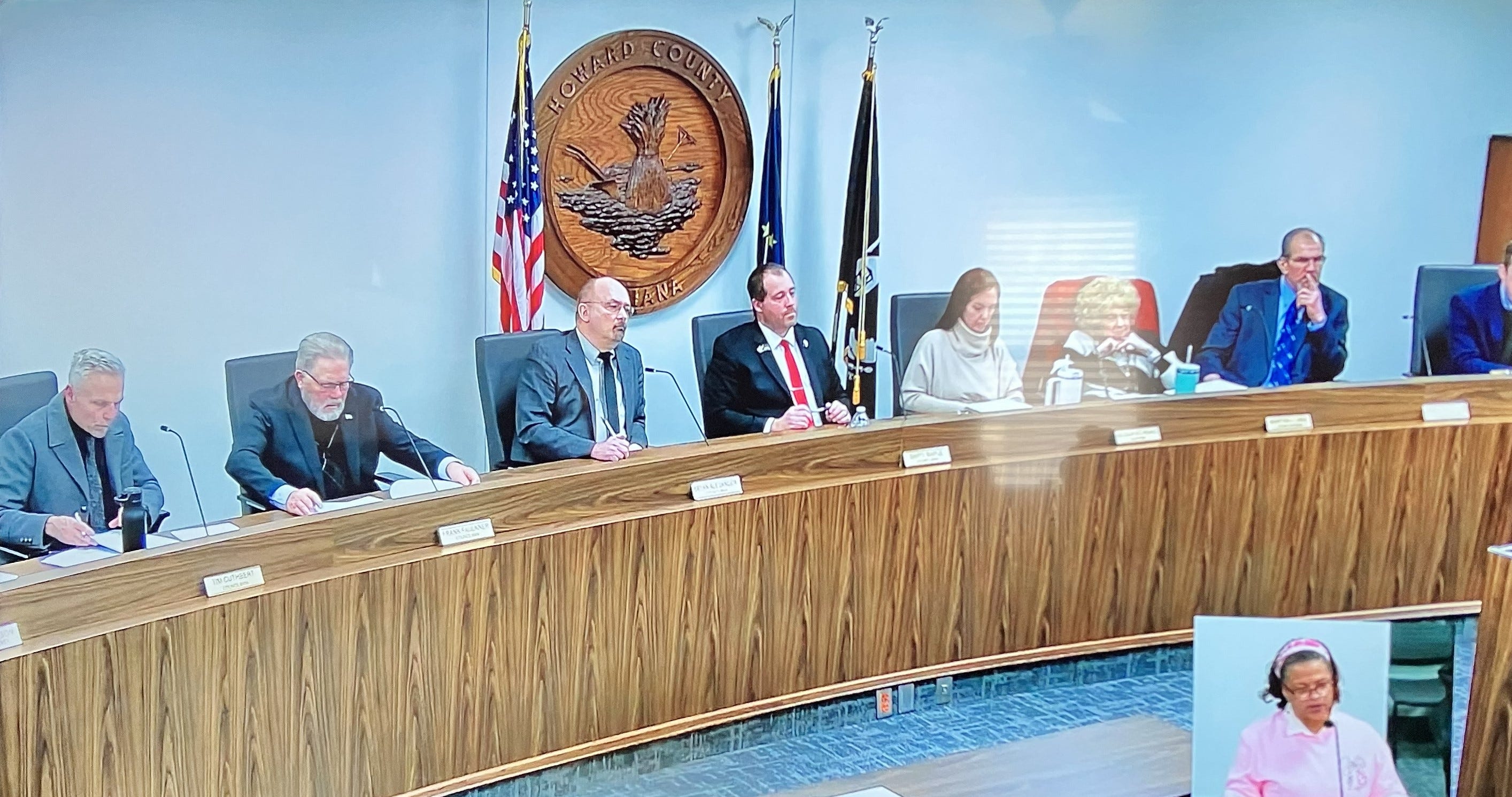
“One thing that I can tell you about all of the hospitals I’ve worked for is they had nursing 24 hours a day, seven days a week, 52 weeks a year,” said Washington. “That was to ensure patients or clients received care to prevent complications from either acute or chronic conditions.
“I can tell you what happens when there is not a shift of nurses (overnight or on weekends). Those nurses have to always be behind the eight ball.”
As pointed out to the council in January, without proper staffing, the day-shift nurses spend much of their time catching up on paperwork and medical needs that arise overnight or on weekends. That puts their normal operations behind schedule and reduces the effectiveness of care.
Washington also pointed out the very limited timeframe for medical care to be given to someone suffering from a heart attack. She explained how quickly a diabetic crisis can claim a life without immediate medical care from a nurse or medical professional.
“If we have inmates in the jail experiencing any of these things, we’re setting the county up for liability,” said Washington. “I want you to think about that. It is my goal, and my organization’s goal, to make Howard County the healthiest community that it can be.”
Given the assistance from the commissioners and the sheriff’s commissary fund, the council readily approved the hiring of two registered nurses at the jail to cover evenings and weekends.
But the jail’s healthcare issues weren’t the only ones that emerged in February. The commissioner also were informed that Community Howard Regional Health has retired its Community Mental Health Center (CMHC) certification, leaving a service gap across the state.
Dr. Carrie Cadwell , CEO of 4C Health, approached the commissioners on Feb. 2, seeking a recommendation that her organization be designated as Howard County’s CMHC in the hospital’s place.
“We have seen ourselves as a community mental health center here in Howard County; we actually offer all of those services, except for one,” said Cadwell. “Actually, we offer those services because we are the designated Certified Community Behavioral Health Center (CCBHC) here in Howard County. We really need to be both.”
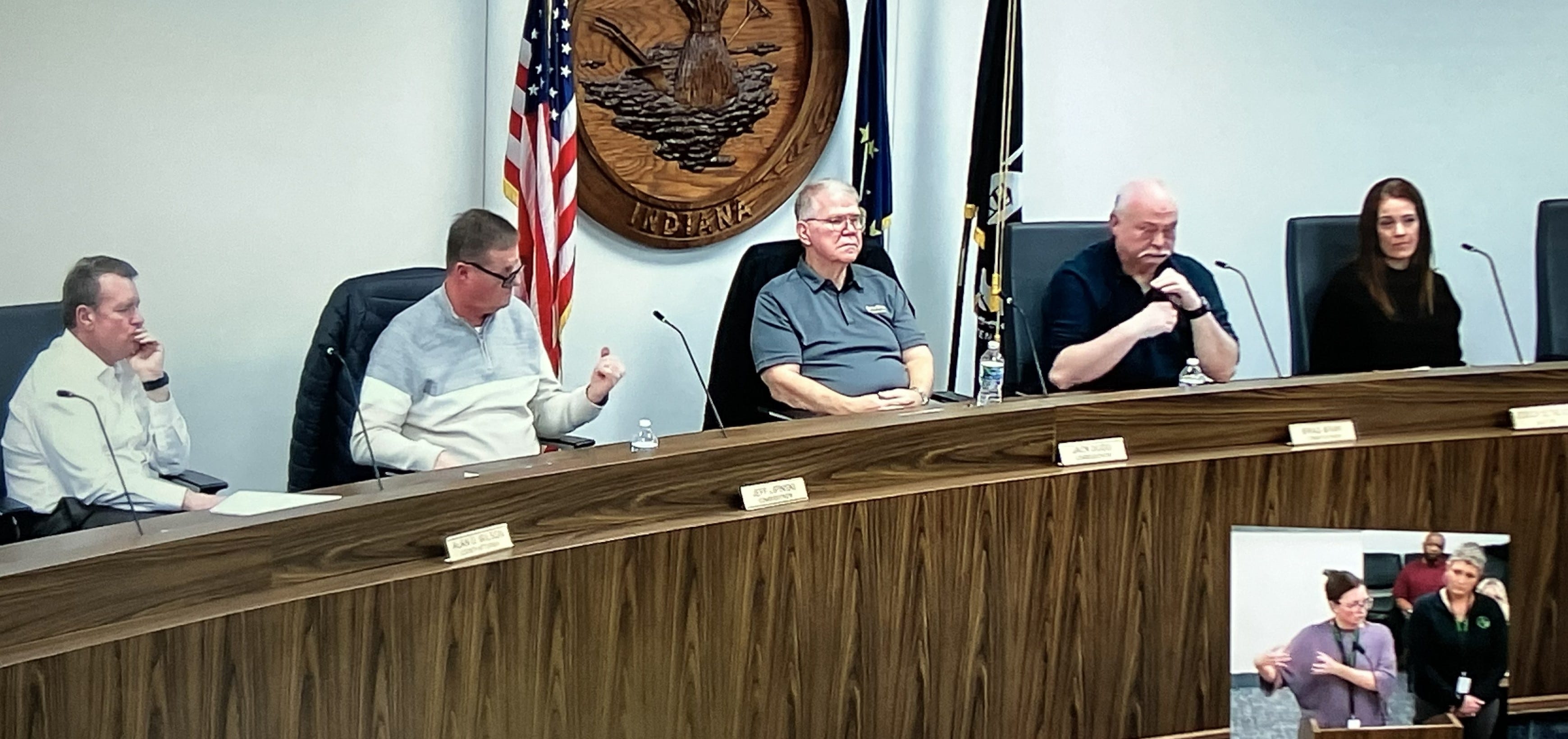
Lisa Willis-Gidley LSW, Chief Revenue Officer for 4C, explained that 4C has grown in Howard County over the past decade, growing from one provider with three therapists to providing 50 therapists across the community, including in four of the five public schools. Today, 4C employs 83 people in Howard County, along with 20 employees who split time between Howard County and other locations.
To date, 4C has served more than 9,200 county residents, with more than 2,000 seeking care in 2025.
“We recognized the need and made a long-term commitment to the community,” said Willis-Gidley. “It brings me genuine satisfaction to see how strongly we’re still serving this community today.
“Any individual can walk into our office and start services immediately when a crisis occurs. Our mobile crisis teams can be deployed to address that crisis.”
Willis-Gidley also pointed out that 4C serves the homeless community, providing resources and securing housing when it can. It also seeks partners to provide services.
Cadwell explained that, for 4C to become the CMHC in Howard County, it requires the recommendation of the commissioners, made to the Indiana Family and Social Services Administration.
“We have extensive partnerships in the community, both formal contracts and informal partnerships,” said Cadwell. “We have a slew of staff. We have two major federal grants that Howard County particularly benefits from mental health awareness and training, and then also our grants to benefit homeless individuals.
“I want us to be the designated Community Mental Health Center because we have been committed for over 10 years, and we plan to stay committed to Howard County.”
Cadwell said the transition to the CMHC designation would take 12-18 months to transfer cases and would result in the addition of 30-50 employees. It also would mean the addition of group homes, providing transitional residential service.
Establishing and funding the group homes is a challenge as only The Pillars exists in Howard County to provide any residential services. And its future is unclear.
Lipinski listened to the proposal and then asked about funding. In Indiana, there is a tax levy available to provide mental health services. He asked if this levy will be accessible by 4C should they receive the CMHC designation. Cadwell confirmed that the tax revenue could be used to support her organization’s group home operations.
“I have to be honest with you, that is predicated on what happens with the group homes,” said Cadwell. “There is no funding for those whatsoever, just the services provided.”
After hearing the proposal, the commissioners agreed to recommend 4C as the county’s CMHC.
In other action by the commissioners in February, the board resolved to place a moratorium on the development of data centers in Howard County. Recently, a move to establish a new industrial park on the northeast side of Kokomo has raised the specter of a data center being developed in the community. That has generated significant community opposition.
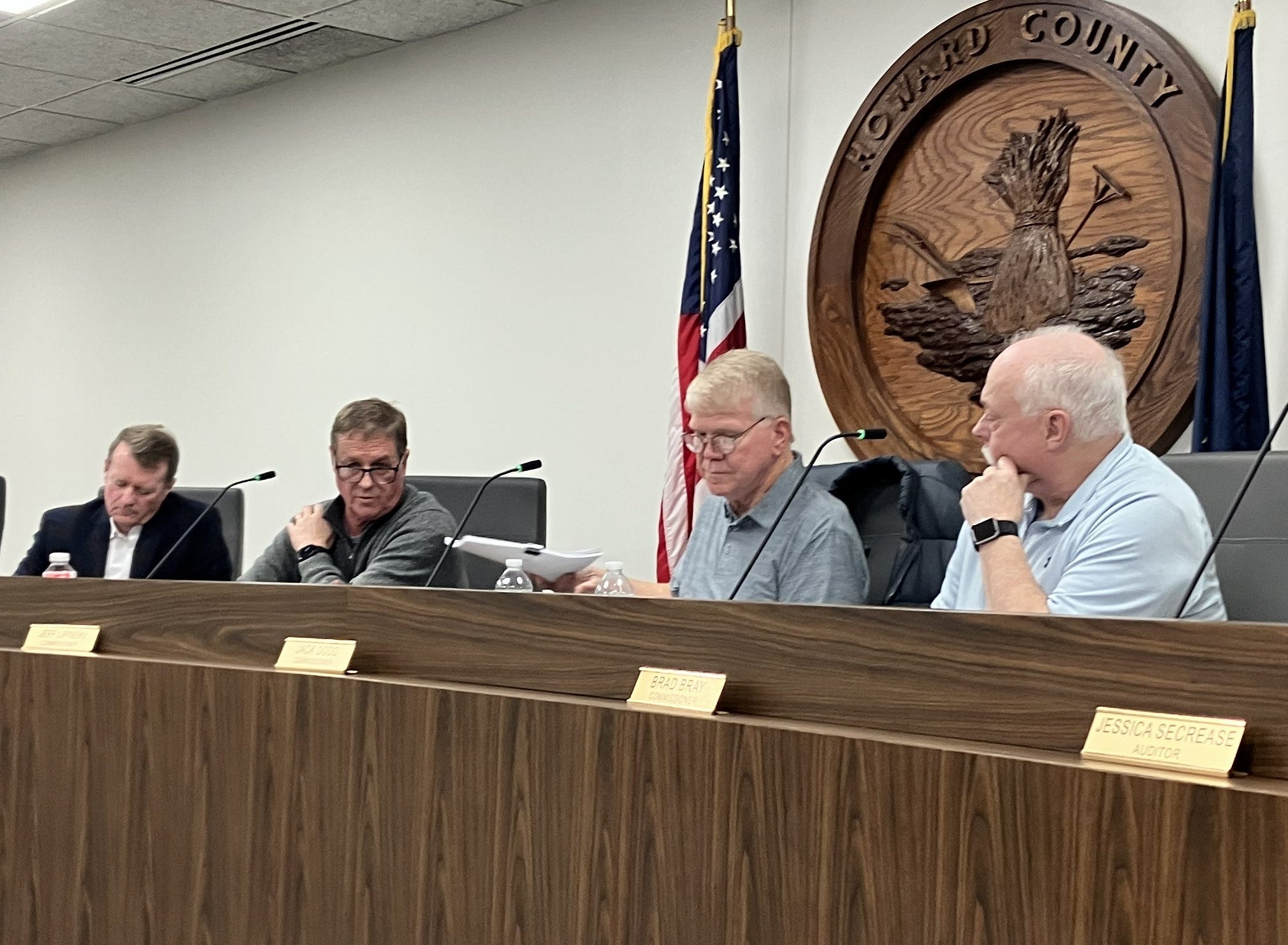
The commissioners sought to separate themselves from the data center debate by simply outlawing their development for the next six months.
“I knew nothing about data centers,” said Commissioner Jeff Lipinski, who originated the resolution. “I hear electricity costs would go up, I hear that water usage would go up. Because of that, I would like to make a resolution that we begin the process for a moratorium for six months, so that we can try to understand and educate ourselves.”
Commissioner Jack Dodd voiced his support but cited the limited scope of their action.
“We as commissioners do not have any say-so on what happens in the city,” said Dodd. “I got a lot of phone calls about why aren’t we doing things to stop the rezoning. This is the city doing the rezoning and the annexation, not the county.”
A formal resolution establishing a moratorium could appear before the commissioners as soon as March 2, as they directed county attorney Alan Wilson to draw up the language for the resolution.