
In October 2023, counties across the state began rolling out CARE Court programs created by the Community Assistance, Recovery, and Empowerment Act. All 58 counties implemented the programs by the end of 2024. The legislation aims to make it easier for first responders, doctors and family members to petition the court to help people suffering from psychosis due to schizophrenia and other behavioral health challenges.
If a case is accepted, a civil court judge presents a voluntary treatment plan, which can include access to housing, mental health counseling, medication and other services. If the person refuses, a judge can compel them into treatment.
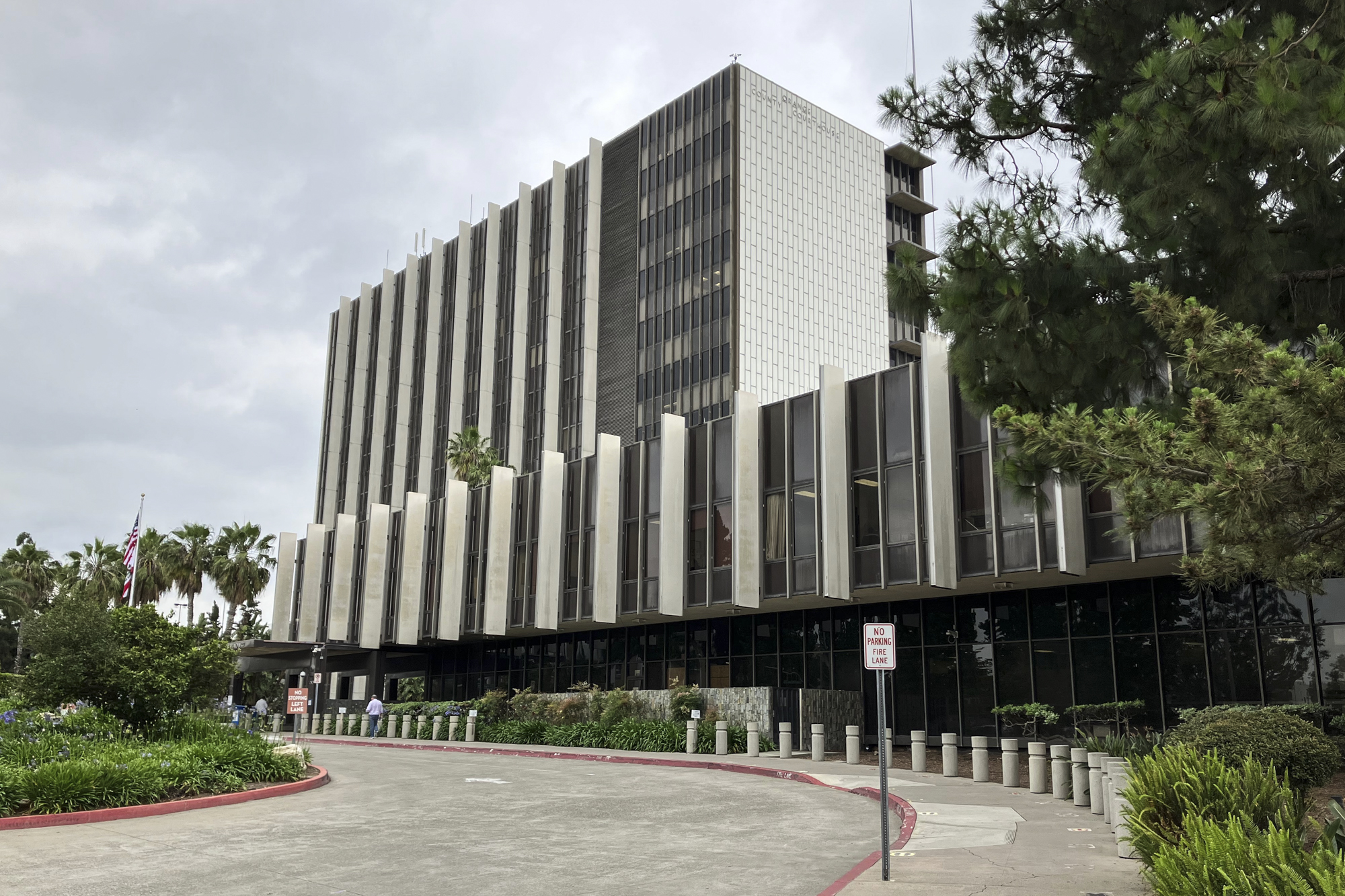 Orange County Superior Court will technically house the local CARE Court, though judges say they will more likely hold meetings with patients at a more neutral site, like a conference room at the county health office. (April Dembosky/KQED)
So far, it’s failed to keep up with expectations in some parts of the state. While Newsom’s office predicted CARE could reach 7,000 to 12,000 people annually when it was introduced, only about 3,800 CARE petitions have been submitted to courts. An additional 4,000 cases where people have been considered for CARE have been diverted by connecting them with services without court participation, Newsom’s office said.
Still, CARE expanded in October to include people experiencing psychotic symptoms as a result of bipolar disorder. Now, Newsom is throwing additional resources behind the program — and calling out counties, like San Francisco, that are underperforming.
Newsom said that his office would direct $131.8 million in Proposition 1 funding to eight Homekey+ affordable housing projects, which provide supportive housing with services for veterans, people who are at-risk or experiencing homelessness, or living with behavioral health challenges.