
In March, we celebrate National Social Work Month to recognize social workers and their dedication to improving lives, strengthening communities and advocating for social justice. Jenny Schiff, a master’s student in the NAU School of Social Work, shared what the field means to her and how social work is a universal language.
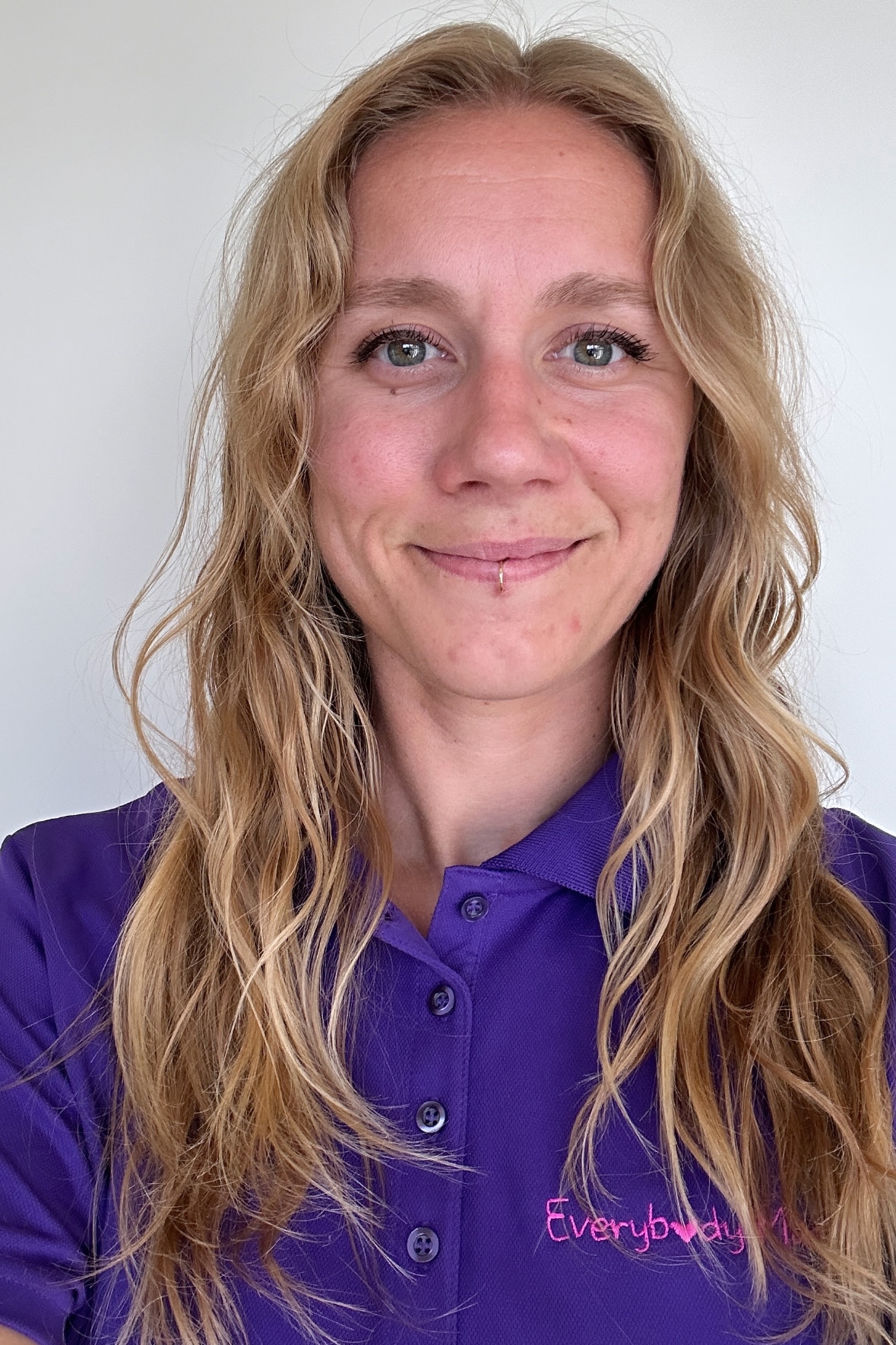 I chose social work because it felt like the natural intersection of my life experiences and my hopes for the future. For my undergraduate degree, I studied fitness and wellness with minors in biology and health education. I was one of the first students in my program to pursue a wellness-focused internship rather than a traditional fitness or exercise internship. I completed my internship with Jay Sutliffe in the Plant-Rich and Nutrient-Dense Interventions for Active Living (PRANDIAL) Lab on campus, where I studied nutrition outcomes across diverse populations.
That experience sparked my interest in dietetics, and I applied to the public health registered dietitian program at NAU. When I was not admitted, I decided to take time away from school and travel before reapplying. However, when the pandemic began, I moved back home and shifted directions. During that time, I began working in virtual health coaching. I quickly realized how deeply mental health and access to food influence nutritional choices. I also recognized that I lacked the training to fully support individuals navigating these complex challenges. That realization led me to explore graduate programs in mental health. While researching options at NAU, I considered both clinical mental health counseling and social work. Because of my strong connection to public health and systems-level change, I ultimately chose social work.
What I love most about social work is its diversity and scope. The field allows professionals to work at the micro (individual), mezzo (family and group) and macro (community and policy) levels. Social workers are trained to understand people within the context of their environment and to help create conditions that promote greater well-being and success. The profession is guided by a distinct code of ethics grounded in social justice, cultural competence and systemic awareness. One of its most powerful aspects is the ability to operate across multiple levels simultaneously, for example, providing clinical care to individuals while also advocating for policies that improve the broader systems that affect their lives.
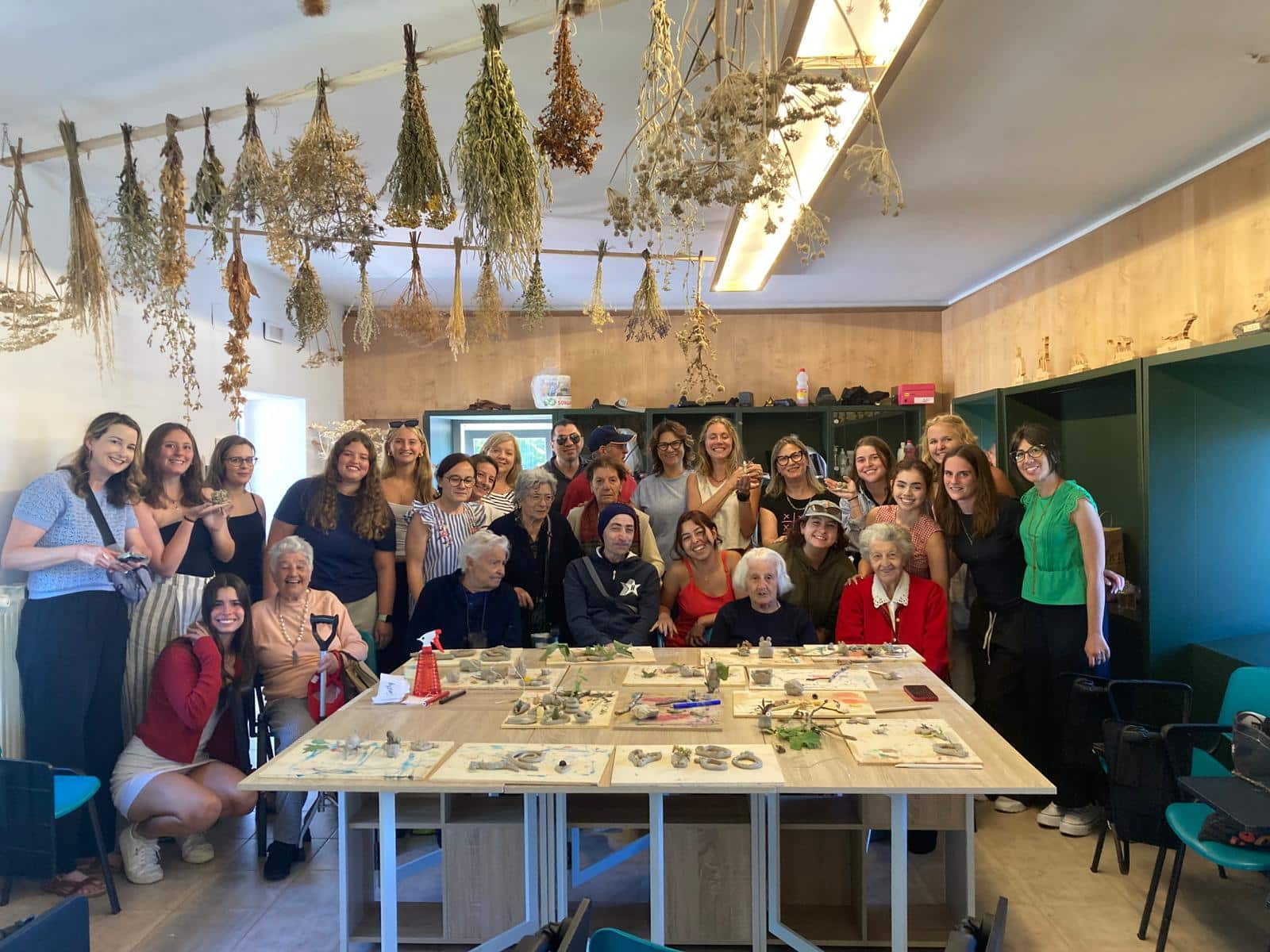 Art therapy session with older adults living with dementia and Alzheimer’s while studying abroad in Italy.
Social work is vital because it enhances human well-being, advocates for social justice and supports vulnerable populations facing poverty, abuse, mental health struggles and illness. By providing counseling, case management and resource access, social workers build resilience, strengthen communities and catalyze positive social change. In today’s world, marked by growing economic inequality, mental health crises and displacement, social work is more important than ever. Social workers serve on the front lines, helping individuals and families navigate complex systems while addressing systemic barriers that prevent people from thriving. Social work is universally understood because, at its core, it is rooted in dignity, compassion and the belief that every person deserves support and opportunity. This summer, I had an incredible opportunity to study abroad in Italy and engage in rural social work with diverse populations. Working in a different cultural context deepened my understanding of how social work principles transcend borders while also requiring cultural humility and adaptability. I witnessed firsthand how community-based support systems, family networks and local organizations come together to address social challenges in rural areas. My experience in Italy reinforced that social work is not confined to one nation or system, it is a global commitment to empowering individuals and strengthening communities in an increasingly interconnected and rapidly changing world.
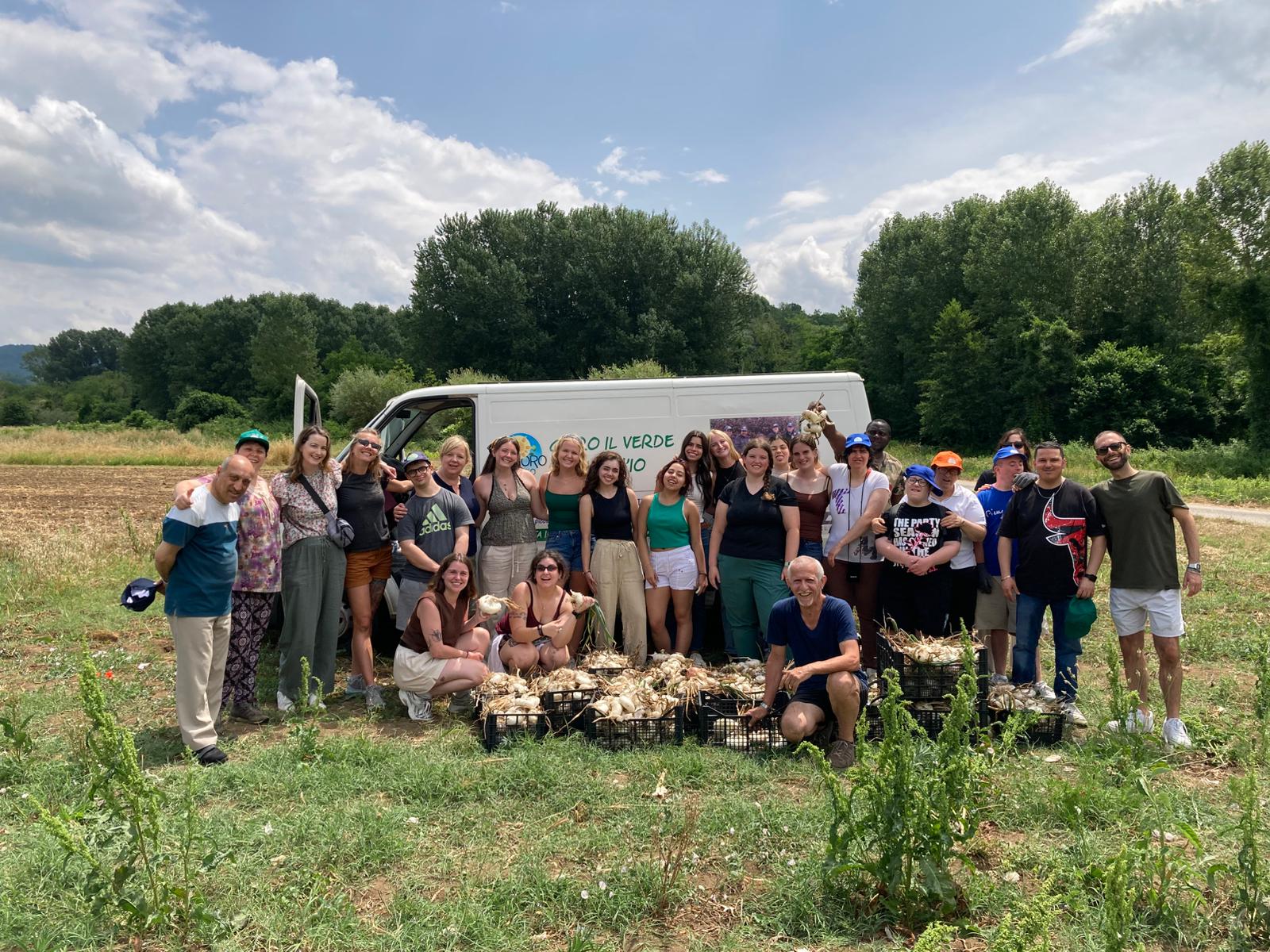 LAI Cooperative in Italy, a program for adults living with developmental disabilities, harvesting onions they sell to help fund their programs.
I am currently interning at Affirming You, a group private practice that supports queer and neurodivergent individuals of all ages. I work with a diverse group of clients and am grateful to be part of such a supportive team with incredible colleagues and supervision. After graduation, I plan to continue working there while completing the supervised hours required to earn my Licensed Clinical Social Worker credential. Looking ahead, I see myself continuing to grow and evolve in the field, working with diverse populations that reflect various stages of my life and identity. I also plan to stay engaged in local government, advocate for policies that improve people’s lives and remain an informed voter.
Above all, community is the value that guides everything I do. No matter where my career takes me, I will remain committed to uplifting those around me and working to create stronger, more equitable communities for everyone.