
The well-being of conservationists has never been a priority in the sector, but new cultural norms and expectations of this workforce are urgently needed.The unhealthy culture of self-sacrifice coupled with growing pressure within the sector — driven by the worsening ecological crisis and changes in the funding and geopolitical landscape — are driving a crisis of poor mental health and well-being among conservationists.Yet change is possible with investment in the well-being of the conservation workforce, through the implementation of evidence-based interventions that promote individual and team well-being, which can lead to improvements in well-being, performance and retention.This article is a commentary. The views expressed are those of the authors, not necessarily of Mongabay.
See All Key Ideas
Nested within the current biodiversity crisis sits an equally complex and concerning human crisis, but one that receives even less attention: the poor mental health and well-being of the conservation workforce.
The scale of this problem is clearly set out in a recent Mongabay article. In a sector that has always relied on the passion and commitment of individuals, where one’s value is measured by selfless dedication to the cause — which can manifest as an expectation to prioritize work above all else, take on unpaid or poorly paid work, accept poor working conditions, or compromise on personal safety — staff well-being has never been a priority.
This unhealthy culture of self-sacrifice provides the context within which sector-wide stressors are impacting the well-being of the workforce. The growing ecological crisis in itself is having a significant impact on well-being, and this is set out powerfully in the Mongabay article. In addition to this, the changing funding and geopolitical landscape, which is deprioritizing conservation and climate action, further increases instability and uncertainty, putting further pressure on the conservation sector.
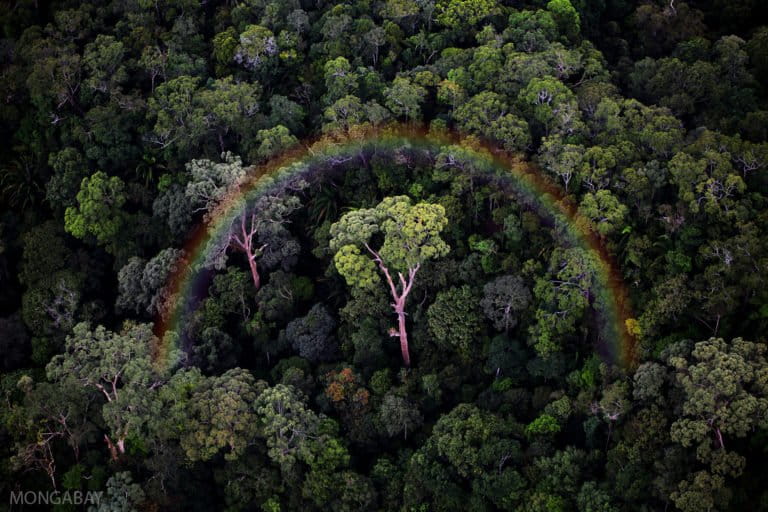 Working in conservation isn’t all rainbows. Photo illustration of a rainforest rainbow in Malaysian Borneo by Rhett Butler/Mongabay.
The impact of all of these chronic stressors are emotional and psychological distress, poor mental health and burnout, increasing the risk that conservation professionals will give up on their aspirations and leave the profession. Recent research found 27% of conservationists are suffering from moderate or severe distress, and women face particular challenges as conservationists, from sexual harassment and discrimination to institutional inequity, on top of often having to juggle additional caring responsibilities outside of work. This research also highlights that this suffering is not distributed evenly across the profession, so greater study is needed to understand the prevalence and nature of psychological distress among those underrepresented groups.
For practitioners at the frontlines of the crisis directly witnessing environmental destruction or taking personal risks in the fight for environmental justice, the threats to well-being can be particularly acute. In our experience, conservation leaders, especially those leading smaller organizations — who are often living with the constant pressure of fundraising, and who carry all of the burdens associated with leadership, yet often have limited professional support networks or access to any form of well-being support or training — may be particularly at risk of burnout.
For the conservationists affected, this is a tragedy. At a sector level, this is a workforce crisis. Talented, committed and experienced professionals are being lost to the profession at a time when we need a strong conservation workforce more than ever.
Based upon our collective experience, improving the well-being of the conservation workforce is an achievable and important goal we must collectively strive for. Better practitioner well-being will be created through valuing the workforce as our most precious asset, deepening our collective understanding of the determinants of well-being and investing in evidence-based interventions that promote better well-being across the sector. Below we share insights from a decade of supporting the well-being of conservationists from across Africa, Southeast Asia and the Americas.
See related: ‘An epidemic of suffering’: Why are conservationists breaking down?
 Jessie Panazzolo founded Lonely Conservationists, a global platform providing resources, advocacy, and a voice for new and burnt-out environmentalists. Image courtesy of Jessie Panazzolo.
‘You are not alone’
Embedding well-being training into broader leadership development programs can serve to normalize a focus on well-being as part of one’s leadership journey, and sends a clear message about the importance of attending to one’s own well-being when working as a conservationist. Targeting conservationists when they are already in a period of learning and growth may serve to embed a well-being practice at a time when they are more willing to embrace new ideas and adopt new practices.
More broadly, the presence of good leadership development infrastructure (such as access to peers and to mentors, opportunities for group discussion and structured reflection, protected time for learning and access to learning resources) can be leveraged to embed learning on well-being and support the formation of new attitudes and behaviors. Peer group learning opportunities, for example, can serve to create space for reflection and the sharing of experiences; these groups can also provide valuable opportunities for holding each other accountable for commitments made to well-being-related actions.
If we are serious about changing the culture in conservation, starting with cohorts of leaders and equipping them with the tools to build thriving teams may serve as an effective pathway for scaling up a healthier relationship with our work, and creating the types of organizations that value those working there.
For busy conservation practitioners and leaders, any well-being intervention needs to start by focusing on easily achievable actions or goals, where changes in behavior are likely to lead to noticeable improvements in well-being. This can serve to secure longer term buy-in from a workforce that has historically not prioritized self-care. Designing interventions informed by behavior change science can help ensure that any changes to practice, or new habits formed, are sustained.
Arguably, the most transformative part of any well-being support and training for conservationists is the realization that they are not alone. Knowing that others are on a similar journey, combined with an experience of psychological safety that allows them to be themselves, can be both empowering and deeply comforting. Creating networks and support structures that allow conservationists to connect, share their experiences related specifically to well-being, and have those experiences acknowledged and validated by peers can be profoundly healing.
In particular, our experience has shown that women-only communities, created with psychological safety at their core, can be transformational to women’s well-being, providing a support network for this group of practitioners that is so often lacking. Sometimes this can be all that is needed to enable practitioners to stay well and keep going. Encouraging practitioners to stay connected with family, friends and colleagues at times of stress, when one’s instinct may be to retreat into one’s own shell, can in itself protect them against mental illness.
In many parts of the world, mental illness continues to carry a heavy stigma. Talking about one’s mental well-being can be seen as irrelevant at best, or at worst as a sign of weakness. Normalizing discussions on well-being and mental health would enable more honest sharing of the difficulties practitioners are facing, creating the opportunity for addressing underlying stressors and for seeking help where needed. When this openness and vulnerability is modeled by conservation leaders, this can serve as a powerful lever for changing the culture that has been so damaging for the profession.
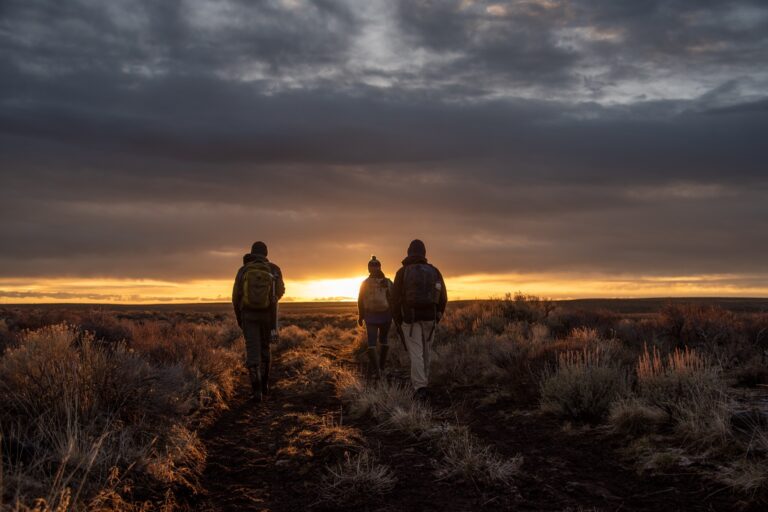 Conservation work often requires long hours, challenging conditions, and limited financial or emotional support. Image by Lena Chang/USFWS Pacific via Wikimedia Commons.
Despite the growing collective appreciation of the importance of well-being in conservation, in the immediate term it is likely to remain challenging to convince all stakeholders in the conservation ecosystem of its value. However, there is a growing body of evidence linking employee well-being to enhanced performance and workforce retention; this evidence can and should be leveraged to help secure support for greater investment in well-being. For those actively engaged in well-being programs, we have an important role in demonstrating how these interventions contribute directly to our conservation mission, and adding to this body of literature.
Perhaps the most important task of any well-being intervention is to reinforce the message that, as conservation practitioners, our well-being matters. Prioritizing our own well-being does not diminish our passion or dedication to our work; rather it enhances our effectiveness and strengthens our ability to drive meaningful change.
The drivers of poor well-being in the conservation workforce can be traced back to the same issues that drive biodiversity loss: an extractive approach to our precious resources (be they human or ecological) and a loss of connection with ourselves, each other and our environment. In this context, self-care becomes a core part of the work of the conservation community, where looking after ourselves becomes a conservation practice and an act of social justice.
A career in conservation should be an enriching, life-affirming journey, rooted in a passion and drive to protect our precious planet. Yet for us to be truly effective, we must also value and support those who dedicate themselves to this work. We must learn to value ourselves.
We urgently need a cultural shift in the way the conservation sector operates to showing as much compassion and care for its workforce as for the species and ecosystems we work so hard to protect. What we have seen is that change is possible: simple measures that are within reach for all of us can positively impact the well-being of individuals and teams.
Through collective action, where networks of practitioners collaborate to create new norms for the sector and ensure better treatment for conservationists, we can create a culture with well-being at its heart, and strengthen our ability to respond to the ecological crisis.
Vik Mohan is a conservation leader, practicing doctor and a wellbeing coach and trainer for conservation practitioners. Nerissa Chao directs the Asian Species Action Partnership and is founder of NOW (Network of Women), a leadership initiative supporting and connecting women working in conservation across Southeast Asia.
See related coverage:
‘An epidemic of suffering’: Why are conservationists breaking down?
Citations:
Schaufeli, W. B., Bakker, A. B., & Van Rhenen, W. (2009). How changes in job demands and resources predict burnout, work engagement, and sickness absenteeism. Journal of Organizational Behavior, 30(7), 893-917. doi:10.1002/job.595
Pienkowski, T., Keane, A., Castelló y Tickell, S., De Lange, E., Hazenbosch, M., Khanyari, M., … Milner‐Gulland, E. J. (2023). Supporting conservationists’ mental health through better working conditions. Conservation Biology, 37(5). doi:10.1111/cobi.14097
