
Two years since residents pushed back on the opening of two mental health facilities in the Colorado City of Northglenn, anxiety and fear remain at the forefront.
“I absolutely feel less safe,” said Northglenn resident Melissa Ryan.
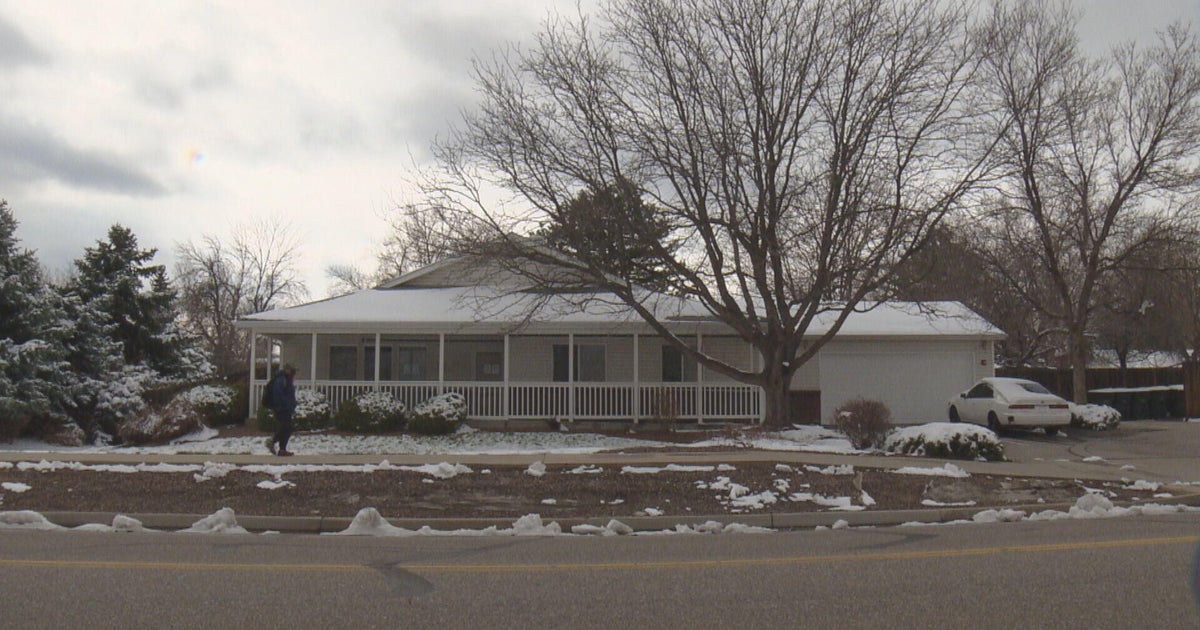
CBS Colorado first covered the controversy in 2024, when residents and city leaders discovered the Colorado Department of Human Services would establish two level-one mental health transitional living homes at 11255 and 11275 Grant Drive. These homes, run by the CDHS’s Office of Civil and Forensic Mental Health, are part of a statewide Mental Health Transitional Living Homes (MTHL) program to expand access to mental health beds in the state under HB22-1303.
HB22-1303 calls for adding at least 125 additional beds at mental health residential facilities throughout the state for “adults in need of ongoing supportive services.” Five of these facilities would serve as level-one homes, and the rest would serve as level-two homes.
Level one homes serve as a pathway for people with mental health conditions to transition back into society in a less restrictive, community setting. Individuals admitted to these facilities work with a case manager and can utilize the services within the facility offered to help reintegrate into society. Residents are restricted from possessing drugs and weapons on site, but residents can come and go as needed, and there is no timeline for when a person can leave the program.
Residents may require medication management and may have previously posed a potential risk to harm themselves or others, but any aggressive behavior must have occurred no less than six months prior to being admitted.
“We understand the importance of mental health and that transition from where they’re at to get them back to where they are a productive person in our community,” said Northglenn Police Chief James May.
CBS
However, city leaders say this well-intentioned goal to help close the gap in mental health beds across the state continues to pose safety risks to the community at large.
“I live about a five-minute walk from the facility. I’ve noticed a large increase on unhoused community being at Webster Lake due to people that leave this facility who are unable to retain a residence after they leave,” said Ryan. “I actually started carrying mace on me, just because I did just feel unsafe walking my dog in my own neighborhood.”
“There’s a lot of vulnerability in that area,” said May. “There are a lot of single moms with kids, and then next door to that, I have a lot of seniors, also. Then, right down the street is the elementary school.”
Chief May tells CBS Colorado there have been roughly 74 calls for service to the transitional living homes in the last two years.
“Reasons that we have responded is when there is a missing person that has wandered away, when there is a tough discharge plan or when residents of the home are not feeling safe, or staff themselves are not feeling safe,” said Jessica Hulse, Program Manager of Northglenn’s Crisis Response Unit.
On Jan. 7 this year, Northglenn police responded to a call at the facility involving a person living in one of the mental health transitional living homes who allegedly stabbed another resident. The two officers who responded to the call were also stabbed.
‘There were three charges of first-degree assault; the victim that was stabbed at the facility, and the other two were the officers showing up. Fortunately, they’re okay,” said May. “We have some violent individuals that are living in this house, and I’m shocked they’re being placed in a level one facility.
Stephanie Fredrickson, with DHS’s Office of Civil and Forensic Mental Health, told CBS Colorado that staff responded promptly to the incident, and the resident who conducted the stabbing was subsequently denied entry back into the program. She also says the Northglenn MHTL Homes leadership made safety changes in response to the incident, including contraband searches in rooms and implementing curfews.
“Right now, I don’t know if there is enough oversight by the state to make sure that they’re putting safeguards in place in their facilities for the vulnerable population that’s in their care,” said May.
CDHS also says they’re reviewing data to identify trends in calls for service and will implement statewide changes to all MHTL homes later this summer.
“While all MHTL homes are equipped with highly-trained staff to support patient and public safety, CDHS is committed to continually improving our safety protocols,” the department said. “As a follow-up to policy changes, statewide changes in MHTL licensing effective July 1, 2026, will allow CDHS to adopt additional security protocols, including strengthening the ability to enforce curfews and randomized searches.”
Northglenn Mayor Meredith Leighty says she hopes to work with CDHS to improve accountability and oversight and address an ongoing concern with who the state may admit to the program in the future.
“We worked collaboratively with the state, and we did receive sort of a gentleman’s agreement for two years that they would not place registered sex offenders at the site,” said Leighty. “Those two years is up, and so we have been actively working behind the scenes to try to pass solid legislation that would make this a permanent thing.”
City leaders have drafted the legislation to discuss it with DHS leaders.
At the state level, Representative Lori Goldstien and Senator Kyle Mullica have introduced a bill (HB26-1285) to also prohibit DHS from admitting a person who is required to register as a sex offender from being admitted into an MHTL home that is located within 1,000 feet of a school.
“We need some collaboration and communication,” said Leighty.
DHS leaders tell CBS Colorado there are currently no plans to change the policy they made with city leaders.
“Public safety is the department’s top concern, and we continue to prioritize delivery of services to individuals in a way that supports both their continued wellbeing, as well as community safety,” DHS said.
The House Judiciary Committee will meet on March 18 to discuss the state bill regarding sex offenders at MHTL homes.