
When Neha Kirpal looks back on her childhood, one memory returns with startling clarity.
She was about five or six when her mother told her, “Don’t brush your teeth because I think the toothpaste is poisoned. I think your father is trying to poison us.”
At that age, Neha did not know the language of mental health. Most five-year-olds are still learning words for the world around them, not trying to make sense of why a parent has suddenly become frighteningly unpredictable. She did not know why her mother would say such terrifying things, or why an invisible fear seemed to have settled over their home.
For Neha, this was simply life as it was lived. It would take many years before she understood that her family had been living inside an illness that affects millions of people in India and that the confusion of those early days would influence the woman she would eventually become.
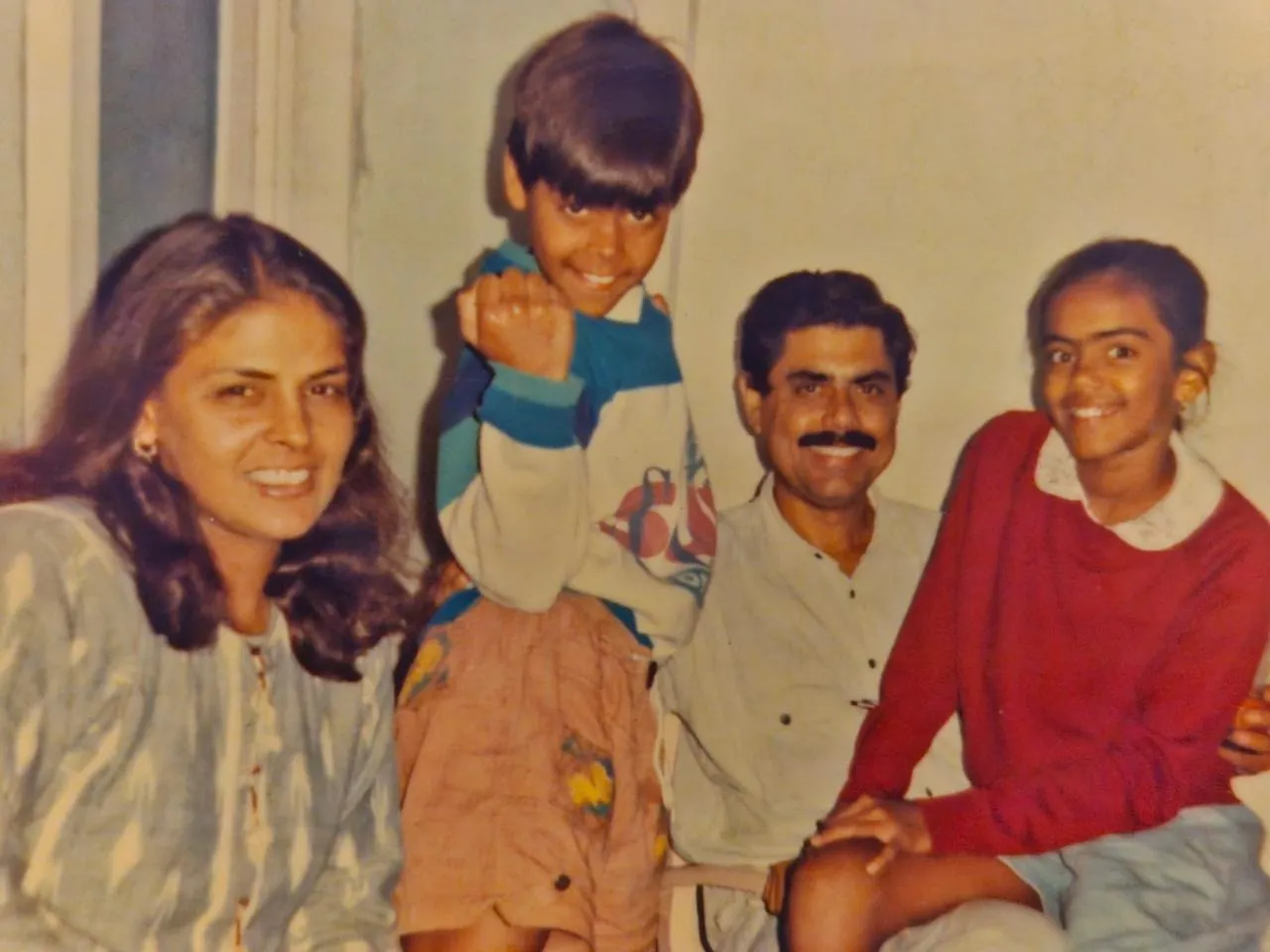 At the time, in the 1980s, the family itself did not fully understand what they were dealing with. Conversations about mental illness were rare, and schizophrenia was barely discussed in public.
“One just knew it as how one was experiencing life day to day,” she says.
As a teenager, she would learn that her mother was living with schizophrenia — a severe mental illness that can distort how a person perceives reality, sometimes creating intense paranoia or deeply held delusional beliefs.
What followed were years of chaos that would affect every part of her growing up: conflict between her parents, accusations that blurred reality and delusion, neighbours overhearing the fights, police arriving at the door, and a home where safety could vanish without warning.
“For the first three-four years, essentially our definition of mental health and illness was a family at war with itself, but behind closed doors.”
Those closed doors, however, did not hold forever.
“The sounds leaked out. My brother would hide under the dining table, and I would throw myself in the middle of a fight.”
At the time, in the 1980s, the family itself did not fully understand what they were dealing with. Conversations about mental illness were rare, and schizophrenia was barely discussed in public. What Neha remembers most is not diagnoses or treatment plans, but the sense that reality inside the house kept shifting in ways she could not explain.
Decades later, those early memories would shape the work she would go on to do — helping transform how India understands and responds to mental health.
But at the time, she was simply a child trying to survive in her own home.
The child who learnt to disappear
Through her school years, Neha built a parallel life outside the house — one that looked almost perfectly normal.
“We slept with furniture pushed against the door because my mother believed someone might come to kill us. Stuff like that was sort of what everyday childhood was. And then one just got up and went to school and pretended like it’s a normal day.”
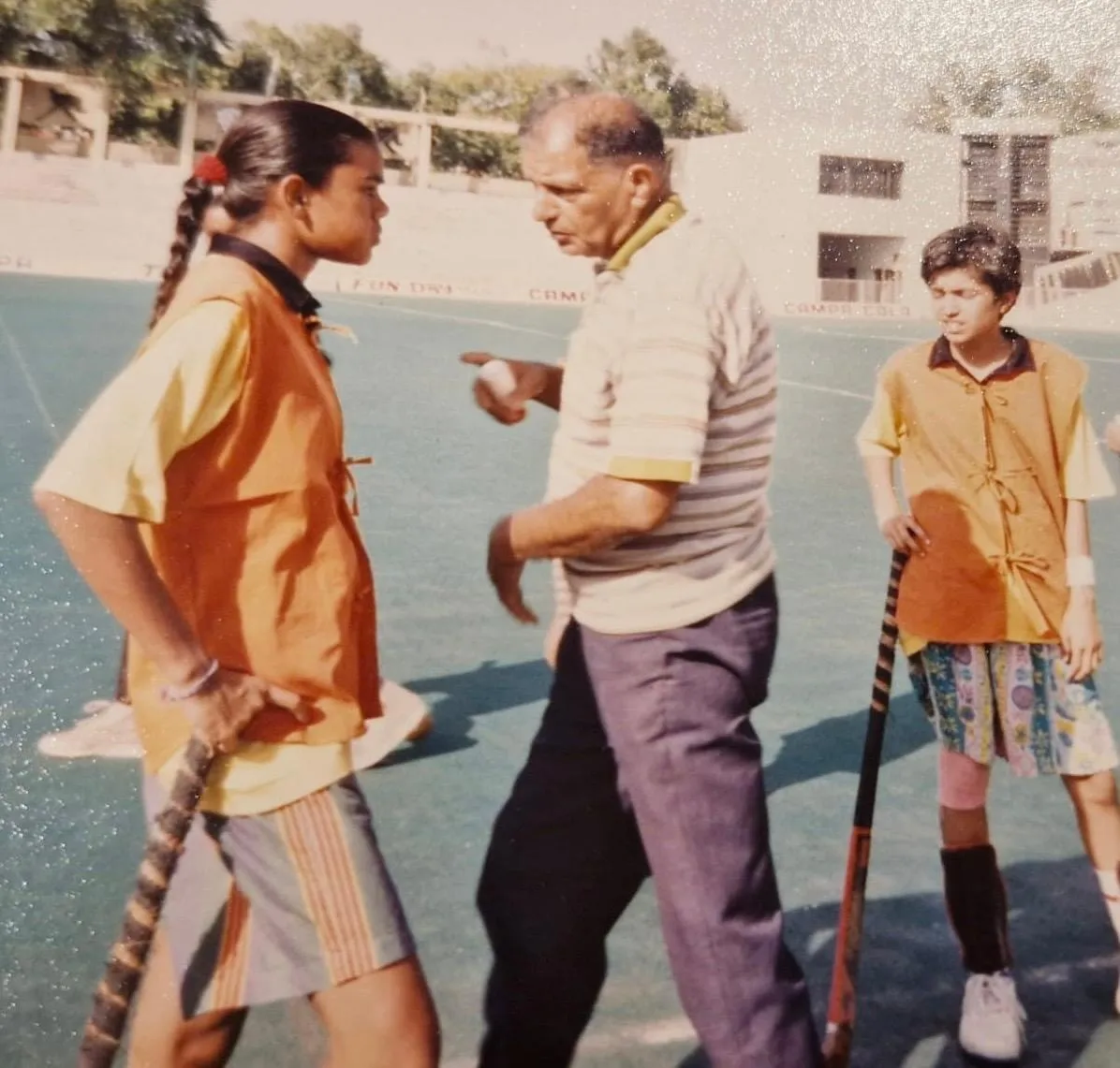
If home was a battlefield, school became her stage for normalcy. She attempted to excel academically and immersed herself in competitive sports such as badminton and hockey.
What looked like discipline from the outside was, in many ways, survival.
“I just ran ten hours a day. That actually saved my life, I would say.”
Looking back, she recognises what she was doing instinctively.
“There was a lot of dissociation. I had to dissociate my inner world from my outer world, my home life from my school life, my body from my mind.”
She learned early to carry different versions of herself in different spaces — the child navigating chaos at home and the teenager who showed up every day determined to keep moving forward.
The day her mother left
By the time Neha was thirteen, the atmosphere inside the house had become almost unbearable.
Her mother had begun to believe that people were trying to harm the family. Complaints were filed with authorities, and paranoia increasingly shaped daily life. Doors were barricaded at night, and furniture was pushed against entrances because danger felt imminent.
For Neha and her younger brother, fear had become routine.
Then, one day in April 1994, everything changed.
Her mother took Neha and her younger brother away and said they were never going back home.
Neha ran back.
“At that point, I was just going back to what I knew was a normal life and not this, you know, being on the run.”
What she did not realise was that this moment would fracture her life into a before and an after.
“I didn’t realise that I’m going to lose them for the next 10 years.”
Her mother and brother disappeared.
“My mother and brother continued to be on the run for the next 10 years and I spent all of those years looking for them.”
For years she had no idea where they were living or how they were surviving. Meanwhile, Neha continued her life — studying, growing up and building a future — while carrying the constant weight of not knowing where they were.
The child nobody asked about
Ask Neha what support she had during those years, and her answer is simple.
“I was parenting myself.”
There were fragments of support — an aunt she could call, small anchors — but much of the emotional labour of surviving those years was something she had to do alone.
In many families navigating severe mental illness, the illness itself becomes the centre of attention while the children quietly learn to survive around it.
For Neha, adulthood would eventually become an attempt to understand what had happened during her childhood.
Finding her mother again
After nearly a decade of searching, the trail finally led somewhere.
Through fragments of information, Neha was eventually able to trace her mother and brother. But the reunion she had imagined for years was not the one that unfolded.
“When she came in front of my eyes… literally like on the floor, chained to a hospital bed… there was a part of me that was so resentful.”
For years, she had carried the weight of their absence — the unanswered questions, the endless imagining of where they might be. Now the reality was both relief and shock.
Her mother’s illness had deepened, and the years that followed would be marked by a cycle familiar to many families living with severe mental illness: hospital admissions, medication trials, brief periods of stability and then another relapse.
“Every time we would try a medication combination, she would be in the hospital for three, four, five months.”
Yet life continued to unfold around this reality.
Neha went to the UK to study, encouraged by her father to step out into the world and build a life beyond the turmoil she had grown up with.
But even as she built her future, her mother’s illness remained a thread running quietly through the background of her life.
In 2008, when Neha got married, her mother came straight from the hospital to attend the wedding.
For families who grow up around severe mental illness, this kind of juxtaposition becomes part of everyday life: hospital visits and celebrations, fear and love, instability and routine existing side by side.
Outside those families, however, the experience often remains hidden.
In India, mental illness is still heavily stigmatised, and nearly 95% of people living with mental health conditions do not receive the treatment they need.
Despite the years that shaped her childhood and early adulthood, Neha continued to build a life that moved forward — studying, working and forming relationships while slowly making sense of the experiences that had shaped her.
Eventually, a treatment combination began to work for her mother.
“Insight is not something that builds overnight.”
Today, her mother lives with her and shares a close bond with Neha’s daughter.
But Neha remains honest about the emotional complexity of that relationship.
“I don’t think I have ever really had a mother that I yearned for.”
Turning lived experience into systems change
For years, Neha’s professional life unfolded in a completely different world.
She built one of India’s most influential cultural platforms — the India Art Fair — and spent more than a decade shaping the country’s contemporary art ecosystem.
But the realities of mental illness never left her.
 If building institutions was one form of healing, writing Homecoming was another.
In 2018, after nearly ten years of running the fair, she stepped away from that world and began working in mental health.
In 2019, she joined psychiatrist Dr Amit Malik as co-founder of Amaha, a mental health organisation designed to make care more accessible across India.
Today, Amaha operates alongside Children First under a shared umbrella of mental healthcare services. While Amaha focuses on supporting adults through therapy, psychiatric care and community programmes, Children First works with children, adolescents and their families. Together, they provide care through both digital platforms and in-person centres in cities such as Delhi, Mumbai and Bengaluru. With a large team of psychologists and psychiatrists, the organisations have already reached millions of people seeking mental health support.
But for Neha, the real impact lies in something less visible.
Helping families feel less alone in the kind of silence she grew up with.
“How many psychiatrists today ask what is happening to the children in the house? Nobody asks these questions.”
She also co-founded the India Mental Health Alliance, which now brings together more than 275 organisations across the country working in mental health.
Because mental healthcare, she believes, cannot exist in isolation from families, schools, workplaces and communities.
When the silence finally broke
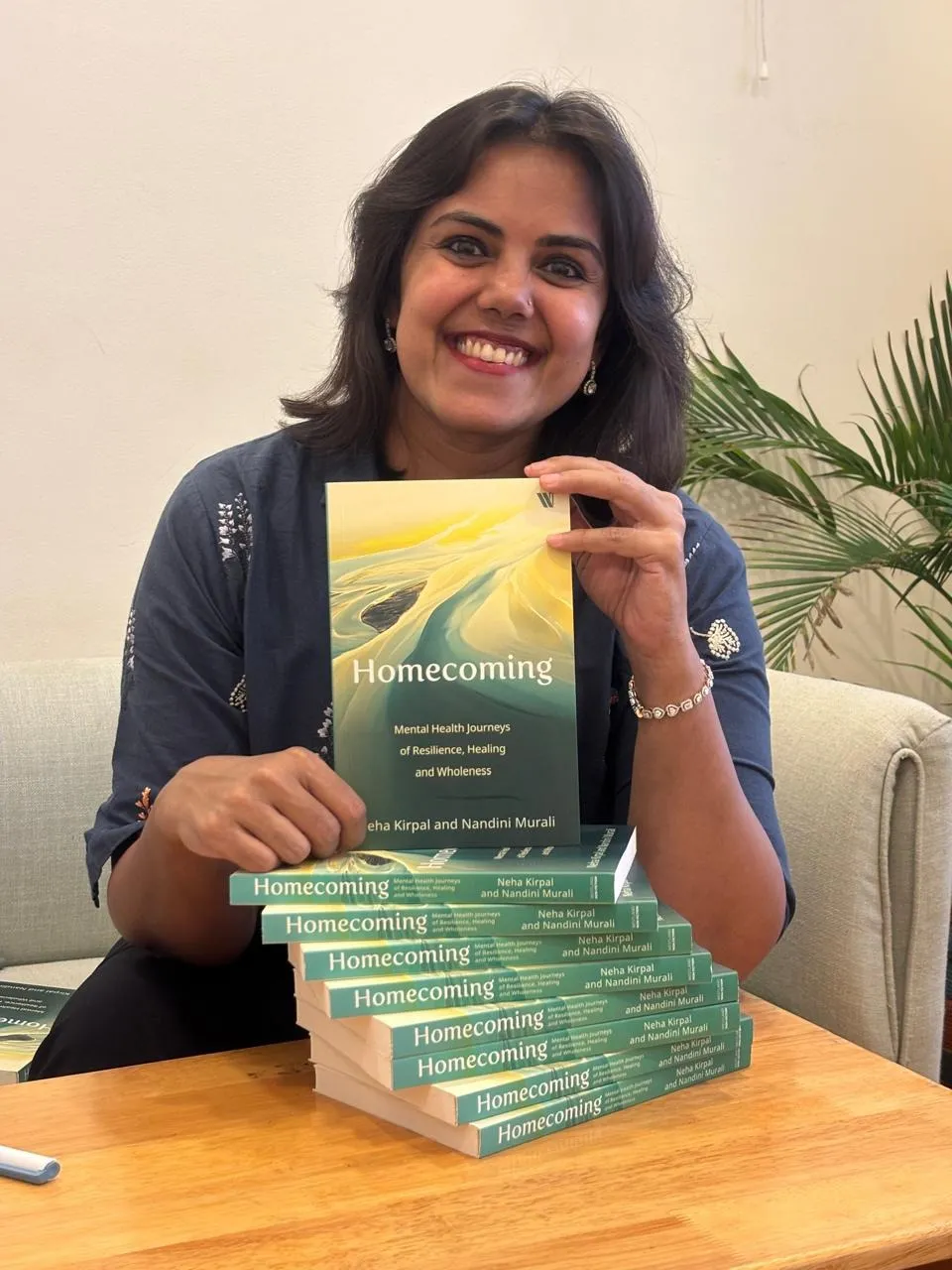
If building institutions was one form of healing, writing Homecoming was another.
The book, co-edited by Neha Kirpal and Nandini Murali, brings together the lived experiences of eleven women navigating severe mental health conditions — from depression, suicide loss and complex trauma to bipolar disorder, OCD and schizophrenia within families.
Emerging from spaces that are not always safe or supportive, the stories challenge the label of “brokenness” and reshape perspectives on what wholeness can mean.
Together they hold up a mirror to society’s discomfort with mental illness, while also revealing the quiet strength of families and individuals who learn to live alongside it.
For Neha, the book opened conversations that had never happened before.
Her father came to the book launch, and she felt him witnessing and understanding her journey. And for the first time in decades, she and her mother finally spoke openly about the illness.
 Through her school years, Neha built a parallel life outside the house — one that looked almost perfectly normal.
“After the book came it was the first time my mother and I ever talked about her illness.”
At events, audience members began sharing their own hidden stories.
“Everybody is just looking for somebody else to go first. When one person begins speaking, it often creates a sense of safety for others to do the same,” she explains.
What remains after the telling
There was a moment in my conversation with Neha that shifted how I began to understand her journey.
She spoke about something that often happens to people who grow up around trauma. Many feel an urgency to step into work that tries to repair what they once lived through.
But Neha’s path unfolded differently.
For many years, she deliberately kept a distance between her personal history and her professional life. She focused first on building herself — studying, working, and slowly making sense of the past she had grown up inside.
Only later did she step into the mental health space.
That distinction matters.
By the time Neha began working in mental health, she had stepped far enough away from the immediate impact of her childhood to recognise the larger systems around it.
What emerged from that distance was something larger than a personal mission.
Today, the work she leads does not revolve around her own story. It draws from it quietly — while relying equally on the collective expertise of clinicians, carers and people with lived experience.
Her relationship with mental health did not begin with a career choice.
It began at five, with a mother slipping into paranoia and a child trying to understand a world that no longer behaved predictably.
It deepened through violence, silence, disappearance and years of searching for her family — and for herself.
And then, slowly, it turned into work.
The little girl who once tried to become invisible now helps thousands of families find care, language and community.
And in that sense, her journey anchored in mental health has always been one story: the child who heard that the toothpaste was poisoned, and the woman who went on to help build the systems she and her family once needed.
Between them lies a lifetime — and a thread made of fear, survival, truth and finally purpose.
An inspiring journey of resilience, healing and wholeness, true to the title of the book Homecoming.