
On a dark winter morning in January, a veteran threatening to harm himself called 911.
The response was massive.
Officers rushed to Herring Run in Northeast Baltimore to locate him. A police helicopter circled overhead while first responders hiked a muddy trail frequented by people experiencing homelessness.
But this show of force — officers, medics and trained mental health counselors from the police department’s Crisis Response Team — was more the exception than the rule.
Nearly a decade after its inception, the specialty team works limited hours, hobbled by staffing shortages throughout the department. Once considered a hallmark model of responding to potentially dangerous mental health calls, the team is limited to three officers, one sergeant and one lieutenant who work a single, midday shift.
Accordingly, it has been unable to respond to recent calls that ended with high-profile police shootings of people in crisis, including a nonfatal encounter with a Bolton Hill woman brandishing a knife and the killing of a similarly armed 70-year-old woman.
The deadly shooting — one of a string of recent cases — spurred the City Council into oversight action, holding hearings on the city’s shortcomings in its response to behavioral health crises while looking at other cities’ approaches.
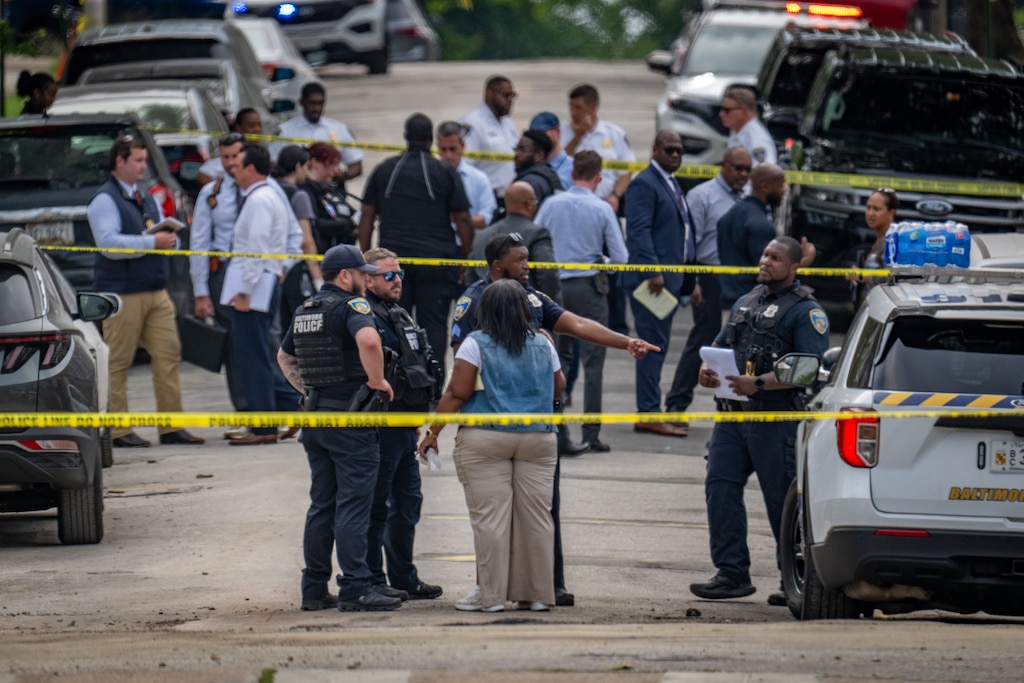 Baltimore Police officers on the scene of the shooting of Pytorcarcha Brooks, 70, who allegedly lunged at an officer with a knife during a mental health crisis in June. (Jerry Jackson/The Banner)
The department had made progress in its broader effort to train patrol officers to deescalate encounters with people in crisis. Today, roughly 30% of the force has completed the recommended “crisis intervention training,” up from 10% two years earlier, according to Baltimore Police.
More often than not, however, officers who haven’t completed the 40-hour crisis intervention course handle emergency calls related to mental health issues, according to a recent independent audit. All new officers receive behavioral health, mental health and deescalation training in the police academy.
In interviews with members of the Crisis Response Team, more than one said they were drawn to the work due to their own personal backgrounds in caring for loved ones with mental health and substance use issues.
The Baltimore Police Department, they said, is moving in the right direction.
“There’s always been an extreme need for behavioral health training,” said Officer Angelo Cossentino, a 22-year department veteran who has worked with the Crisis Response Team for eight years. “We’ve just started to address something that’s really, really needed.”
Waiting for action
The Crisis Response Team was created nearly a decade ago, prompted in part by the federal investigation into the city’s police department following the 2015 in-custody death of Freddie Gray.
Around that time, Baltimore Police entered court-monitored federal oversight, which includes mental health reform mandates.
Cossentino estimated the team responds to two or three “very serious” calls per week. Much of its time is spent checking on people door to door — about 20 per day — from a list of mental health patients who experienced an acute crisis that led to extreme measures, including forced hospitalizations.
“We sit around waiting for action like the fire department,” Cossentino said.
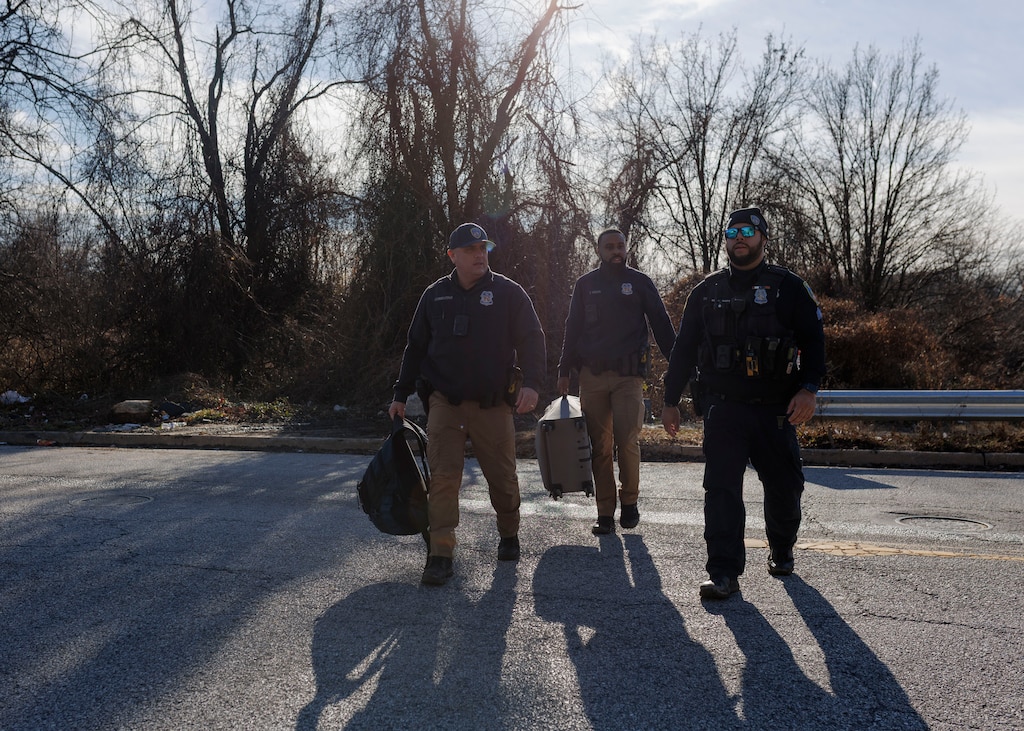 From left, officers Angelo Cossentino and Tim Dixon and Sgt. Rene Aguilera carry the belongings of an unhoused person to transport them to a shelter during a crisis response call. (KT Kanazawich for The Banner)
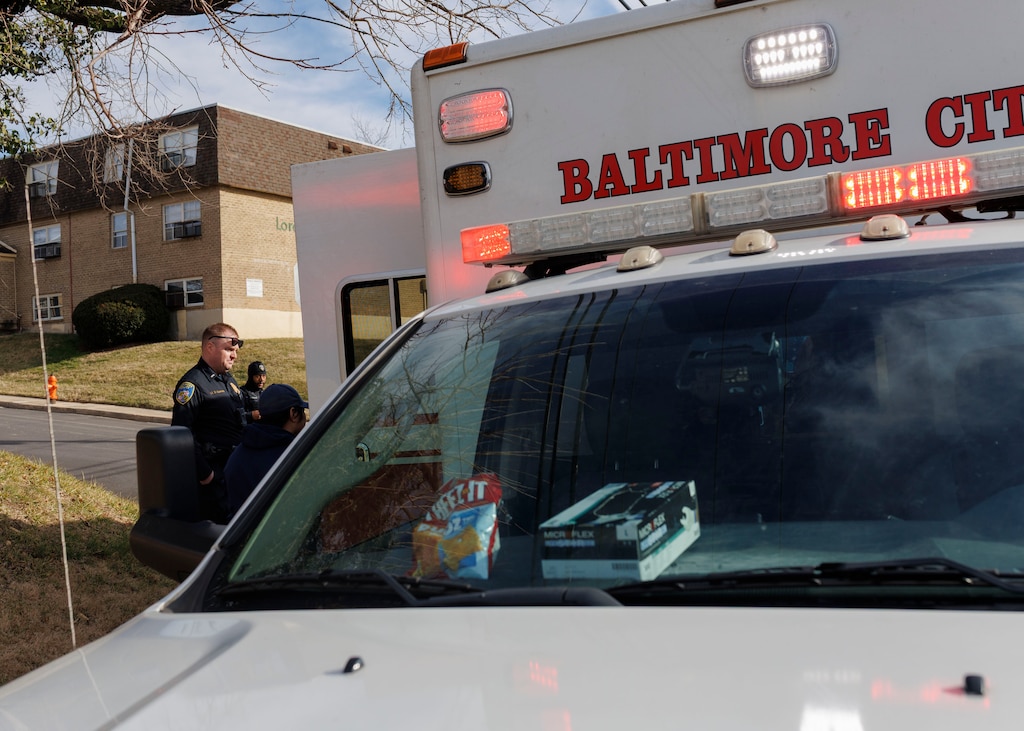 Officers, medics and trained mental health counselors from the police department’s Crisis Response Team respond to a call in January. (KT Kanazawich for The Banner)
For the department veteran, crisis intervention brings a unique set of rewards that an average police officer often misses.
“You can see the results of your work,” he said, reflecting on cases in which he’s seen people get connected to resources and improve their lives.
Cossentino is also proud of the team’s track record in deescalation.
“In seven years, I can count on one hand the amount of times we have used force,” he said.
Chief Shannon Sullivan, who oversees the team, said Baltimore Police would like to expand its capabilities with more civilian mental health experts but can’t.
“We would need another clinician,” Sullivan said. “Getting clinicians to do this work, and paying them appropriately … is a challenge.”
 During a January search for a homeless veteran, a group of police officers, mental health clinicians and a fire department medic spent more than an hour convincing him to turn over his pocketknife so he could be admitted for crisis care. (KT Kanazawich for The Banner)
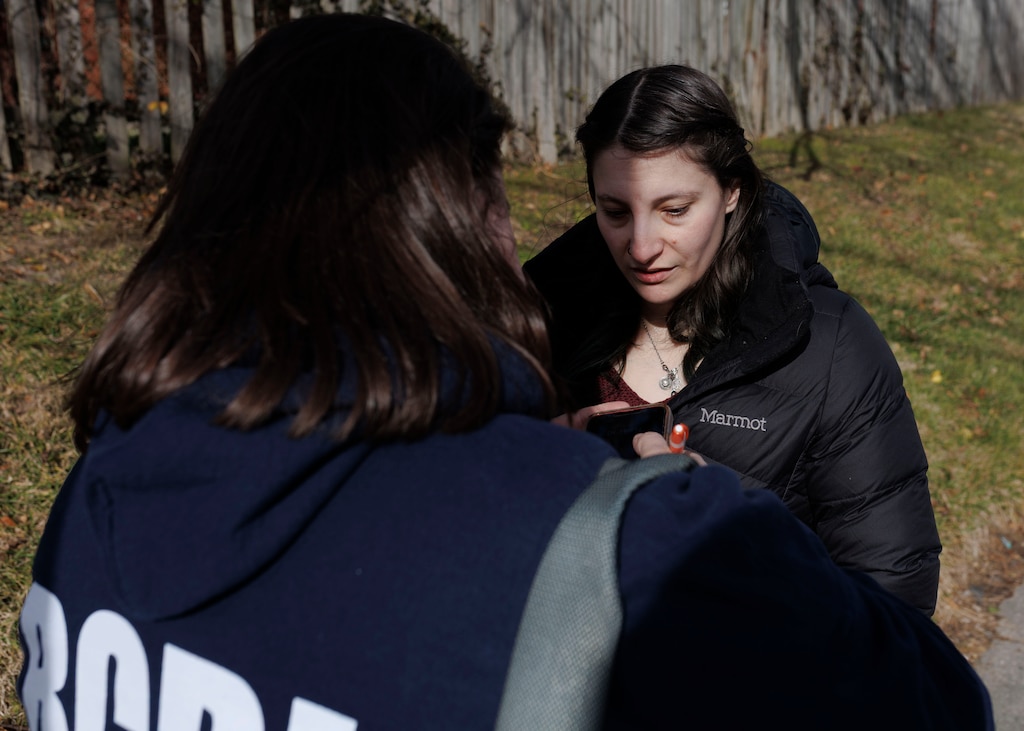 Licensed social workers Deana Krizan, left, and Brittany Trexler make calls seeking resources on behalf of an unhoused person during a crisis response call. (KT Kanazawich for The Banner)
Outside the department, there is a growing movement away from this approach.
City Council President Zeke Cohen, following a pattern of reforms in cities across the country, is pushing for an “alternative response” model that diverts 911 calls to licensed clinicians, unlicensed “peers” or a combination of the two.
Shannon Scully, director of justice policy and initiatives at the National Alliance on Mental Illness, said Baltimore has made incremental moves but lacks a cohesive approach to dealing with people in crisis. She said Cohen’s efforts were encouraging.
“There’s evidence that the sooner you are connecting someone to the behavioral health system, and bypassing that law enforcement interaction, the more likely that person is getting onto the road to recovery,” Scully said.
Baltimore already has some 911 diversion, as well as non-police “mobile crisis response” teams, but the programs are sparsely staffed and limited in scope. An independent audit released late last year reviewed the city’s response to a sampling of nearly 100 behavioral health-related calls and found at least 15% of them should have been referred to crisis response teams instead of police but weren’t.
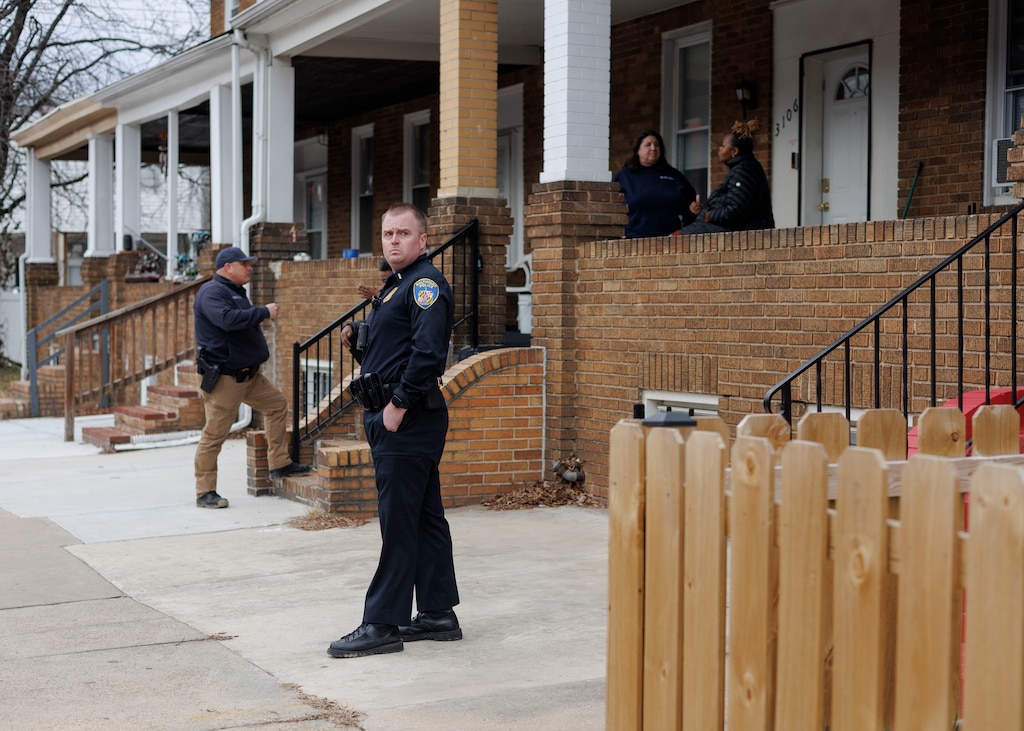 Much of the team’s time is spent checking on people door to door from a list of mental health patients who experienced an acute crisis that led to extreme measures, including forced hospitalizations. (KT Kanazawich for The Banner)When police aren’t the answer
Cohen said in an interview that he wants to see Baltimore follow the models of cities such as Denver and Durham, North Carolina, which have diverted 5% or more of their 911 calls from police. Baltimore diverts about 1.5%.
Cohen and some of the mayor’s staff traveled to Durham recently to learn about the city’s more robust 911 “community response” program.
“Our officers are asked to do an extraordinary amount of what I would consider to be non-police work,” Cohen said, expressing concern that the department is being pulled away from its primary mission of fighting crime.
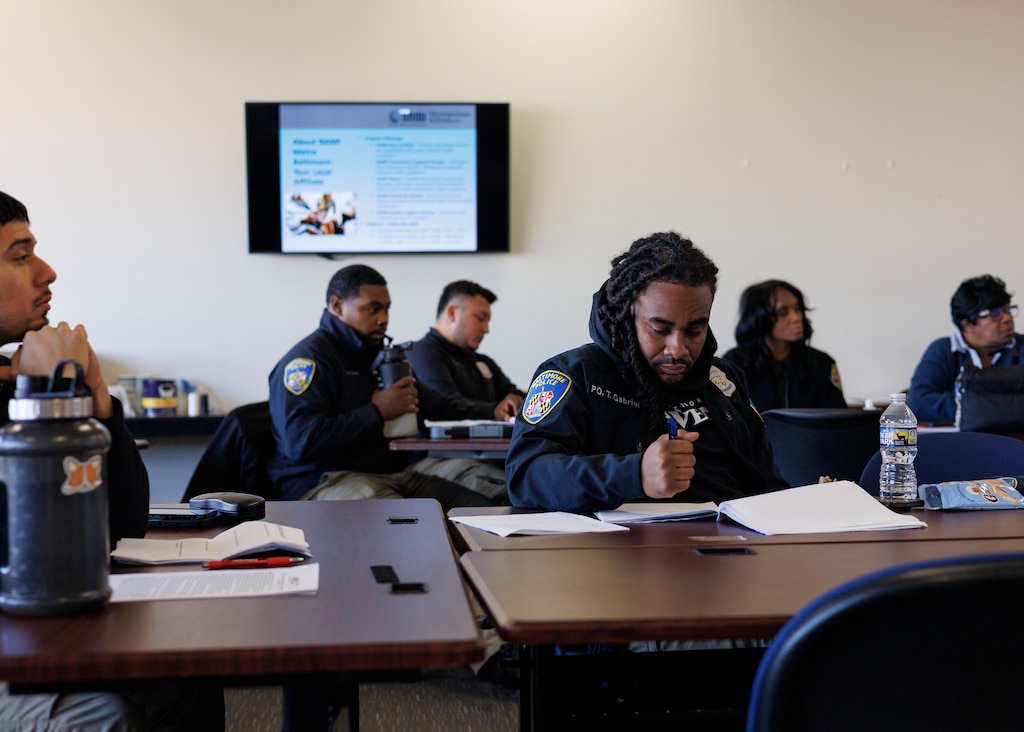 Baltimore Police officers, dispatchers and other first responders attend a mental health awareness training with the National Alliance on Mental Illness. Roughly 30% of the force has completed a recommended “crisis intervention training,” according to BPD. (KT Kanazawich for The Banner)
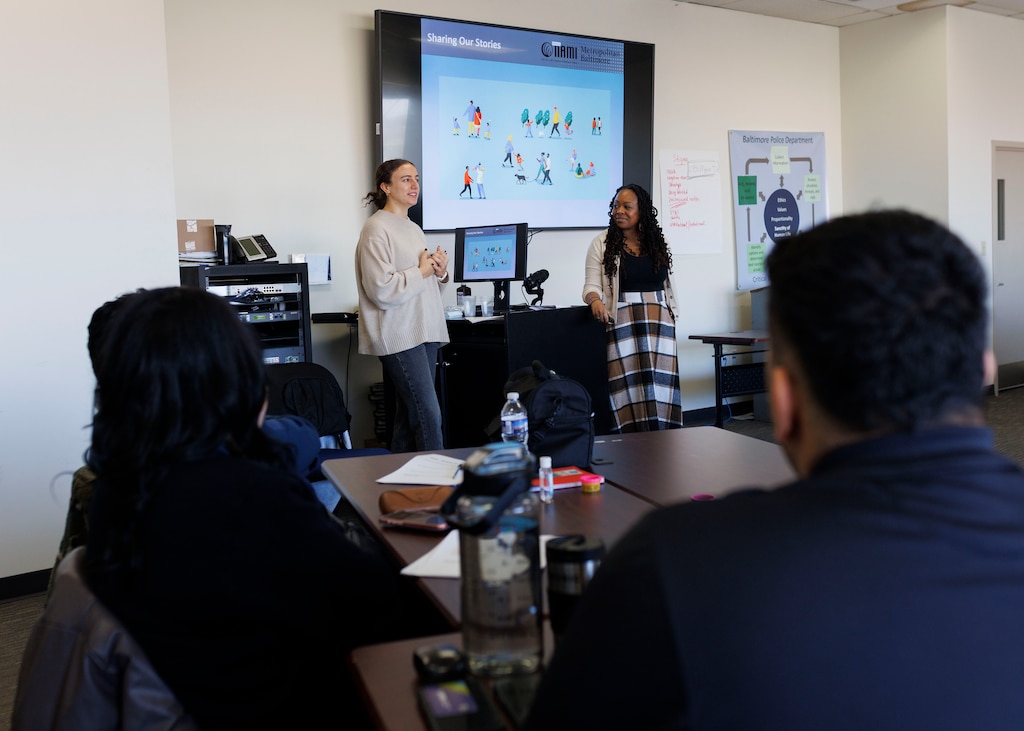 NAMI volunteers Alexandra Bessler and Joy Binion talk about their experiences as family members of people with mental illness as part of a training for first responders. (KT Kanazawich for The Banner)
Sullivan, the Baltimore Police chief who oversees mental health initiatives, said the department supports diverting more calls, “but the devil is in the details.” Some callers, she said, specifically request police assistance.
“People often say, ‘No, I want the police to respond,’” Sullivan said. “And I think part of that is because it’s what they know. And change is hard for everyone.”
During the January search for the homeless veteran, a group of police officers, mental health clinicians and a fire department medic spent more than an hour convincing him to turn over his pocketknife so he could be admitted for crisis care. The city has only 21 such beds available at a local nonprofit facility.
Team members described the episode as a success.
“He just wanted to get out of his situation, so … strike while the iron is hot,” said Deana Krizan, the clinical social worker on the scene with the team.
Krizan, a longtime social worker who has worked with the team for nearly a decade, said she believes the joint venture with law enforcement is paying off.
“The police presence was helpful because we didn’t know what we were walking into,” she said.
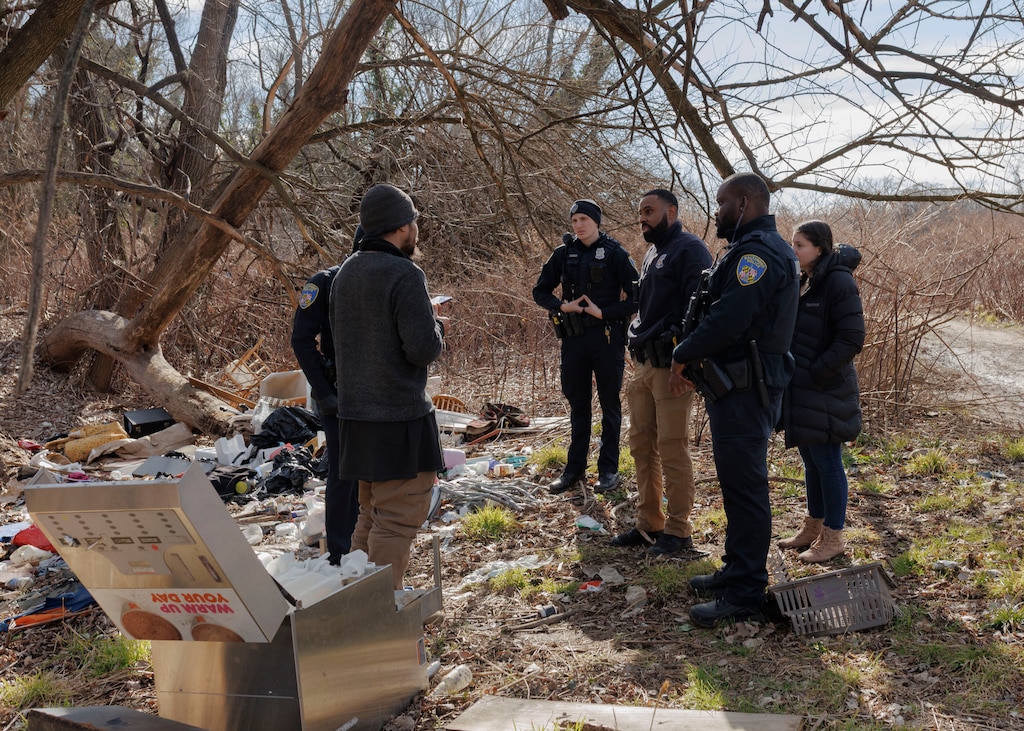 Police officers and other members of the Baltimore Police Crisis Response Team speak to an unhoused person who made a call for help. (KT Kanazawich for The Banner)
Cossentino pointed out that the man had specifically requested a police officer who was also a military veteran as a condition to give up his knife. He questioned whether the armed man would have ditched his weapon for someone else.
“Having the police there is sometimes good; sometimes it can escalate,” he said. “In my personal experience, it totally goes by what the situation is.”
The veteran officer and social worker questioned whether clinicians would feel comfortable responding to those calls without police.
“It can turn very quickly into something that maybe a mental health professional can only do so much,” Cossentino said. “And by that time, if the call comes out over the air: two minutes, three minutes, five minutes. That’s a very long time if someone becomes agitated and you need police.”
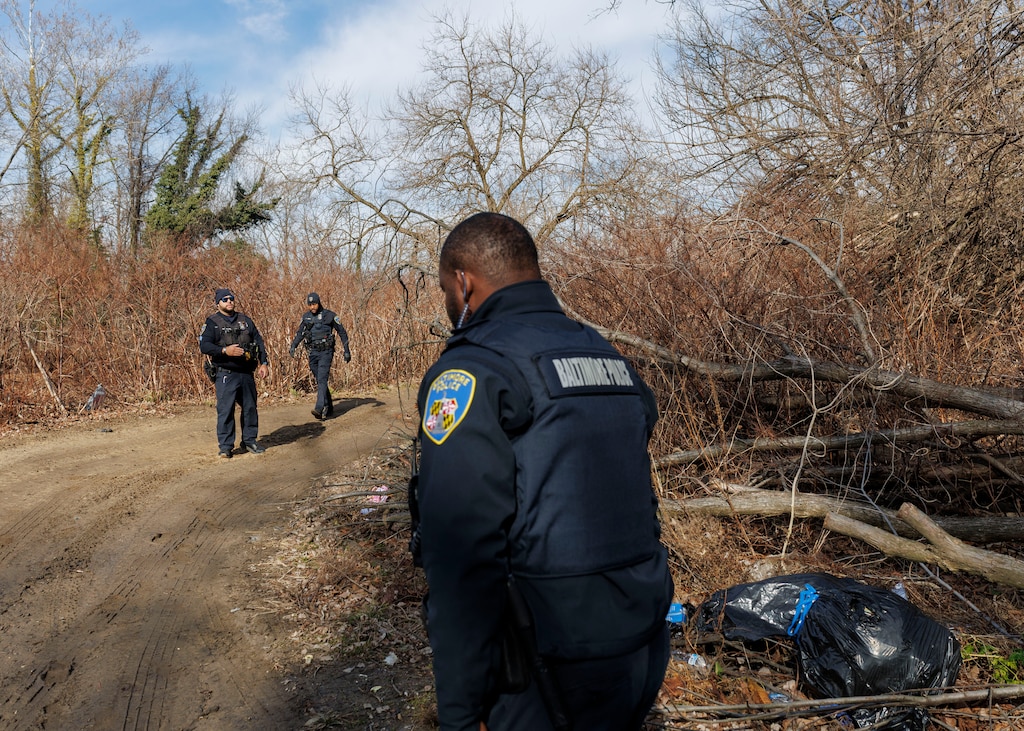
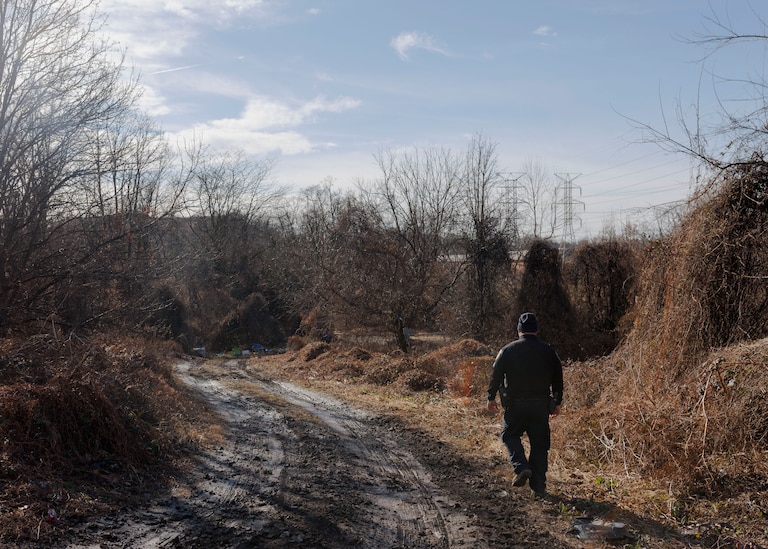 A Baltimore Police officer walks down a trail to pick up belongings for an unhoused person. (KT Kanazawich for The Banner)
Scully, the policy expert for the National Alliance on Mental Health, said she understood that sentiment but questioned whether it was realistic, given the strained resources for cities such as Baltimore.
Social workers, Scully said, respond without police to what are statistically higher-risk scenarios, such as welfare checks for children in abusive homes.
“Most professions don’t get a bodyguard,” she said.