
By Irene Rotondo
masslive.com
WORCESTER, Mass. — A federal civil rights lawsuit has been filed against Worcester, accusing the city of endangering people in mental health crisis by sending armed police to 911 calls instead of trained clinicians — a practice advocates say violates disability law and leaves children and adults traumatized, injured and afraid to call for help at all.
The suit was filed in U.S. District Court on Monday by three major mental health groups — the National Alliance on Mental Illness (NAMI) of Central Massachusetts, NAMI-Massachusetts and the Parent-Professional Advocacy League.
| HOT TOPIC: Unions: Low pay could drive 1/3 of NYC EMS workforce out the door in 2026
It juxtaposes 911 calls made by Worcester residents for physical health emergencies with those involving mental health crises, highlighting how “armed police officers” enter situations that call for clinical care and escalate crises instead of stabilizing them. This disparity, the groups argue, amounts to discrimination under the Americans with Disabilities Act and Section 504.
“None of the City’s policies, procedures or practices provides for mental health professionals to be first responders to mental health emergency calls,” the complaint states.
“It is not a crime to experience a mental health crisis, and the City should not respond by sending armed police to mental health emergencies. People with mental health disabilities deserve better,” said Steven Schwartz, Special Counsel at the Center for Public Representation.
The City of Worcester declined to comment on the lawsuit to MassLive, stating it had “not officially been served this complaint yet” as of 11:50 a.m. Monday.
“We value our longstanding partnerships with law enforcement. At the same time, we recognize that the City’s response to individuals with mental health conditions in crisis is not equitable, effective, or adequate,” said Eliza Williamson, Executive Director, NAMI Massachusetts. “The Americans with Disabilities Act is built on the simple belief that people with disabilities deserve dignity, equity, and meaningful access to the support they need.”
The suit argues Worcester’s 911 system violates federal disability law by treating mental health emergencies fundamentally differently from physical health emergencies.
When a resident calls 911 for a heart attack or other medical crisis, the city dispatches EMTs and paramedics trained to assess, stabilize and provide clinical care. But when the emergency involves suicidal thoughts, panic, psychosis or trauma, the complaint argues Worcester’s “default” is to send armed police officers — even though officers “are not qualified to perform the core functions of an emergency mental health response,” and their presence alone can escalate a crisis.
The plaintiffs cited examples of families whose children or relatives received no mental health support after calling 911, but instead were involuntarily committed, told to go to the emergency room or arrested — including two autistic boys in two different incidents, aged 10 and 14. Officers kicked down the teen boy’s bedroom door and physically restrained him. In the other incident, they fractured the 10-year-old’s arm.
The suit also points to Worcester Police Department policy that limits officers’ options to arrest, involuntary commitment or transport, noting research that shows people with mental illness are nearly 12 times more likely to experience police use of force.
As a result, the plaintiffs argued, many Worcester residents now avoid calling 911 altogether, turning instead to NAMI or PPAL for help during emergencies.
The complaint also highlights the city’s short‑lived Mental Health Crisis Response Team that was launched in 2023 and staffed by clinicians and peers. According to the suit, the team operated only on limited hours, was rarely dispatched as the first responder and was often sent only after police had already intervened — undermining its purpose.
Worcester then disbanded the program after less than 18 months, leaving no unarmed clinical response in place. The plaintiffs argue that this failure to provide a health‑based response for psychiatric emergencies denies people with mental health disabilities equal access to emergency services and violates the Americans with Disabilities Act and Section 504.
“The current system leaves people in Worcester feeling that there is no available help for individuals experiencing mental health emergencies. We have hope that this lawsuit will bring about positive change,” said Robin Bahr Casey, President, Board of Directors, NAMI Central Mass.
The plaintiffs are asking a federal judge to order Worcester to overhaul its 911 system so that mental health emergencies receive a clinical, unarmed response comparable to the care provided during physical health crises. They argue the city must redesign its dispatch policies, train staff and create or reinstate a dedicated mental health crisis team to comply with federal disability law.
The case in Massachusetts comes as cities across the country face mounting pressure, and in some cases, federal investigations, over police‑led responses to psychiatric emergencies.
The Worcester Police Department was sharply criticized for its use of excessive and unjustified force in a 2024 Justice Department report following a two-year investigation. Worcester police officers unnecessarily and rapidly escalated minor encounters with the public, including with people who had behavioral disabilities or were in the midst of mental health crises, the Justice Department said in its report.
Root causes, federal authorities said, were deficient training and supervision of officers, insufficient accountability and missing policies. Several initiatives were announced by Worcester City Manager Eric D. Batista following the report, including a hotline for members of the public to report misconduct by police officers.
This hotline was to be managed externally, by the investigations division within the Executive Office of Diversity, Equity and Inclusion (EODEI). The EODEI also was to lead training sessions, seminars and workshops on behavioral health, implicit bias and additional topics, all of which will align with and inform written policy within the police department.

A private ambulance driven by a relative ran a red light and crashed into another car, leaving an infant dead and the child’s mother hospitalized, police said
March 16, 2026 09:42 AM
·
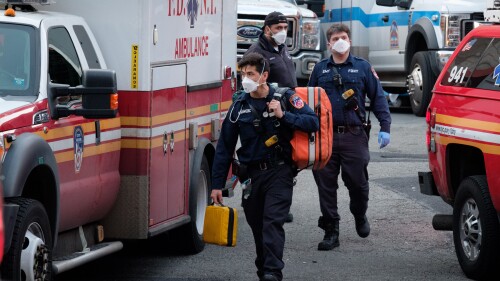
Union leaders warn up to 1,500 EMTs and paramedics may leave in 2026 as pay disparities with firefighters worsen staffing shortages and response times
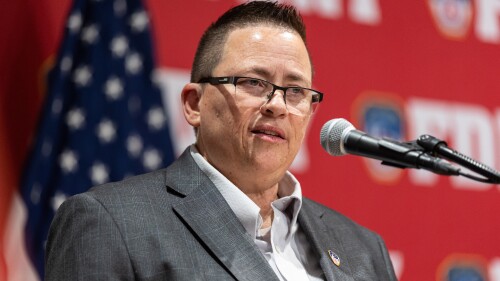
Lillian Bonsignore, the first former EMT to lead the FDNY, reflects on the department’s uneasy 1996 merger with EMS
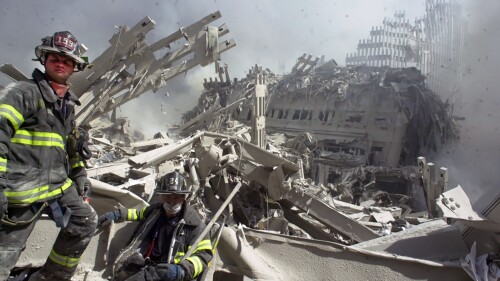
Advocates and lawmakers warn staffing shortages at the World Trade Center Health Program are causing treatment delays for sick 9/11 responders and survivors
©2026 Advance Local Media LLC.
Visit masslive.com.
Distributed by Tribune Content Agency, LLC.
ImageTrend releases 2025 EMS Insights Report highlighting national trends shaping prehospital care