
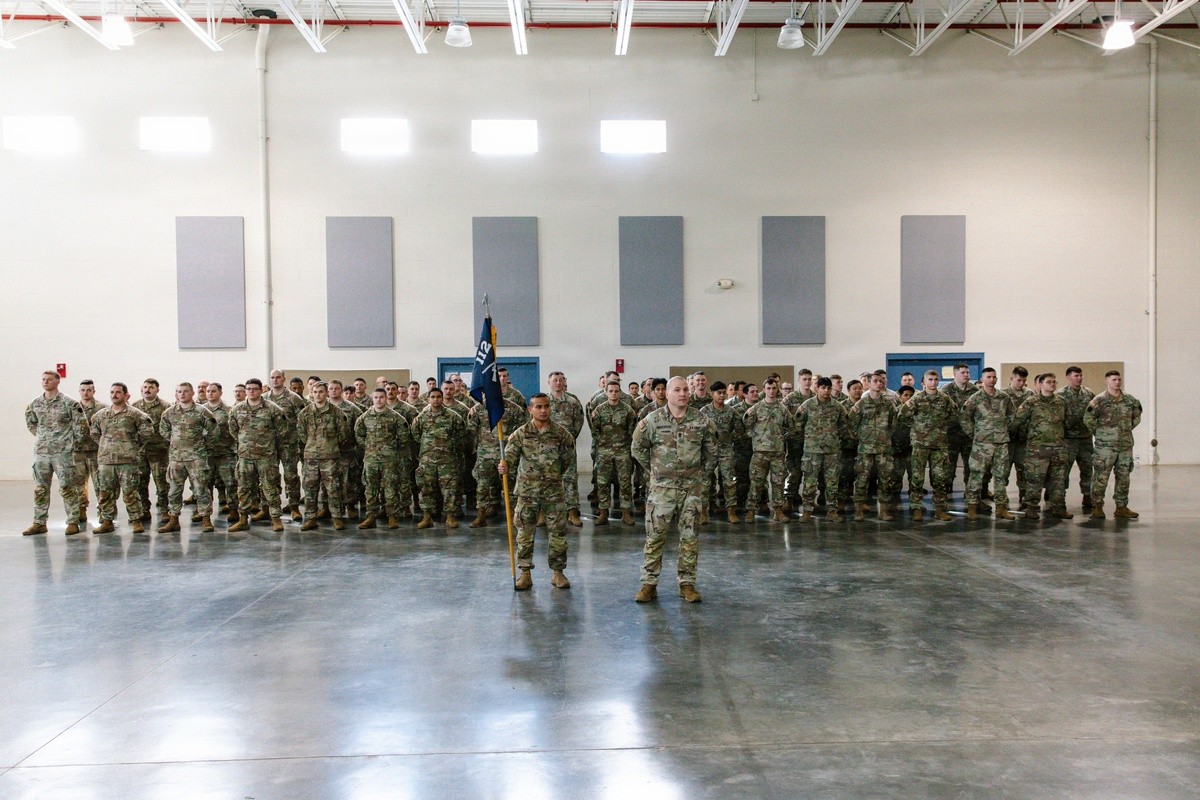
The Behavioral Health Pulse gives Commanders a reliable…
(Photo Credit: (U.S. Army Photo))
For Commanders who want to understand challenges affecting their Soldiers and potentially undermining unit readiness, the Behavioral Health Pulse offers a quick, data-driven snapshot of possible sources of unit stress—from unit cohesion to relationship conflicts to alcohol misuse.
“The BH Pulse gives Commanders a reliable and fast way to assess behavioral health stressors across their formation … (enabling them) to design interventions to keep their formations lethal and ready,” said Maj. Oscar Gonzalez, Ph.D., a Research Psychologist at the Army’s Directorate of Prevention, Resilience and Readiness.
The BH Pulse is a capability that supports the Suicide Prevention and Response Program and consists of a 15- to 20-minute anonymous survey of Soldiers, for use by Commanders. It contains multiple scientifically validated questions related to four main categories: Behavioral Health, Work Environment, Social Relationships and Deployments.
The survey is digital and comes at no cost for Commanders. They can use this visibility tool if they are anticipating a deployment, overseas rotation or increase in operational tempo and want to understand and address any problems ahead of time. The tool can also be used if Commanders want a general baseline understanding of where their unit currently stands regarding behavioral health, or if they recently returned from a deployment or there was a recent stressful event at their unit and they want to assess what type of help their unit needs, Gonzalez said.
DPRR recently expanded the operational capability of the BH Pulse to ensure Command Teams Army-wide can execute a BH Pulse at their unit. Typically, Behavioral Health Officers request the BH Pulse, administer it and analyze results. However, for units without a BHO, the BH Pulse portal is now a self-service system that allows Commanders to activate the BH Pulse for their unit, administer the survey and obtain the results.
“If you’re in charge of people, you should have the ability to see and understand and measure these variables,” Gonzalez said. “Understanding the current state of risk among formations is the first step to intervene and foster a lethal warfighting force.”
Besides the four main categories, the BH Pulse has additional optional categories that Commanders can add to the main survey to address their current concerns. This includes categories asking questions about National Guard and Army Reserve activation, financial well-being and burnout.
The results, which can be received within days of activating the survey, are given in a report that provides the prevalence of unit behavioral health factors as well as recommendations for mitigation strategies. Command teams can make use of organizational and installation resources to address areas of concern.
The survey also allows Commanders to see how their unit compares with other populations in the Army. Over 220,000 BH Pulse surveys have been collected since October 2020, and the BH Pulse uses this data to provide a comparison of their unit with other combat arms, support or National Guard and Reserve units Army-wide. Commanders can also view historical BH Pulse results for their units, when available.
Unlike other military surveys, the BH Pulse is not CAC-enabled, so Soldiers who take it remain anonymous and the data is kept confidential. Soldiers are provided with a random PIN they use to access the survey, and it can be taken on a mobile device or via a computer. DPRR recommends at least 70% unit participation to ensure robustness of the data.
To request a BH Pulse for your unit, contact the BH Pulse team at usarmy.pentagon.hqda-dcs-g-1.mbx.bhpulse-helpdesk-mbx@army.mil. To learn more about the BH Pulse, visit the DPRR website: www.armyresilience.army.mil.