
NEW YORK — Mayor Zohran Mamdani signed an executive order creating a new Office of Community Safety, a move aimed at expanding how the city responds to mental health and crisis-related 911 calls.
The new office is designed as the first step toward a broader Department of Community Safety, a campaign promise Mamdani says will take a “whole-of-government” approach to crime prevention — one that places greater emphasis on mental health response, violence prevention and social services, including alternative response models that may intersect with EMS.
Renita Francois was appointed on March 19 to serve as deputy mayor of community safety.
“For too long, we have approached crime and safety by placing only ever-expanding expectations on the police department,” Mamdani said during a press conference announcing the initiative. “We have asked them to address every failure of our social safety net.”
What the new office will do
The Office of Community Safety will consolidate several existing city functions under one umbrella, including:
Crime victim servicesGun violence preventionDomestic and gender-based violence preventionHate-crime preventionCommunity mental health programs
It will also coordinate crisis response efforts, including the city’s B-HEARD program — a civilian-led response model for certain mental health calls.
Mamdani outlined three main divisions within the office:
Neighborhood safety, focused on violence prevention and victim supportCommunity mental health, overseeing crisis response and long-term care strategiesStrategic initiatives aimed at developing new public health-based safety approaches
The office will be led by a commissioner reporting to Francois, who will oversee citywide strategy and coordination across agencies.
Focus on mental health response
City officials said the new structure will play a key role in expanding B-HEARD, which has been used to respond to some mental health-related 911 calls.
“This division will oversee the Office of Community Mental Health and manage policy for crisis response, including in vital programs like B-HEARD,” Mamdani said.
He described the program as “underfunded and under-supported” and said the new office will guide additional investment to expand its reach to more neighborhoods.
Currently, 911 calls are screened to determine whether they are eligible for a B-HEARD response and whether teams are available to respond.
“Today there are a number of calls that come in that are deemed to be eligible for a B-HEARD response, but there is simply not the capacity,” Mamdani said.
He added that the goal is to ensure people in crisis “actually receive the care that they need and that their only option is not simply a police response.”
Mamdani noted that B-HEARD operates within the city’s existing emergency response system, with some operational components tied to FDNY.
“B-HEARD has operational parts of it that fall within the FDNY,” he said.
The new Office of Community Safety will oversee policy, coordination and expansion of the program, while working across agencies involved in emergency response.
A phased approach
City officials emphasized that the March 19 announcement is only the beginning.
The Office of Community Safety will first conduct an assessment of existing programs and identify which initiatives can be expanded. Plans for staffing, budget and operational scope — including how many calls could ultimately be handled outside of police — were not revealed.
“This is the start,” Mamdani said. “New Yorkers cannot afford to wait for city government to finally take seriously these kinds of crises.”
Francois, who previously led the Mayor’s Action Plan for Neighborhood Safety under Mayor Bill de Blasio, said the effort will focus on coordination and long-term investment.
“We have a ton of expertise, programs and resources,” she said. “Our responsibility is to take these disparate programs and create a cohesive strategy.”
Broader shift in public safety strategy
The administration is positioning the new office as part of a broader shift toward addressing what officials describe as the root causes of crime — including poverty, mental health challenges and lack of access to services.
Mamdani said the current system relies too heavily on a “patchwork of programs” and places unrealistic demands on police.
“We must instead pursue a whole-of-government model. One where our strategies are centralized and implemented with coordination and at scale and one which a deputy mayor oversee,” Mamdani said.
Would shifting some mental health 911 calls to specialized response teams improve patient care — or create gaps in emergency response?
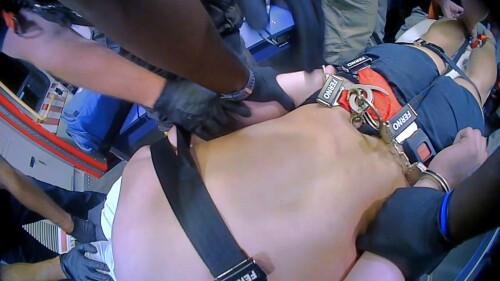
A federal judge dismissed a wrongful death lawsuit alleging Bristol responders used excessive force and denied care to a 23-year-old during a medical emergency in 2017
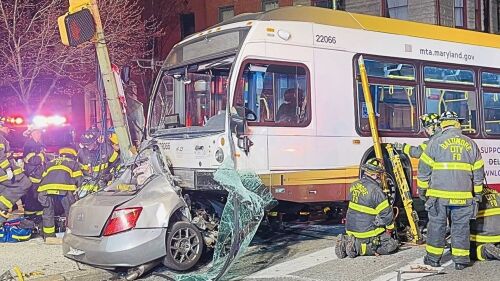
Firefighters, medics and special operations units responded to a bus crash, with one patient requiring a complex extrication

Understaffed, overworked first responders need robust wellness programs to combat stress
March 19, 2026 12:05 PM
·
Distinguishing between the conditions starts with fluid history and symptom patterns
March 19, 2026 11:04 AM
·

Strategic East Coast expansion strengthens nationwide 1–2 day shipping and extends live customer care hours for First Responders