
This article is a part of “Mental Health Snapshot,” a reporting collaboration between Tulsa Flyer, The Oklahoma Eagle, The Frontier, KOSU, La Semana and Focus Black Oklahoma on mental health and resources in Northeast Oklahoma.
All editorial decisions for this series are made by the participating newsrooms.
Major series support provided by: Healthy Minds Policy Initiative
On a quiet stretch of land in the small town of Cement, Oklahoma, a modest white house sits just off the road, surrounded by farmland.
Inside, Brittany has set up a life that matters to her. A framed photo of her and her husband hangs in the entryway. Dozens of Legos and trinkets fill the shelves lining her living room walls.
Brittany — whose last name KOSU is withholding because she discusses suicide — moved to the rural Oklahoma town eight years ago and said she has gotten used to the slower pace of life that comes with it, making weekly trips into Chickasha for groceries. Still, there are moments when being out in the countryside can feel isolating.
This winter, during a stressful holiday season, the isolation hit a little harder than normal.
Following a difficult, lengthy visit from family members, Brittany said she was having trouble managing her emotions. Hurtful comments made by her mother-in-law were swirling in her head. In a moment of desperation, Brittany turned to her phone and looked up how many pills she would need to take to cause an overdose.
“My personal world just felt like it was imploding,” she said. “If I died I wouldn’t feel anything anymore. If I died I wouldn’t have this pain.’’
Brittany has struggled with suicidal ideation for years. It’s a symptom of her depression and histrionic personality disorder. She’s found a good mix of therapy and mental health medication to manage her diagnoses, but sometimes, everything boils to the surface.
This time, for the first time, Brittany clicked a link to text 988, the National Suicide & Crisis Lifeline. She knew she needed help, but the sun had already set, and the closest hospital was miles away.
“I texted 988,” she said. “To have someone else there, that was even just willing to listen in that moment … really helped.”
Brittany was one of thousands of Oklahomans who used the 988 hotline in November, adding to the increasing calls, texts and messages local operators logged in the past three years. The total includes callers who have self-reported to be citizens of 36 of the state’s 39 sovereign tribal nations.
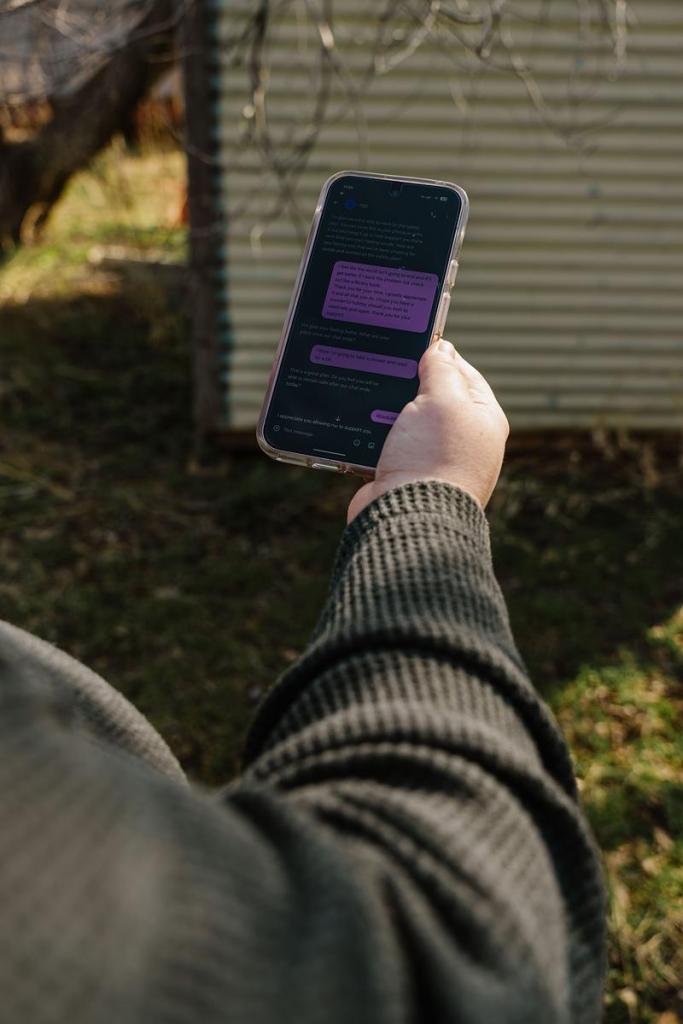 Brittany’s conversation with a 988 operator that she says kept her safe. KOSU is withholding her last name because she discusses her own suicidal ideation. Credit: Loren Knight for KOSU
Federal investments supported the launch and implementation of 988 nationwide in 2022, but ongoing funding for local call centers, as well as the development of other core components of the behavioral health crisis continuum, largely fell to state and local governments.
Since then, calls to 988 have increased more in Oklahoma than any other state, nearly doubling between 2022 and 2024.
For Derek LeMaster, who oversees Solari, the company in charge of picking up the calls, the increase is a sign people who need help are reaching out.
“There’s not a wrong time or a wrong reason to call,” he said.
In Oklahoma, officials have worked hard to prop up a system that works, according to Tony Stelter, who helps run the state’s mental health facilities for the Oklahoma Department of Mental Health and Substance Abuse Services.
“The Substance Abuse and Mental Health Services Administration … they wanted someone to call, someone to respond and somewhere for folks to go,” Stelter said. “And we took that really seriously.”
Someone to respond
Tucked inside a tall office building in Tulsa, mental health professionals, case managers and therapists intermingle, each assigned to a cubicle with a landline and headset.
The group staffs a call center operated by local nonprofit Family & Children’s Services, and can be dispatched by 988 operators to emergency mental health crises in the area.
On a normal Wednesday in January, employees Rachel Wimp and Clara Anderson geared up to visit an 88-year-old woman who’d joked about killing herself on the phone with bill collectors.
Along with harm reduction supplies, like gun safety locks and drug deactivation kits, their car was stocked with a large plastic bag of cat food.
“Animals are a really big thing for people,” Wimp said. “And so that can be a great way to kind of bridge that gap.”
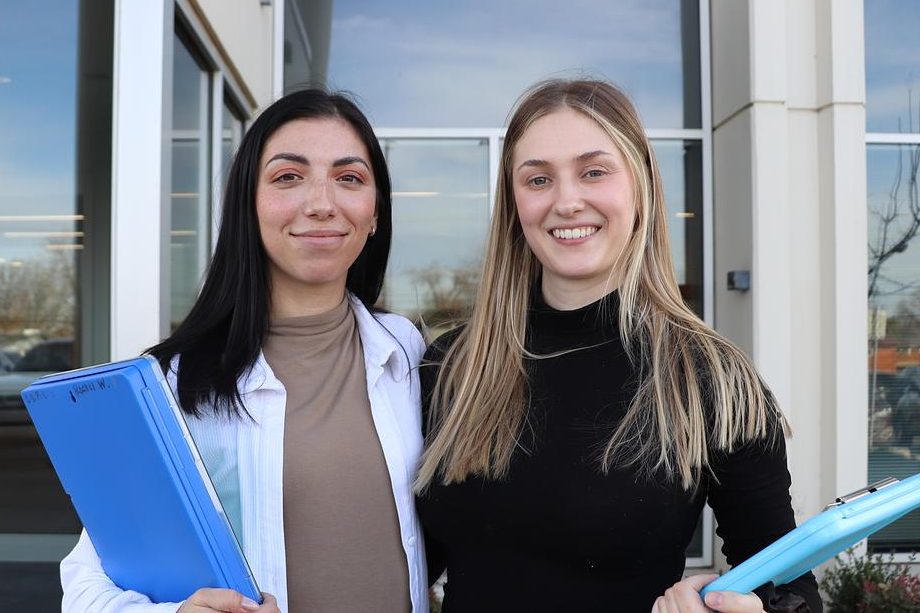 Rachel Wimp, left, and Clara Anderson pose for a photo in front of the Family & Children Services’ call center. The two regularly respond to mental health crisis calls for the 988 hotline.
Anderson said mental health emergencies can look very different from person to person. She and Wimp have grown accustomed to thinking on their feet, but 988 dispatchers are good at providing them with details beforehand.
“You get a much bigger picture of people’s lives when you see them in person,” Anderson said. “Their environment, their social support, families — things that all really contribute to mental health.”
Anderson and Wimp are counselors and have been trained to de-escalate high-tension mental health emergencies and connect people to long-term care. During their visit with the cat owner, they helped her get plugged into case management at a senior service center in the area.
Between July and December, mobile crisis teams at Family & Children’s Services were dispatched to 573 calls.
The Department of Mental Health also partners with a dozen other mental health providers to create a patchwork of mobile response teams that can be dispatched to crises by state 988 operators. Still, agency officials report 90% of 988 calls in Oklahoma are resolved entirely over the phone.
988 and 911
Operators at the Oklahoma City Police Department’s 911 communications center have a direct line to transfer callers to the 988 hotline. It was the first of a growing list of local integrations at police departments being facilitated by the Department of Mental Health.
Management specialist Katherine Underwood said putting the systems together has opened the door for a new kind of response to mental health calls that come into the police station.
“When 988 was introduced, it completely changed the way we process calls,” she said. “Up until that point, we always sent an officer.”
Transferring mental health calls to 988 frees up emergency lines for other crises, Underwood said. It also helps reduce the total number of 911 calls the center receives, and means people are met with appropriate care.
“We’re a stopgap measure compared to a system that’s set up to truly focus on the client and their individual needs and follow up with them,” she said. “That’s what’s so great about 988.”
The state mental health agency has completed similar integrations at nine other 911 call centers and police stations. As a result, 40 mobile teams were dispatched to a scene with, and at the request of, law enforcement in February. In the same time, 73 calls that came into 911 call centers were transferred to the 988 hotline.
“No matter which street you take as far as dialing 911 or 988, you know that you’re going to be getting the services that you really need,” Underwood said.
During an interim study in October, Rep. Tim Turner, R-Kinta, estimated the 988 hotline saves Oklahoma taxpayers millions every year.
“Beyond its lifesaving reach, 988 also is a smart investment for Oklahomans,” he said.
A data analysis by Health Minds Policy Initiative, an Oklahoma nonprofit working to improve mental health across the state, found collaboration between Family & Children’s Services and 911 operators in Tulsa saved the city almost $110,000 in six months. Savings were split between the police department, fire department and the ambulance service EMSA.
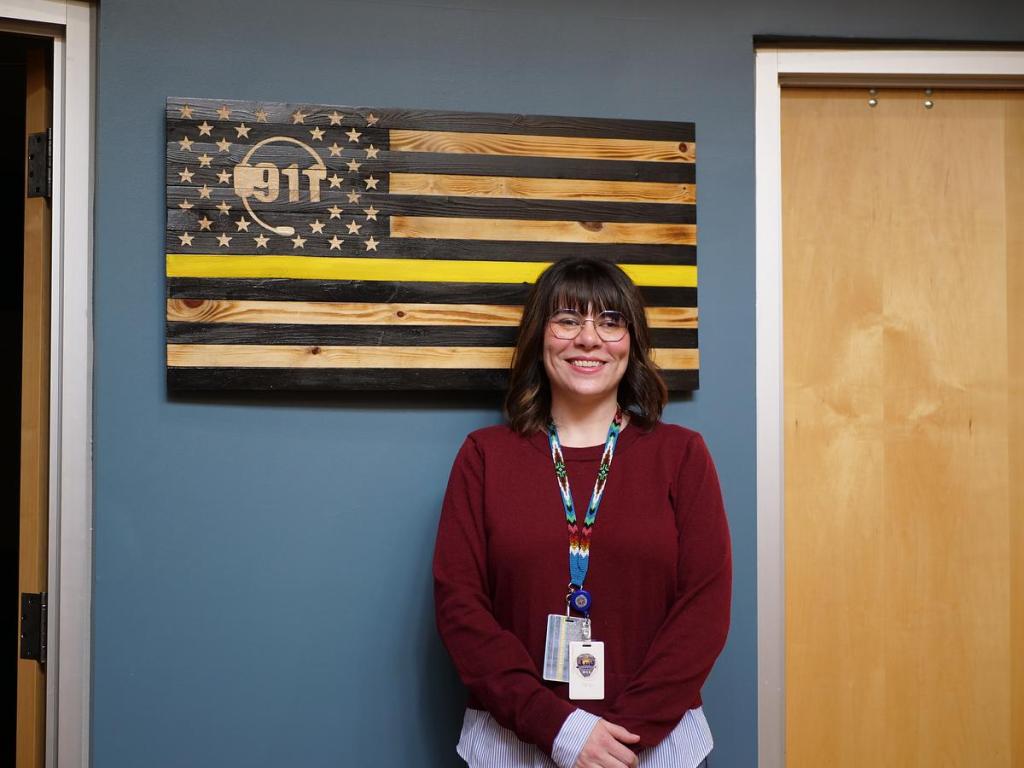 Katherine Underwood said the 988 hotline has helped reduce 911 calls. She works as the communications management specialist for the Oklahoma City Police Department. Credit: Sierra Pfeifer / KOSU
Finding the funding
The federal government paid for the launch of 988, but states are expected to pick up the tab when funding runs dry in September. The federal bill that established the program recommended that states collect a telecommunication fee, which is how 911 is largely funded.
Only a dozen states have created fees, though. Oklahoma isn’t one of them.
Instead, the state mental health department reports the $5.7 million needed to keep the hotline running is included in its budget request to the legislature.
But whether the agency’s request is granted lies in the hands of lawmakers working with a tight budget, and Gov. Kevin Stitt, who has pushed for flat appropriations during his seven years in office.
Budget woes for the Department of Mental Health also run deeper than most state agencies. The department is still recovering from a multi-million dollar shortfall last year that resulted in the unprecedented firing of its former commissioner.
In another effort to keep the hotline running, Rep. Kevin Norwood, R-Owasso, is sponsoring a bill that would create a trust fund for 988.
“We cannot let 988 come to an end,” Norwood said in a press release. “This bill helps make sure there is a fund in place, so someone is always there to answer the call for Oklahomans who are struggling.”
His proposal is making its way through the legislature. Prior efforts to establish a telecommunication fee have failed. Norwood told Harvest Public Media there’s little appetite in the state legislature for a new tax.
‘Someone that cares’
For people like Brittany, finding a sustainable way to fund the 988 hotline in Oklahoma is important. She said being able to talk to a mental health professional, even though she lives in a rural county, saved her life.
“I would have stayed in that cycle,” she said, “and could have ended up harming myself.”
Oklahoma has one of the highest suicide rates in the country, and it’s increasing faster than the national average. Between 2013 and 2022, nearly 8,000 Oklahomans died by suicide, an average of two people every day. Rural communities held a burden of those deaths.
LeMaster from Solari said people who call 988 in Oklahoma have come to expect someone who understands what it’s like to live in the state, and what resources are available.
“This is somebody that understands our unique culture here and what it means to be an Oklahoman,” he said. “The grit that you have to have; the resilience that we have.”
Without state funding, local call centers, and the collaborations the state Department of Mental Health has established, could be lost.
“It’s free, it’s confidential and it’s someone that cares,” Brittany said. “I think that the more people who know about that, the better.”
Sierra Pfeifer is a reporter for KOSU.
Additional series support by: Oklahoma Women in Technology
Related
Related Articles