
This article is a part of “Mental Health Snapshot,” a reporting collaboration between Tulsa Flyer, The Oklahoma Eagle, The Frontier, KOSU, La Semana and Focus Black Oklahoma on mental health and resources in Northeast Oklahoma.
All editorial decisions for this series are made by the participating newsrooms.
Major series support provided by: Healthy Minds Policy Initiative
Some funding for mental health services has been restored since state officials announced millions in spending cuts last year. But providers say they have still had to reduce services and seek funding elsewhere to fill budget gaps.
The Oklahoma Department of Mental Health and Substance Abuse Services said it was trimming services it deemed duplicative or unnecessary last fall due to a budget deficit. Several state audits found patterns of overspending at the agency.
Mental Health Association Oklahoma lost $694,480 in state funding, which led to a reduction in services and the elimination of several programs, said Amy Coldren, a spokesperson for the nonprofit.
The organization cut a support program for adults living with severe mental illness and a statewide coalition for children’s mental health professionals and advocates, said CEO Carrie Blumert.
The support program, called Creating Connections, offered support groups, case management and education to people who live with some independence but still need additional resources, said Blumert. She said Mental Health Association Oklahoma had supported the program since 2001.
“It helped people who were stable stay stable and stay independent and stay housed,” Blumert said.
Funding for a drop-in center in Tulsa serving adults experiencing mental illness or homelessness was at risk but wasn’t ultimately eliminated, Blumert said. But she said the program, which provides clients with case management, housing assistance and support groups, is now operating with 20% less funding.
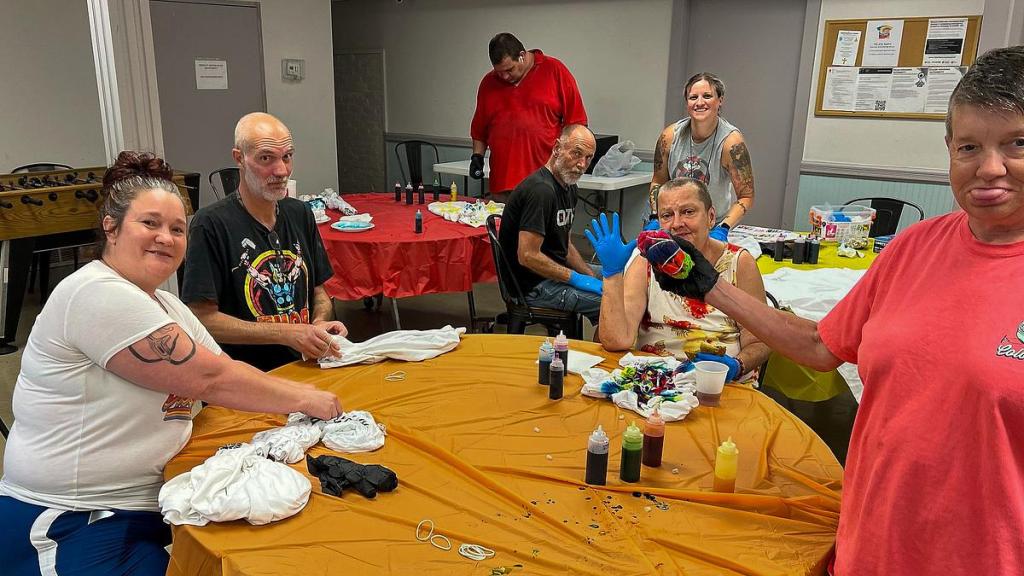 Participants in Mental Health Association Oklahoma’s Creating Connections program work together to tie-dye T-shirts. The support program for people living with severe mental illness has been eliminated as a result of Oklahoma Department of Mental Health and Substance Abuse Services contract cuts. Credit: Courtesy Mental Health Association Oklahoma
Mark Davis, chief programs officer for Mental Health Association Oklahoma, said in an emailed statement that while the organization hasn’t reduced staffing at the center, it now has a smaller budget for assistance and supplies. Staff now have fewer resources to help clients obtain state IDs and birth certificates, provide clothing assistance, offer non-perishable food items and supply bus tokens.
Blumert said Mental Health Association Oklahoma has had to increase fundraising efforts to fill budget gaps for drop-in centers in Tulsa and Oklahoma City and a few housing programs in Oklahoma City that also saw reductions.
“I think when the Department of Mental Health makes these cuts, sometimes they don’t realize the domino effect that organizations have to deal with,” Blumert said.
The Department of Mental Health didn’t respond to a question about funding cuts that the Mental Health Association sustained. But the contract adjustments were one part of a “broader fiscal stabilization effort,” Maria Chaverri, an agency spokesperson, said in a statement to the Frontier. She also said the agency will continue reviewing contracts as part of routine fiscal oversight.
“All 77 counties continue to have access to life-saving care, and our focus remains on long-term sustainability and preserving critical services for Oklahomans,” Chaverri said in the statement.
The Mental Health Department reduced one contract for Family & Children’s Services’ crisis stabilization unit at its crisis care center by about half, Chaverri said. The agency aims to eliminate the funding stream by next year because Chaverri said it has determined that other providers in the area now offer many of those services.
She said the agency is still supporting the Tulsa-based nonprofit through certified community behavioral health clinic reimbursements and by adding fixed-rate contracts for uninsured and underinsured clients at its crisis care center.
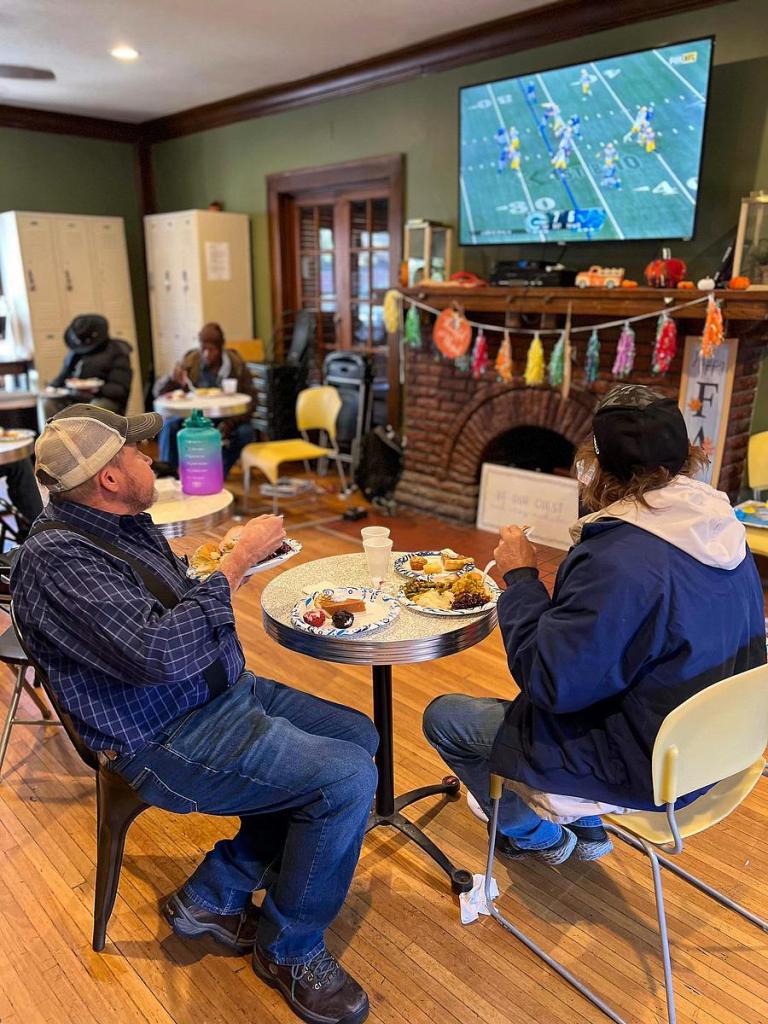 Clients at Mental Health Association Oklahoma’s Denver House attend a 2023 Thanksgiving lunch. The peer-run drop-in center in Tulsa serving adults experiencing mental illness or homelessness has sustained a 20% cut in state funding as a result of Oklahoma Department of Mental Health and Substance Abuse Services contract cuts. Credit: Courtesy Mental Health Association Oklahoma
Amanda Bradley, Family & Children’s Services’ vice president of crisis services, said the organization’s crisis care center is an urgent recovery facility where staff assess patients’ mental health needs and can connect them with outpatient treatment. Patients can be transferred to the facility’s crisis stabilization unit for longer-term care.
Bradley said the cuts haven’t yet reduced services at the crisis care center as people continue to need those resources.
“We’re kind of being pushed into a situation to be doing more for individuals with just less funding,” Bradley said.
The Department of Mental Health notified the Tulsa County Sheriff’s Office in June that it would lose $15,200 in state funding for alcohol compliance checks at local restaurants and stores, Casey Roebuck, a spokesperson for the sheriff, said in an emailed statement to The Frontier. The sheriff’s office hasn’t been able to conduct the checks to ensure businesses are checking customers’ identification since July because of the cuts, she said.
“While we understand the need for departments to manage and control spending, we hope this funding can be restored in the future so this important work may continue,” Roebuck said. “The ultimate goal of this program is simple but critical: to protect young people and save lives by preventing underage access to alcohol.”
There were worries that proposed state cuts would have affected GRAND Mental Health’s urgent care facilities, detox and treatment center, mobile crisis teams and street outreach in Tulsa County, said Ron Brady, a spokesperson for the provider.
“I think the outcomes would have been pretty catastrophic in terms of people not able to get help that needed it,” Brady said.
GRAND was able to negotiate a funding extension until the end of last year. The organization then entered into a new contract in 2026 that Brady said allows it to serve more people amid a growing demand for mental health and substance abuse services.
As a nonprofit that’s largely dependent on state and federal funding, Brady said there’s always concern about future support. He said GRAND is continuing to seek additional sources of funding through grants and private donors as the state mental health department navigates federal cuts and its own budget shortfalls.
“We want to be mindful of the state’s limitations, and so we want to be able to provide those services, but it would be irresponsible not to seek additional funding services,” Brady said.
The Department of Mental Health has requested $461.5 million in state funding from the Legislature for the next fiscal year, about a 14% increase from the previous year. The request includes $22.5 million for technology upgrades that the Department of Mental Health said would allow for more accurate accounting.
Ari Fife and Garrett Yalch are reporters for The Frontier.
Additional series support by: Oklahoma Women in Technology
Related
Related Articles