
This article is a part of “Mental Health Snapshot,” a reporting collaboration between Tulsa Flyer, The Oklahoma Eagle, The Frontier, KOSU, La Semana and Focus Black Oklahoma on mental health and resources in Northeast Oklahoma.
All editorial decisions for this series are made by the participating newsrooms.
Major series support provided by: Healthy Minds Policy Initiative
Admiral Place stretches across north and east Tulsa parallel to Interstate 244. For decades, the corridor has been lined with aging motels, auto shops, small retail stores and fast food restaurants.
For some travelers, the motels are a cheap overnight stop. For others, they become something closer to housing.
Extended-stay motels often serve as last-resort housing for people who cannot secure an apartment because of eviction histories, low income, lack of credit or criminal records. Without leases or background checks, motels can offer immediate shelter — albeit at a higher nightly cost.
But life in these spaces exists in a gray area.
In Oklahoma, the legal line between a motel guest and a tenant remains unclear. State law identifies motel occupants as “transient,” meaning they do not receive the same protections as renters. But the law does not clearly define when a stay stops being temporary.
Housing researchers say that ambiguity can create instability for people who rely on motels as long-term shelter.
Sociologist Stephanie Gonzalez Guittar has spent years studying families living in extended-stay motels in Florida. Recruiting participants for her research took months.
“It’s just a hard population to reach,” Gonzalez Guittar said. “Because of the circumstances that they’re in.”
Many residents, she explained, live under constant uncertainty about how long they can remain in a room.
In some states, once someone occupies a room for around 28 days, they may gain tenant protections. To avoid triggering those protections, some motels periodically move guests between rooms or require them to leave.
The result can be a cycle of displacement — moving between motels or returning to homelessness.
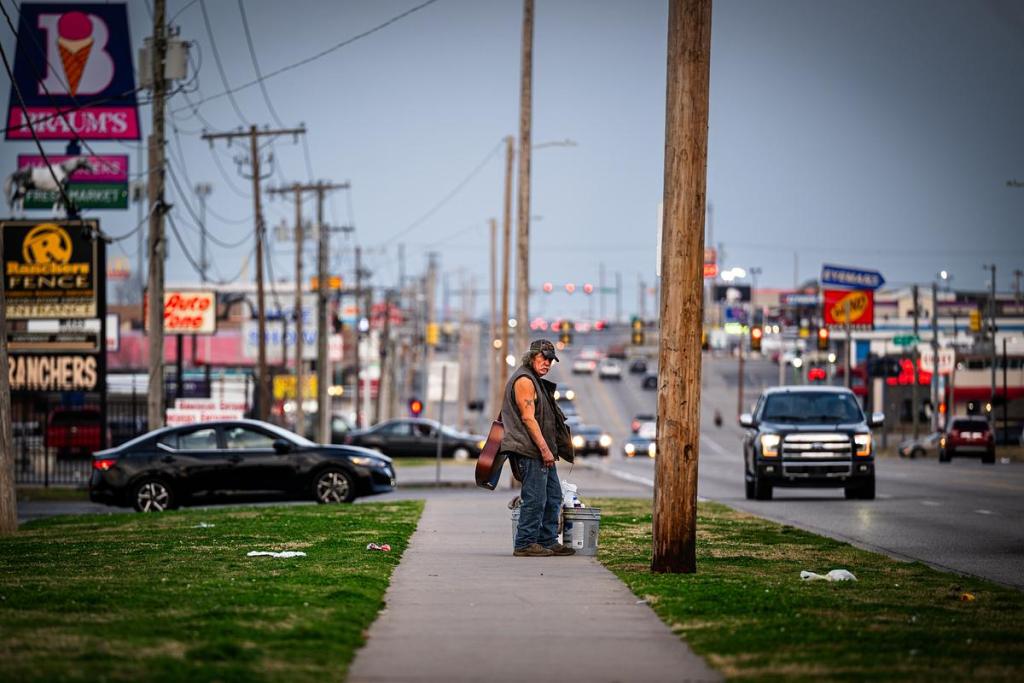 A man stands on the street on East Admiral Place March 5, 2026. Credit: Milo Gladstein / Tulsa Flyer
Silence inside the motel
The motel where the Focus: Black Oklahoma reporter stayed sits just off Admiral Place, behind a gated entrance.
From the outside, the gate suggests privacy or security. Inside, the atmosphere felt subdued and quiet.
Rooms are larger than typical roadside motels. Each includes a refrigerator and microwave, signaling guests may stay longer than a night or two.
But the space did not function like a neighborhood.
Residents did not gather outside or socialize in shared spaces. People moved quickly between rooms and cars.
In three days, the reporter heard only a handful of voices. The silence itself became part of the story.
Extended-stay motels often house people living through periods of intense instability — job loss, eviction, family crises. But those experiences do not always translate into a visible community. Instead, residents may keep to themselves. Without open conversation, the emotional toll of that instability remains largely hidden.
Walking the corridor
Admiral Place is a corridor designed primarily for cars. Sidewalks exist, but pedestrians are relatively sparse. Walking the road reveals a different perspective than driving the road.
Parking lots stretch between aging storefronts. Chain-link fences separate businesses from empty lots. Gas stations and discount stores serve as informal gathering points.
During the cold January weekend, several encounters offered glimpses into life on the margins of the corridor.
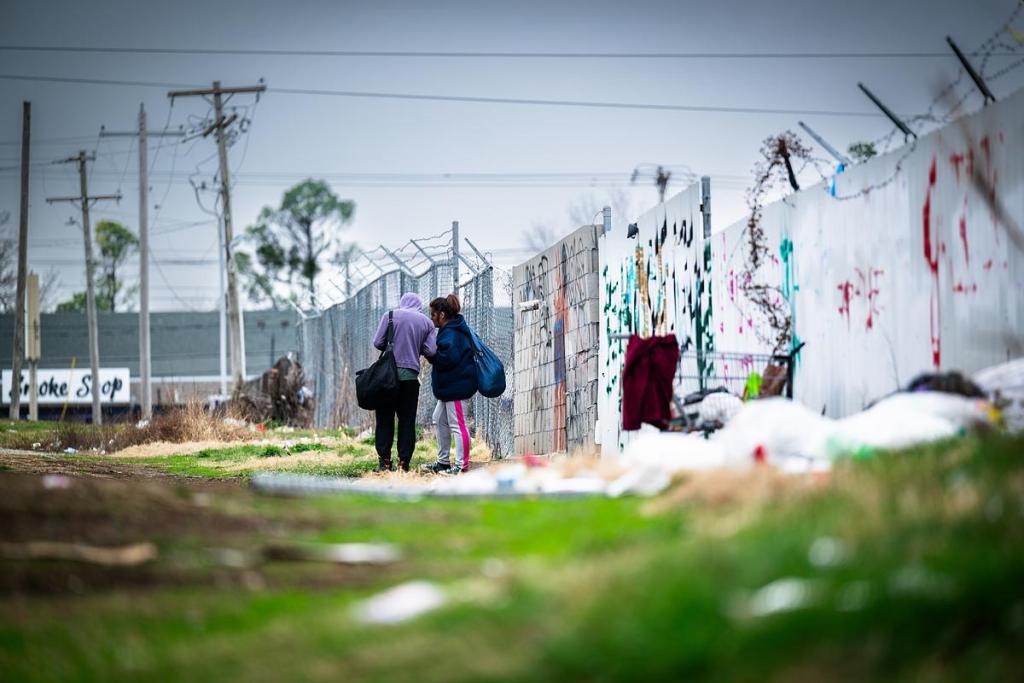 Two people stand in an alley behind a motel off East Admiral Place, March 5, 2026. Credit: Milo Gladstein / Tulsa Flyer
One man introduced himself as Chris. He had been homeless for five years, he said.
Within minutes of meeting a stranger, Chris began speaking about childhood abuse. His father had been violent, he said, particularly during the years when he was beginning to speak clearly and express himself.
Chris also said he writes short stories. He acknowledged he uses drugs regularly.
The conversation lasted only a short time before both men continued walking in opposite directions. The exchange highlighted a pattern often seen in street encounters: deeply personal disclosures shared quickly with strangers, sometimes without context or follow-up.
Community on a church stoop
On the final morning of the reporting trip, a longer conversation unfolded outside the Mesa Church building, recently purchased by the CREOKS behavioral services provider to serve as a temporary shelter for people experiencing homelessness. There, a man named Robb Daniel Myers sat on the stoop watching the street. Myers spoke openly about his life.
Born in Charleston, South Carolina, he spent many years in California before arriving in Tulsa.
“I’m just a regular dude,” he said.
Myers described himself as an alcoholic and said he has cirrhosis of the liver. He has lived on the streets for many years.
People passing by became part of the conversation. Myers pointed them out by nicknames or small details he recognized.
A woman with headphones walked down the sidewalk, moving rhythmically to music.
“That’s the dancing lady,” he said.
Another man across the street was someone he knew from a nearby business.
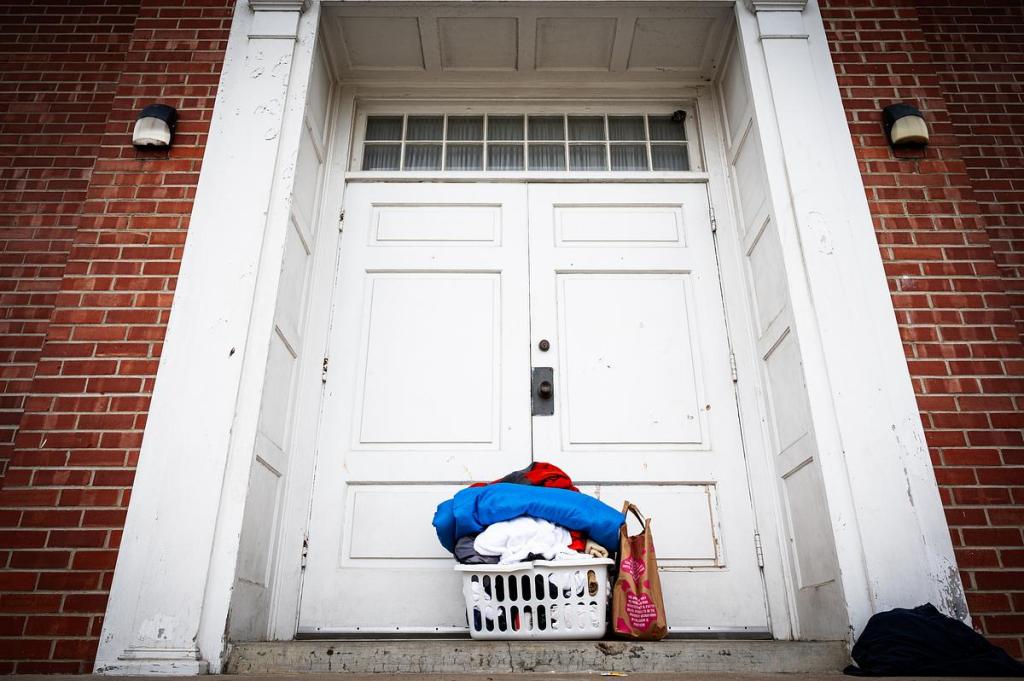 A basket of belongings sits on the steps of the Mesa Church building, now owned by the CREOKS behavioral services provider, in Tulsa March 5, 2026. Credit: Milo Gladstein / Tulsa Flyer
Life on the street, Myers suggested, involves recognizing patterns — who belongs where, who helps whom, who can be trusted.
“If you’ve been homeless for a minute, you kind of recognize what’s going on,” he said.
During the conversation, Myers sat near a pile of things belonging to a woman named Tammy.
When she returned with her dog, Tammy explained she might need to place the dog in foster care because she could no longer care for it while living on the street. The decision clearly weighed on her.
It illustrated a quieter form of emotional strain—one that rarely appears in public discussions of homelessness but reflects difficult choices people face every day.
Trauma, grief and survival
Encounters along Admiral Place often contained fragments of personal histories. Some involved trauma. Others involved grief.
A woman named Heather spoke briefly while walking along an overpass. She said she had found a place to sleep for two nights but no longer had that option. She was looking for something to eat.
Heather spoke about her boyfriend, who once suffered severe frostbite while sleeping in a car and had accidentally shot himself years earlier. She said she helped care for him through recovery. Then she continued walking.
Many such conversations ended abruptly, leaving more questions than answers. For observers, the pattern can appear chaotic or disorganized. But experts say those fragments of personal history often reflect the pressures of survival.
Mental health and homelessness
Public discussions about homelessness often focus on mental illness or substance use as primary causes. But housing policy experts caution the relationship between mental health and homelessness is more complex.
Sabine Brown, housing senior policy analyst at think tank Oklahoma Policy Institute, says while mental illness and addiction are more common among people experiencing homelessness, they do not fully explain the problem.
 A man tries to keep his dogs from running away behind a motel on East Admiral Place in Tulsa March 5, 2026. One of the dogs belonged to his deceased wife. Credit: Milo Gladstein / Tulsa Flyer
“There’s this idea that everyone who’s experiencing homelessness is suffering from mental illness or substance use disorder,” Brown said.
Those conditions exist, she said, but not at rates high enough to account for homelessness on their own.
Instead, Brown emphasizes the reverse relationship: Homelessness itself can damage mental health. Constant uncertainty about shelter, food and safety place intense stress on individuals.
“If you think about someone constantly struggling every day just to meet their basic needs, of course that’s going to affect their mental health,” Brown said.
The lack of stable housing also makes treatment difficult.
“It’s really hard to treat someone’s mental illness or substance use disorder when they don’t even have a safe place to sleep at night,” she said.
The numbers in Tulsa
According to Tulsa’s most recent annual Point-in-Time count, approximately 1,400 people in the city are experiencing homelessness on a given night. The count is conducted once each year and attempts to measure the number of people living in shelters, transitional housing and outdoor locations. But the figure represents only a snapshot.
Many people move between different forms of unstable housing: motels, couches, vehicles, shelters and temporary arrangements with friends or family. Some may never appear in official counts at all. Housing advocates say that instability is often driven by systemic factors rather than individual choices.
“I think it’s uncomfortable for people to realize they may be closer to homelessness than they think,” Brown said.
For many households, a single missed paycheck or unexpected expense can lead to eviction.
“It’s easier to assume it’s a personal failure,” she said. “But often it’s a system failure.”
A corridor shaped by economics
Looking beyond individual encounters, Admiral Place itself reflects broader economic patterns.
Property records show many businesses and motels along the corridor are owned by limited liability companies registered outside Oklahoma. Some are linked to corporate entities in Texas, Arkansas or California. Ownership structures can be difficult to trace beyond those registrations. That pattern suggests revenue generated by the corridor may flow out of the local community.
Whether intentional or not, it reinforces Admiral Place’s role as a transitional space — one that serves people moving through housing instability rather than building long-term neighborhood stability.
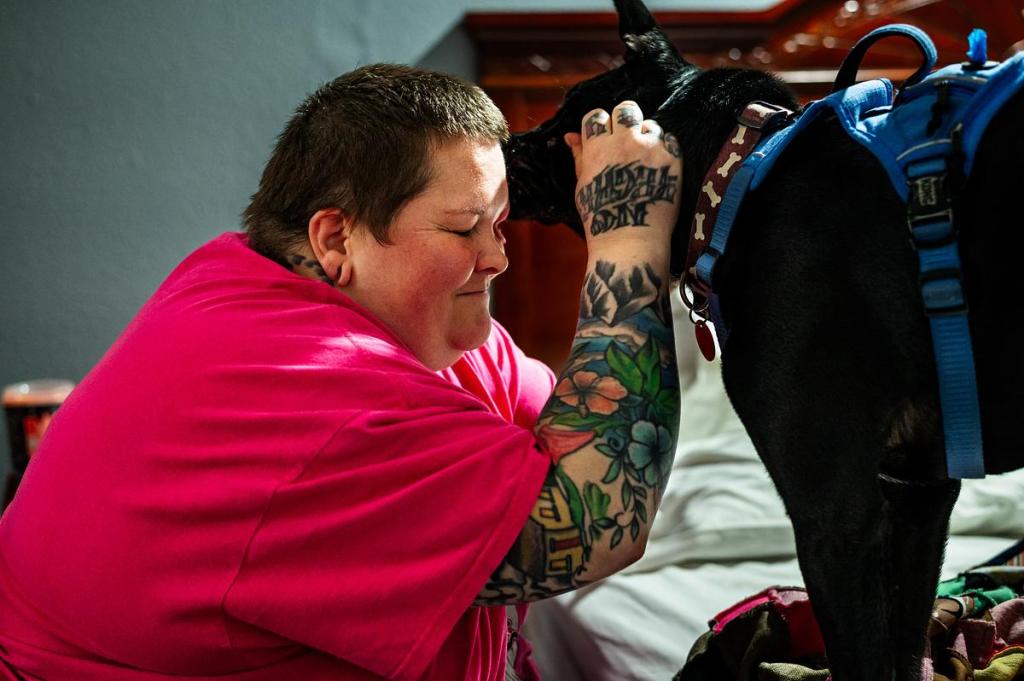 Suzanne Stephens receives a kiss from her dog Sage in her motel room at Rest Inn & Suites March 10, 2026. Stephens has spent the past two years unhoused due to medical difficulties and has just recently moved into the motel with help from the Tulsa Day Center. Credit: Milo Gladstein / Tulsa Flyer
The human landscape
During several days of walking the corridor, certain patterns emerged. Strangers frequently asked the reporter if he was doing all right. A man leaving a bar stopped his car to check on him. A woman with purple hair greeted him with a smile and a similar question.
The exchanges reversed the expected roles. Instead of the reporter asking questions about their wellbeing, the people living along the corridor were checking on his. Small gestures of care existed even in difficult circumstances. They offered a reminder that life along Admiral Place is not defined solely by hardship. It also contains moments of connection.
Mental distress appeared in many of the conversations: addiction, trauma, grief and confusion about the future. But those experiences often seemed inseparable from housing instability.
In other words, the issue may not simply be mental health on the margins. It may be the margins themselves.
Housing policy experts argue meaningful solutions require addressing the structural conditions that produce instability — affordable housing shortages, rising rents, limited tenant protections and gaps in social services.
Without those changes, the cycle of motel living and homelessness will continue.
Additional series support by: Oklahoma Women in Technology
Related
Related Articles