
Course prepares dental professionals to identify issues during updates, refer patients for help
by Mary Beth Versaci
March 25, 2026
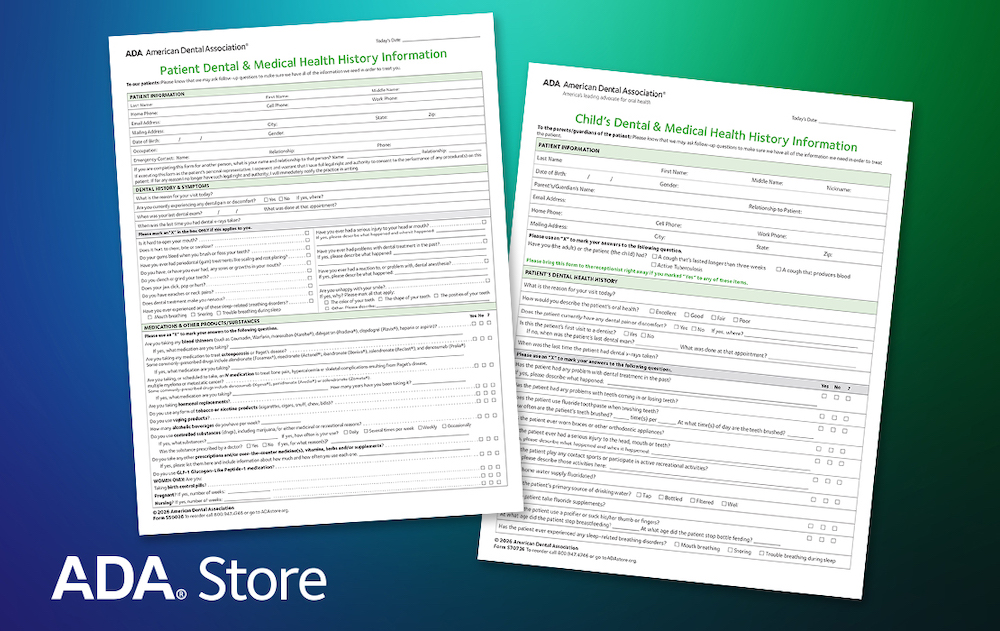
Updated patient health history forms from the American Dental Association include a new screening question related to mental health and the addition of GLP-1 receptor agonists to the list of medications patients may be taking.
The ADA Council on Dental Practice approved the changes in January after last revising the forms in 2021. The updated forms became available for purchase through the ADA Store on March 24. The ADA recommends patients complete new health history forms every two years, with interim updates as needed.
One new question asks patients if they have felt connected to the world around them over the past two weeks, and the other asks if patients have taken a GLP-1 receptor agonist. Positive responses may influence treatment planning and support patient wellness, and the ADA has developed resources to help educate members on the topics the questions address.
“Oral and overall health are inseparable,” said ADA President Richard J. Rosato, D.M.D. “These updates to the health history forms will help our dental community create more compassionate environments for care and enable greater coordination with physicians and mental health professionals for whole-body health.”
To support dental professionals in addressing mental health concerns, the ADA hosted a live webinar in January titled “The Dental Visit: Bridging Patients to Mental Healthcare Through Connection,” which was moderated by Jennifer Thompson, D.D.S., chair of the ADA Council on Dental Practice. The recorded course is available on demand through the ADA Store.
“The ADA’s updated patient health history forms respond to the rising use of GLP-1 receptor agonists,” Dr. Thompson said. “Our patients trust us and our dental teams and sometimes share concerns no one else hears. With the new mental health prompt, we can make a meaningful difference in their overall well‑being.”
The course, worth three continuing education credits, focuses on tools and communication skills needed to identify potential mental health issues, respond empathetically and refer patients appropriately.
“As dentists, we have a significant opportunity to support our patients by helping them connect with the mental health care they may need,” said Margaret Gingrich, D.D.S., chair of the ADA Council on Dental Practice’s Dental Team Wellness Advisory Committee and a course panelist. “Many individuals see their dentist more regularly than any other health professional, and some may not have a primary care physician at all. When we notice signs that a patient may be struggling, we should feel confident and empowered to offer appropriate referrals and resources. Taking that step can make a real difference in their overall health and mental well‑being.”