

Listen to this article
Estimated 4 minutes
The audio version of this article is generated by AI-based technology. Mispronunciations can occur. We are working with our partners to continually review and improve the results.
The federal government will contribute $15 million to the construction of two new treatment facilities in Greater Toronto Area for first responders facing with post-traumatic stress injuries.
The funding will help to expand access to specialized care for police officers, firefighters, correctional officers, paramedics and health care workers, according to Eleanor Olszewski, minister of emergency management and community resilience.
“This is about changing how we respond to injuries that are invisible. Too often people who have these injuries face barriers when they need the support themselves,” Olszewski said.
“These are the people who show up for us in moments of crisis. They care for Canadians when they’re hurt, when they’re overwhelmed, when they’re afraid. They carry enormous responsibility and they do that work every day under incredible pressure,” she added.
Olszewski noted first responders and frontline health-care workers especially face “exposure to trauma that can lead to post traumatic stress injuries, depression, anxiety, addiction, other mental health challenges.”
She said the money is also expected to help reduce the stigma surrounding mental health issues and substance use among first responders.
 Eleanor Olszewski, minister of emergency management and community resilience, says: ‘This is about changing how we respond to injuries that are invisible. Too often people who have these injuries face barriers when they need the support themselves.’ (Jason Franson/The Canadian Press)
The two new treatment facilities will located in Toronto and Caledon. Station No. 3434 in Toronto will be an outpatient clinic, while the Caledon Recovery Centre will be a residential facility. Both will be operated by the Runnymede Healthcare Centre, a rehabilitation and complex continuing care hospital in Toronto’s west end.
Construction is expected to begin next year.
‘Occupational stress injuries are real,’ hospital CEO says
Connie Dejak, president and CEO of the Runnymede Healthcare Centre, said the two sites will form one integrated system of care with “multiple pathways” to healing.
“First responders step into moments most of us spend our lives trying to avoid. They run towards crisis, uncertainty, and human tragedy and suffering, often without pause and too often without the time or space to process what they carry with them afterward,” Dejak said.
“Occupational stress injuries are real. They are cumulative, often invisible, and if left unaddressed, can profoundly affect the individuals and their families and the communities they serve.”
Runnymede Healthcare Centre estimates more than 36,000 first responders in Ontario are affected by post-traumatic stress injuries, a number expected to rise to more than 46,000 by 2040.
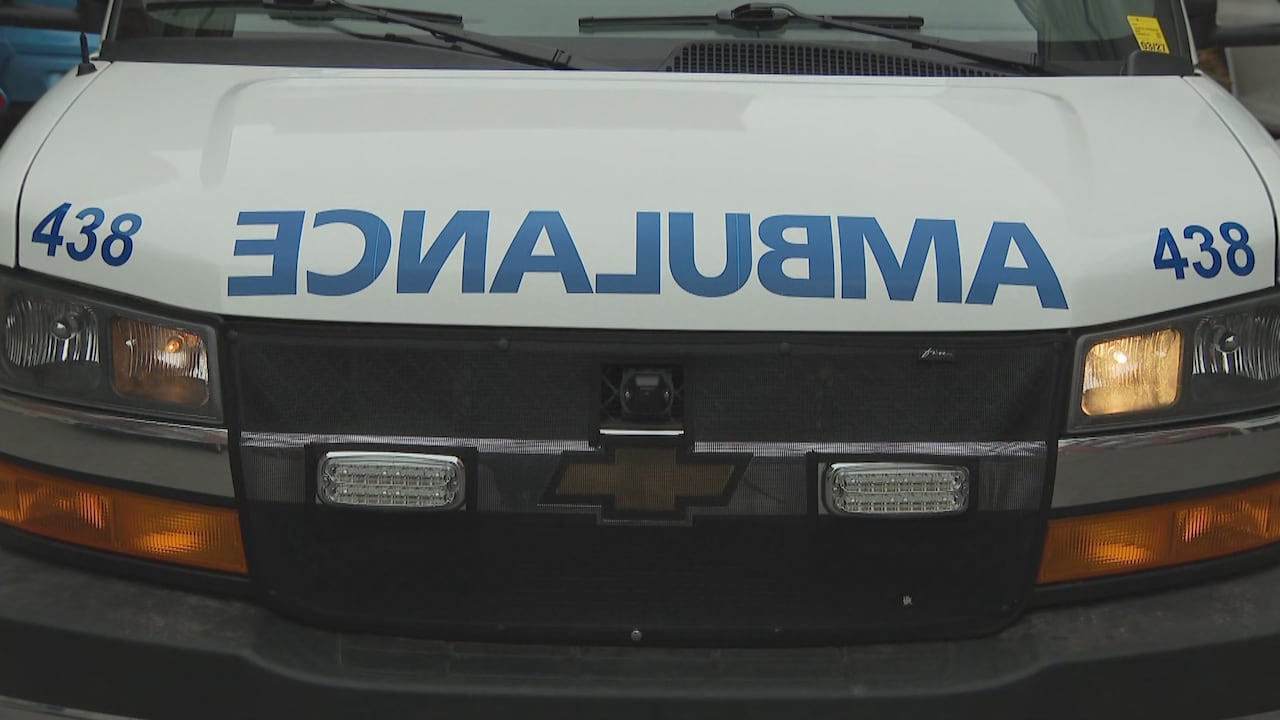 Runnymede Healthcare Centre estimates more than 36,000 first responders in Ontario are affected by post-traumatic stress injuries (PTSI), a number expected to rise to more than 46,000 by 2040. (Daniel Dadoun/CBC)Funds will make a difference, Ontario minister says
Ontario Health Minister Sylvia Jones said the federal money will make a difference. In 2025, the Ontario government committed more than $10 million to the project.
“With today’s investment from the federal government, we are another step closer to getting shovels in the ground for these new facilities,” Jones said.
Station No. 3434, a six-storey hub, “the front door to recovery,” will serve as a main site for outpatient services, including assessment, therapy sessions, and aftercare for a range of post-trauma conditions, depression and substance use disorders, Dejak said.
The facility will also house recreation programs and facilities to support people who are recovering from their injuries.
The Caledon Recovery Centre, “a place where individuals can step away from the demands of service,” will have 40 residential beds and the average length of stay is expected to be 30 days, Dejak said.
It will offer detoxification services, intensive psychotherapy and psychosocial treatment. Patients will have personalized care plans during their stay, with follow-up aftercare therapy and support available to promote recovery.