
Michigan has nearly doubled its out-of-state youth mental health placements over the past decade. Costs have similarly surged
The pandemic accelerated a youth mental health crisis already worsened by social media, burning out staff at treatment facilities
Amid state policy shifts and facility closures, in-state capacity has shrunk
HOLT — Eleanor Middlin was 15 when her family sent her to a Missouri boarding school, an 11-hour drive from her mid-Michigan home. It was the worst thing that ever happened to her. It also saved her life.
“I’m alive because of it, and I will never be able to forget it,” Middlin, now 20, told Bridge Michigan.
Her experience leaving Michigan for long-term care represents an emerging trend for the state’s youth in severe mental health crises.
In the years following the COVID-19 pandemic, a growing number of teens and children are being sent hundreds or thousands of miles from home, often because the state lacks the resources to treat them here.
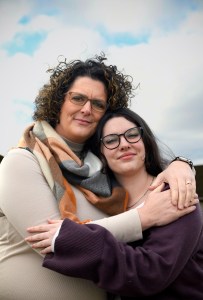 Jennifer Middlin and her daughter Eleanor Middlin, 20, of Holt struggled to find an appropriate teen residential treatment facility for Eleanor when she was a teenager. (Rod Sanford for Bridge Michigan)
The Middlins are among an unknown number of families in Michigan who pay their own way to get the help they need — their experience largely invisible in state data.
But for other children placed in facilities through court order or child welfare, state reports show out-of-state placements have surged in recent years as a series of Michigan facilities closed.
As of September, 152 youth in Michigan’s direct-placement program were living in out-of-state facilities — some as far away as Hawaii and Arizona, according to a recent report from the Department of Health and Human Services.
That was up from 122 children sent out of state in 2024 and more than double the 74 children in 2023.
Forcing a child to travel for care is like “throwing them to the wolves,” said Laura Marshall of Cedar Springs, whose son was sent to a Wyoming long-term treatment facility through court order. “We had no control over where he was going.”
Families say the extreme distance makes it challenging to plan visits and some facilities further limit contact. The isolation can be detrimental to their children’s recovery and traumatizing for parents to endure.
Related:
“Horror stories” about abuse and staff misconduct dominate conversations about youth treatment facilities, adding a layer of fear for parents that their loved ones may return in a worse condition.
“You’re shipping your kid, in some cases, across the country,” Marshall said. “There really isn’t any way as a parent to be able to vet what’s really going on.”
State officials believe the rise in out-of-state placements is largely limited to court-supervised youth in the juvenile justice system, not children they directly oversee. But counties that report placement data to the state are “not required” to share that information, a spokesperson said.
“The Michigan Department of Health and Human Services believes that placement decisions for youth in foster care and those involved with the juvenile justice system must be guided by safety, stability and the best interests of each individual child to ensure they receive the care and treatment they need to thrive,” spokesperson Erin Stover wrote in an email.
The confusion is a symptom of a larger problem, lawmakers contend: A massive department overseeing a sprawling landscape of juvenile facilities that could lead to kids falling through the cracks — or needing to seek care elsewhere because state offerings are not accessible at the time.
“The liability question is really huge, because who is responsible?” State Rep. John Roth, R-Interlochen, said. “If that kid gets seriously injured in an (out-of-state facility), is it the state that they went to’s problem now?”
‘Fighting it out’ for treatment
Eleanor Middlin was hospitalized for self-harm at 12 years old.
Throughout her adolescence, Eleanor had seen therapists and received medication. But her mental health issues compounded during the pandemic, a period marked by intense isolation and “complete access” to the internet. Snapchat, Instagram and Yubo became social media vehicles toward a “path of feeling horrible” about herself.
“It was the perfect environment for me to get worse,” she said.
She developed substance-use disorders — mainly “downers” like Xanax and opioids — and eating disorders. Many of her habits were unknown to her mother, Jennifer Middlin.
“It felt shameful … even though we tried everything that we could try,” Jennifer told Bridge. “It’s sort of this secret club that no one wants to be part of and no one admits to being part of.”
Short-term stays could stabilize her daughter, Jennifer said, but Eleanor needed something more than the behavioral health centers near Holt were offering.
“We didn’t think we could keep her monitored the way she needed to be monitored,” she said. “They didn’t have recommendations that we could really sink our teeth into, so we had to find it on our own.”
The cost of out-of-state care came out-of-pocket for the Middlins — Jennifer estimates her family spent $90,000 on her daughter’s treatment. Insurance didn’t cover her daughter’s frequent therapy sessions at the boarding school. The loans and the toll on her savings to make payments were “financially devastating.”
The state also carries a significant financial cost to send its youth out-of-state for treatment — it paid more than $13 million in related costs last fiscal year, with about half coming from the state. That was up from $9.7 million the prior year.
That amounted to $392 per day of care, up from $379.
Parents and mental health advocates describe a system that consistently fails children with complex psychological disorders, where the needed treatment “doesn’t exist anywhere” in Michigan.
They point to several intersecting factors — limited in-state capacity, insurance not offering enough support and publicly-funded community mental health services not meeting the needs of families.
Emergency calls to deal with youth in crises are frequent, setting the stage for many youth to have prolonged encounters with the criminal justice system to address their needs.
Insurance companies and the public mental health system are constantly “fighting it out” to cover care, said Rachel Cuschieri-Murray, a cofounder of a local parents group called Advocates for Mental Health of MI Youth. “So it’s not being done by anyone.”
Parents are being overwhelmed, she said, both by the specific needs of their children, and by navigating a system that does not provide a roadmap for care.
A ‘perfect storm’
There were 9,200 children in Michigan’s welfare system as of December 2024, according to recent state reporting. Of those, 468 lived in institutional centers that include youth residential treatment facilities.
Several of those facilities, which house children and teens with significant emotional, behavioral or mental health challenges, have closed since the onset of the pandemic, when about 1,200 beds for child caring institutions were operating. Today, there are fewer than 400 beds available.
Dan Gowdy, the president of the Association of Accredited Child and Family Agencies and the CEO of the Grand Rapids-based Wedgewood Christian Services, describes a “perfect storm” that enabled the current capacity crisis in Michigan.
Youth mental health had been deteriorating long before COVID-19 with the proliferation of social media, he explained. The pandemic made matters worse with “extended isolation” pushing the problems out of public view.
Mounting staff turnover at child caring institutions became the norm in the early-2020s, as facilities went on “full lockdown for months at a time,” Gowdy added. Amid the “great retirement” during COVID, programs could not safely staff their facilities amid “skyrocketing” assaults.
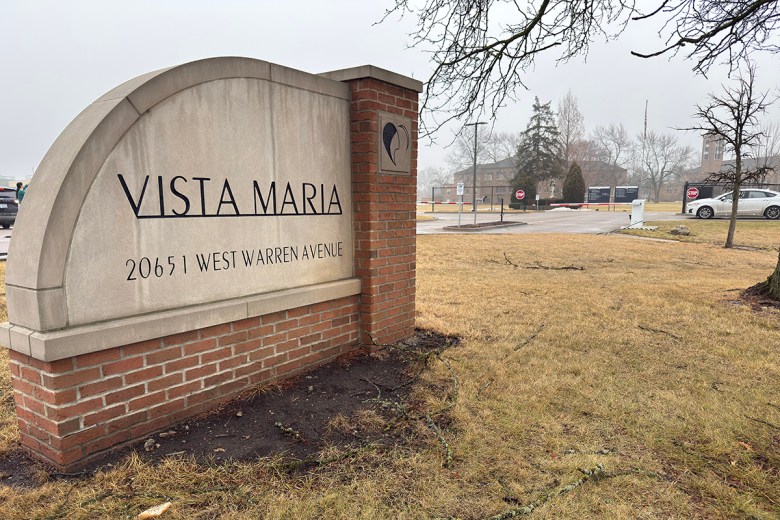 Vista Maria residential treatment program in Dearborn Heights recently closed, exacerbating a growing need for youth psychiatric services. (Eli Newman/Bridge Michigan)
Kathy Regan, CEO of recently-closed Vista Maria residential treatment program in Dearborn Heights, said the agency’s insurance provider for workers’ compensation stopped coverage at the end of 2025 due to the severity of staff injuries, which included broken knees and dislocated shoulders.
“I can’t keep staff safe,” Regan said in an October 2025 interview. “They’re getting their asses handed to them.”
With fewer beds and trained staff available, providers say recent state regulations also pushed agencies to deny children with severe behavioral health issues.
After the death of 16-year-old Cornelius Fredrick, whose fatal restraint at Lakeside Academy in Kalamazoo was determined to be homicide, MDHHS adopted new rules in 2022 to reduce the use of “restraints and seclusions” at state child caring facilities.
Two former staffers charged with involuntary manslaughter in Fredrick’s death were sentenced to probation and Lakeside Academy was closed.
Stover, the MDHHS spokesperson, said that use of restraints “is permitted in emergency situations to ensure the safety of youth and staff,” adding that emergency restraints were utilized 362 times in February alone.
Shifting state policies and oversight have put pressure on youth residential treatment facilities to address growing wait lists, Gowdy said, even if that means taking on children and teens whose needs are not aligned with what facilities can offer.
“You had smaller available beds, high-acuity youth concentrated in more intense environments,” Gowdy told Bridge. “That’s just simply not sustainable.”
According to the state, there are 101 active child caring institutions in Michigan. Gowdy estimates about 16 youth treatment programs have shuttered since the onset of the pandemic.
The Shawono Center in Grayling, Michigan’s only state-run residential facility for male juveniles, closed in February 2025. Vista Maria, which had been the state’s largest treatment facility for girls, shut down in December.
Ahead of Vista Maria’s closure, Regan described “a systemic crash” happening for Michigan’s youth treatment programs, but said she didn’t have the answers as to why.
Michigan has worked in recent months to increase its in-state capacity to serve youth in psychiatric crisis. Still, many children and teens are traveling to states as far as Nebraska and Utah to get help.
The path forward
Some lawmakers say that no real, substantive changes are likely to occur within the state’s youth treatment facilities this year amid elections to replace term-limited Gov. Gretchen Whitmer and other officials.
With the Whitmer administration having “just months” left in office, “I just don’t see it as something that they’re going to be willing to tackle,” state Rep. Matt Bierlein, R-Vassar, said.
Instead, he argued, a voter-approved change to legislative term limits — allowing lawmakers to serve up to 12 years in a single chamber — has led to a strong bench of Republicans and Democrats who care about the topic and have the institutional knowledge to possibly enact change.
Providers and advocates hope the state can develop more sustainable practices for its facilities in the future, and bring about more specialized bed capacity for those who need it. That includes taking a trauma-informed approach to deliver services and implementing proper public investment to train clinicians and frontline staff to care for children and teens.
Families say finding community in those who have already charted the turbulent tides of the state’s mental health care system has been a critical resource.
“The more connected you are, the more success you’re going to have in navigating the system,” said parent advocate Cuschieri-Murray.
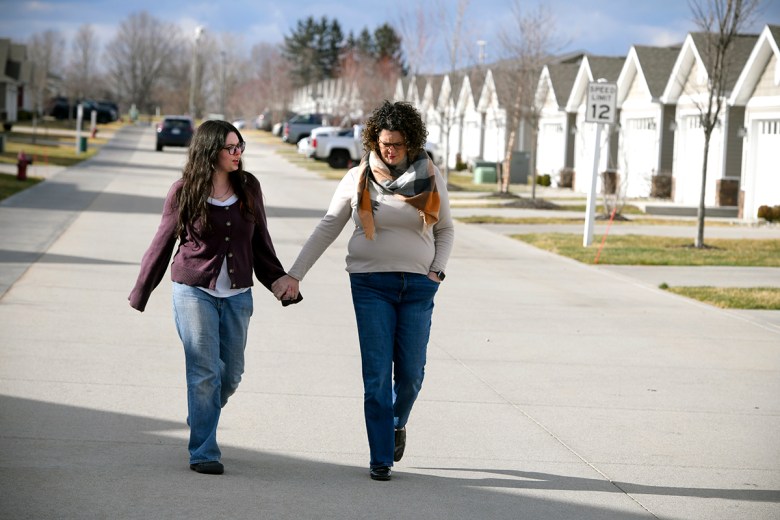 Eleanor Middlin believes that being sent to an out-of-state care facility may have saved her life. (Rod Sanford for Bridge Michigan)
For Eleanor Middlin, the crisis stabilization services she got in Michigan were a “life preserver” to keep her head above water when she really needed a “lifeboat” of long-term care to take her safely to shore, which her family eventually found in Missouri.
Now adjusting to life back in Holt, she hopes telling her story will remove some of the stigma that surrounds mental health issues.
“I’m not looking for everyone to understand what I went through and how that affected me,” she said. “I’m more just hoping that maybe the one person who needs it … maybe they understand it. Maybe they feel a little bit less alone about that.”
Related
Thank you to our Michigan Health Watch Sponsors
Bridge Michigan Health Watch is made possible by generous financial support from our sponsors. Sponsorship supports our independent journalism mission but does not constitute sponsor endorsement of individual articles or editorial content. Bridge Michigan journalism remains fact- and data-driven and independent at all times.
Please visit the About page for more information and to subscribe to Health Watch. Interested in becoming a sponsor? Contact Emma Carr.
Republish This Story
