
Before joining The University of New Mexico College of Nursing, Tim Sowicz, PhD, CNP, FIAAN, worked in Arizona, where his research focused on expanding behavioral health and substance use services in rural communities.
He collaborated with community partners to study access gaps and develop intervention models – work that strengthened his interest in how nurses can address addiction and improve access to care.
When the opportunity arose to come to New Mexico, he saw the chance to explore how that experience could inform new approaches here.
Sowicz now serves as a clinician educator and associate professor at UNM, specializing in primary care, substance use and underserved populations. His research examines how nurses can expand access to treatment and improve health outcomes.
When Sowicz talks about his research, it always comes back to practice. “I mostly do qualitative research – and most of that is driven by clinical experiences,” he said.
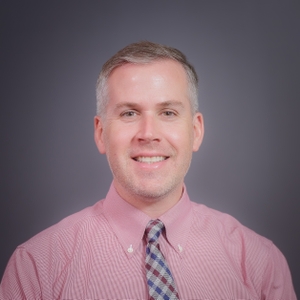
I’m very interested in doing research to understand what are nurses’ unique contributions to addiction recovery, helping people get into recovery for addiction.
– Tim Sowicz, PhD, CNP, FIAAN, Clinician Educator & Associate Professor, UNM College of Nursing
Sowicz, originally from the East Coast, was studying HIV prevention and sexual health history taking practices at a Federally Qualified Health Center for his dissertation research. During that project, he began seeing the connections between social conditions, health disparities and substance use.
“It wasn’t necessarily a clear plan,” Sowicz said. “It was more serendipity than anything else – just following what interested me at the time.”
That experience led him toward further study, including postdoctoral work in addiction science at the Veterans Affairs medical center in Pittsburgh. Over time, his clinical research interests began to converge around substance use and the complex systems that shape access to care.
Today, service, practice and research remain intertwined. Sowicz works as a nurse practitioner at Albuquerque Healthcare for the Homeless. He often sees patients with alcohol and opioid use disorders.
On Fridays, he sees patients in the clinic, but on some Friday evenings, he will leave the clinic early and take a van out to the International District, where he sees patients in the back of the van as part of the organization’s outreach and harm reduction initiatives.
That work – community-based and grounded in harm reduction – informs everything about Sowicz’s approach to research.
“It’s great to give somebody medication to help treat an opioid use disorder,” he said, “but if they still don’t have housing, or still don’t have health insurance or still are unemployed . . . can you ever really fully recover?”
For Sowicz, addressing addiction means addressing the full context of a person’s life.
“The challenges are really addressing those social issues,” he said. “We know from data that’s collected at the federal level that mental health and behavioral health disorders co-occur very commonly with substance use disorders, and so it isn’t enough to treat the opioid use disorder if you don’t address the underlying mental or behavioral health issue, whether that’s depression or schizophrenia or bipolar disorder.”
At Albuquerque Healthcare for the Homeless, care is built around an integrated health model that brings together medical, psychiatric and behavioral health providers.
“We have both medical providers and two psychiatric mental health nurse practitioners – both of them are graduates of our program – and we have therapists,” he said. “If one of my psychiatric NP colleagues is seeing a patient for, say, schizophrenia, and they complain about chest pain, I can very easily transition them to my schedule and evaluate their chest pain, and vice versa.”
That model of collaboration is at the heart of Sowicz’s research philosophy.
“I’m very interested in doing research to understand what are nurses’ unique contributions to addiction recovery, helping people get into recovery for addiction,” he said. “The thing that makes it different is the way I come at it – from the theoretical knowledge about nursing and what nursing is and what nurses do, which is different than what physicians and PAs and pharmacists do.”
That translational approach also informs his international leadership. Sowicz serves as secretary of the U.S. chapter of the International Nurses Society on Addictions (IntNSA), a professional organization that advances excellence in addictions nursing through advocacy, education, research and policy development.
That same philosophy guided his national collaboration with the American Society for Pain Management Nursing and IntNSA to publish practice guidelines, affirming the rights of people with both pain and substance use disorder to receive evidence-based compassionate care.
“Persons with co-occurring pain and substance use disorder have the right to be treated with dignity and respect, and receive evidence-based, high-quality assessment and management for both conditions using an integrated, holistic, multidimensional approach,” the statement reads.
For Sowicz, that kind of work demonstrates how nursing research can drive practice and how practice, in turn, should inform the research that nurses pursue.
“Being able to focus sometimes on not only diagnosing and treating people with substance use disorders, but actually contributing to the body of knowledge and science that then informs that practice is really interesting,” he said.
That mindset also shapes his teaching.
“I think it [clinical practice] helps teaching and it helps research and scholarship,” he said. “It’s nice, because I have some expertise in managing addictions, which a whole lot of people don’t do. I can come in and be that content expert across programs, not just in the advanced practice nurse programs, but also in the pre-licensure programs.”
Even for students who aren’t sure, he hopes exposure sparks empathy.
“I hope it gives students an appreciation,” he said. “I hope it takes some of the fear out of students – that someone’s addiction or their ability to have housing or not have housing is really just one piece of that person’s story. Addiction, particularly opioid use disorder, is similar to health issues from the turn of the century. This is just our modern-day health crisis.”
For Sowicz, the idea that research, practice and education are inseparable defines his role at the College of Nursing. His research has laid the foundation for the scholarship he continues to publish today and the work he’ll lead next: Exploring how nursing research can change systems and strengthen recovery.