

Greetings, MindSite News Readers.
In today’s Daily, Idaho’s Republican-led legislature restores its statewide in-home mental health program for the most severely ill — but not before deaths stacked up. Emerging research reveals unexpected links between autism and Alzheimer’s, and an $110 million investment from The Ballmer Group will support tuition costs to train much-needed mental health professionals in California.
But first, shoutout to Xavier, the fastest kid alive! Here’s to cheering him on in the Olympics one day.
Scientists Resisted the Idea, but Autism and Alzheimer’s May Be Linked
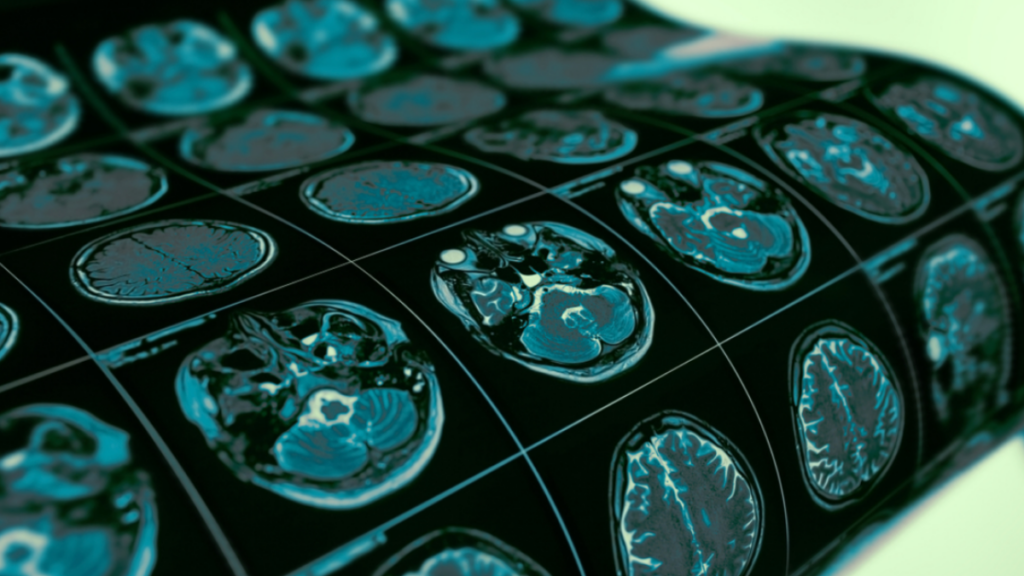 Credit: Stam_Photo/Shutterstock
Sometimes, science gets it wrong. Joseph Buxbaum, a longtime researcher and professor of psychiatry, neuroscience, and genetics/genomic sciences, felt sure that was the case when he first noticed medical literature suggesting a link between autism and Alzheimer’s disease a few years ago.
“I came to this kicking and screaming. I didn’t want to believe it,” he told The Washington Post. He was certain, as science had argued for decades, that autism was a condition affecting brains in development, while Alzheimer’s dismantled brains that were already aged.
Now, new discoveries are pushing researchers to consider that each condition may offer insight into the other — that to understand the degeneration of Alzheimer’s in older age requires greater understanding of how the brain develops.
Two recent studies, one done in 2021 and another in 2025, show that people with autism are about 2.6 times more likely to develop early-onset Alzheimer’s than the general population — and it’s not the first time such a connection has been suggested.
Studies conducted in the late 1990s and early 2000s also spotted something curious, as case reports of autistic adults with dementia at young ages began to pop up. But the potential of a connection was easy to brush away, with very little research existing on autistic people over age 50 at that time.
Now though, much has changed: Studies about aging and autism have increased, and over time, improved brain imaging, DNA sequencing, and molecular biology insights suggest multiple avenues of connection between autism and Alzheimer’s — through genes, neural circuitry, and patterns of disease.
More specifically, scientists have identified at least 148 genes shared between the two conditions, according to the International Journal of Molecular Sciences. Many of those genes control synapses — the tiny junctions where brain cells talk to each other.
In autism, these connections form differently from the start; in Alzheimer’s, they disintegrate slowly over time. One gene in particular, SHANK3, shows up in both. Mutations in SHANK3, which disrupt how neural circuits are built early in life, have long been associated with autism.
In Alzheimer’s, it’s been found that levels of SHANK3 decrease as the disease progresses, leading researchers to conclude that such declines are linked to the loss of synapses.
Brain imaging has also revealed that the most striking similarities between autism and Alzheimer’s don’t lie in individual brain regions, but in the networks connecting them.
Earlier research focused on literal size shifts between the two conditions in specific areas, like the amygdala — which is often, but not always, enlarged in people with autism — and the hippocampus — which shrinks faster and earlier in autistic adults than in the general population, mirroring what happens in Alzheimer’s patients.
Now attention has shifted to synaptic connectivity. In autism, stronger connections between neurons correlate with better daily functioning, while in Alzheimer’s, the loss of those same connections tracks closely with cognitive decline — possibly more so than the amyloid plaques and tau tangles long considered the disease’s hallmarks.
In addition, the brain is constantly generating waste that must be cleared to keep its billions of cells functioning — and a breakdown in that cleanup process may reveal another channel between autism and Alzheimer’s.
Many of the genes shared between the two conditions connect to the mTOR pathway, which controls the brain’s ability to clear debris and remove toxic proteins. When that system stutters, waste accumulates, causing glitches in protein function and neuron communication.
A study published earlier this year in Frontiers in Neuroscience found “possible commonalities” on MRI scans in both conditions, particularly involving the glymphatic system — a brain-wide waste-clearing network active during sleep — with researchers noting that loss of smell, a known early symptom of Alzheimer’s, may also be an overlooked sign of autism.
While the research is still new, scientists believe that focusing on these shared cleanup mechanisms could eventually lead to treatments that address both conditions at once.
Idaho Cut a $4 Million Mental Health Program. The Fallout Cost More.
 Photo: SevenMaps/Shutterstock
Jesse Turnipseed shouldn’t have died in the “trash-choked closet” of a bug-infested apartment, but he did.
He is among the preventable casualties that stacked up almost immediately following the December elimination of Idaho’s assertive community treatment – or ACT – a Medicaid-funded program that provided intensive, in-home mental health care to the state’s most severely ill residents.
Sometimes dubbed “a hospital without walls,” according to the New York Times, the program sent teams of clinicians into patient’s homes to closely monitor their health, ensure they took their medications to remain stable, and build trust through sustained relationships to keep people with serious mental illness alive and out of crisis.
Established in the 1970s, ACT has been shown to reduce emergency hospitalizations by 40% to 80% and costs the state roughly $4 million a year.
But a string of income tax cuts stretching from 2021 to 2025 eliminated $4 billion in Idaho’s revenue, with the state projected to lose an additional $1.3 billion annually going forward — a figure equivalent to 24% of the state’s general fund.
Congressional passage of Trump’s “Big Beautiful Bill” in July 2025 has further compounded fiscal strain, reducing federal spending by $1 trillion over the next decade, including $665 billion in funding to states for Medicaid.
With a state Constitution prohibiting deficit spending, the double whammy of major cuts pushed Idaho Gov. Brad Little to issue an executive order last August, compelling each state agency to reduce spending by 3%, in preparation for the federal cuts.
Under the pressure of the time crunch, Idaho’s Medicaid contractor, Magellan, chose to eliminate ACT. The consequences were swift and devastating.
“We have had four deaths that you can pinpoint directly back to these programs that were done away with,” said Sen. Kevin Cook, a Republican from Idaho Falls, with one sheriff reporting that involuntary psychiatric commitments more than doubled in his county, as crisis centers saw a 28 percent spike in demand. “Our sheriffs, our ERs and our courts are dealing with the same individuals over and over again,” Cook added.
The fallout alarmed Idaho legislators enough to act. In an unexpected reversal, Republican lawmakers — not Democrats — led the charge to restore funding, citing both the human toll and a financial argument that proved hard to ignore: cutting mental health services doesn’t eliminate costs; it transfers them. The state ultimately allocated $10.4 million from opioid and tobacco settlement funds to resume the program.
But though funding for ACT has been restored, no easy reversal of circumstances is on the horizon. Clinicians actually report an uphill battle to resume operations after just four months of pause. Staff shifted or left when the program was defunded, and patients scattered, losing touch.
Those still on the job, like nurse practitioner Meredith Sievers, worry about how to rebuild trust in the system that abandoned them. “Why would they believe you?” she said.
In other news…
To increase the number of licensed mental health professionals in California, Ballmer Group gifts $110 million to LA area universities: California is facing a severe shortage of mental health professionals. According to state data confirmed by the Los Angeles Times, 55 of California’s 58 counties don’t have enough clinicians to meet demand. In Los Angeles alone, the shortfall runs between 20% and 35%.
One reason: the high cost price of professional education. At Cal State LA, a one-year social work degree costs roughly $17,500. At UCLA, a similar credential costs California residents more than $65,000 without financial aid. For students who are already working full-time or raising children while pursuing their degrees, that financial burden often pushes talented candidates out of the field entirely.
So it’s good news that the Ballmer Group has decided to invest across three state schools — Cal State LA, Cal State Dominguez Hills, and UCLA — to fund scholarships, expand enrollment, and develop new mental health training programs focused on underserved communities. Enthusiastic about what’s to come, Cal State LA President Berenecea Johnson Eanes expects the funding “will change lives across Los Angeles by preparing a new generation of counselors and social workers who reflect and understand the communities they serve.”
Building your strength for optimism: If optimism feels like a personality trait you either have or you don’t, behavioral scientist and psychologist Deepika Chopra, author of the newly released “The Power of Real Optimism,” says you’ve been thinking about it wrong. Optimism is a muscle, she told NPR, and like any other muscle, it can be strengthened. Her evidence- based approach isn’t about toxic positivity or pretending everything is fine, either. It’s about staying rooted in reality while still holding space for hope.
In her book, Chopra outlines practical strategies anyone can use to build a more optimistic mindset, including a “ta-da list” that replaces self-criticism with self-gratitude, a scheduled “worry time” technique borrowed from clinical psychology that actually reduces anxiety by containing it, and a smarter approach to affirmations using her “7/10 rule” — because repeating things you don’t believe doesn’t work, but repeating things you almost believe just might.
To hear Chopra explain the science herself, check out this episode of NPR’s Life Kit. (In case you were wondering like I was, Deepika Chopra is a behavioral scientist and psychologist with no relation or affiliation to wellness figure Deepak Chopra.)