
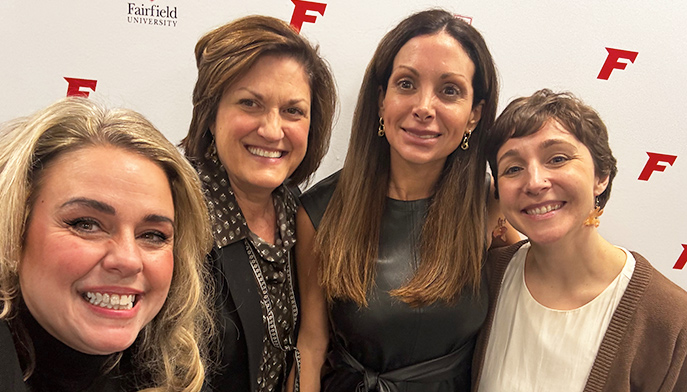
(L – R) Michelle Pagnotta, Mary Dobson, Jocelyn Novella, and SEHD Dean Evelyn Bilias-Lolis at the panel discussion.
This March, Fairfield University’s School of Education and Human Development hosted “Eating Disorder Grand Rounds: The Ethics of Eating Disorder Treatment,” a panel discussion that brought together clinicians and faculty members from multiple disciplines to explore ethical decision-making and collaborative care in the treatment of eating disorders.
Panelists included Jocelyn Novella, PhD, LPC, ACS, BC-TMH, associate professor of counseling education; Mary Dobson ’07, LMFT’10; Jane Conway, LCSW, RD; Briana Rogers, LPC; Bridget Hussain, PhD, RDN, CDCES, CND; Danielle Conklin, DNP; and Mackenzie Gordon, DCN. Together, they examined a shared case study and discussed the ethical considerations that arise when treating individuals with eating disorders.
More than 30 local mental health providers—from local private practices, university counseling centers, eating disorder treatment programs, and community mental health agencies—attended the event, alongside Fairfield graduate and undergraduate students with an interest in the field.
Bridging Clinical Practice and Academic Learning
During the panel, participants discussed the complexity of eating disorder treatment and the ethical challenges clinicians face when coordinating care across disciplines. Eating disorders are among the most serious psychiatric conditions, with one of the highest mortality rates of any mental health disorder. Research consistently shows that recovery outcomes improve when treatment involves coordinated care from professionals such as psychotherapists, physicians, dietitians, psychiatrists, and family systems specialists.
Dobson, founding CEO of LiftWell Health and a clinician whose work focuses on multidisciplinary treatment for eating disorders and complex mental health conditions, contributed the valuable clinical perspective of someone working directly in program development and patient care.
“The panel was an incredibly meaningful experience,” she said. “One of the points I emphasized is that no single discipline can treat these conditions alone. True recovery requires collaboration across fields.”