
FAYETTEVILLE — Access to health care and health education in schools in Madison and Carroll counties will change the lives of students and their families, according to school staff.
The University of Arkansas for Medical Sciences Institute for Community Health Innovation recently announced it would work with certain schools in the two counties to establish programs aimed at reducing behavioral risk factors for youth, while also preparing students for careers in community health.
A $1.2 million Rural Communities Pathways grant, funded by the federal Health Resources and Service Administration, will allow the institute to work with schools in Huntsville, Eureka Springs and Kingston with a focus on training teachers to identify and respond to risk behaviors, according to a UAMS news release.
Topics teachers and students will explore include mental health awareness, stress management and substance abuse prevention, the release states.
The grant is intended to create innovative youth-focused behavioral health care support programs, while also offering behavioral health care career opportunities in rural communities, according to the Health Resource and Service Administration website.
Rosalinda Medrano, assistant director of community programs at UAMS, said this grant allows the institute to expand its work with youth. It allows the institute to focus on rural communities that experience disparities and give them access to health resources and services.
The federal Rural Communities Opioid Response Program funds the grant, Medrano said.
‘AN AMAZING RESOURCE’
The institute has trained adult community health workers and has programs aimed at workforce development to fill gaps in care. Throughout the institute’s time offering these programs, schools have shown interest in having students participate, Medrano said.
“We are grateful for this collaboration and the opportunity to work together across Madison and Carroll counties to support students beyond the classroom,” said Paula Harris, Huntsville School District assistant superintendent. “The Rural Pathways work allows us to connect education, health and community resources in ways that will have a lasting impact on students and families.”
Lacie Bohannan, counselor in the Kingston School District, said she’s excited about the opportunity for students to have access to health professionals.
“Having health professionals come to campus to educate our students on important healthy relationships and mental health topics is an amazing resource,” she said. “Students have a support system with our staff and educators, but having outside professionals to learn from will be extremely beneficial and an added support.”
The institute plans to work with schools to establish pathway programs that introduce students to community health career opportunities, including establishing the first community health worker training for high school students in the state, the release states.
Pearl McElfish, the institute’s director, defined community health workers as people who “connect individuals and families to essential care in their communities” and “leverage cultural and community-wide approaches to help their neighbors achieve optimal health.” Many community health workers have made a profession from the assistance they previously gave on a volunteer-only basis, often to family and friends, she said.
“Today’s youth face significant challenges, which are often compounded by limited access to behavioral health resources,” Medrano said. “This program addresses those gaps by meeting young people where they are, delivering practical, effective solutions that are designed for youth and informed directly by their voices and experiences.”
EUREKA’S PARTICIPATION
Eureka Springs Superintendent Bryan Pruitt said he’s excited about the partnership with UAMS and the opportunities it offers students.
Eureka Springs High School’s participation in the partnership is part of a broader effort to address rising concerns around student mental health, substance use and overall well-being, according to an email from Pruitt and high school counselor Gena Wenger.
Rural students are often at higher risk for behavioral health challenges, making early support, education and intervention especially important, the email states.
The district’s sophomores, juniors and seniors will have the option to attend a summer community health worker training program through the partnership. The program will take place June 15-26 and offers a $500 stipend and travel reimbursement. It provides real-world experience in behavioral health careers, the email states.
The school will also have a Youth Advisory Board in partnership with the nonprofit Arkansas Behavioral Health Integration Network, which focuses on integrating quality mental health care across the health care landscape. Students will assess student mental health needs; help choose evidence-based, trauma-informed programs; and lead and implement peer-driven mental health initiatives, according to the school.
Medrano said the students will be working alongside health care providers to meet 40 hours of guided field work. Through the institute’s partnerships with other health care organizations, clinics and other places that serve the community members such as food pantries, students get shadowing opportunities to learn about available resources and how they can help their communities.
Once the students complete the program, they receive a certificate of completion and something to add to their resume, Medrano said. Upon meeting the age and hours requirements, they’ll be eligible to apply for certification as a community health worker through the Arkansas Community Health Worker Association, she said.
A law took effect in July requiring the state Medicaid program and some private health plans to provide reimbursement for services provided by community health workers. Supporters of the measure said they hoped to bolster a workforce that bridges the gap between people and health systems.
“This legislation is a significant step toward creating healthier, more resilient communities,” Krista Langston, executive director of community programs at the University of Arkansas for Medical Sciences’ Institute for Community Health Innovation, said in a statement. “By prioritizing accessible health care and further establishing the role of the community health worker, this legislation sets the stage for lasting, positive change in health outcomes across the state of Arkansas.”
The institute has already worked with students through a partnership with Ignite Professional Studies in Bentonville, which allowed students in their junior and senior year to join a pilot doula program, Medrano said. The students received training as a doula by participating in clinicals or shadowing and are eligible to pursue certification once they meet all of the requirements. The program is ongoing.
This coverage was made possible by donations to the Northwest Arkansas Democrat-Gazette Community Journalism Project.
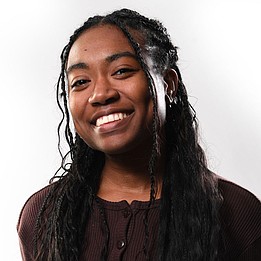
Jada Robison is the health and Rogers/Lowell city reporter for the Northwest Arkansas Democrat-Gazette. She discovered her love for journalism writing for her University newspaper, The Bison, at Harding University. She went on to win first place in feature writing at a the Southeast Journalism Conference in 2021 and began writing for other publications outside of school. Post school she explored other avenues and occupations before deciding to continue pursuing her dream of becoming a writer.