


Caught in the cycle
PART 5
Other states made bolder moves to fix mental health care.
What lessons does this hold for SC?
By Glenn Smith,
Jocelyn Grzeszczak
and Alan Hovorka
April 26, 2026
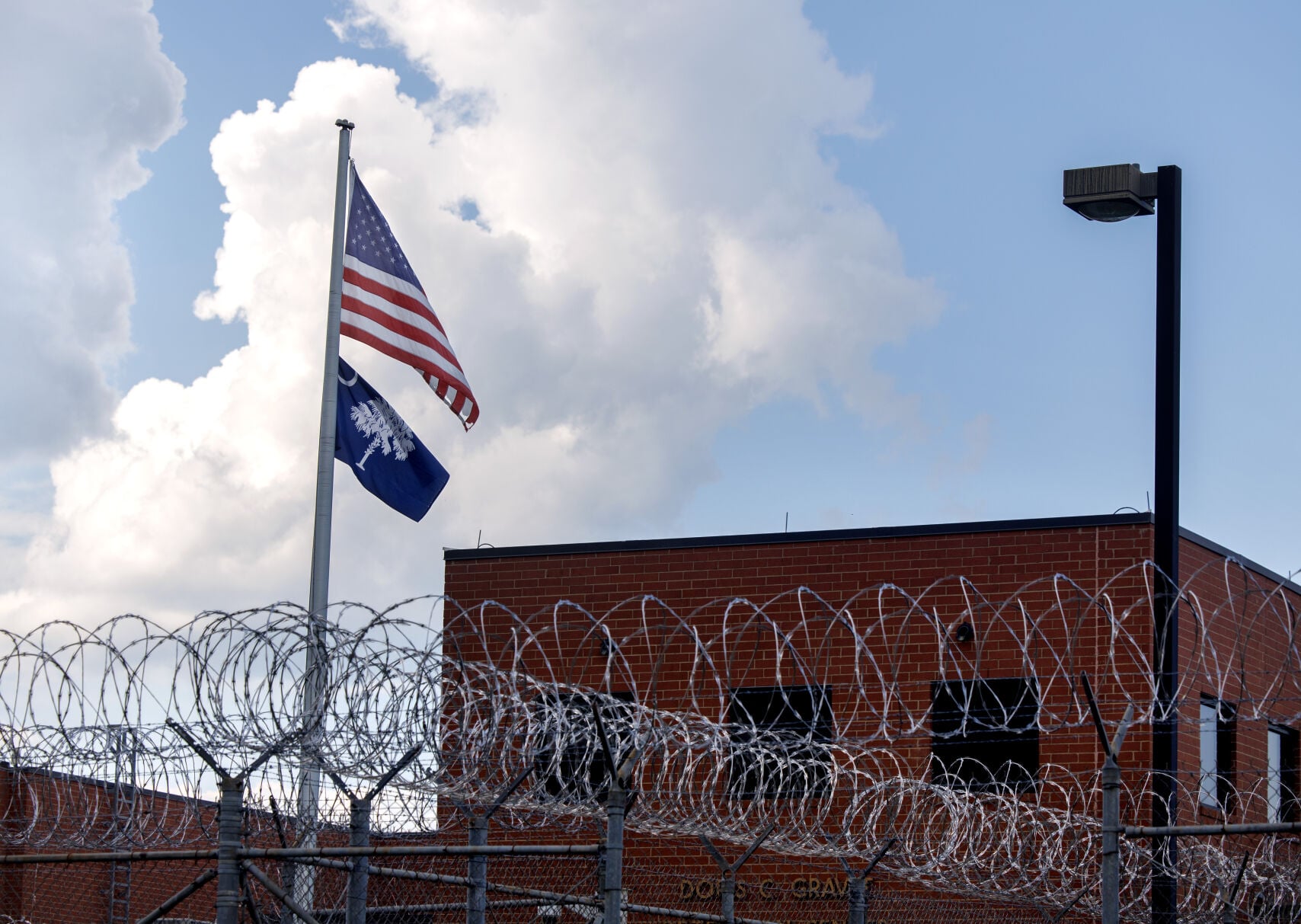
Four years after South Carolina law was changed
to allow jails to provide competency restoration treatment, Aiken
County’s detention center has the only program that is fully up and
running.
GRACE BEAHM ALFORD/STAFF
Four years after South Carolina law was changed
to allow jails to provide competency restoration treatment, Aiken
County’s detention center has the only program that is fully up and
running..
GRACE BEAHM ALFORD/STAFF
South Carolina has struggled for decades to care for the mentally ill defendants filling its jails and now risks falling behind other states with clearer consensus and strategies for tackling this growing challenge.
Demands for pre-trial mental health evaluations have spiked in recent years, and inmates are waiting an average of eight months in jail to get needed psychiatric care. This has proven dangerous for inmates and detention staff, expensive for taxpayers and it leaves the state open to potentially costly legal challenges, experts said.
If you or someone you know is experiencing a mental health
crisis, contact the South Carolina Office of Mental Health’s
statewide Mobile Crisis Team, available 24/7/365: 833-364-2274.
South Carolina has a network of 16 community mental health
centers and dozens more local clinics that provide emergency and
outpatient services. To find a location nearest you, here.
National Suicide Prevention Hotline: Call or text 988.
South Carolina is hardly alone in dealing with such pressures, but other states have made greater strides in devising potential fixes — at times as a result of punishing lawsuits.
In some states, the focus has been on adding psychiatric beds. In others, the goal is to more quickly identify those in the most dire need of care. Still others have streamlined their court processes. Some have combined all of these elements.
Across the U.S., the basic goal is to ensure criminal defendants get help in a timely manner so they can understand their charges and meaningfully participate in their own defense. Many also seek to help these defendants get on track in life and steer clear of the criminal justice system in the future.
In the past five years, South Carolina lawmakers have introduced a handful of bills aimed at improving the system here. Their ideas include allowing courts greater flexibility in diverting patients to private care and creating a pilot program to explore alternatives to incarceration for inmates with behavioral health issues.

The Office of Mental Health’s G. Werber Bryan Psychiatric Hospital in Columbia has 213 beds for criminal defendants who need inpatient care. As the state’s lone public hospital providing treatment to help mentally ill inmates get well enough to stand trial, the average wait time for admission is currently eight months.
Grace Beahm Alford/Staff
Most of the legislation has stalled in committees, unable to get a hearing.
State Rep. JA Moore, for instance, introduced a bill aimed at protecting mentally ill offenders from a fate similar to that of Jamal Sutherland, a 31-year-old constituent who died at the Charleston County jail in 2021.
Sutherland landed there after a fight at a North Charleston psychiatric center where he was being treated for schizophrenia and bipolar disorder. He died after he refused to go to a bond hearing and deputies used physical force, pepper spray and Tasers to extract him from his cell.
Moore, a North Charleston Democrat, proposed delaying bond hearings for people arrested at mental health facilities until they could be evaluated and a parent or guardian contacted to represent their interests. His bill also would have barred physical force from being used to make them attend bond hearings.
Moore twice introduced the bill and twice saw it stall in the Judiciary Committee without a hearing.
“It just wasn’t a priority,” he lamented.
One bill did pass, in 2022. It extended inpatient treatment at the state’s only public forensic psychiatric hospital from 60 to 180 days. It also made possible jail-based and outpatient restoration treatment for defendants found incompetent to stand trial. But four years later, only one jail restoration program is fully open.
In the absence of legislative buy-in, the state Office of Mental Health in 2025 launched a service to better identify inmates who don’t need to be waiting for a mental competency exam and divert them to other services.
The office is asking public defenders to request a pre-screening of clients before seeking a court order for a psychiatric evaluation. After reviewing a case, state clinicians will provide the lawyer with an individualized treatment plan, suggestions for resolving the case or a go-ahead to request the evaluation.
Clients and their attorneys, desperate for any mental health care, often see the competency restoration process as one of the few paths to treatment. But experts say many could be better served by other programs.
And that is the point of this prevention strategy: weed out inappropriate cases and free up resources for those who do need an exam.
A page of the mental competency workbook taught to Aiken County jail inmates on July 21, 2025, through the Aiken-Barnwell Mental Health Center. Competency restoration treatment consists of medication, basic education about legal procedures and targeted therapy — a process that took defendants an average of 130 days to complete last year. Some officials liken it to a civics lesson.
Grace Beahm Alford/Staff
The initiative has proven successful. After four months, about half of the screened cases led to defendants being diverted to other treatment, said Kelly Gothard, the Office of Mental Health’s forensic services director.
But the end result is basically just treading water — keeping wait times for restoration treatment from getting worse.
Still, other states are taking note. National experts recently asked Gothard’s team to present their strategy to see how it might be implemented elsewhere.
“This may be the key to the system functioning more effectively,” Gothard said. “It’s a reorientation, a realignment, of the competency system to be doing what it was intended to do, instead of being a source of unintended harm, which is kind of where we are and a lot of states are.”
Other parts of the country recognize this challenge, as well.
To produce this series, Post and Courier reporters reviewed dozens of reports and studies, consulted with experts and academics, and spoke with officials in several states who have enacted reforms to improve the care of mentally ill people detained in jails. If they agree on one thing, it’s that change doesn’t occur without a concerted effort by all parties who have a role in the system.
The following is a look at some of those endeavors:
Florida
Miami-Dade County has long been an innovator in trying to address care for mentally ill inmates, largely out of necessity. Its jail is considered the largest psychiatric institution in Florida. Around 11,000 defendants with serious mental illnesses are booked into the facility every year. Nearly 60 percent of the jail’s population has mental health issues, costing taxpayers around $232 million per year, according to the Miami Foundation for Mental Health.
The county is credited with establishing the nation’s first drug court in the 1980s to help offenders with addiction issues, and its judicial circuit mounted a separate effort in 2000 to address the rising influx of mentally ill inmates. The Criminal Mental Health Project, which came to be widely known as “the Miami Model,” used early interventions and jail screenings to divert defendants from the criminal justice system and into community-based treatment and support services. The program helped the county cut its annual jail bookings by more than half, according to a journal article by court officials.
“That’s the bottom line, reducing recidivism, reducing trauma to the criminal justice system and getting people on the right track,” said Cindy Schwartz, a Florida-based criminal justice and behavioral health consultant who ran the jail diversion program until 2022.
Retired county judge Steve Leifman, who started the Criminal Mental Health Project, said the county dramatically cut costs and achieved better results by reserving the competency process for the most serious crimes and channeling others into programs that made a long-term difference in their lives.
“It’s a third to 50 percent cheaper than traditional restoration. It’s a third to 50 percent faster, and the outcomes are almost 100 percent better because once the person stabilizes, it’s all about treatment and teaching them how to live in the community and making sure they have wraparound services when they leave us,” he said.
Leifman has been a driving force behind the Miami Center for Health and Recovery, a unique treatment and services hub for people with schizophrenia, bipolar disorder and other serious mental illnesses. It’s targeted at criminal defendants and those at risk of being swept up in the criminal justice system. The 208-bed center will have a crisis stabilization unit, residential and outpatient care, dental and optometry services, transitional housing, vocational work programs, a courtroom, and legal and social services. Its long-anticipated opening has been delayed in recent months by county concerns over long-term funding, Miami Today has reported.
The Miami Center for Health and Recovery in Florida is designed to be a unique treatment and services hub for people with schizophrenia, bipolar disorder and other serious mental illnesses. It’s targeted at criminal defendants and those at risk of being swept up in the criminal justice system. “Our hope is that this will enable us to really break the cycle that nobody has been able to break,” said retired Miami-Dade County Judge Steve Leifman, a driving force behind the center.
Provided
Colorado
The Bridges program launched in 2018 to help Colorado comply with a consent decree in a federal lawsuit over monthslong backlogs in care for mentally ill criminal defendants.
As with many states, Colorado faced a constitutional quandary in which defendants’ legal right to assist in their own defense butted up against their right not to be detained without trial, said Jennifer Turner, executive director of Bridges of Colorado.
“As you can imagine, jail is not good for anyone’s mental health,” she said. “And if somebody’s already struggling with significant mental health needs, we’re going to see rapid decompensation.”
As its name implies, the program aims to bridge the state’s criminal justice and mental health systems. Appointed court liaisons identify defendants’ needs and work to connect them with housing, transportation, health insurance and other services. They work in each of the state’s 22 judicial circuits and brief judges, prosecutors and defense lawyers on their defendants’ progress and challenges.
As demand for its services increased, the program became an independent state office in 2023. The program now has an annual budget north of $15 million and worked with nearly 3,000 defendants in 2024, Turner said. About 20 percent of the people it oversees are immediately released from confinement to receive outpatient care in the community, reducing the demand for inpatient psychiatric beds, she said.
Bridges helped secure the release of one defendant who was later charged with stabbing four people in January 2025 along Denver’s 16th Street Mall, killing two and wounding the others. Some critics questioned the program’s effectiveness and oversight as a result.
Turner said the stabbing was tragic and heartbreaking, but it was the first time in Bridges’ history that a defendant working with the program had committed such a crime.
“The fact that we can say that this was our first incident … in six years and with 8,000 people served, to me, that tells you that this is a good idea,” she said.
Colorado also has created special competency dockets in several judicial districts aimed at dedicating specific court calendar time to handling cases in which defendants’ fitness to stand trial is at issue. These dockets, designed to make the process more efficient and cut down on wait times, have caught on in other states, as well, including Nevada, New Mexico and Wisconsin.
Restraint chairs sit parked in the intake area at the Aiken County Jail on July 21, 2025. These chairs are used to restrict the movements of inmates who become violent or uncontrollable.
Grace Beahm Alford/Staff
Washington
Washington state has spent more than $2 billion in the past decade to improve its competency and restoration systems. This followed a class-action lawsuit filed in 2014 that alleged long wait times for these services violated inmates’ constitutional rights. As a result, the state was ordered to provide competency evaluations within 14 days and restoration services within seven days of court orders — or face fines.
To meet its obligations, the state has added around 200 inpatient psychiatric beds, expanded outpatient restoration services in 16 counties, hired nearly 60 additional competency evaluators to assess inmates throughout the state and expanded the use of telehealth for evaluations.
Washington also created new roles for “forensic navigators” who guide mentally ill defendants through the restoration process and assist them with meeting other needs, such as finding housing or vocational support.
Challenges remain. The state has been fined $400 million along the way for failing to hit benchmarks, and it has struggled at times to keep pace with staffing demands. But progress has been made.
In the wake of the changes, wait times for restoration treatment have dropped from eight or nine months to about a week in most cases, said Dr. Thomas Kinlen, director of the Office of Forensic Mental Health Services at Washington’s public health agency.
Kinlen told The Post and Courier that his state is in its best position ever to meet its obligations for treatment. But there were no short-term fixes to get there, he said. It took a multi-pronged approach and 10 years of work. And it required a serious effort to make sure the state not only had sufficient beds, but that they were reserved for patients with the greatest needs.
“Those that are in jail waiting for competency services, it is night and day from what it was before,” he said.
Jail jumpsuits fill milk carton storage containers at the Sheriff Al Cannon Detention Center on Sept. 10, 2025, in North Charleston.
Grace Beahm Alford/Staff
Illinois
Drawing on national models, the Illinois court system has led an ambitious, collaborative effort in recent years to study and improve the state’s mental competency process.
They’ve held regional workshops and a summit of experts that led to a 2022 action plan drawing on the experience of judges, prosecutors, defense attorneys, mental health advocates and others.
Legislation was crafted and passed, creating a 15-member task force with representatives from the judicial, executive and legislative branches to review and propose changes to fitness-to-stand-trial statutes.
State law long required that inmates deemed incompetent to stand trial be sent to an inpatient treatment facility within 20 days of a court order. But that deadline was pushed back during the pandemic, leading to complaints from sheriffs and jails around the state.
The average wait time for treatment now stands at about 80 days, and Illinois is trying a number of approaches to get that number down, said Scott Block, who was hired in 2021 to serve as Illinois’ first statewide behavioral health coordinator.
Among other changes, the state has added more than 100 new forensic psychiatric beds, with plans to add another 100 by the end of this year.
“There’s more to this puzzle than just building beds,” Block said. “There’s issues with how do we divert people from even coming into the justice system.”
The task force has recommended reserving competency evaluations and inpatient treatment for the most serious crimes while boosting access to outpatient care for lower-level offenders. Judges are getting additional training. Officials are studying data surrounding competency evaluations and restoration treatment placements. And the state is exploring the use of court navigators to better identify which defendants need the most help and who might benefit by being diverted into community programs and care.
“Just cutting somebody loose with zero resources and not helping address the underlying need is certainly never going to reduce the faucet here in the beginning of the process,” Block said.
Amilleo Mingo, who has schizoaffective disorder, said a clinic denied him medication a day before he attacked a police chief in January 2020.
By Grace Beahm Alford gbeahm@postandcourier.com
Kentucky
In July 2024, the Bluegrass State passed sweeping legislation aimed at improving guardianship and competency proceedings. The measure, known as “Seth’s Law,” is named after a former attorney for the Kentucky Judicial Commission on Mental Health who died by suicide the previous year.
The state had required that all mental health evaluations take place at the Kentucky Correctional Psychiatric Center, which led to significant backlogs due to limited bed space. Hundreds of criminal defendants were left waiting around 18 months to be examined. Seth’s Law changed that, allowing for initial evaluations to be conducted on an outpatient basis in jails and other community settings by psychologists or psychiatrists — bringing Kentucky in line with South Carolina and a number of other states.
The law has had a dramatic effect in reducing wait times, and officials hope it will result in speedier justice for defendants and crime victims alike. The changes have already reduced the backlog of evaluations from more than 400 people to around 50, said Shawna Mitchell, administrator of the Kentucky Judicial Commission on Mental Health, which worked with lawmakers to craft and pass the legislation.
The effort also demonstrated the importance of communication and collaboration among the various agencies and advocates involved in the system, Mitchell said.
“I think the most important thing is that we didn’t do this alone, and it took everybody and every system coming together, acknowledging that we all contributed to the barriers of this, and that we all had to be willing to do more to get people help quicker,” she said.
The state is now working to provide additional training in the law to lawyers and judges, make greater use of telehealth and virtual court services, and develop the use of restoration treatment in jails to get defendants needed care in a more efficient manner. Cooperation remains the key ingredient.
“You have to have everybody that touches that system on board,” Mitchell said. “And if you don’t have the right players, then you can’t really change the way the system is responding.”