
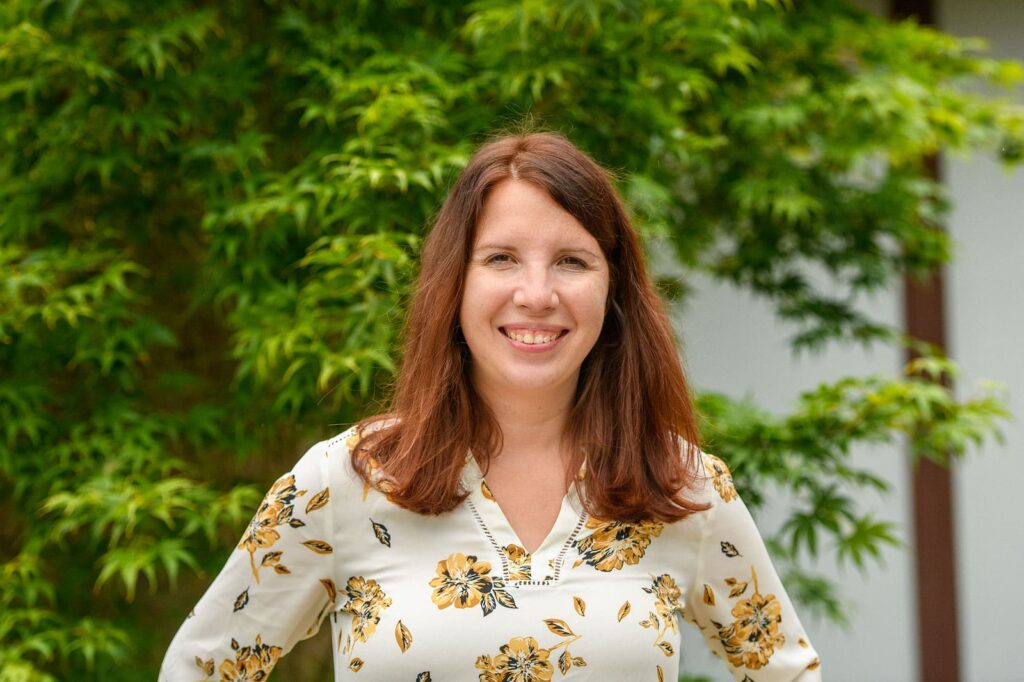
 Melisa Tasker, a program administrator with Washtenaw County Community Mental Health, oversees the county’s Mobile Crisis Team and Co-Response Unit programs. Doug Coombe
This article is part of a series about mental health in Washtenaw County. It is made possible with funding from Washtenaw County’s Public Safety and Mental Health Preservation Millage.
Washtenaw County is serving more people experiencing mental health crises, as well as reducing arrests and hospitalizations, through two new mental health crisis response services. The county’s Mobile Crisis Team (MCT) provides rapid response and follow-up to mental health concerns, while its Co-Response Unit (CRU) pairs a clinician with a sheriff’s deputy to identify and address mental health needs on the spot.
“The state of Michigan has mandated that every CMH have some level of crisis response, some kind of mobile crisis team,” says Melisa Tasker, a program administrator with Washtenaw County Community Mental Health (WCCMH). “It’s really an acknowledgment that crisis response is an evidence-based practice that communities want and need.”
As the person responsible for overseeing both the MCT and the CRU, Tasker is proud of the teams’ impact in the community. She says the MCT handles around 8,000 monthly calls, up from 4,000 in 2019. The CRU has been especially instrumental in reducing arrests and hospitalizations. Currently, 30% of calls to the Washtenaw County Sheriff’s Office (WCSO) are being connected to Tasker’s teams.
Matt Brunale, a clinical social worker, has been part of the MCT since 2023, conducting the bulk of his work in schools. He states that the community impact is invaluable because “at this time in history, we have so much changing so rapidly. And oftentimes as adults, we tend to forget that we have children.”
“We have these children who we work with on a day-to-day basis, who are also being exposed to whatever you think, what we go through, everything that we see, everything that we hear,” he says. “But they don’t really have the life experience that we do.”
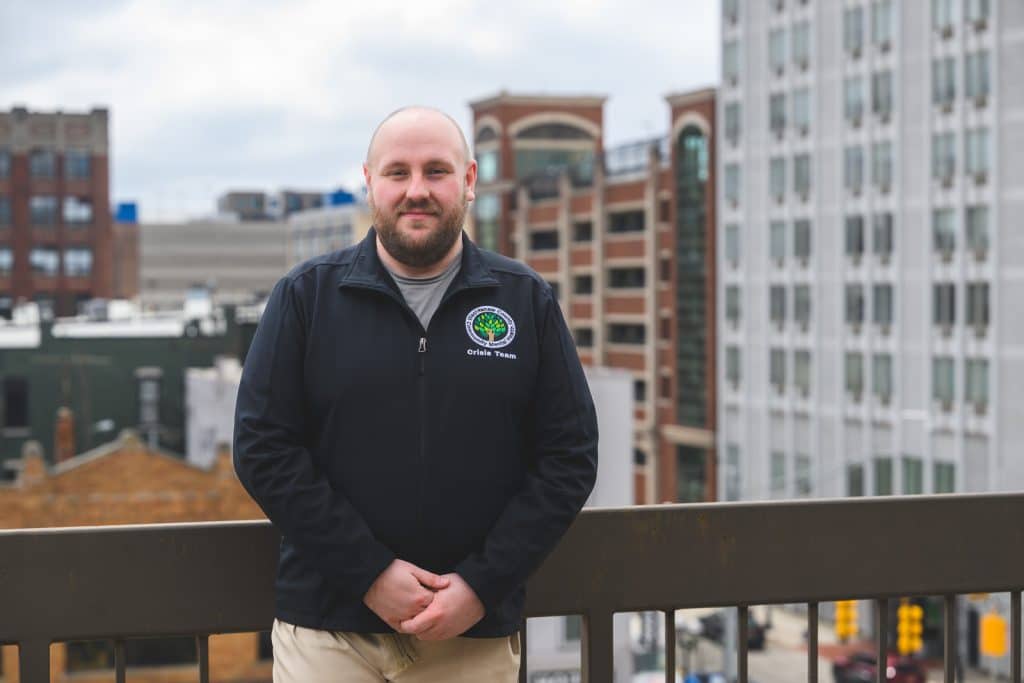 Matt Brunale. Doug Coombe
He explains that adults can cope, compartmentalize, and move past experiences, but children don’t always have those skills. Oftentimes, he says adults expect kids to function, but “it’s so unforgiving, and it just doesn’t work.”
“So many kids need a lot more time adjusting. So we’re providing them assistance, providing outreach support, or providing mental health help with whoever’s trying to help them adjust to whatever is going on,” Brunale says. “And, if things are going bad, helping them find ways to connect with others and to feel the fulfillment that we want them to feel.”
In addition to providing this type of support, he connects with school districts’ social workers and administrators. The purpose is to provide mental health education about topics such as trauma-informed care, LGBTQ identities, and other common concerns that children are experiencing.
Shannon Novara, a program manager with the Washtenaw Intermediate School District (WISD), works closely with Brunale. She oversees WISD’s Bridge program, primarily working with county school districts on mental health promotion and substance use prevention projects.
Her connection to CMH’s crisis team began in earnest prior to the COVID pandemic, when the number of students expressing concerns about suicide started to increase.
“A lot of schools’ first reaction was to send students to the emergency room, and the psychiatric emergency room is really not a pleasant place for anyone, but especially young people,” she says. “The University of Michigan’s director of psychiatric emergency services, CMH, and WISD all came together to try to find alternatives. And the best alternative was the CMH crisis team.”
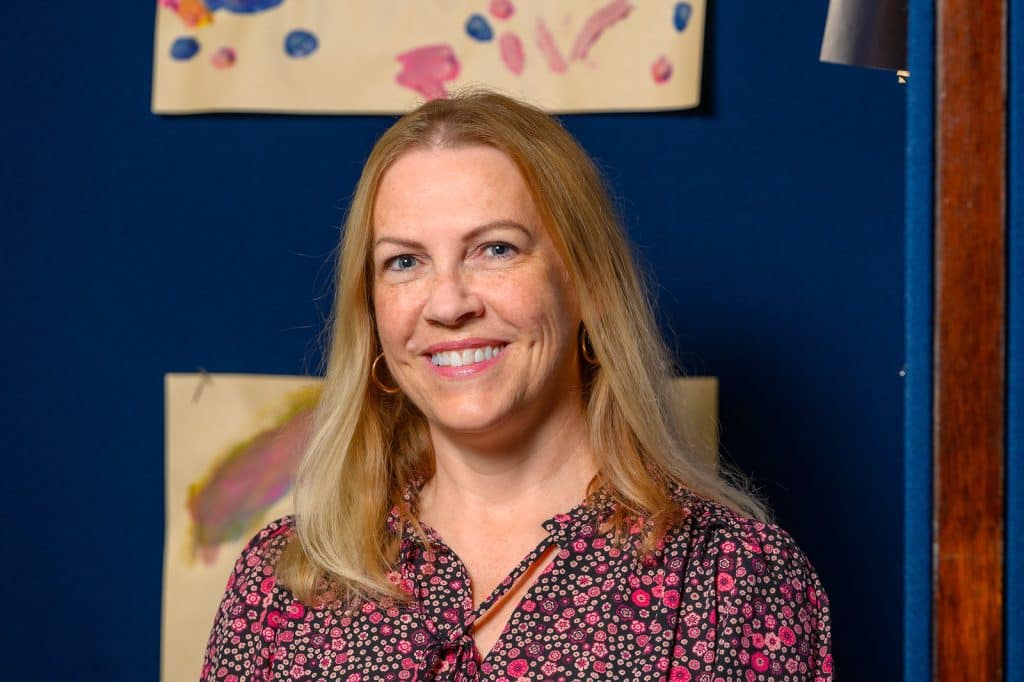 Shannon Novara. Doug Coombe
Novara says there’s been a tremendous push to reduce stigma around mental health in general. It’s a good sign that some students know that they can reach out to school staff – and that they’re encouraged to do that if they need it, rather than suffering alone.
“Young people actually have a much better understanding of when they may need to seek help,” she says. “And they’ve also gotten better at seeking help for their friends and their peers who might be struggling with their mental health.”
Not every school building has a licensed clinical social worker or counselor. In fact, most don’t. When kids are expressing concerns about their mental health or even thoughts of suicide, it can be overwhelming for schools. But Novara underscores that Brunale is on call every day, so the WCCMH crisis team is a great resource for students and school staff.
“They are great thought partners. If they’re available, they will come out to the school and meet with the student. They’ll meet with their family. They’ll talk with the school staff,” she says. “They’ll assess the student to determine: Should this student go directly to the emergency room? Or can we work with them and their family to create a safety plan that will keep them safe until they can see another provider?”
Expanding MCT services
Tasker underscores that since the passing of a public safety and mental health millage, WCCMH has been able to expand the number of people it can serve.
“Historically, CMH has focused on people with more severe needs who are often on Medicaid,” she says. “The millage funding let us open the door wider so that even residents with mild to moderate mental health needs, who aren’t on Medicaid, can access crisis services through us.”
WCCMH staff now take calls from anyone who might be having a mental health crisis, or anyone that might be close to somebody who’s having a mental health crisis. Staff receive, assess, and triage many calls from loved ones, family members, neighbors, roommates, and friends.
Tasker says that sometimes the MCT will visit a person’s home, and create a safety plan. The plan includes identifying the caller’s coping skills, natural supports, and overall plans and goals for the next few weeks. Tasker says MCT members strive for the least restrictive level of care option.
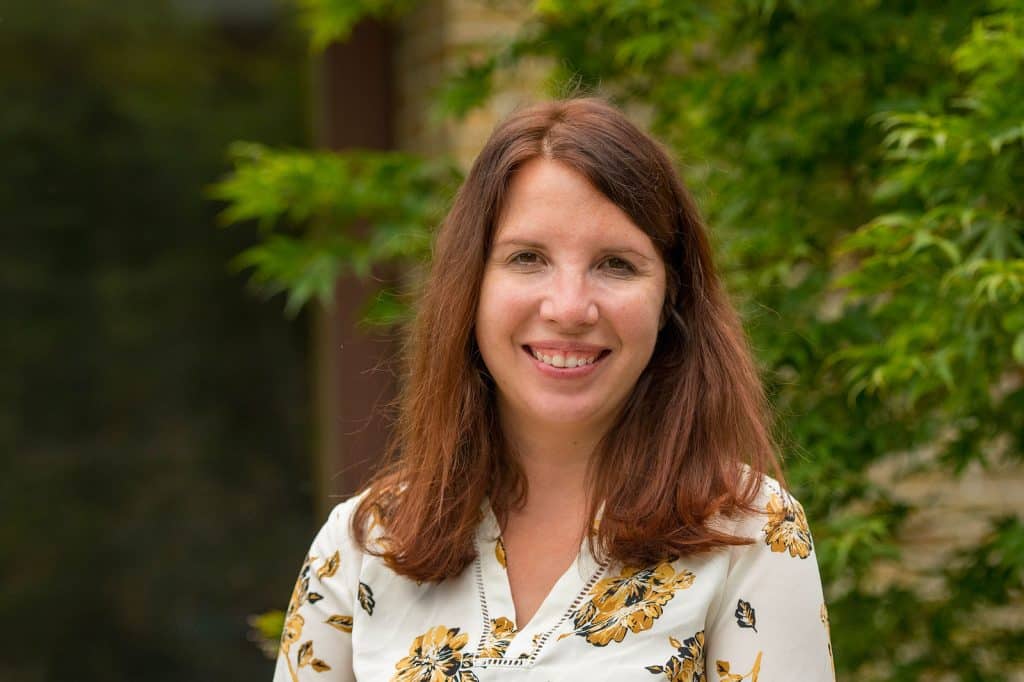 Melisa Tasker. Doug Coombe
“We talk to them about factors that may make things riskier for them to remain in the community, like access to lethal means,” Tasker says. “And then we’re providing daily contact and follow-up to that initial crisis intervention to ensure that the plan is working, that their symptoms are potentially getting better.”
Additionally, over the last 10 years, MCT members have been building relationships with law enforcement partners. Tasker explains that WCCMH staff came to realize that the same individuals turning up at their office, and in their community calls, were also repeatedly coming to the attention of law enforcement.
“We didn’t have any idea that our law enforcement partners were seeing our people, so that kind of sparked this idea,” Tasker says. “How do we work together to make sure that if somebody is calling 911, or needing a law enforcement presence, that they could access a mental health clinician?”
Providing needed support to sheriff’s deputies
Deputy Jim Roy, an 18-year veteran and trainer at WCSO, co-founded CRU with WCCMH social worker Christine Holston in 2022. The duo focuses on assisting the unhoused, those with substance use disorders, and people experiencing mental health crises. By midnight, while most Washtenaw County residents are already safely tucked into their beds, Roy and Holston are usually taking calls and on the road.
Roy recalls that they “kind of started as two separate roles, doing co-response without having a co-response unit.” When Holston worked nights, she required assistance from police to conduct welfare checks. And when Roy found somebody in crisis, who he felt he lacked the tools to help, he would call CMH.
“Christine was on the crisis team for about 12 years total. Up to this point, she worked midnights and I worked midnights on the road patrol at the sheriff’s office,” he says. “I would call and talk to Christine. And when Christine had a pickup order, or she needed to execute something, she would call and ask for me.”
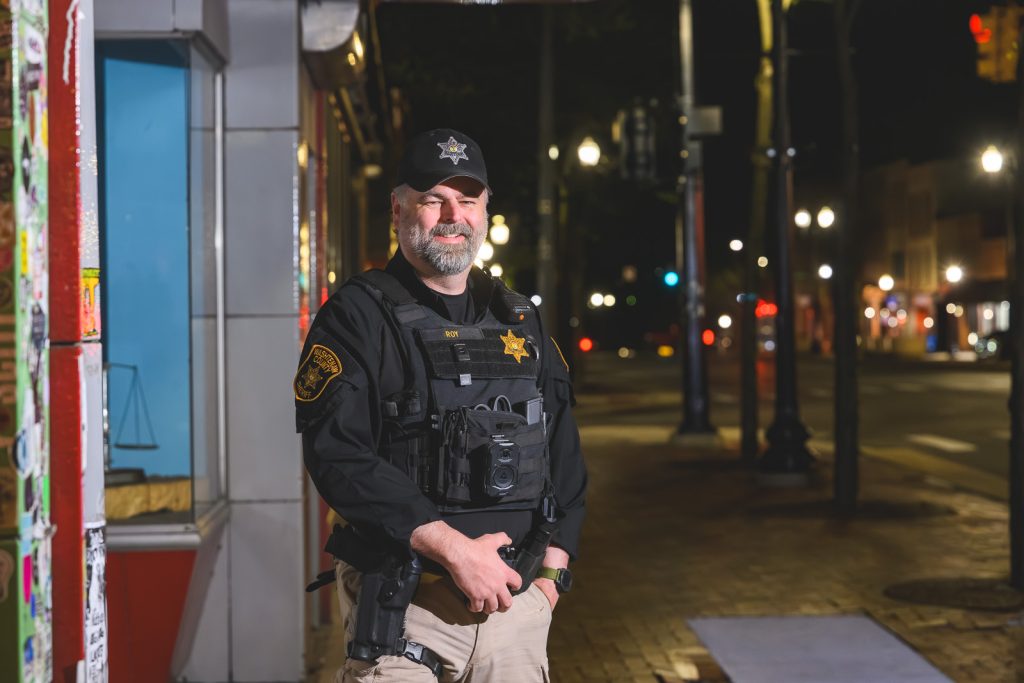 Jim Roy. Doug Coombe
Recently, Roy and Holston received a call for assistance resulting in an encounter that encapsulates the positive impact of CRU.
“A gentleman, schizo-affective, non-medicated … was having religious fixation, religious delusions, and armed himself with a baseball bat in the house, and had taken a bunch of Gabapentin in an attempt to overdose,” he says. “So, our timeline was ticking due to the fact that they were actively overdosing, but they were also hostile and armed with a bat.”
The man’s parents were concerned that intervention by armed law enforcement officers could be dangerous. However, the CRU team was able to allow the man a safe place to self-soothe as he ranted.
“I was like, ‘If you want to pace, pace between these two places, put your bat down, and just pace. Get it out of your system,’” Roy says. “He continued to rant about religious delusions, about how God was speaking to him and he needed to pray.”
CRU let him rant, while Holston kept reminding Roy that “the Gabapentin is going to win at some point.” Roy was able to get the man close enough to put his arms out and they recited The Lord’s Prayer together.
“I held his hands together, and I was able to walk with him as we prayed. We walked to the ambulance together. He got on the cot willingly and was transported to the hospital, where he was treated for overdose as well as mental health issues,” Roy says.
Holstan and Roy followed so the man knew they were with him. Upon arrival at the hospital, Roy was able to stay by his side while medical professionals stabilized the man. Then Holston was able to explain mental health concerns to the doctors and nurses.
“She’s much more eloquent with those types of doctor words than I am, so she’s able to explain actually what our concerns are, what we were seeing on scene, … while I talked to him and kept him calm for the nurses,” Roy says.
Later that evening, the man’s parents called and thanked WCCMH directly for preventing the physically dangerous interaction they had feared.
Serving future needs
Moving forward, Roy would like to see more funding that would allow more deputies and officers to get involved with CRU. One thing he didn’t quite realize is how many of the calls he responds to are mental health- or substance‑use related.
“Having more units that are trained properly to respond is going to be even better,” he says. “Being able to talk people down, talk people into getting help or going to the hospital, instead of putting hands on is going to be huge.”
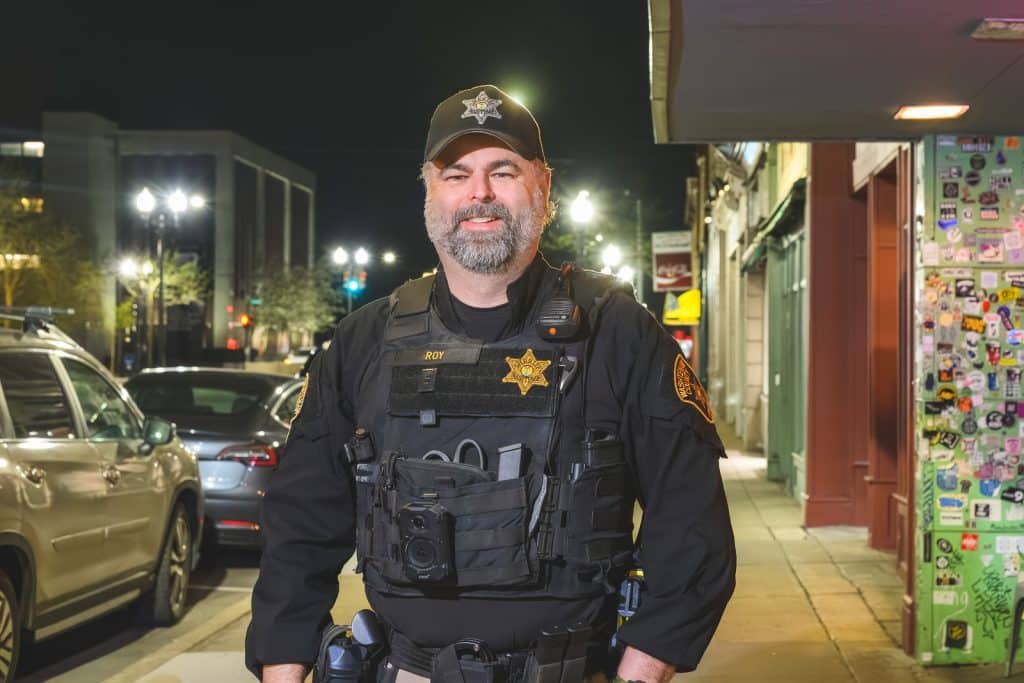 James Roy. Doug Coombe
Tasker shares similar desires for expansion, noting that the millage was a turning point for the community. Future funding would strengthen coordination with 911 dispatch, adding another layer of immediate mental health response.
“At the end of the day, all of us are here for the same reason and want the same thing,” she says. “That’s wanting people to be well.”