
On April 24, Brooklyn College President Michelle J. Anderson joined professors Jacqueline Shannon and Haroula Ntalla to bring together clinicians, researchers, advocates, community leaders, and students at Brooklyn College for the 2026 Perinatal Mental Health Summit, a daylong convening focused on strengthening maternal and reproductive mental health care for parents, infants, and families.
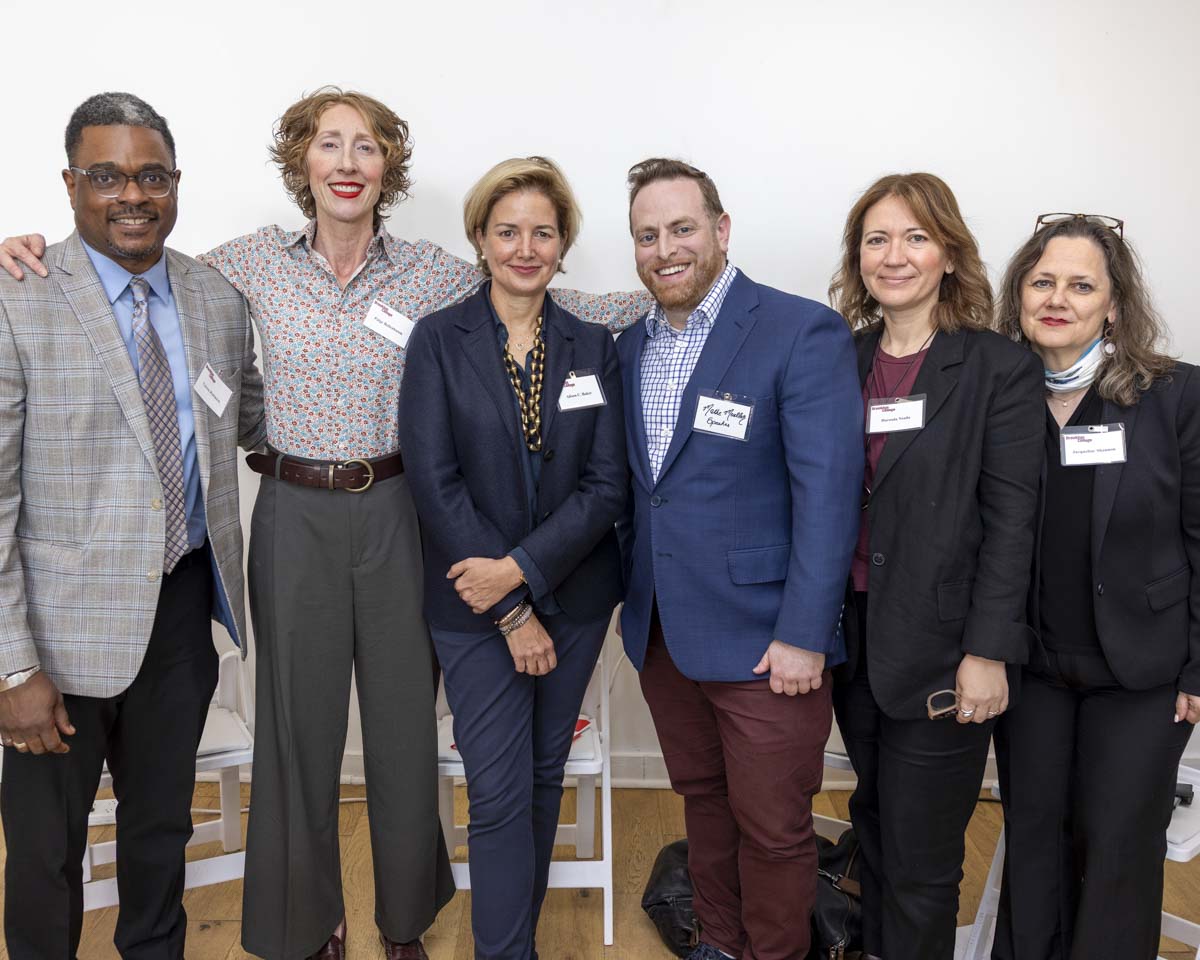
(Left to right) Tykeen Robinson, New York City Department of Health; Paige Bellenbaum, Paige Bellenbaum Consulting; Alison Baker, Seleni Institute; Dr. Moshe Moeller, HERO Dads/ Montefiore Einstein Hospital; and Brooklyn College professors and leads for the college’s perinatal health courses Haroula Ntalla and Jacquelie Shannon at the 2026 Brooklyn College Perinatal Mental Health Summit April 24. Shannon and Ntalla also led the efforts at the college to organize this and last year’s inaugural summit.
Titled “Relational Beginnings: Advancing Perinatal Mental Health for Parents, Infants, and Families,” the second annual summit was held in partnership with United for Brownsville and the New York City Health Department at the Greg Jackson Center, for Brownsville. It focused on perinatal grief and the postpartum experience, and both maternal and paternal mental health, with particular attention to the importance of father support. The summit also highlighted dyadic and reflective group interventions grounded in relational and attachment-based approaches, along with culturally responsive, trauma-informed care for Latina mothers and families in underserved communities.
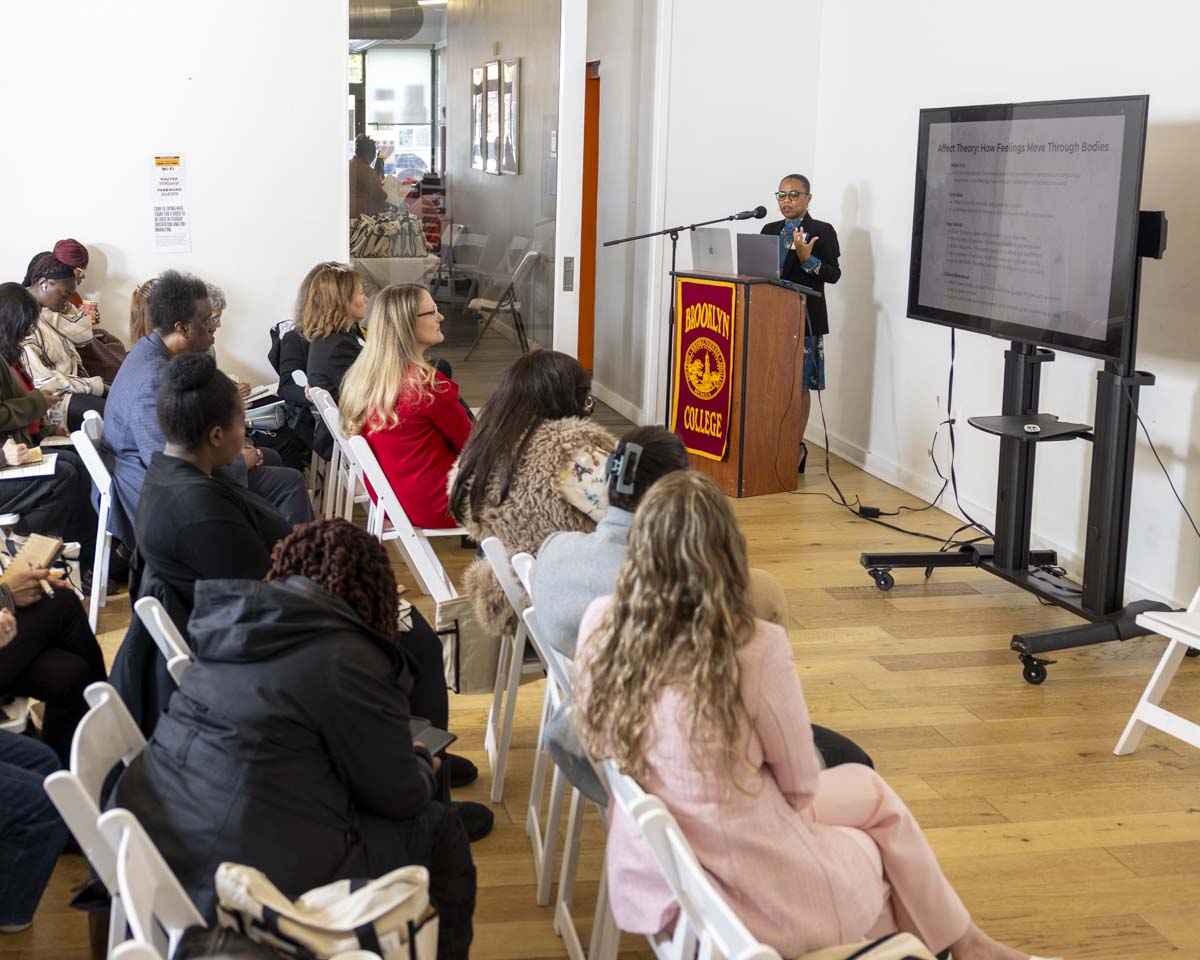
The Summit brought together a distinguished lineup of perinatal experts, highlighted by keynote speaker Solimar Santiago-Warner (DSW, LCSW, PMH-C) an accomplished clinician-scholar, educator, and leader in perinatal mental health with nearly two decades of experience across pediatric, neonatal, and perinatal hospital systems.
The event underscored Brooklyn College’s commitment to addressing the national perinatal mental health crisis through its dynamic course offerings, community partnerships, and workforce development, all of which has garnered the support from Brooklyn Borough President Antonio Reynoso and most recently, Congressional funding championed by Chuck Schumer.
“Perinatal mental health is foundational to the well-being of families,” Brooklyn College President Michelle J. Anderson said. “I am grateful to Borough President Antonio Reynoso and Senator Chuck Schumer for strongly supporting the College in establishing the Advanced Certificate Program in Perinatal Mental Health.”
Held on the heels of Black Maternal Health Week, this event drew over 200 community members, clinicians, educators, students and others, and featured more than a dozen interdisciplinary health and mental health experts and served as a crucial platform to address one of the most urgent health care challenges facing Brooklyn and the nation today.
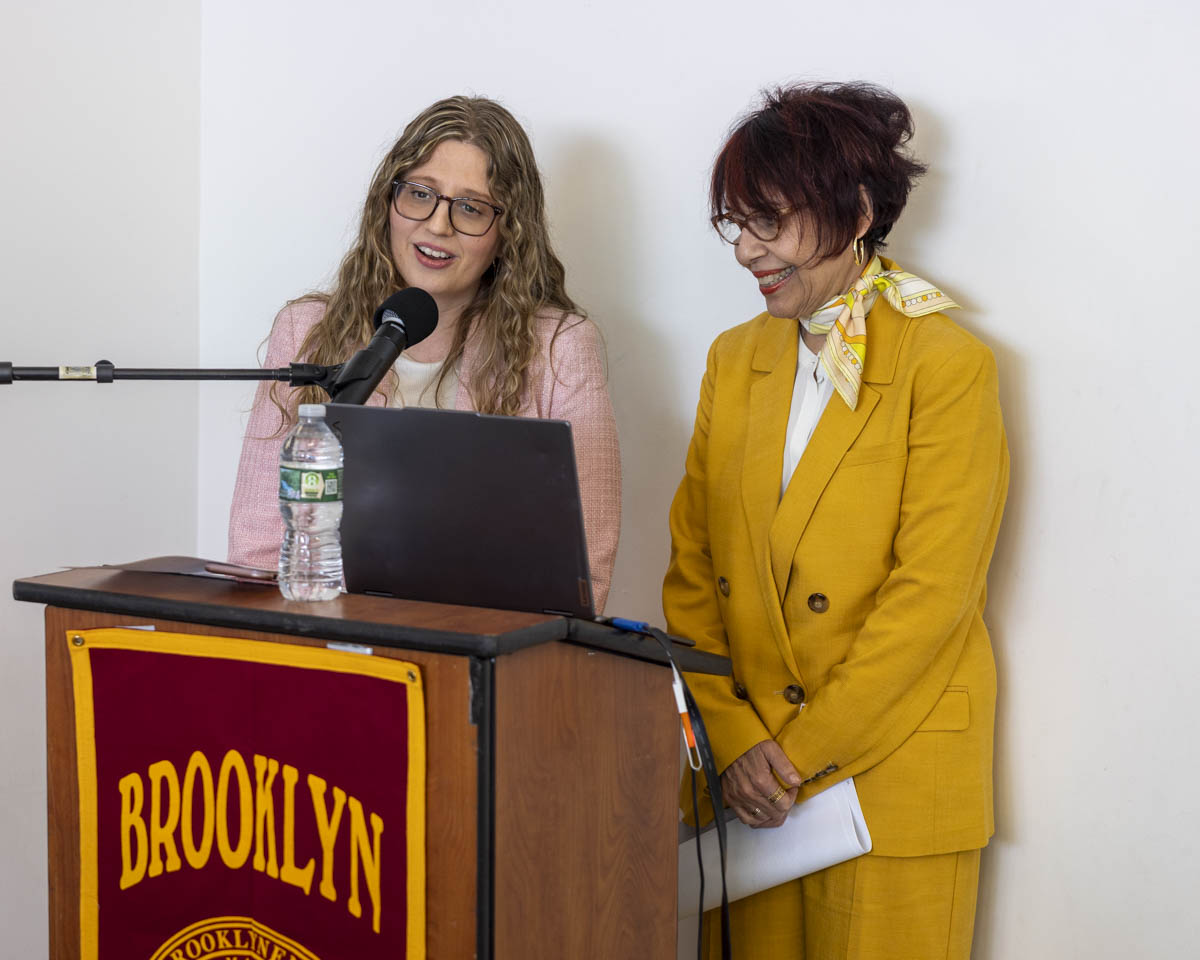
(Left to right) Paola Amaya-Rodriguez, LCSW, PMH-C, of Chances for Children, and Silvia Juarez-Marazzo, LCSW-R, NCPsyA, also of Chances for Children and an adjunct instructor at Brooklyn College, co-presented on a panel focused on supporting Latina mothers.
“We designed this Summit to meet professionals where they are by partnering with the United for Brownsville and New York City Health Department in Brownsville to create space not only to learn, but to connect alongside interdisciplinary colleagues within our communities in meaningful ways,” Shannon said. “By integrating clinical expertise in early relational development, with a deep understanding of the social factors and inequities often shaping families’ lives, we’re advancing equitable perinatal care for all families by preparing students and practitioners to respond in ways that can truly transform outcomes for parents and their children.”
The Summit featured a distinguished lineup of perinatal experts, including keynote speaker Solimar Santiago-Warner, DSW, LCSW, PMH-C, a clinician-scholar, educator, and leader in perinatal mental health who brought nearly two decades of experience across pediatric, neonatal, and perinatal hospital systems. At the summit, she spoke about integrating trauma-informed and culturally responsive frameworks into perinatal and reproductive mental health care, emphasizing how systems could better support families suffering from pregnancy and infant loss. Throughout her talk, she highlighted the need to bridge research, clinical practice, and lived experience to transform care systems in ways that honored both evidence and the realities of families.
“As clinical faculty at Brooklyn College, we are deeply connected to one of the most diverse campuses and communities in the country,” Ntalla said. “Our perinatal mental health initiative, which includes this summit and our accompanying coursework, allows us to partner closely with local health and mental health providers and families to address challenges and drive meaningful, education-based change to what is a national crisis.”
Georgina Gooden is a parent leader, early intervention advocate, and community strategist based in Brownsville, Brooklyn. She also consults through Grassroots Perspectives LLC, providing community-based insights on programs impacting families, and works with United for Brownsville as an early intervention advocate, supporting families and elevating their voices in policy and decision-making spaces. strengthen family-centered systems. She has completed two perinatal mental health courses at Brooklyn College and is enrolled in two more. Gooden has also helped coordinate two Brooklyn College Perinatal Mental Health Summits.
Georgina Gooden
“Both the summit and the perinatal mental health courses at Brooklyn College are strengthening how I support families, giving me the language, tools, and clinical insight to pair with lived experience, so I can advocate more effectively and help shape systems that truly meet families where they are,” Gooden said.
The summit was preceded by a Presidential Lecture Series event on April 23 at Brooklyn Borough Hall with President Anderson and nationally recognized leader Liz Dozier who engaged in a timely discussion on the Black maternal health crisis in the United States. The event was also attended by Borough President Reynoso. Read more about that event here.
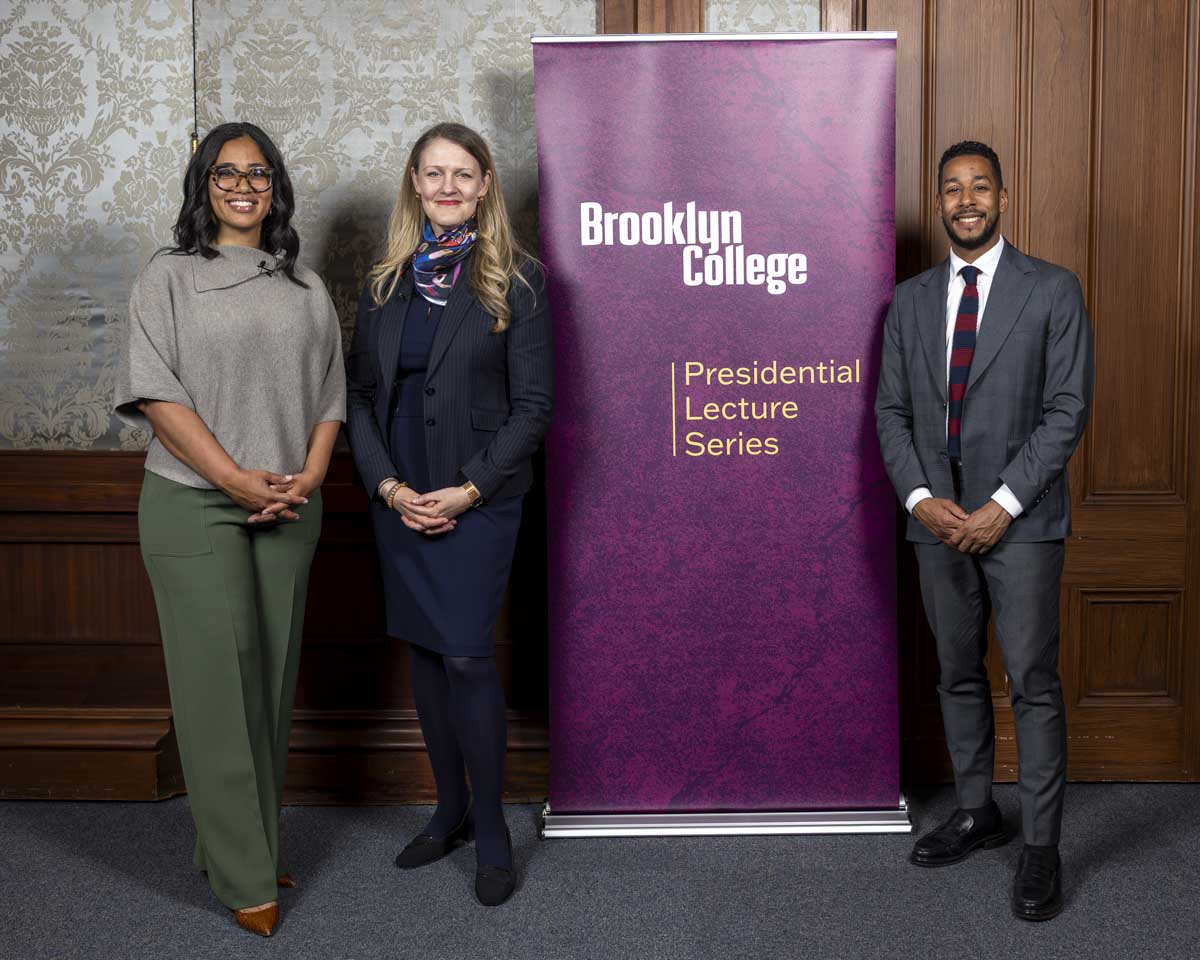
(Left to right) Liz Dozier engaged in a timely discussion on the Black maternal health crisis with President Michelle J. Anderson as part of Brooklyn College’s Presidential Lecture Series on April 23. The event was also attended by Borough President Antonio Reynoso, who has lent his support of the college’s perinatal mental health curriculum and programming.
2026 Perinatal Mental Health Summit Lineup:
Greetings: President Michelle J. Anderson and Brooklyn College perinatal health curriculum leaders Jacqueline Shannon and Haroula Ntalla, Early Childhood Education/Art Education Department, Brooklyn College.
Opening Remarks: Mimi (Paulomi) Bhatt, PhD, MPH, CNM, FACNM, Assistant Professor at Rory Meyers College of Nursing at New York University.
Keynote Speaker: Dr. Solimar Santiago-Warner, DSW, LCSW, PMH-C, Solmaterna Therapy & Consulting: “Perinatal Grief and the Postpartum Body.” Solimar Santiago-Warner explores perinatal loss through an embodied, trauma-informed, and interdisciplinary lens, centering the postpartum body as a site of grief, memory, and resilience. Drawing from clinical practice, phenomenology, affect theory, and perinatal palliative care, the presentation examines how grief is experienced physiologically and relationally following stillbirth, late miscarriage, or early infant loss. Designed for a multidisciplinary and community-based audience, the talk offers practical tools, language, and interventions that professionals can immediately apply within their respective roles. Participants will gain approaches to support bereaved parents with greater dignity, compassion, and relational awareness across healthcare, mental health, and community settings.
Panel 1: Fathers Matter: Perinatal Mental Health, Partnership, and Early Relationships
Panelists: Paige Bellenbaum, LCSW, PMH-C. Paige Bellenbaum Consulting; Alison C. Baker, LCSW, PMH-C, Clinical Director, Seleni Institute; Moeshe Moeller, Ph.D., Director, HERO Dads, Montefiore Einstein Hospital. Moderator: Tykeen Robinson, MSW, Mental Health Program Manager, Bureau of Maternal, Infant, and Reproductive Health, New York City Department of Health and Mental Hygiene.
Overview: Fathers/Non-Birthing Parents and Perinatal Mental Health. While much of the perinatal mental health conversation centers around mothers and birthing people, up to one in 10 fathers and partners experience significant mental health challenges during the perinatal period—often in silence. Shame, stigma, and a lack of culturally responsive care prevent many from seeking support, leaving mental health conditions untreated. Limited support and access to appropriate care can impact not only the father’s/non-birthing parent’s well-being but also the child’s development and the stability of the family system. One of the strongest predictors of paternal depression or anxiety is the mental health status of the mother/birthing parent. As such, an inclusive, family-centered approach to perinatal mental health is critical. This talk will explore the often-overlooked experiences of fathers and partners during the perinatal period. Participants will learn how to recognize the signs and symptoms of perinatal mood and anxiety disorders in fathers/non-birthing parents, explore the barriers they face in accessing care, and review practical, evidence-based strategies for engagement and intervention.
The Transition to Parenthood: Supporting Both Parents. Perinatal mental health conversations often center on the birthing parent, but the transition to parenthood is a profound shift for both individuals in a relationship. This discussion will explore the emotional and relational changes that occur as couples move from partners to co-parents, including shifts in identity, roles, and expectations. Particular attention will be given to the often-overlooked experiences of non-birthing parents, who may face their own psychological challenges while feeling pressure to prioritize supporting their partner. Research shows that men whose partners experience postpartum depression are at significantly higher risk of developing depression themselves, yet they are far less likely to seek support.
The Silent Partner: Fathers, Postpartum Stress, and the Couple Relationship. This presentation explores the often-overlooked experiences of fathers during the postpartum period. Drawing on clinical work with couples and the HERO Dads program, it highlights the emotional, relational, financial, and mental health challenges many fathers face while supporting partners with postpartum mood disorders and adjusting to the transition to parenthood. It will also address paternal postpartum depression and the importance of including fathers in perinatal mental health support.
Presentation: A Relationship Held From the Beginning: Lessons from Dyadic Psychotherapy and Reflective Groups in Infant Mental Health Practice. Presenters: Silvia Juarez-Marazzo, LCSW-R, NCPsyA, Chances for Children, Adjunct Instructor, Early Childhood/Art Education Department, Brooklyn College; Paola Amaya-Rodriguez, LCSW, PMH-C, Chances for Children.
Overview: This presentation explores the power of early relationships through the lens of dyadic psychotherapy and reflective group practice in infant mental health. We will examine how perinatal and early relational experiences shape both maternal mental health and the developing parent–infant relationship, influencing the trajectory of early relational health and overall well-being for years to come. The session highlights how perinatal and infant mental health interventions intersect and are essential, particularly for families from marginalized communities who face systemic inequities, racial health disparities, and the impact of intergenerational and collective trauma. As profound shifts in social policies impact the social environment of families, this presentation underscores the effectiveness of dyadic approaches as a catalyst for repairing trust in relationships and fostering hope. It further emphasizes the urgent need to prioritize relational, culturally responsive supports for mothers and their babies.
Panel 2: Latina Mothers and Perinatal Mental Health: Barriers, Culture, and Pathways to Care. Panelists: Laudy Burgos, LCSW-R, PMH-C, Associate Director, OB/GYN and NICU, Mount Sinai Hospital, also studying perinatal mental health at Brooklyn College; Kimberly Polanco, MSW, PMH-C, Birth and Abortion Doula and Childbirth Educator, OB/GYN, Mount Sinai Hospital, also studying perinatal mental health at Brooklyn College with Mahbuba Choudhury, LMSW, OB/GYN, Mount Sinai Hospital; and Carmen Muñoz-Medrano, Health Program Coordinator, Hispanic Federation. Moderator: Silvia Juarez-Marazzo, LCSW-R, NCPsyA.
Overview: Beyond Silence: Understanding and Responding to PMADs in Latina Mothers. Latina mothers experience perinatal mood and anxiety disorders (PMADs) at rates equal to or higher than non-Latina White women, yet these conditions are often under-recognized and under-treated. Symptoms may be expressed through physical complaints rather than emotional language, leading to missed diagnoses. Many Latina mothers face compounding stressors, including immigration-related fears, language barriers, economic hardship, and experiences of racism within healthcare systems. Cultural values such as familismo, marianismo, and respeto, along with stigma surrounding mental health, can influence whether help is sought. Structural barriers—including limited insurance coverage, lack of bilingual providers, and logistical challenges—further restrict access to care. Despite these obstacles, Latina mothers demonstrate strong resilience through family networks, spirituality, and community support. Addressing PMADs effectively requires culturally responsive, trauma-informed care that integrates mental health into perinatal services and centers the strengths and lived experiences of Latina mothers.
Barriers, Stigma, and Strength: The Lived Reality of Latina Mothers’ Mental Health. Structural barriers such as limited access to culturally and linguistically appropriate care, lack of insurance coverage, immigration-related stress, and fear of engaging with formal systems can prevent many Latina mothers from receiving timely mental health support. Language barriers and the limited availability of Spanish-speaking providers can further complicate communication, increasing the risk of underdiagnosis or misinterpretation of symptoms. In addition, many Latina mothers face heightened economic stress, unstable housing, and demanding work conditions during pregnancy and the postpartum period, all of which can increase vulnerability to perinatal mood and anxiety disorders. Cultural expectations and stigma surrounding mental health also shape how Latina mothers experience and express emotional distress. Many feel pressure to embody ideals of strength, sacrifice, and self-reliance, which may discourage them from seeking help or openly discussing symptoms of depression, anxiety, or trauma. Family dynamics, migration-related separation from support networks, and experiences of discrimination within healthcare settings can further contribute to feelings of isolation. Addressing these issues requires culturally responsive care that centers language access, community trust, family engagement, and providers who understand the cultural context of Latina motherhood while recognizing the resilience and strengths present within these communities.
From Barriers to Community Care: Culturally Grounded Support for Latina Mothers. Latina mothers face significant structural and cultural barriers that impact their mental health during the perinatal period. Postpartum depression and anxiety are often under-identified and untreated due to language barriers, stigma, socio-environmental stressors, and limited access to culturally responsive care. Many mothers prioritize family needs over their own well-being, delaying help-seeking, while unfamiliarity with the healthcare system and broader sociopolitical concerns further limit access to care. Culturally grounded, community-based approaches are essential in addressing these disparities. Programs like the Por Nosotras Maternal Mental Health Workshops, developed through the Hispanic Federation, create trusted spaces for open dialogue, peer support, and psychoeducation. By combining emotional support with practical resources, these initiatives reduce isolation and empower mothers. Expanding such programs and strengthening partnerships between healthcare providers and community organizations is critical to improving outcomes and ensuring equitable, culturally responsive care.
Closing Remarks: Ashanda Saint Jean, MD, FACOG; Associate Professor, Department of OB/GYN, New York Medical College.