
Students at Western Kentucky University want stronger mental health support, and student leaders believe that awareness and access to resources remain key to helping students succeed.
Research shows that more than 40% of college students reported experiencing symptoms of depression, and suicide remains one of the leading causes of death among young adults, according to the American College Health Association.
The WKU Student Government Association put its focus this academic year on the growing need for support services.

Rush Robinson, the outgoing SGA president, is a senior and majors in psychology, philosophy, and sociology. He worked with Veronica Butler, SGA Mental Health and Wellbeing Committee chair, to develop a year-long program and recommendations to address mental health.
 (FILE PHOTO) President Rush Robinson gives his report during the weekly SGA meeting on Tuesday, Nov. 25, 2025 in Senate Chambers. (Jonah Savage)
Butler majors in international affairs, political science and Mandarin Chinese. She said that mental health has become a growing priority for the SGA and that advocacy and creating a stronger sense of community can solve problems.
“One of my biggest struggles with knowing when to seek help versus being aware is whether you feel like you can seek help with those resources and feeling like those resources are accessible or not,” Butler said.
Her committee designed events to connect students and reduce feelings of isolation that impacts well-being.
The SGA-sponsored Mental Health Week and Women’s Month, both aimed at raising awareness and encouraging conversations around well-being.
During Mental Health Week, the WKU Counseling Center and the WKU chapter of the National Alliance on Mental Illness offered peer-led support groups, educational programs and outreach activities designed to reduce stigma and create a place for students to talk about mental health.
The Counseling Center also provided individual and group counseling, crisis intervention and consultation services throughout the week.
The SGA organized the Toppers Talk About It campaign, which encouraged students to openly discuss feelings and experiences with mental health issues.
Robinson said university administrators have been receptive to student concerns, especially when those concerns come supported by data.
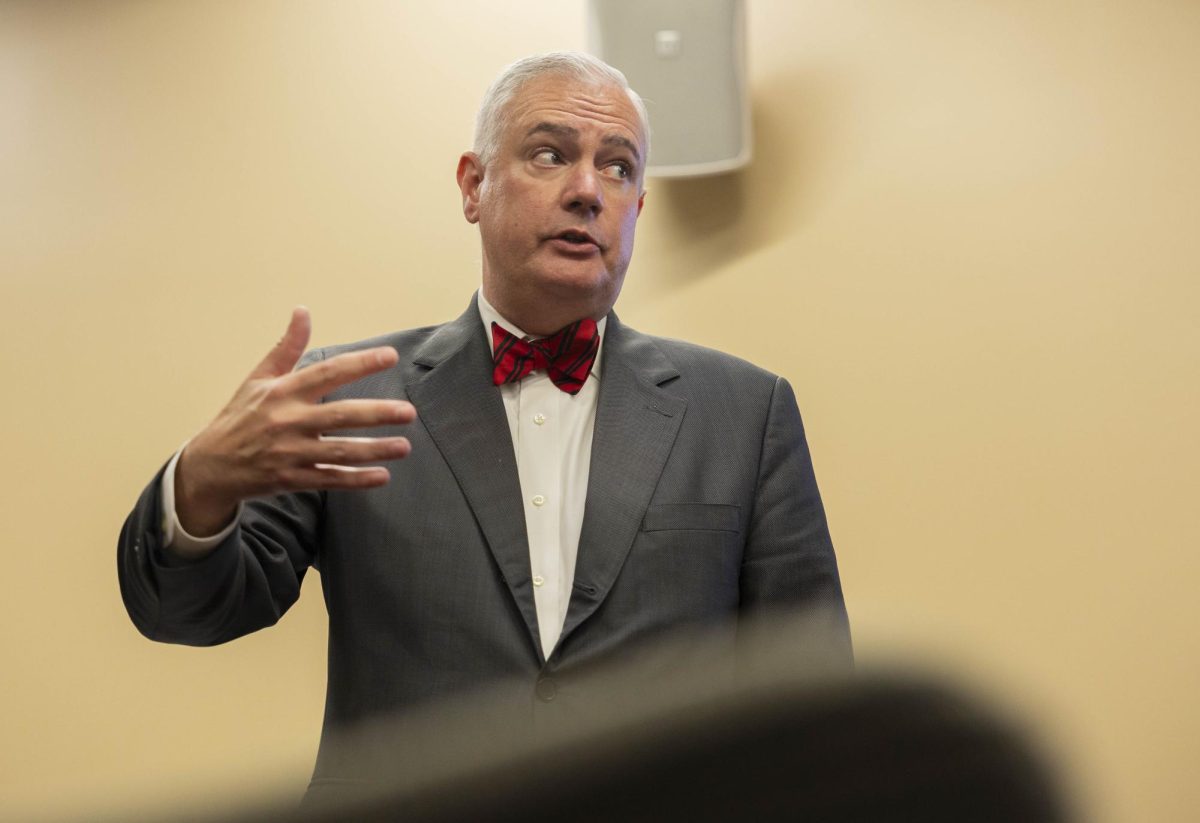 (FILE PHOTO) WKU President Timothy Caboni features as a guest speaker at the weekly meeting of the Student Government Association in senate chambers on Tuesday, Sep. 2, 2025. (Jonah Savage)
Before presenting ideas or proposals to administrators, SGA members collected information that demonstrated a clear need. These efforts are now part of the university’s strategic plan, a focus on keeping students at WKU by increasing mental health and disability support services.
“We are so fortunate to have administration that is actually receptive to the things that students in the SGA say,” Robinson said. “Over the past three years, there’s been more than zero suicides at WKU, and so I think that’s infinitely too many.”
More than 1,100 suicides on U.S. college campuses occur each year — the No. 2 cause of death, according to the ACHA. It reported that more than 60% of college students experienced overwhelming anxiety, and more than 40% said they felt so depressed it was difficult to function.
Jay Gabbard, professor of social work, provided the SGA with data gathered from several mental health organizations including the NAMI, the ACHA and the American Psychological Association.
It showed that:
25% of young adults between the ages of 18 and 24 have a diagnosable mental illness.
44% of American college students report having symptoms of depression.
80% of college students report feeling stress daily.
40%-50% of college students with diagnosable conditions do not seek help.
50% of college students rate their mental health as below average or poor.
64% of young adults no longer in college are not attending college due to mental health concerns.
10% of college students have contemplated suicide in the last year.
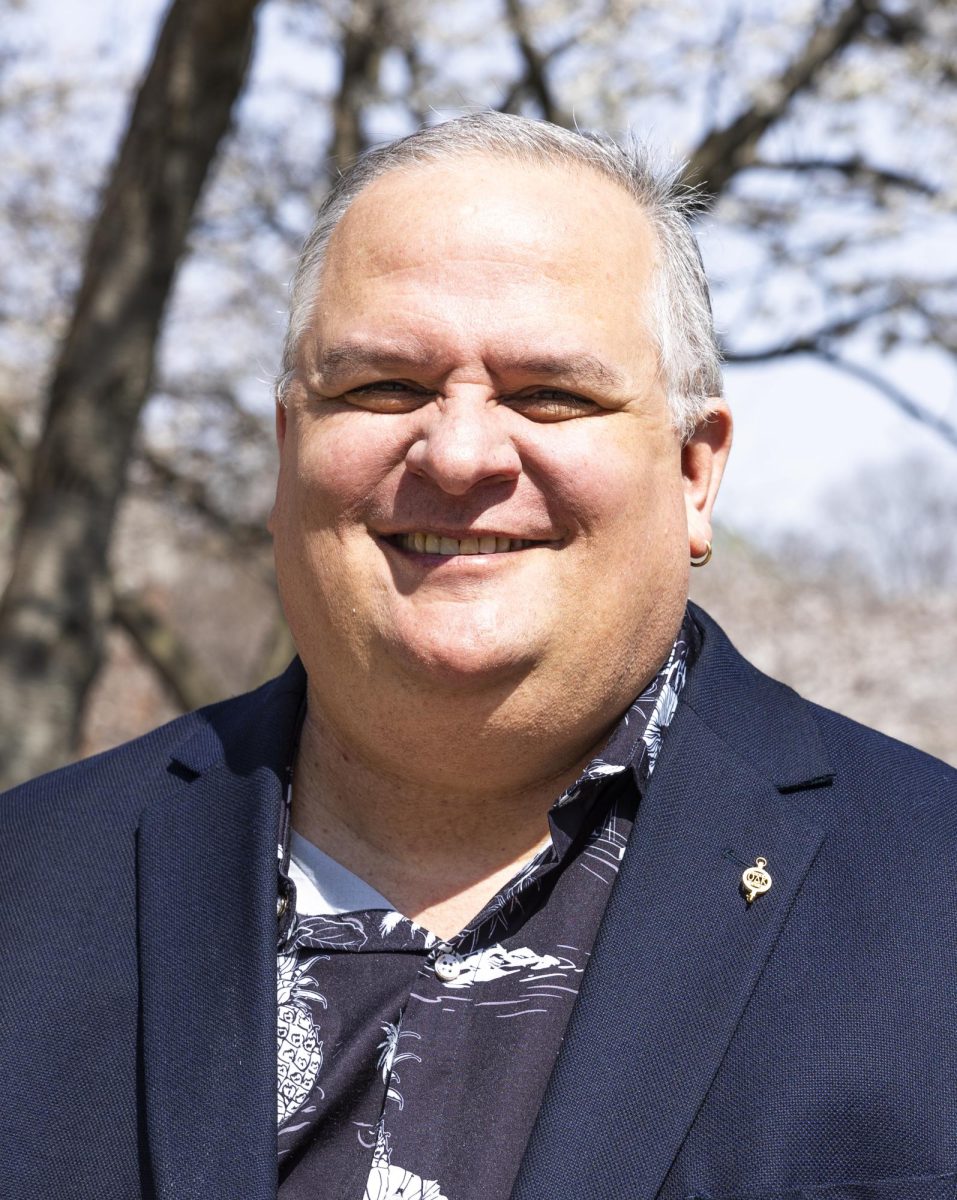 (FILE PHOTO) Social Work Professor and NAMI Facilitator Jay Gabbard started the program nearly 10 years ago after a student suicide highlighted an absence of mental health services. (Gabriel Milby)
Creating an environment where students felt comfortable talking about their struggles was an important step in encouraging more people to seek support, Butler said.
Robinson said that his experience with anxiety led him to seek help — something he believes the SGA’s efforts addressed.
“If we can show (students) that normal people have normal issues, it will get easier to talk about,” Robinson said.
Robinson also emphasized the importance of peer-to-peer support.
Simply checking in on friends could make a meaningful difference, he said. He said that guest speakers brought in by SGA educated students on recognizing warning signs of suicide and understanding how to respond.
Robinson said that increasing SGA’s presence throughout campus helped students see the SGA as a resource available to everyone, not just those directly involved. He joined a diverse group of campus organizations. This showed him that the view of mental health issues can change depending on the social environment.
“Mental health is different in every social group,” Robinson said.
Butler has experienced mental health challenges, including struggles with anxiety, which helped shape her commitment to improving access to counseling services and reducing the stigma around seeking help.
Butler said her involvement in student government began with a desire to make a greater impact on campus. She is a member of several campus organizations, including Out in Honors, the Feminist Student Union, the Queer Student Union and the College Democrats.
A major focus has been improving access to mental health resources, she said. Students suggested practical changes, including relocating counseling services to less “daunting” locations and increasing the number of available counselors.
“Some of those recommendations were to bring the counseling center down The Hill to the Downing Student Union,” Butler said.
The Counseling Center is in Potter Hall Room 409.
Those recommendations were reviewed and approved by the Counseling Center Review Committee before being passed along to university administrators, though it remains unclear if those recommendations will be enacted, she said.
Butler said ongoing awareness efforts are part of SGA’s continued push to make mental health a visible and urgent issue on campus. She said that the Counseling Center can offer support, or it could refer students to psychiatric clinics when they need more specialized care.
“At WKU we are very proud of our counseling center,” Butler said.
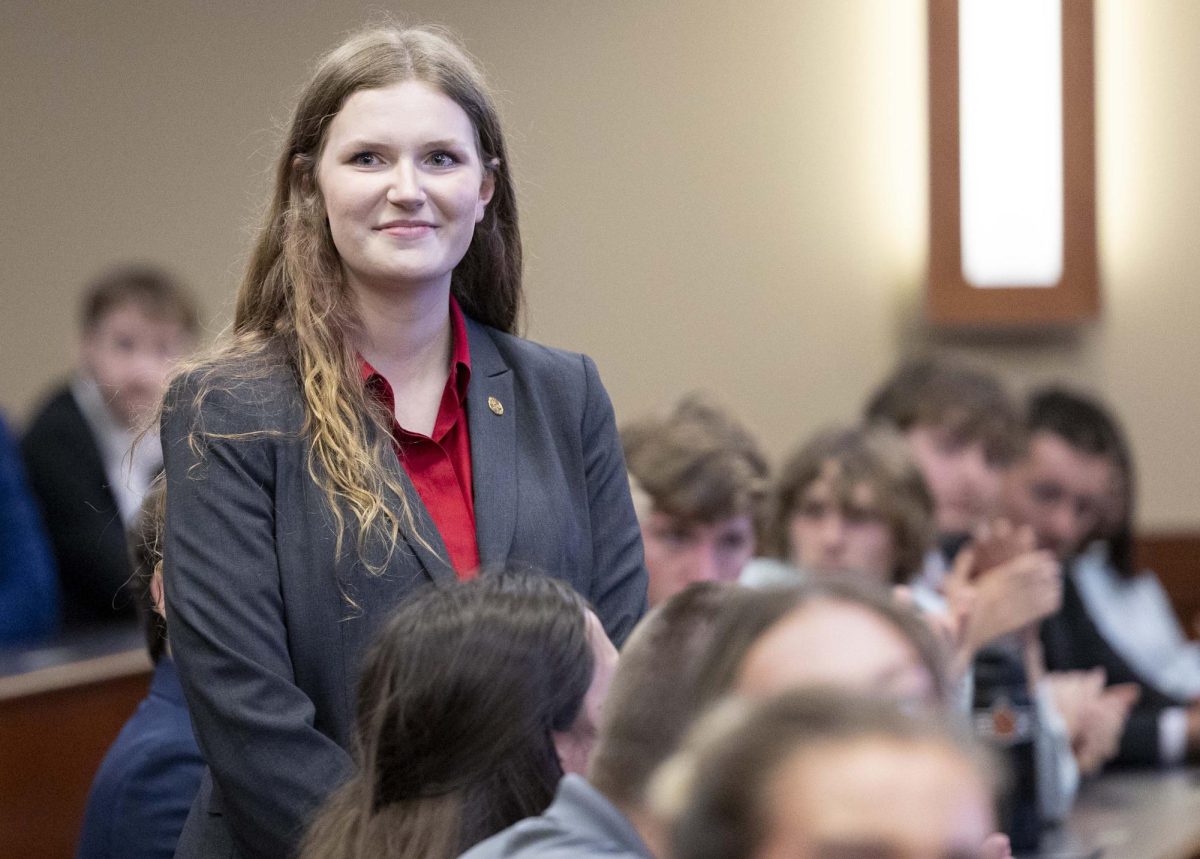 (FILE PHOTO) Veronica Butler stands proudly as she is appointed and sworn in as the new Senate Speaker of the 26th Senate on Tuesday, April 28, 2026, in the senate chambers. (Kylee Holt)
Robinson and Butler said that because mental health challenges look different depending on a student’s background or social environment, outreach was important.
So, SGA tried to collaborate with a wide range of campus organizations to reach as many students as possible. Through a combination of advocacy, programming and outreach the SGA hoped to create a campus culture where students felt supported in seeking help.
The Out of Darkness Walk on Saturday, April 18, capped off the year of work by SGA. It was organized as a remembrance to those lost to suicide and to show support for those facing mental health issues.
However, Caden Lucas, the newly elected SGA president, said mental health will continue to be a major focus.
He said that supporting student well-being is “foundational to everything else,” including academic success and campus involvement. Lucas said the work done by Butler’s committee is an important part of that effort. He said that mental health is not a one-time issue but something SGA plans to focus on “in a sustained and meaningful way” throughout his term.
“Our goal is to ensure that students feel supported, heard and connected to the resources they need,” Lucas said.
 (FILE PHOTO) Newly appointed Student Government Association President Caden Lucas hugs Senator at Large Veronica Butler after his win during the SGA spring election in the senate chambers on Wednesday, April 15, 2026. (Jacob Sebastian)
Contributing writer Makenna Egan can be reached at [email protected].