
St. Elizabeths, one of the most historic and infamous landmarks in D.C., has been abandoned and closed to the public for decades.
At the facility originally known as the Government Hospital for the Insane, tens of thousands of patients were treated over the course of its 150 years. It’s also where one doctor did much of his research that would lead to his promoting the use of lobotomies to cure mental illness.
News4 was able to get exclusive access to the some of the buildings on the campus of St. Elizabeths in Southeast D.C., including the infamous autopsy theater.
It took more than a year to get permission to go inside.
The 180-acre campus has an incredible history, not just for Washington, D.C., but the nation. It was the first federal facility built specifically to treat mental illness, and while segregated, it treated Black and white people during and after the Civil War.
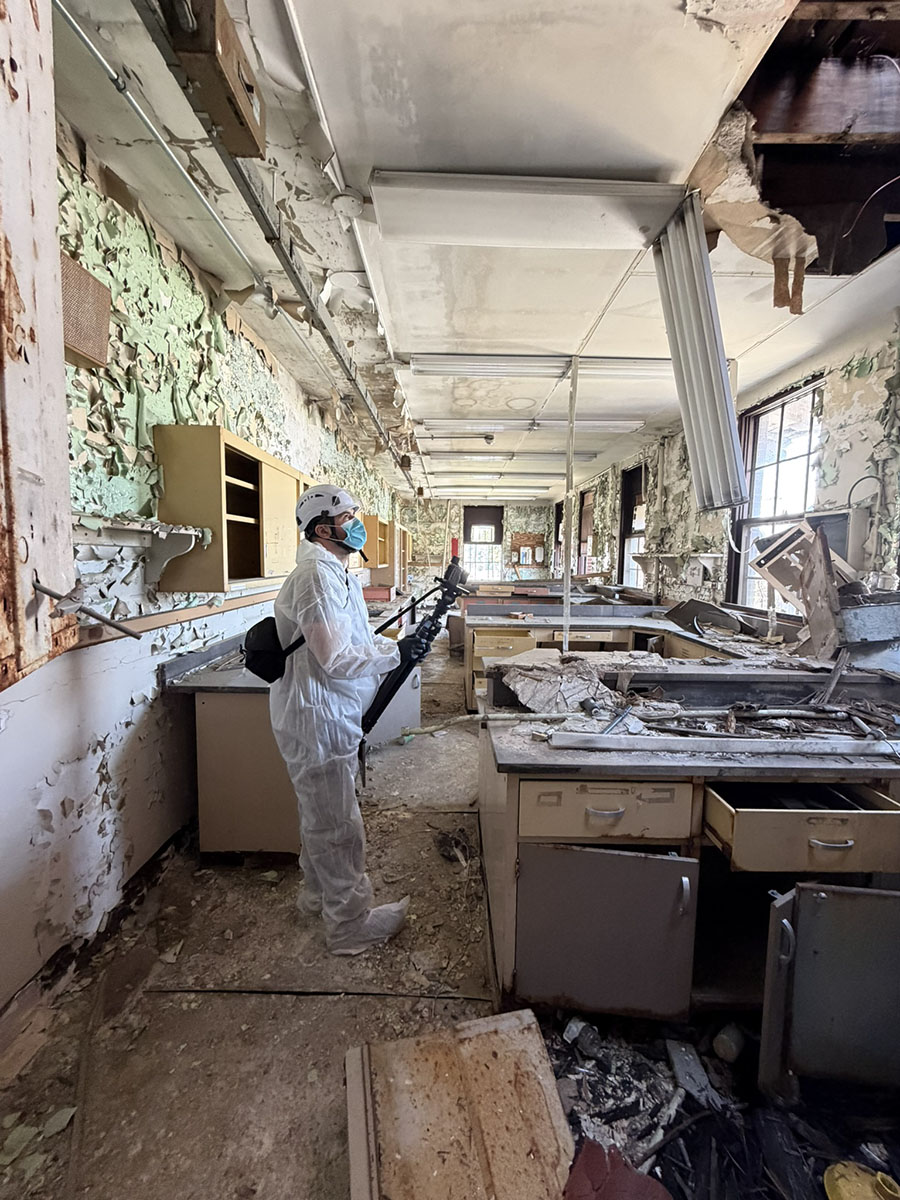
The laboratory where Dr. Walter Freeman performed thousands of autopsies on patients who had died at St. Elizabeths in the 1920s and 30s is amazingly still intact. Freeman would go on to perform thousands of lobotomies — most notably on Rosemary Kennedy, sister of President John F. Kennedy. The procedure was discontinued in the 1950s.
News4’s Mark Segraves got exclusive access to some of the buildings on the St. Elizabeths campus, including the famed autopsy theater.
On the East Campus of St. Elizabeths, dozens of still-empty historic buildings stand waiting for their turn to be rehabilitated and repurposed, just steps from the CareFirst Arena and the portion of the campus that has already been revitalized.
But for block after block of once impressive-looking buildings, time has stood still.
Building P: Deteriorating hallways, atriums for fresh air
Building P is marked by a crumbling façade, with windows boarded up and shattered. Flashlights lead the way through the darkened and forgotten hallways, which doctors, nurses and patients once bustled through.
Stairwells are littered with decades of neglect; abandoned hallways are lined the with rusted caged doorways.
At times, it felt like ghosts were walking the darkened hallways, passing the rooms in which, years ago, patients lived and died.
Sunlight now breaks through the ceiling.
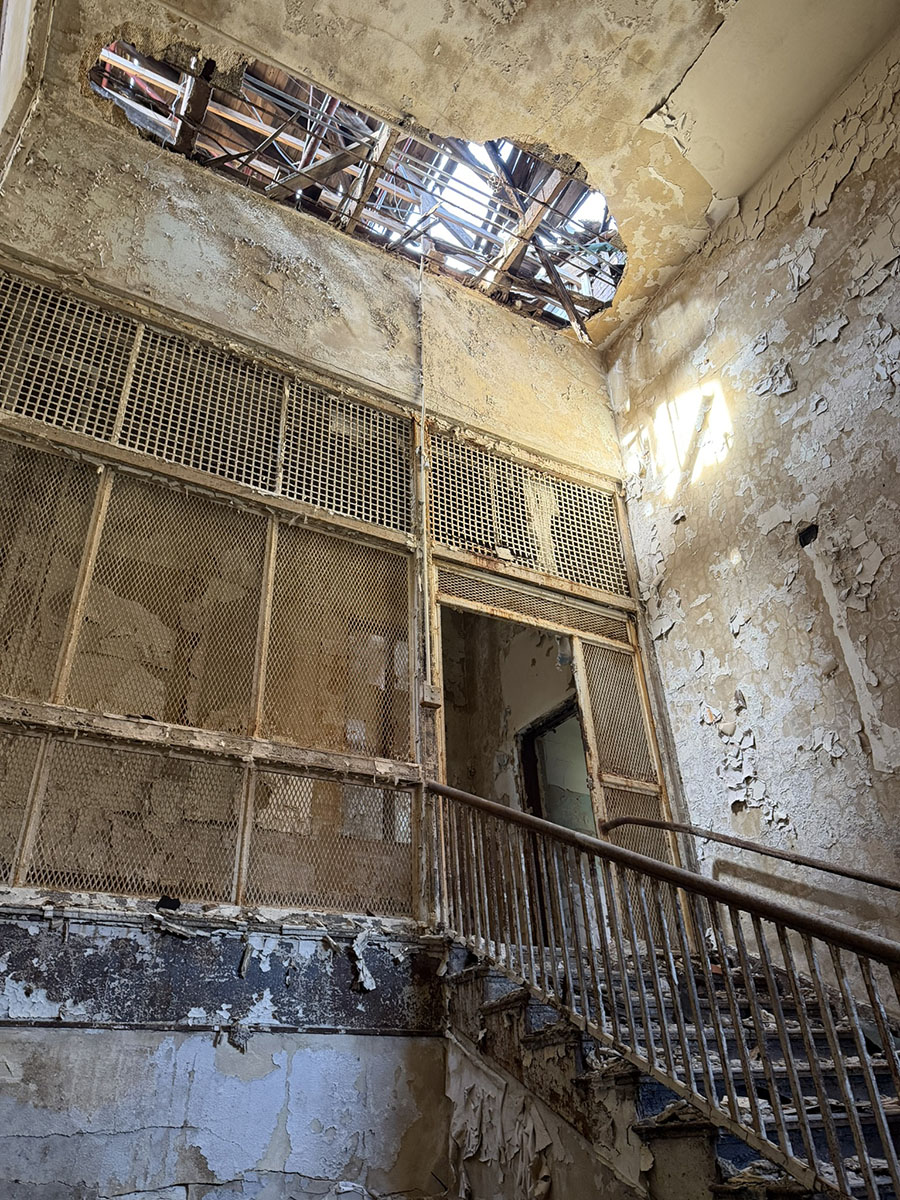
Through a door is one of the many sprawling screened atriums. They were originally designed for patients to relax in, as doctors believed fresh air could cure some mental illnesses. But in times of overcrowding, these atriums became filled with patient beds.
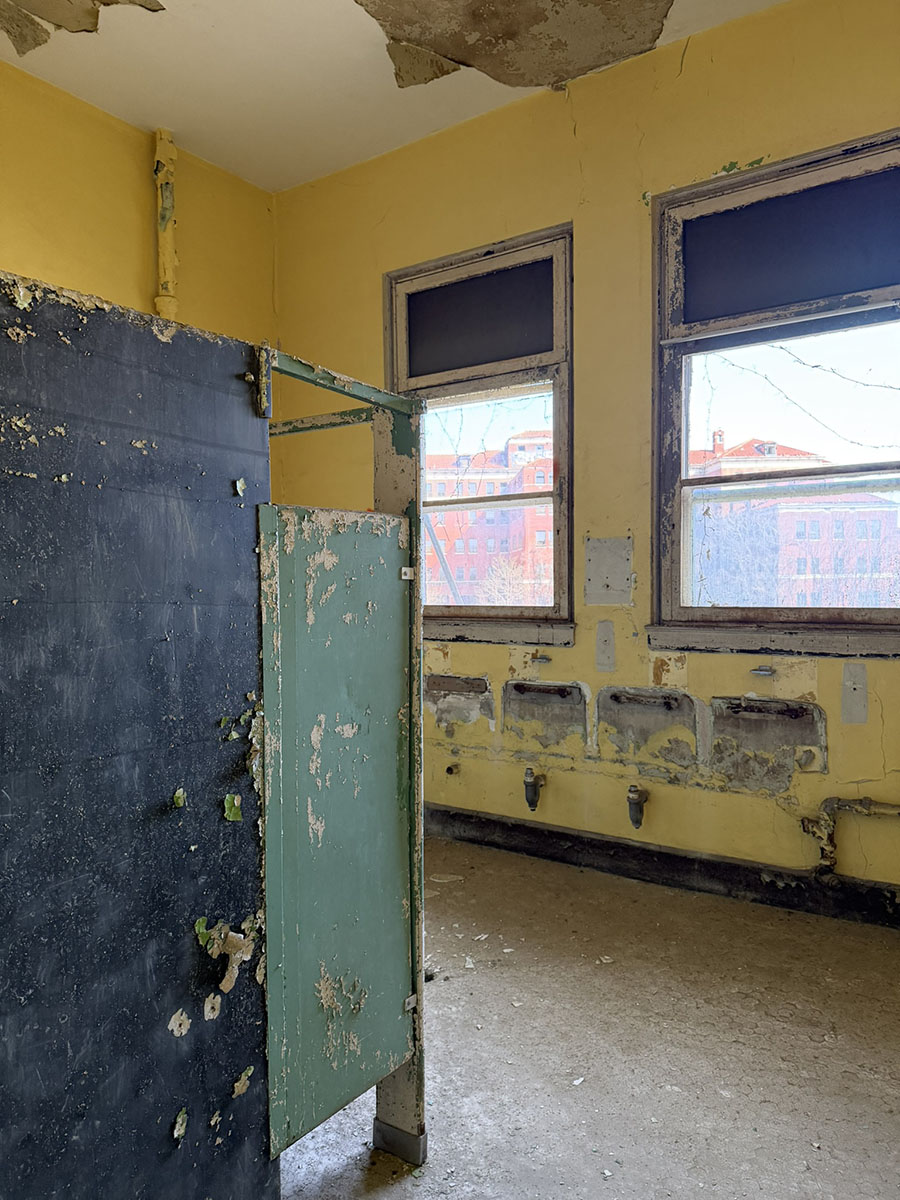
The rooms and halls still are clinging to the original pastel blues and yellows that once adorned the interiors. Bathroom stalls are still in place, with more pastel colors.
Inside the notorious Blackburn Laboratory
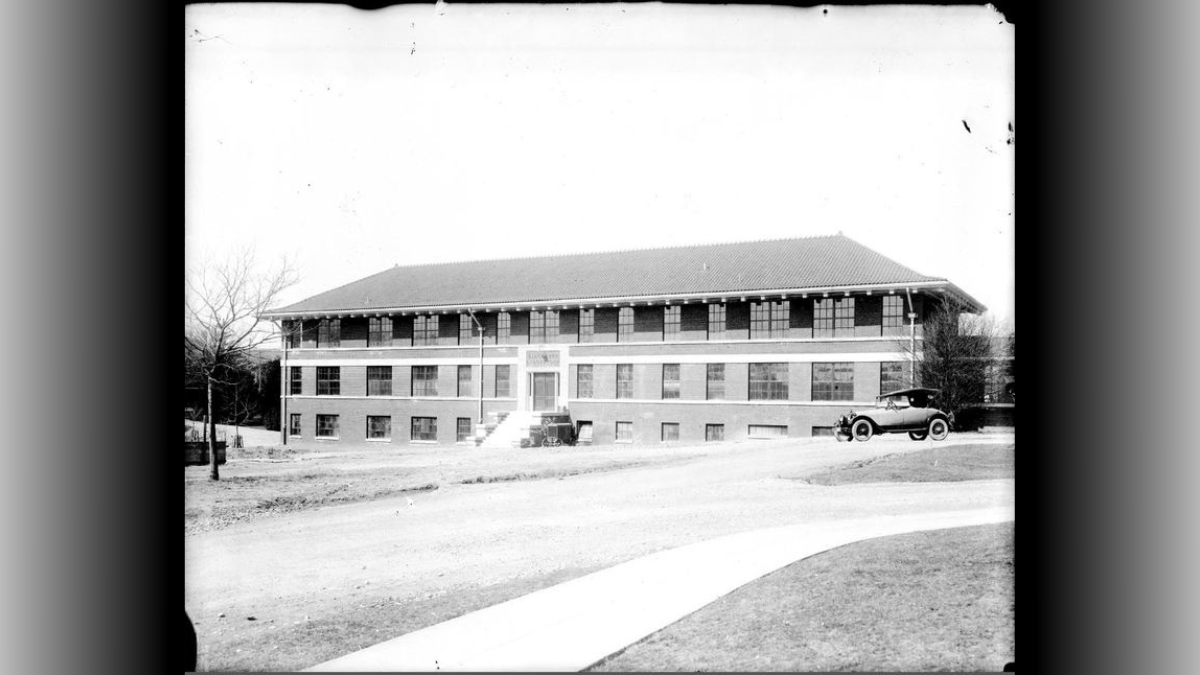
Even the exterior of the Blackburn Building gives off an eerie feel of solitude and foreboding.
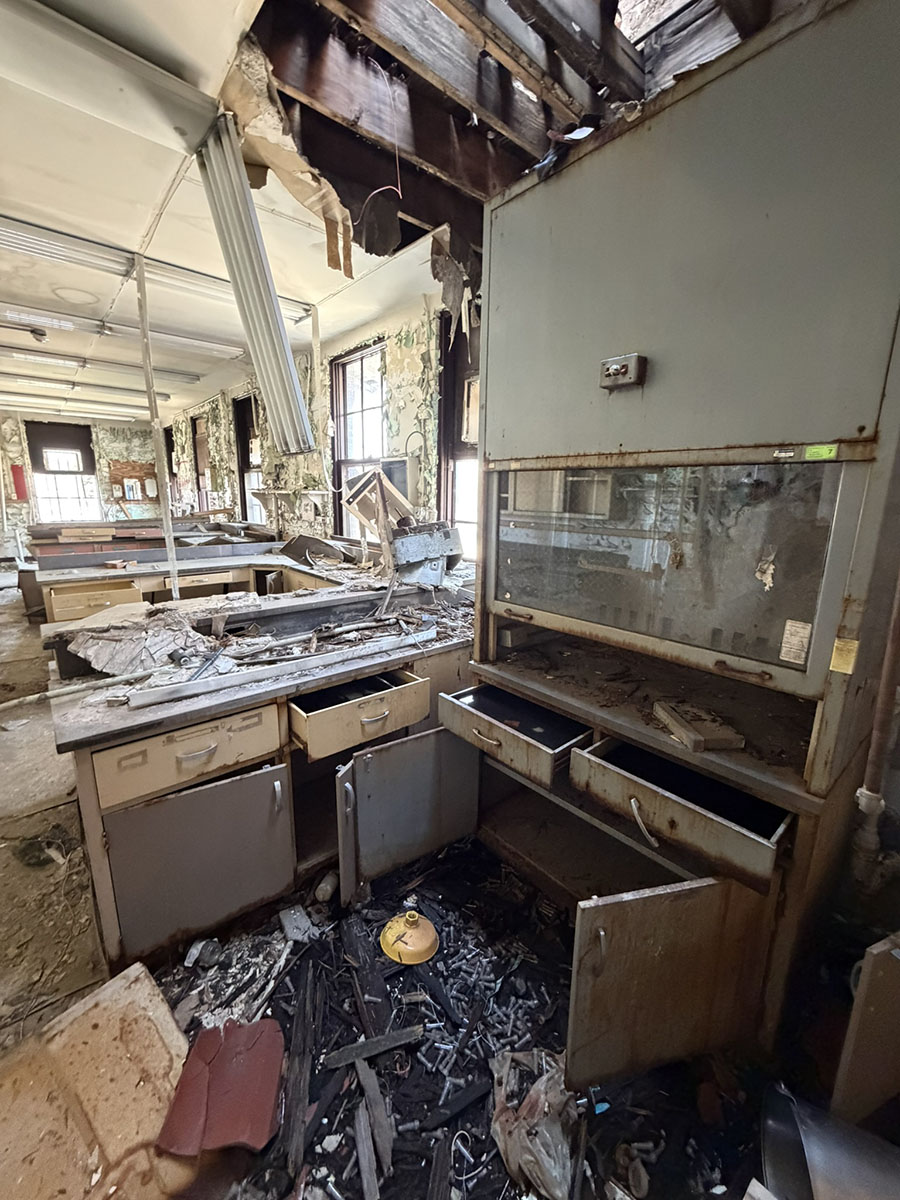
Our first stop was the lecture room. Then it was down the hall to the chemistry room, where both time and vandals have taken their toll.
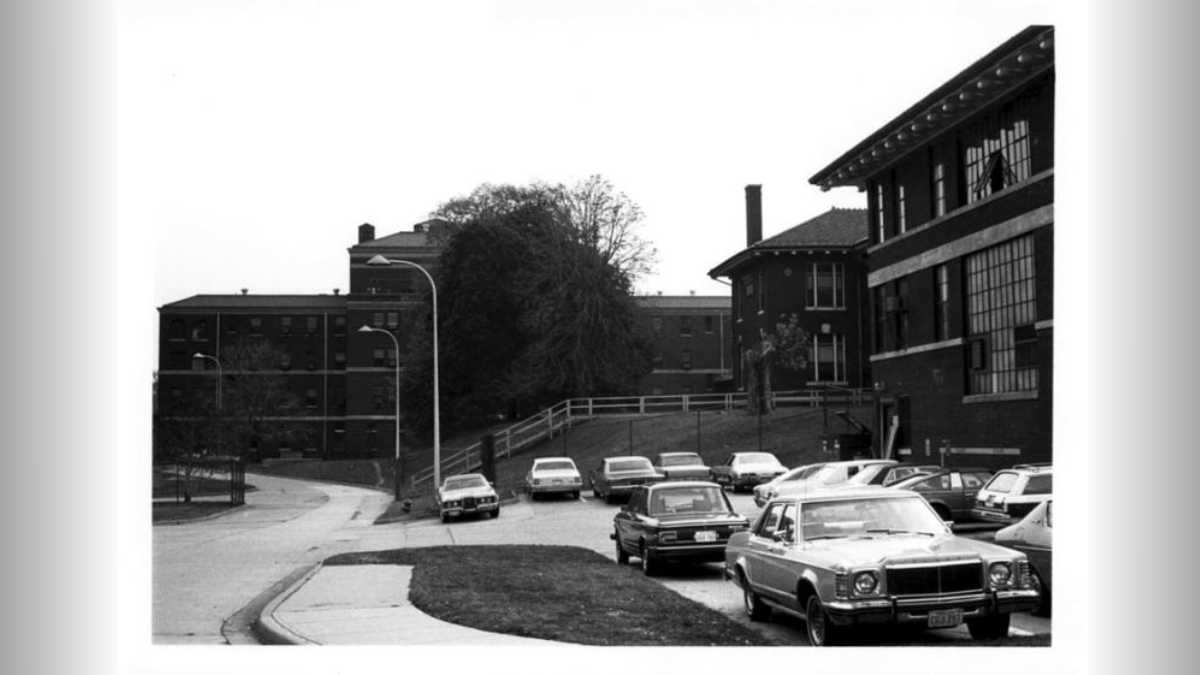
A narrow makeshift staircase goes up to the attic. Down yet another deserted hallway, the solid wood doors break the din of silence — room after room offering glimpses into the building’s past.
Research stemming from autopsies at St. Elizabeths led doctor to develop transorbital lobotomies
Dr. Walter J. Freeman was an early and vocal advocate of surgical treatment for mental illness. A noted physician and scientist and the first chair of the Department of Neurology at The George Washington University, Freeman began his early research into mental illness at St. Elizabeths.
In 1924, at age 28, he began working at the hospital, where performed thousands of autopsies on mental patients who had died there.
Freeman left St. Elizabeths in 1933 and, three years later, would go on to perform the first prefrontal lobotomy in the United States at GW. Freeman later developed his transorbital lobotomy technique, known as “the icepick method.”
In 1941, Freeman would perform probably the most notorious lobotomy in American history: on Rosemary Kennedy, the 23-year-old sister of future President John F. Kennedy. The procedure left the eldest Kennedy sister mentally and physically disabled, barely able to walk and talk. Her personality was permanently changed by the procedure.
Freeman performed more than 3,000 prefrontal and transorbital lobotomies between 1930 and 1960, often before large audiences and reporters.
The widespread use of lobotomies would fall out of favor as patient outcomes failed to live up to expectations, coupled with public perception and the advancement of antipsychotic medications to treat mental illness. Freeman’s reputation deteriorated as well.
The Journal of Neurosurgery summed up Freeman’s contributions to medical science, writing, “The field of psychosurgery was founded on Walter Freeman’s contributions, and his legacy remains ingrained in the collective consciousness of those who seek to treat mental disorders with neurosurgical interventions. His contributions to the field were prescient, but his incautious methods ultimately contributed to his decline in reputation.”
Photos: Inside DC’s long-shuttered St. Elizabeths Hospital
Autopsy theater: Calling cards from trespassers, forgotten files
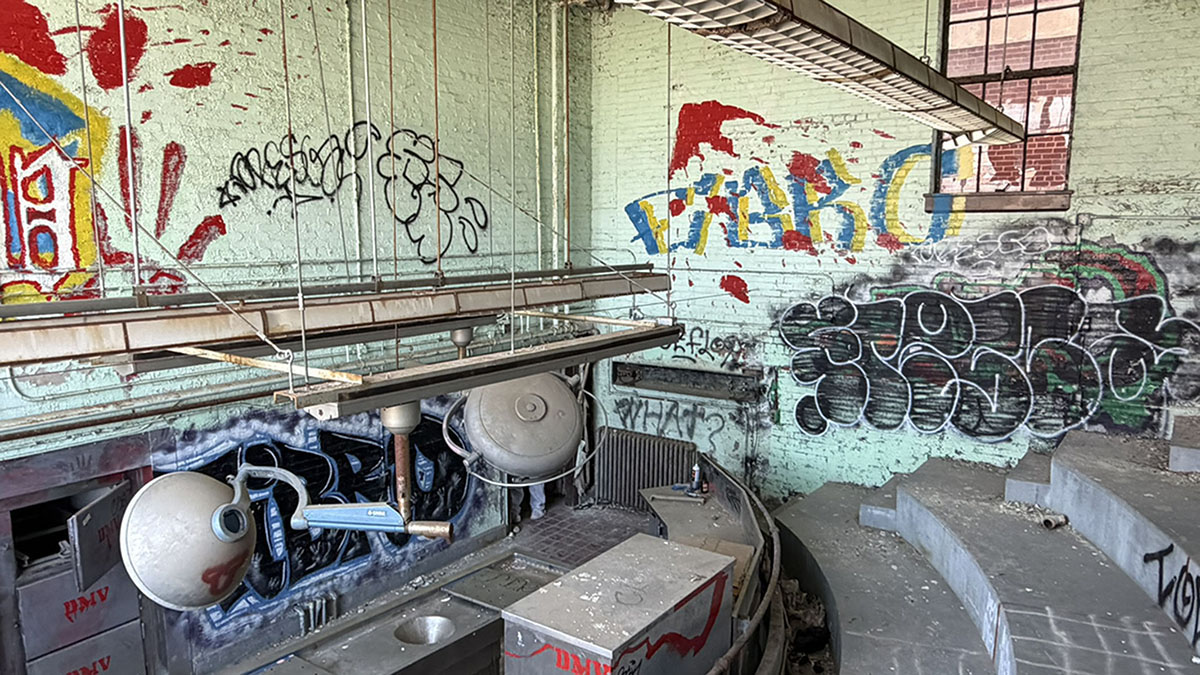
Our last stop, in the basement, was the infamous autopsy theater, where Freeman performed thousands of autopsies and developed his theories that would lead to the proliferation of lobotomies across the country.
The once state-of-the-art operating room now is a canvass for trespassers’ graffiti.
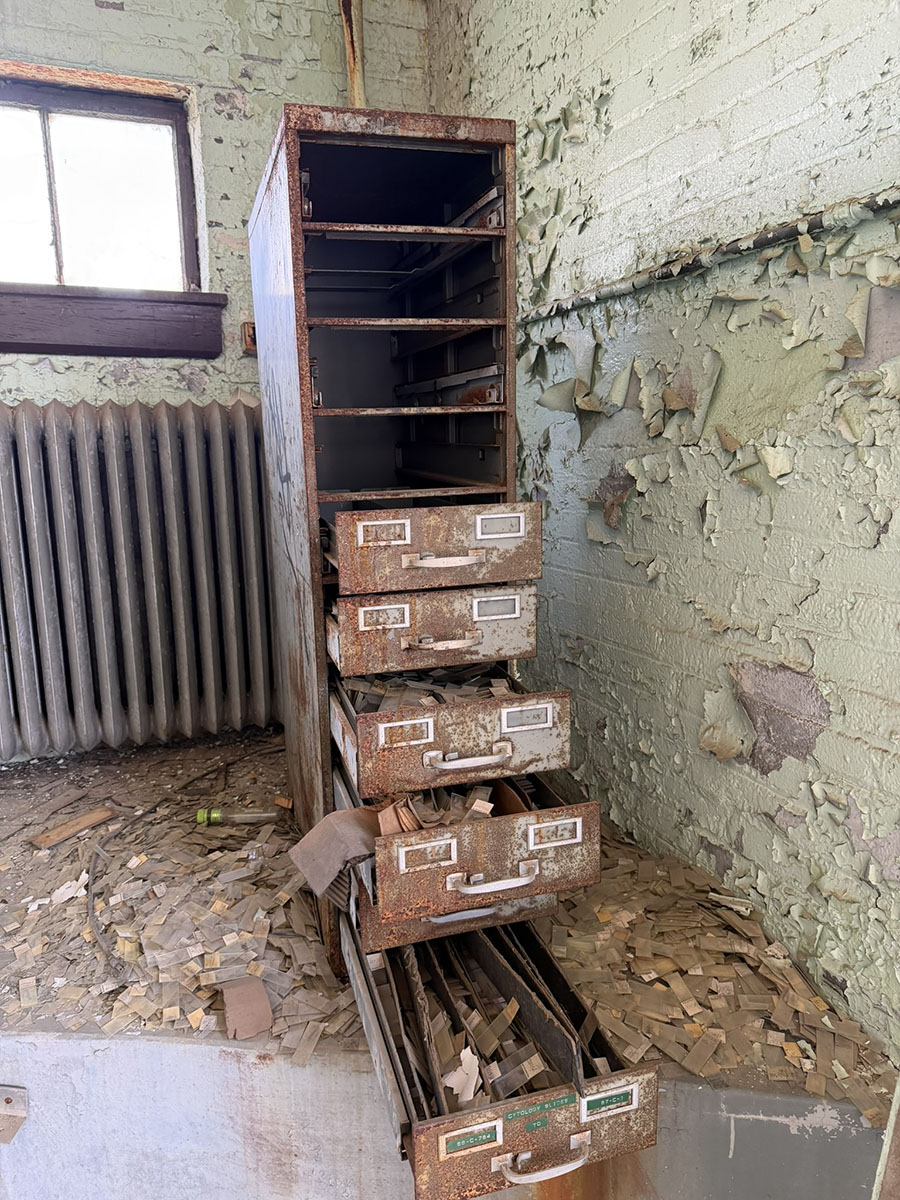
A rusted file cabinet littered with the slides likely from brain cells each from a patient who once lived and died here at St. Elizabeths, years of scientific research now scattered across the floor.
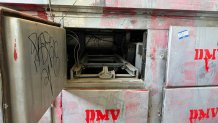
This is the refrigerator here and the more where they kept the bodies still functional, still intact.
The place that this room holds in our nation’s history, particularly when we talk about mental health.
Congress changed the name of the facility to St. Elizabeths Hospital in 1916. It was added to the National Register of Historic Places in 1979.
What will happen to these buildings?
A portion of the campus has already been revitalized. Eventually, the plan is for all the historic buildings to be restored.
Building P is expected to become a community hub, housing nonprofits. The Blackburn Building will be lifted up and moved before being restored. It may be turned into a museum of some sort.
For Part 2 of this story (set to air June 2, 2026), News4 spoke with the developers and a historian about the campus and the redevelopment of these historic buildings.
Written by Mark Segraves. Shot by Carlos Olazagasti. Video edited by Perkins Broussard.