

Listen to this article
Estimated 4 minutes
The audio version of this article is generated by AI-based technology. Mispronunciations can occur. We are working with our partners to continually review and improve the results.
Jennifer Schooley says one of the more frustrating aspects of being a farmer are the assumptions people make about her as a woman in the agricultural industry.
The Norfolk County farmer and her family have owned an apple and lavender farm since 1906. She’s part of a long line of women farmers, having grown up watching her mother and grandmother work out in the field and at home.
“Growing up and watching that and the work they put into it, I had no desire to farm because it’s a lot of hard work for not a lot of money and it’s a thankless job,” she told CBC News.
It was during the pandemic Schooley decided to get behind the wheel of the family tractor to help her aging parents.
Now, not only does she help run her family’s farm, she’s also the president of the Norfolk Federation of Agriculture where she has been able to host talks about life as a female farmer.
“It’s a great opportunity to get the conversation started and it’s a wonderful opportunity to reflect on the words that [other farmers] use and gender assumptions that they have when working with women in farming,” she said.
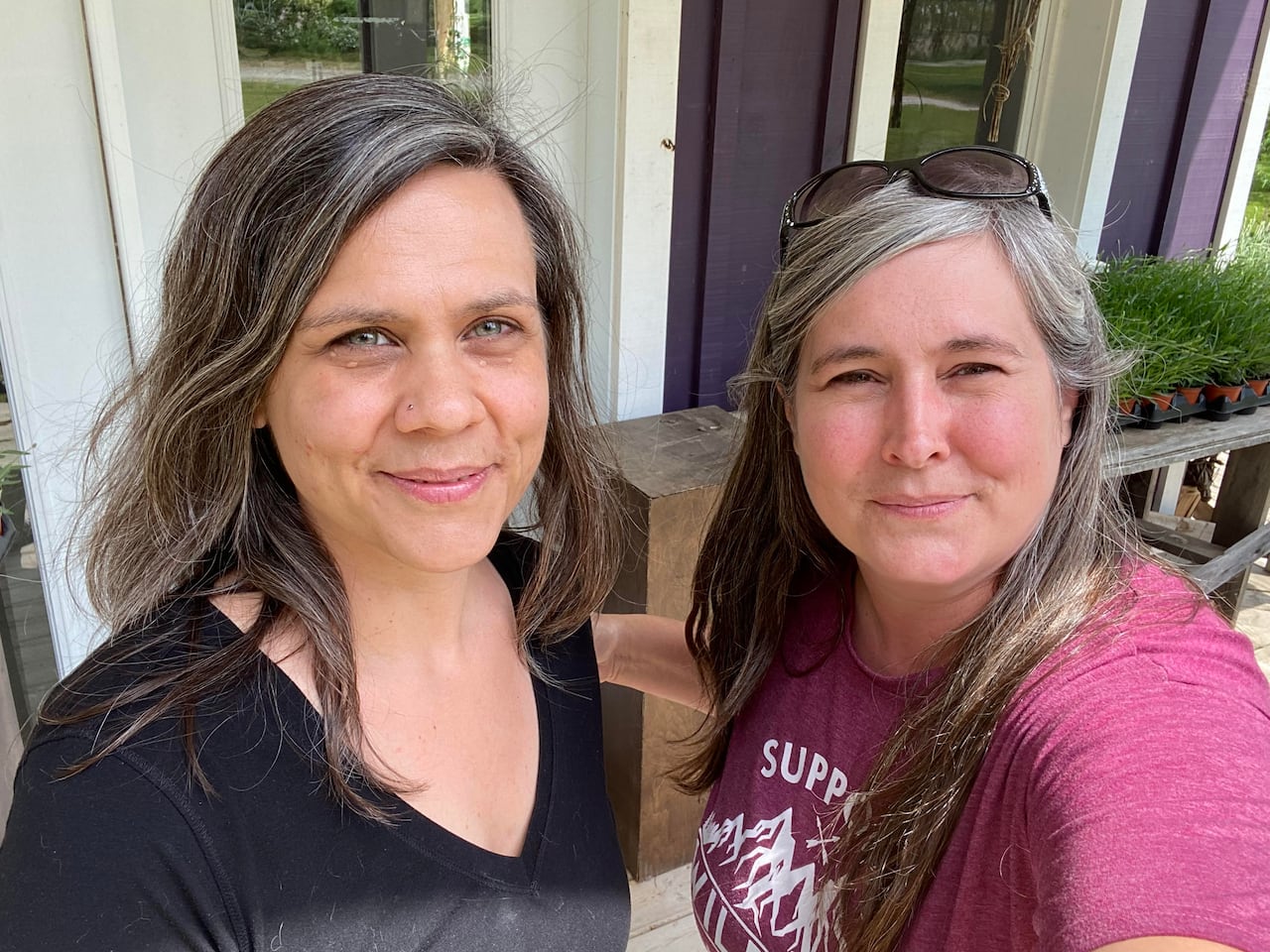 Jennifer Schooley (right) pictured here with her sister Melissa, are the fourth generation to run their family’s 115-year-old farm in Ontario’s Norfolk County. (Submitted by Jenn Schooley)
Schooley said she has had her fair share of negative experiences due to being a woman, from people assuming she’s not a farmer or misunderstandings about she does on the farm.
“Often times, I just have to laugh and shrug it off,” she said.
These kinds of interactions, along with the the stressors that already come with being a farmer, as well as the additional work many women farmers take on at home, can weigh on their mental health, Schooley adds.
“You’re not just farming outside, but you’re also the wife, the mother, most often the dinner maker, the clothes cleaner, the doctor taker, you’re the peace maker and problem solver, the school liaison,” she said.
“You’re still having all these roles and expectations on you and that can be a lot to juggle.”
Women’s experience part of broader trend
Schooley’s experience is part of a broader trend that researchers at the University of Guelph have been keeping an eye on.
Andria Jones and her team have released studies in the past about the vulnerability of farmer’s mental health and found that women were scoring higher in stress, depression, anxiety and burn out.
Through that work, Jones and her team conducted in-depth interviews with women farmers and found many felt undervalued and reported instances of disproportionate workloads.
“They tended to speak about something commonly known as the the triple shift,” Jones said.
“Even with supportive partners, the management of the household often falls to them, so all of that combined with on farm work, off-farm work, plus being the CEOs of the household makes for very full days and a lot of stress.”
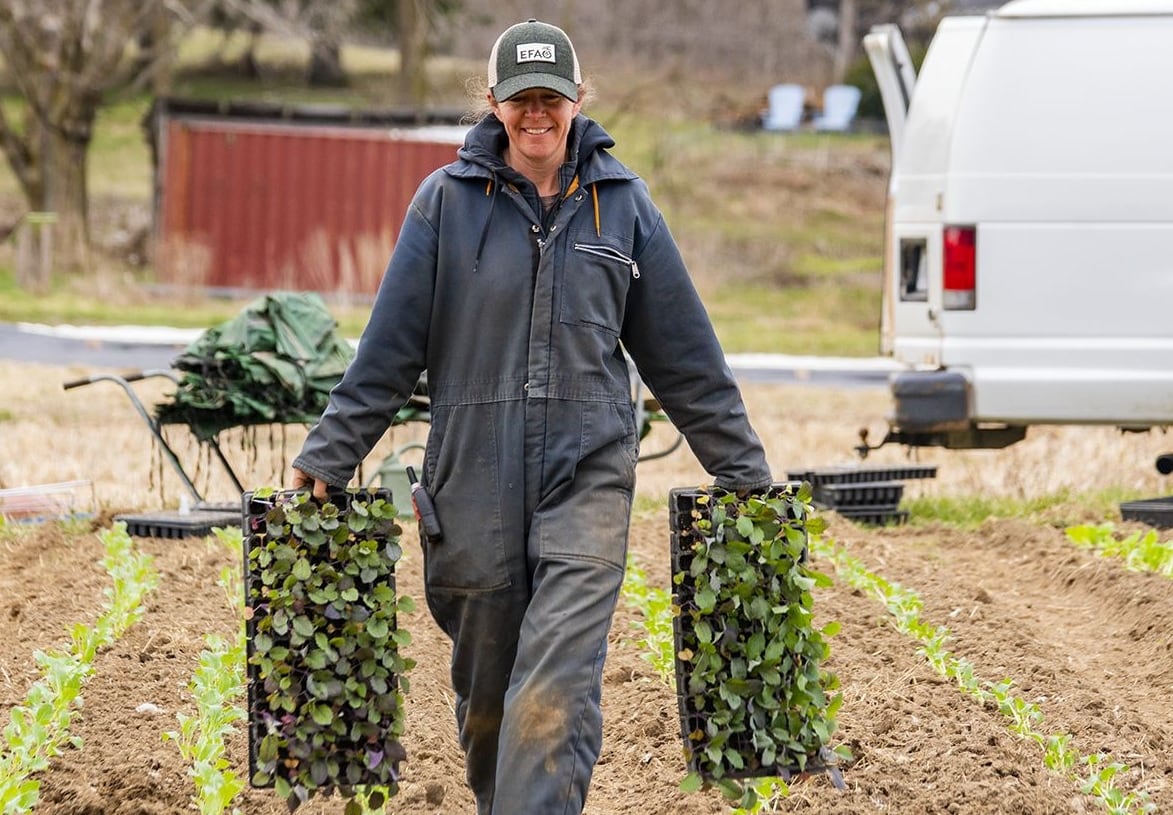 Angie Koch of Fertile Ground Farm in St. Agatha, Ont., carries two flats of kohlrabi transplants. The farm sells directly to households through community share agriculture groups and some retail within Waterloo region. (Submitted by Angie Koch)
She added many women also struggle with their identity. They reported a lack of recognition in the sector and often were only being perceived as “the farmer’s wife.”
Jones said there is some progress being made recognizing women in their roles in Canadian agriculture.
“We still have a ways to go. Presently women make up 30 per cent of the Canadian farming population and I’m not entirely sure we see that reflected in things like leadership positions,” she said.
Like Jones, Schooley said change starts when people talk about it.
“Conversations need to be there. I don’t think that people don’t need to shy away and there has to be this general understanding that agriculture is very difficult and never mind adding the gender roles on top of that,” she said,
“It’s just having that open mind and seeing it from the perspective of a woman farmer.”