
ORLANDO, Fla. — It’s an unwavering type of commitment: When the alarm sounds, they go.
And that’s what Orlando firefighter Brian Stilwell did 10 years ago as the attack at Pulse nightclub was still happening on June 12, 2016.
He, like all firefighters, ran toward danger, not knowing what he would encounter, and a profound sense of camaraderie is the tie that binds them to each other.
It’s what drew Stilwell to the job at the age of 18 — inspired by his brother-in-law who worked as a firefighter, as well as his two Lakeland firefighter neighbors.
“They can be everything from a lift assist for an elderly person to working fire calls for house fires, building fires. Car accidents, medical calls,” Stilwell said, noting that he could never picture himself working in a traditional office setting.
After stints with Polk County Fire Rescue, Winter Haven and others, by the age of 21, the rookie firefighter was hired by the city of Orlando, where he worked his way from a single-engine station at Orlando Executive Airport, to busy Station 10 by Universal Studios.
“Firefighters typically have big personalities anyways. So, trying to find how you fit in, especially when you’re first on,” he said. “Don’t run your mouth, don’t say a lot. Just do as you’re told, learn the job.”
The call that changed it all
His latest move 11 years ago was to a single-engine station located along South Orange Avenue in downtown Orlando, just yards from Pulse nightclub, which allowed him to slow down. That is, until the call one year later that would change his life.
“When the tones went off, we heard it was a shooting at Pulse, so it’s literally a block away,” he said. “It was very surreal, I guess is a good way to put it, staging in your station and hearing gunshots. It’s just like, ‘What in the world is going on?’”
As shots pierced the night, firefighters at the small station took cover. Stilwell recalled his lieutenant at the time grabbing his radio as Orlando Police Department officers with long guns flooded the block to secure the area.
When Stilwell and fellow firefighters finally opened the station’s bay doors, they found the first victim outside, bleeding on a bench.
“We pulled the guy inside the bay to work on them easier and get out of the way,” he said, his eyes misting at the memory. “So, we all started cleaning up the blood.”
In the months after Pulse, Stilwell said he felt something within him change — his patience was constantly running thin with others, and he was more short-tempered, irritable and angry.
Others took notice, from Stilwell’s colleagues to his wife.
“I thought it was fine,” he said. “My engineer and lieutenant pulled me aside and were like, ‘You are not yourself right now.’”
Stilwell said he came to the stark realization that he needed help of his own. He reached out to UCF Restores, knowing both his job and marriage were on the line.
Helping the helpers
Like so many other first responders and veterans, Stilwell sought out the transformative and free program housed on the campus of the University of Central Florida.
In 2011, following a call from the Department of the Army about treatment options for veterans and active-duty personnel, longtime psychologist Dr. Deborah Beidel launched UCF Restores to treat those suffering from PTSD, or post-traumatic stress disorder, using virtual technology.
In the years that followed, the program received millions of dollars in grants to expand operations. After the initial focus on veterans, UCF Restores began treating first responders, from 911 dispatchers and police officers, to victims of mass casualty incidents.
Beidel noted that the shooting at Pulse nightclub shifted stigmas about mental health.
“I think before this time, first responders and veterans were always reluctant to get treatment because they thought no one could help them … People who are helpers don’t always easily reach out for help,” she explained. “But, as we deployed to various critical incidents across the state, people saw us as an agency that was joining them in arm.”
And while Pulse was the catalyst, Beidel said subsequent events like the Surfside condo collapse and Parkland school shooting crystallized an idea: Licensed clinicians with UCF Restores don’t have to be relegated to a clinic on the university’s campus — they can be everywhere.
The idea gave way to a 34-foot long resiliency center on wheels. The $150,000 investment, which is currently housed in a gated lot on the university’s campus, was made possible by financial backing from both Florida’s Legislature and Lockheed Martin.
The unit, with licensed clinicians in tow, travels to any natural disaster or mass shooting throughout the Sunshine State.
“Oftentimes, after a disaster, lots of people want to help, but lots of people don’t understand the type of trauma that people are going to talk to them about,” Beidel said. “What happens is the therapist gets more upset than the person who did the responding. And that sets up a negative cycle of whether or not mental health can really be a resource for first responders.”
According to Beidel, the state of Georgia is now building its own mobile mental health command center, as other states take notice of Florida’s model.
“My hope is that we could have a couple in different parts of the state so we could respond more quickly, and in that way be more accessible to people when and where they need it,” she said.
In tandem, UCF Restores remains focused on training peer support specialists, who serve as the first line of defense within their own departments. So far, the group has trained more than 3,000 such specialists across the state, including Stilwell.
After all, he said the therapy he received over the course of months with Restores was pivotal, not only in saving his job and marriage — it was likely “life-saving,” he said.
“I decided to do it because that was my way to get back from something tragic I went through, so that other people could move through it and hopefully get the help,” he said. “Trying to make something positive come from it.”
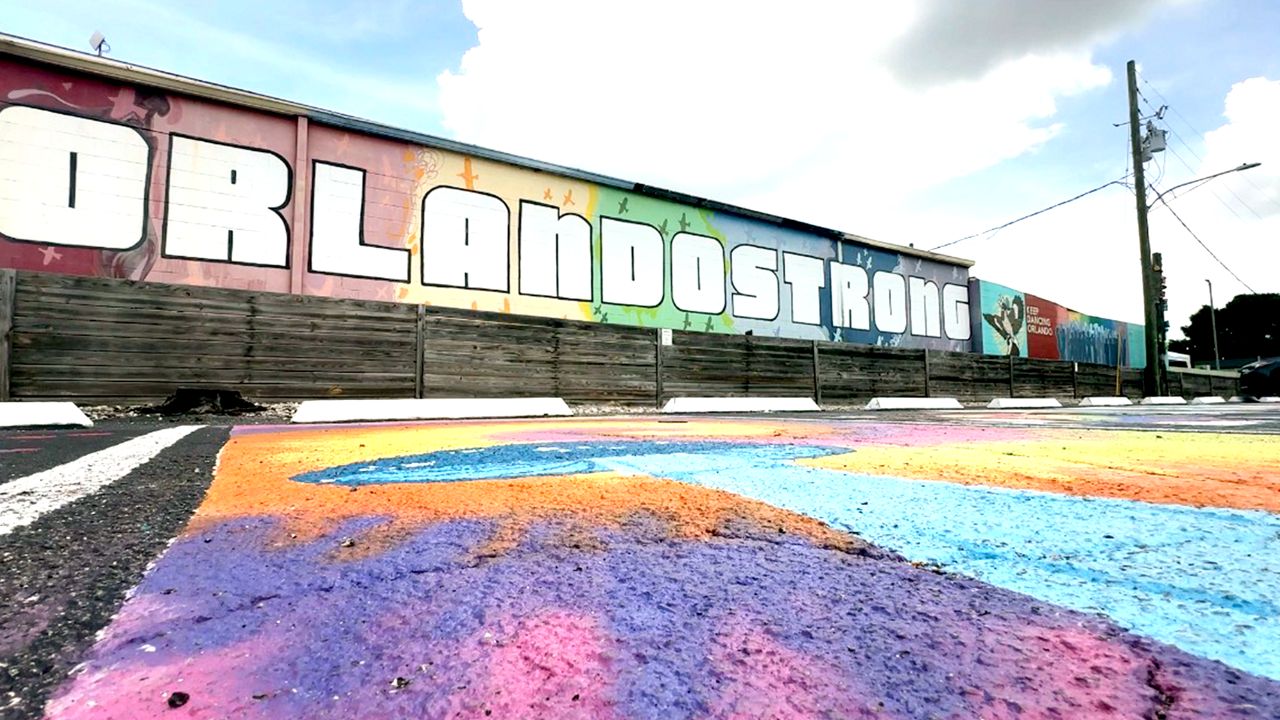
REMEMBERING PULSE
Ten years ago minus one day, the city of Orlando was dealing with a tragedy. Late Friday night, June 10th, 2016, singer Christina Grimmie was shot and killed after a concert at The Plaza Live at Colonial Plaza, just east of downtown Orlando. The Saturday morning news was overflowing about the horrific murder of a young celebrity in The City Beautiful’s own backyard. It was incomprehensible that someone would do such a thing, and then the incomprehensible was followed by the unimaginable. Some 27 and a half hours after Grimmie’s murder, another gunman opened fire at the Pulse Nightclub on South Orange Avenue in the SODO section of Orlando, killing 49 people and injuring 58 others. When daylight came, the numbers were staggering.
Stories: