
4
Featured image above: Little Rock-based Alleviant has grown to more than 150 employees and locations in three states. (Photo provided by Alleviant Integrated Mental Health)
By all conventional metrics, Alleviant Integrated Mental Health is a blockbuster success. The Little Rock-based practice, which opened for business with one location and three employees in 2018, has since grown to 150 total employees, nine Arkansas locations, two locations in Nevada and one in Kansas, serving more than 120,000 patients annually.
“We’ve really expanded our footprint not just beyond the Arkansas locations, but we have grown each of those nine also,” said Brian Mears, founder and CEO. “We started out with relatively small practices and have definitely gained footprint, tripling the size of some of them.”
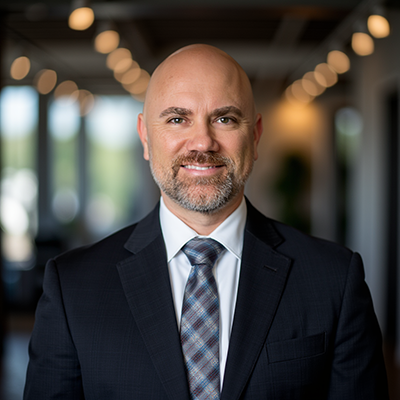
Brian Mears
The growth and expansion would be impressive for someone who set out from the start to build such a business and even more so in the case of Mears, who never planned to go into mental health services until actually doing it.
Mears started his most unconventional career right out of high school by founding Tropical Sno shaved ice, growing his snow cone empire from one stand to more than 80 in Arkansas over just a couple of years.
“I loved business, and it gave me the opportunity to do other things I wanted to do,” he said. “I actually joined the military, joined the Army Reserve, and ended up spending a career there, which led me to all of my official training. The military offered me nursing school up front, to which I said yes.”
Mears would train in a medical field miles removed from mental care, eventually earning a doctorate in nurse anesthesia practice. He leveraged that training to the hilt, teaching anesthesia classes, working clinically and even getting involved in the political side of healthcare.
“I was living in Florida at the time, serving as director of simulation and testifying in front of Congress. I was very busy, but I loved my life and my career in anesthesia,” he said. “Then we got a phone call that changed our lives in April of 2012.”
Mears and his wife, Leilani, who had no children of their own, agreed to become parents to seven children between ages 2 and 18 surrendered by a family member. Overnight, the couple came face to face with behavioral health issues and were thrust into the quandary many families faced when trying to navigate the system.
“My introduction to mental health was going from a very structured life where things were very figured out to just overnight having seven children and dealing with things we were not necessarily ready for,” he said. “It was very obvious when these kids showed up that they needed care. I looked for help, and I found out there was very limited help to be given.
“The place I wanted to get them into had a yearlong wait. My friends were really much more knowledgeable about the profession of psychiatry than I was, but when I asked, ‘If you were in this situation, who’d you get help from?’ they all answered with a resounding, ‘I don’t know.’ That was my introduction to psychiatry, and it led me to the question: What is psychiatry if nobody really knows who you can refer to or what type of care you should get or even how to have access to care?”
What started as a quest to get his children the help they needed quickly became Mears’ search for wider answers to more fundamental questions. The more he looked into treatment options, the more he discovered a wobbly, gap-riddled system in which people in need of behavioral and mental health services were largely being triaged by primary care physicians for want of specialized, informed care.
“I found most people in the hospital didn’t know where to get care from or even the type of care because the access wait is so long,” he said. “Even my friends who had needs were getting their antidepressants from primary care. They were getting their anxiety medicines from primary care. The profession itself, even within healthcare, was a big question mark.
“For me, that led to a resounding void where I had to find information — first, because the kids needed it, and then, second, because it was a big question. I’m somebody that when I have a question, I’m going to pursue an answer.”
Over the years that followed, Mears doggedly chased answers, ultimately returning to school, earning additional degrees, becoming dual board certified and completing fellowships in subject matter that included psychology and functional metabolic and nutritional psychiatry. He emerged from academia not only with a better understanding of what was being done in the field but with a vision for new approaches to treatment. Alleviant Integrated Mental Health was born on the backs of those pioneering ideas.
“There’s a misunderstanding of what the brain and the mind are,” he said. “We think of the physical body in terms of illness and dysfunction. If you have a broken bone, you know what to do; you’re going to the emergency room and have a cast put on or have surgery. If you have a really bad illness and you feel terrible, you’re going to seek care at urgent care or primary care.
“When the brain doesn’t feel good, we chalk that up to whatever, but we don’t recognize depression and anxiety and [post-traumatic stress disorder] as an illness within the brain. I like to explain that in terms of hardware and software: the brain is the hardware that drives the software called the mind. Psychiatry has historically focused on the mind, not the brain.”
The upshot of this perspective is treatment that resorts to medications to modulate an anxious or depressed mind while failing to consider physical brain ailments that could be under the manic or depressive feelings.
“There’s been a philosophy within psychiatry that medications are largely the solution, and I’m here to argue that medications are not the solution,” he said. “Medications can be an important part of a bridge, but a bridge to where? That’s where we have to do a better job. Our overall healthcare awareness in this country is horrible as far as what people understand about their own ability to maintain wellness. Most people simply give their responsibility off to whoever they’re seeing.
“If you’re seeking care for diabetes, you’re giving your decision-making away to whoever’s managing your diabetes. They may give you insulin or a blood sugar pill without talking about what else you need to do, like, if you’re Type 2 diabetic, adjusting your lifestyle so you no longer have to be on that pill. In mental health, it’s the same way; the physical brain itself can become dysfunctional. The problem is when people seek psychiatry or primary care for, say, depression, they’re just put on an antidepressant for life. That’s a travesty.”
By contrast, Alleviant Integrated Mental Health was established at the intersection of the physical and psychological, where clinicians are more interested in discovering a medical explanation for the patient’s state than issuing a pat mental diagnosis. Through the use of objective diagnostic tools such as EEGs and lab work, the staff seeks to isolate any physical malfunction that may exist as a foundation for the next step in treatment.
“We can look at [test results] and say, ‘OK, there is a physical dysfunction happening, and that’s why the mind feels this way. Now we can help your mind bridge into a better state,’” Mears said, underscoring that the process does not end there but that the evaluation merely serves as a starting point.
“Ultimately, we have to dig in and figure out why your brain became ill in the first place,” he said. “What led to that dysfunction? Was it adverse childhood events? Was it trauma? Was it grief? Was it a physical illness that led to a biological dysfunction? Once we find that, we can empower you with knowledge and treatment plans that can lead you away from us, which is the whole goal — to help you be well, and you don’t have to see us any longer.”
Just like in its approach to diagnostics, Alleviant Integrated Mental Health’s approach to treatment is unconventionally broad, going beyond therapy and medications to include services that promote and enhance brain wellness. Everything is meticulously documented and shared with other members of the patient’s healthcare team, such as the referring physician, to help eliminate the gaps in communication that very often exist and hamper a comprehensive approach to care, to say nothing about keeping patients informed.
“Simply medicating a patient for something like depression doesn’t work,” he said. “These drugs have significant side effects. You’re coming back every one to three months to see us for a new prescription, and we’re not doing anything to resolve the depression. The medicine doesn’t work like that, yet we still promote things as if it does work like that. There is not a single wellness plan for the brain, but there are comprehensive approaches that can help you understand how to maintain wellness and how to become well.
“Lots of referrals come into psychiatry, but, historically, there’s nothing that comes back from psychiatry to the primary care physician. They should get our notes, they should know what’s going on, they should know what medicines we prescribe, yet you don’t usually see that. When we receive a referral, the referral source will get our notes back. That’s very important because it’s a team effort to help you. What led me to start this company was to try to fix at least part of the puzzle. We can’t fix everything, but the big questions, I thought we could make a difference there.”
SEE THE ARTICLE BELOW AND IN OUR JUNE 2026 ISSUE OF AMP
READ ALSO: Reed Named Next Site Administrator for Dardanelle Regional Medical Center