
PHOENIX (AZFamily) — The average person may face a handful of traumatic events in their lifetime, but for first responders, trauma is a daily part of the job.
A bill now on Gov. Katie Hobbs’ desk aims to make it easier for public safety professionals to access mental health support to process that trauma.
SB 1400, sponsored by Senate Public Safety Committee Chairman Kevin Payne, passed the Legislature this month with bipartisan support. The bill still needs Hobbs’ signature to become law.
First responders answer call after call after call, running toward danger and disaster to save and protect others.
“They might go from a fatal car accident to a child drowning to then having to give somebody CPR in one shift,” said Dave Goetia, a Glendale police officer.
Phoenix firefighter and paramedic Gary Nolte said the traumatic scenes stay with first responders long after the call ends.
“Kids injured or sick and or dying. The parent screams stick with us. The anguish, the pain that we see on scene,” Nolte said.
The toll of trauma
The constant compounding trauma can take a toll on a first responder’s mental health. But that’s not easy to admit, even for veterans like Nolte.
“Those six letters are what’s killing firemen, S-T-I-G-M-A, the stigma,” Nolte said. “Guys don’t want to go get help, and then they start coping in unhealthy ways. And we are more likely to die by suicide than in the line of duty.”
Scott Stahl, an employee assistance officer with the Glendale Police Department, said many officers don’t realize the impact their work has on their personal lives.
“They don’t realize that they are going home and they’re taking all of this trauma home with them and the effect that it does have on their family,” Stahl said.
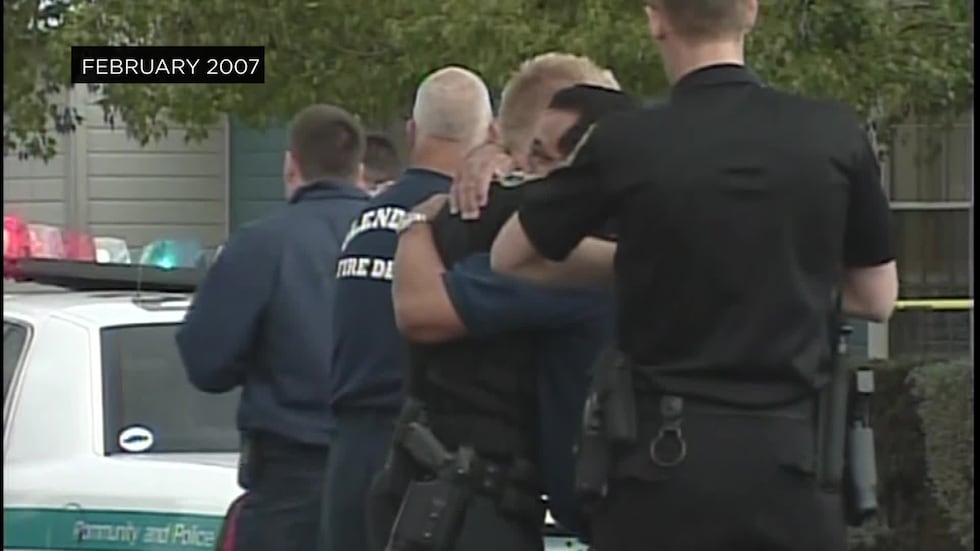 Glendale Police Officer Anthony Holly was shot and killed during a traffic stop in 2007. Holly had been Officer Dave Goetia’s backup that day.(Arizona’s Family)
Goetia knows that toll firsthand. Glendale Police Officer Anthony Holly was shot and killed during a traffic stop in 2007. Holly had been Goetia’s backup that day.
“PTSD, survivor’s guilt, you know, the why, you know, how did I survive this and Tony didn’t?,” Goetia said.
Goetia said he wishes he had faced his inner turmoil head on instead of burying himself in work and suppressing his feelings.
What the bill does
The legislation would allow law enforcement agencies and other public safety organizations to establish wellness and crisis response programs. Those programs could include counseling, peer support, crisis intervention services and other resources for employees who experience traumatic events in the line of duty.
The bill also protects the confidentiality of communications made during counseling and support sessions.
The legislation includes exceptions to confidentiality for situations involving clear and present danger, criminal investigations, threats of harm and certain policy violations that constitute crimes.
Glendale’s existing program
Glendale Police already have this kind of program, and Stahl helped write the bill. He is part of the department’s employee assistance unit, which responds to every incident involving a child, bad car wrecks and brutal murders — anything that may cause an officer to struggle after seeing.
The goal is to have someone there solely to support the people taking care of everyone else.
“I’m not a therapist or anything like that. So everything is peer-to-peer. And it calms them and they’re more willing to open up,” Stahl said. “Part of that stigma of not talking is fear that they’re going to lose their job, that they’re going to be found not fit for duty, and that’s just not the case,” Stahl said.
Getting help sooner
From personal experience, Nolte knows holding it in only makes it worse.
“There’s PTS, which is post-traumatic stress. If I would have gotten help sooner, I would have stopped it from becoming post-traumatic stress disorder,” Nolte said.
Times are changing. Asking for help is no longer viewed as a shameful sign of weakness.
“In fact, it’s a sign of strength,” Goetia said.
Recent traumatic incident
On Memorial Day this year, police say a Glendale mother shot and killed her two young children before turning the gun on herself. Some of the officers who worked that scene have been on leave since the incident to focus on their mental health, according to a Glendale Police spokesperson.
See a spelling or grammatical error in our story? Please click here to report it.
Do you have a photo or video of a breaking news story? Send it to us here with a brief description.
Copyright 2026 KTVK/KPHO. All rights reserved.