
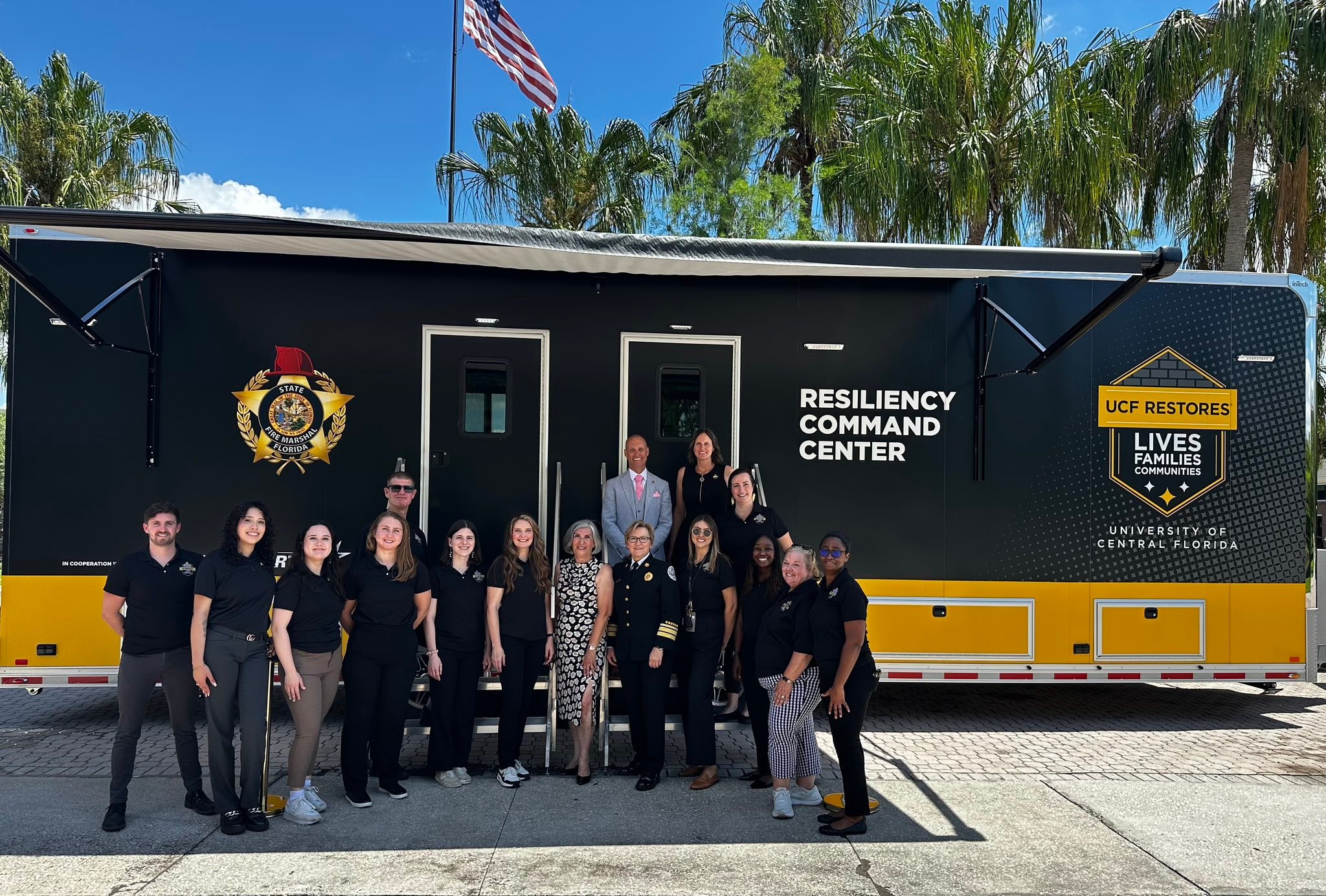
The UCF RESTORES team, alongside Florida Division of State Fire Marshal Director Joanne Rice, poses in front of the newly unveiled UCF RESTORES Resiliency Command Center on May 14, 2025.
UCF RESTORES, based at the University of Central Florida, provides clinical treatment services to first responders, front-line medical personnel, military veterans, active-duty military personnel, and survivors of mass violence and natural disasters, helping them overcome trauma and PTSD to lead fulfilling careers and family lives. Therapy options include virtual reality, with treatment success rates far exceeding the national average.
UCF RESTORES Executive Director Deborah C. Beidel, PhD, ABPP, explained that Florida began deploying mental wellness resources as part of the overall emergency response—starting with the Champlain Towers building collapse in Surfside, Florida on June 24, 2021. At the Surfside incident, peer support teams, chaplains, and licensed clinicians were available to search and rescue teams as they searched for those who had perished in the collapse.
Mobile Unit Addresses Privacy Needs
UCF RESTORES’ licensed clinicians are among the first on the ground when tragedy strikes. The team previously provided psychological first aid in borrowed, makeshift spaces, lacking the structure and privacy necessary for effective care.
“It quickly became apparent that there was no confidential space for those conversations,” Beidel said. “First responders don’t easily ask for help. They need a private space to decompress alone or to share their experience with someone they trust. As I looked around at all the command centers dedicated to the disaster’s physical response, I decided that UCF RESTORES needed a similar vehicle dedicated to the mental wellness response.”
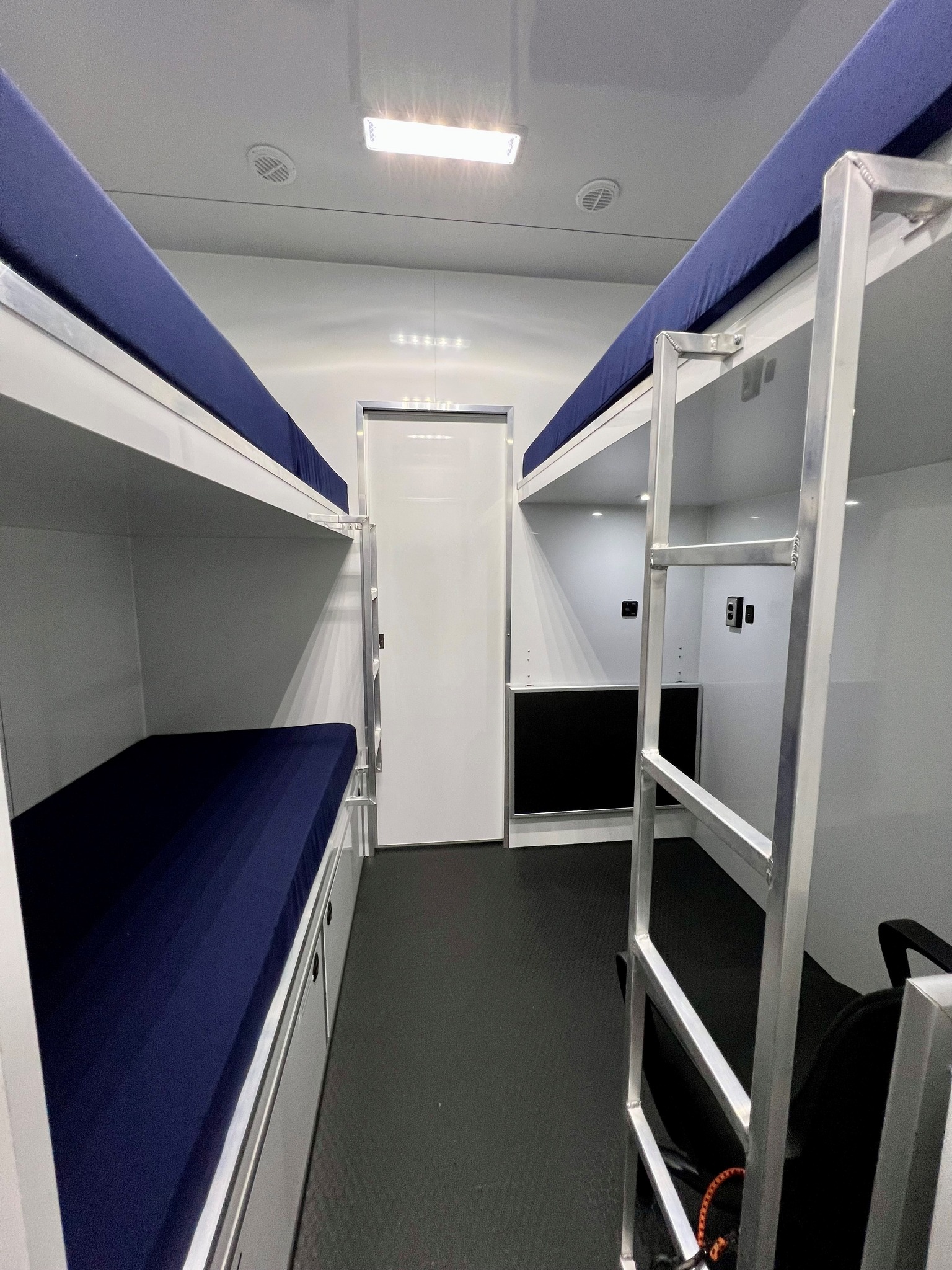
The UCF RESTORES Resiliency Command Center features staff quarters for extended emergency response deployments.
The all-new UCF RESTORES Resiliency Command Center addresses this gap, creating a controlled, trauma-informed environment for emergency response clinicians to meet first responders where they are—at the frontlines of crises. The Resiliency Command Center, unveiled in May, is designed to provide a safe environment for evidence-based behavioral health care to first responders at the scenes of crises, including natural disasters, mass casualty events, and line-of-duty tragedies. The command center marks a national first: the launch of a mobile, trauma-care-specific command center built with purpose, backed by state and corporate partners, and ready to serve those who lay their lives on the line for Florida’s communities. The Florida state legislature, the Florida Division of State Fire Marshal, Lockheed Martin, and the University of Central Florida have backed the project.
UCF RESTORES currently has four full-time licensed clinicians available to deploy.
The Resiliency Command Center trailer is 34 feet long, towed by a pickup truck.
“We chose this design so the truck could be used separately at a disaster site if needed,” Beidel said. “We collaborated with colleagues from the fire and EMS services to make sure that the design would suit their needs, then worked with Trailers of the East Coast on the final build.”
The unit includes two private consultation rooms and staff quarters, ensuring clinicians can provide care in a safe, confidential environment at the heart of emergency response operations.
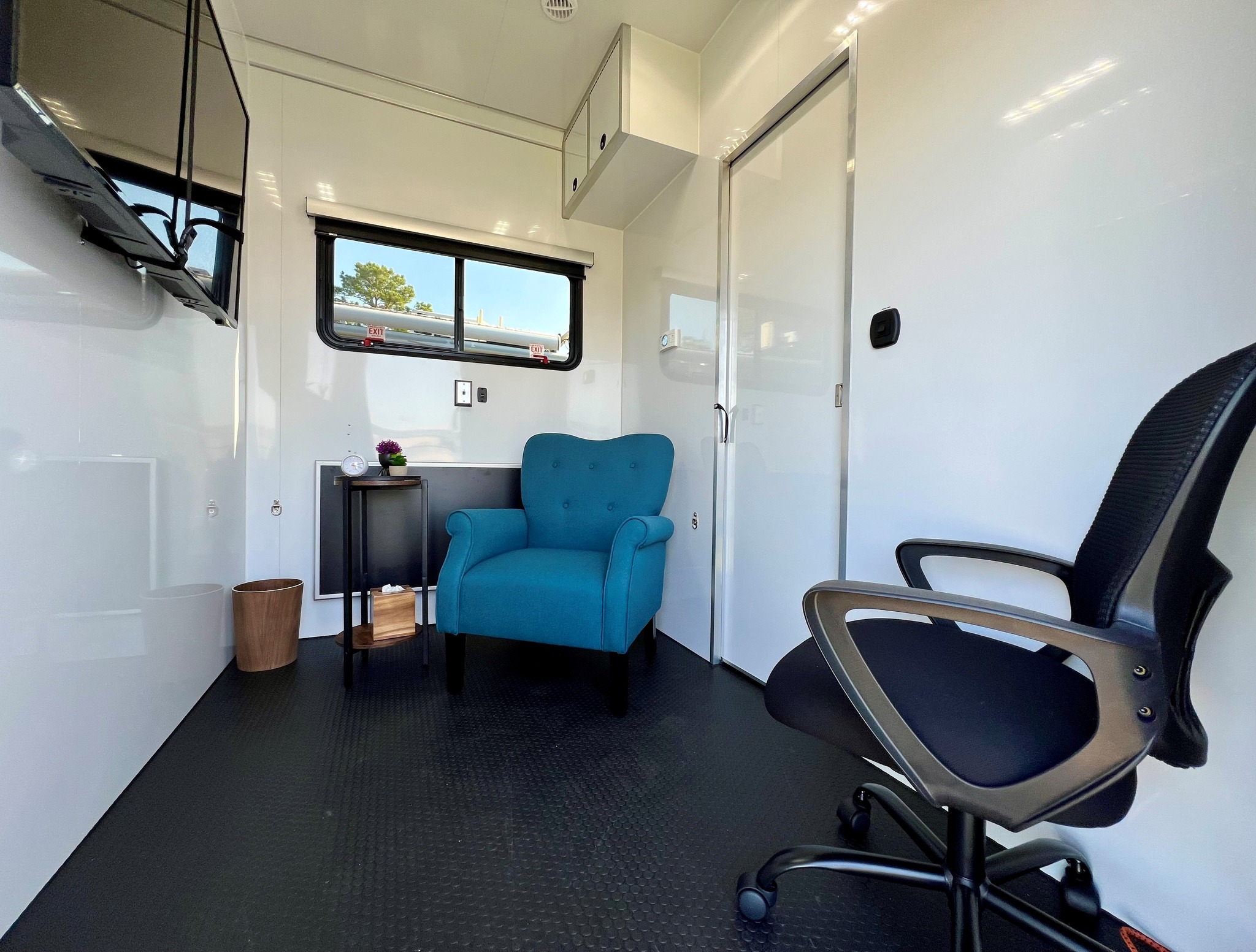
The UCF RESTORES Resiliency Command Center offers private consultation rooms, ensuring clinicians can provide care in a safe, confidential environment.
“The goal is for any first responder who needs a little quiet time alone—or would like to speak to a peer or a clinician—to use that space,” Beidel said. “Although not built specifically for civilians, anyone in need of support after a disaster can come and ask for help.”
There’s also a recharge center in the back stocked with supplies that search and rescue teams are likely to need during deployment: dry socks, moleskin, lip balm, sunscreen, and energy gum.
“First responders can take what they need to keep doing their job,” Beidel said.
The total cost of the truck and trailer was approximately $200,000.
“We’re still developing a full picture of ongoing maintenance costs, but because the trailer belongs to the University of Central Florida, many of those expenses will be absorbed through the university’s fleet facilities,” Beidel said.
Challenges
One of the challenges in establishing the Resiliency Command Center is the sheer size of the vehicle.
“We wanted it functional around the clock for days or weeks at a time, and as a result, the vehicle exceeds the height of the university parking garages, hence the need for off-site storage,” Beidel said. “If we build another one, we’d likely design it smaller. Not everyone is comfortable driving a trailer of this length, so having first responders who are trained and confident with the command center is important.”
Why Now?
UCF RESTORES has provided more than 900 hours of crisis response support since 2019 to more than 50 of Florida’s most devastating events. Beidel said the first lesson was “we really needed our own place to organize our efforts. On any deployment, we move through the site so people know that we are available. But having a central location also gives people a way to find us. Some may just come for supplies; others may come for supplies and stay for a conversation.”
A second lesson was “just how necessary this vehicle will be,” Beidel said. “Sometimes first responders in an affected area request peer support teams for station visits, but there’s nowhere nearby for those teams to stay, which makes it difficult to reach the departments that need them. Our Command Center has sleeping quarters, a small kitchen, and shower facilities, allowing the team to operate independently in areas where other housing isn’t available.”
Scenarios in which Beidel envisions the center being deployed include natural disasters such as hurricanes, floods, or tornadoes as well as man-made disasters such as the building collapse.
“We could deploy in response to smaller scale events, including line of duty deaths,” she added.
UCF RESTORES also operates Redline Rescue, where clinicians trained in the occupational demands of the fire and EMS services are available to help first responders in need. Beidel explained, “In the event of a major disaster, we can reach out to mental health professionals across that statewide network and place additional clinicians on standby as needed.”
During and in the immediate aftermath of a disaster, the evidence supports debriefings that provide psychoeducation about the expected aftermath of trauma exposure and what to anticipate in the coming weeks, along with peer support, Beidel said.
“The evidence also supports the use of psychological first aid, which is particularly helpful for civilians impacted by the event,” she said. “We plan to use both approaches depending on the specific situation.”
Support From Multiple Sources
At the unveiling ceremony, UCF President Alexander N. Cartwright thanked Florida state Sen. Tom Wright and state Rep. David Smith for their “unwavering support and advocacy for this program.”
He acknowledged Lockheed Martin, which provided financial assistance, for its collaboration with UCF RESTORES.
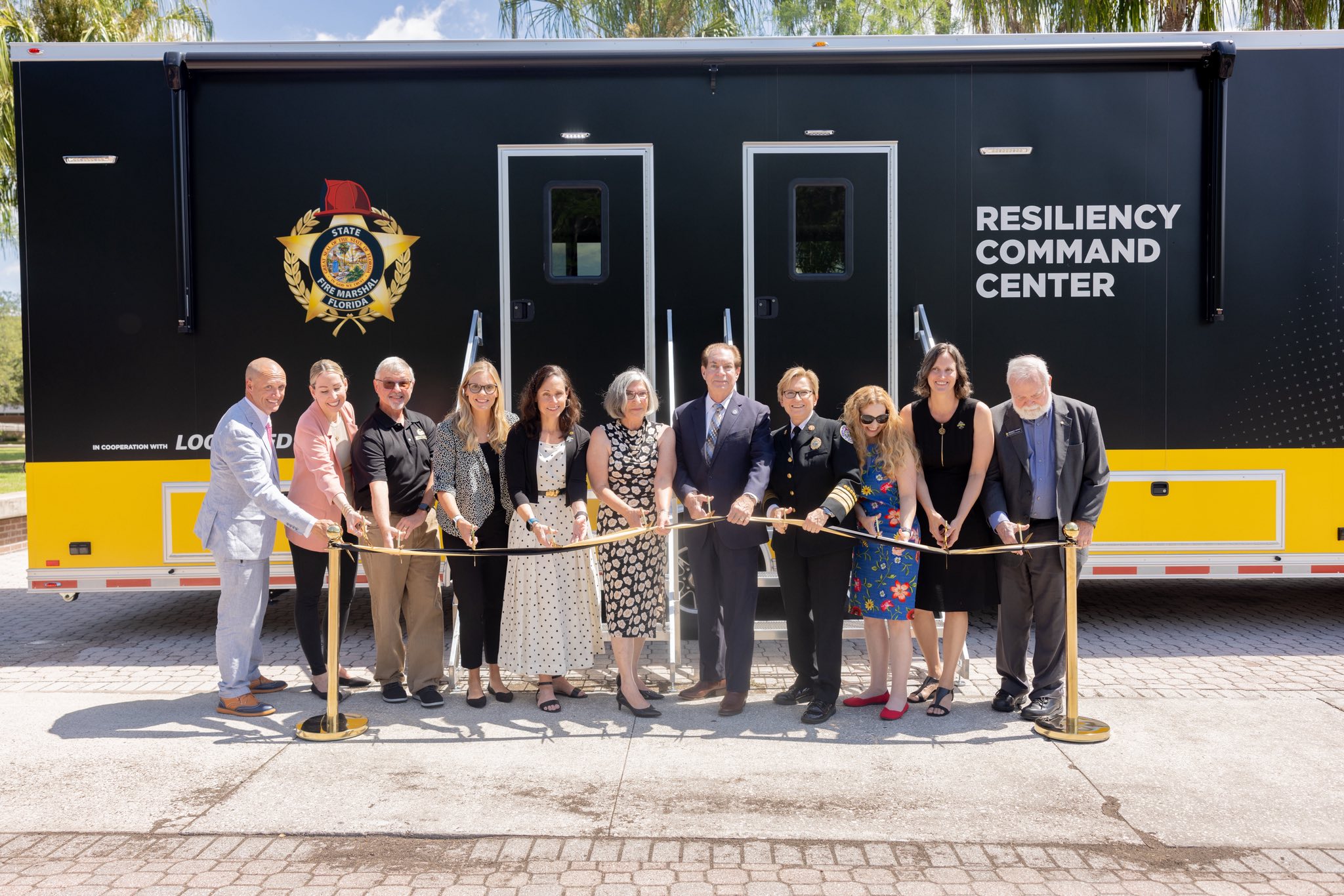
UCF RESTORES leadership—joined by State Sen. Tom Wright, State Rep. David Smith, and representatives from Lockheed Martin—officially unveiled the UCF RESTORES Resiliency Command Center on May 14, 2025.
Beidel pointed out both the Florida legislature and Lockheed Martin are long-term partners of UCF RESTORES who support its work with veterans and first responders.
“When we shared our vision, both were incredibly supportive of the project and contributed financially to the overall cost,” she added. “A local car dealership also provided the truck at a reduced cost.”
“We are immensely grateful to our first responders and emergency response agencies who bravely run towards critical emergencies,” Cartwright said, adding the unveiling of the new center marks a significant step forward in mental health care for first responders and trauma survivors.
“Through groundbreaking research and cutting-edge innovation, UCF RESTORES has helped thousands of individuals across our state, providing critical support to those in need,” Cartwright added.
“We celebrate the inauguration and unveiling of a mental health command trailer for the UCF RESTORES program, a project born from a shared commitment to the well-being of our first responders,” said Florida Division of State Fire Marshal Director Joanne Rice. “For me, it has been an absolute honor to work alongside Dr. Beidel and her devoted team, as well as Dr. Kellie O’Dare and the Second Alarm Project on this project and so many others. Over the years, we’ve built an incredible partnership with this team—especially during hurricanes—providing essential behavior health and resources when and where they are needed.”
The peer support programs and clinician awareness initiatives speak directly to the unique challenges faced by first responders, she added.
Indian River Fire Rescue Firefighter Engineer Lt. Dustin Hawkins credited UCF RESTORES for being the rescuers for first responders “and that is the most humbling experience that as a first responder we could ever be embraced by.”
The organization created a “beacon and a light, purpose built, thoughtfully and intelligently designed, to fill all the voids in the fields and prevent our members from having yet again another ‘we regret to inform you’ knock on the door.”
Beidel said as part of the team leading Florida’s mental wellness response, “we know that there are no other vehicles specifically designed and deployed to address mental wellness in the state. We’re not aware of anything comparable elsewhere, and I’ve already received calls from several other states asking for details.”
At the unveiling, Beidel expressed her gratitude to the Florida Legislature, Lockheed Martin, Director Rice and the first responder community for its support in bringing UCF RESTORES’ vision to life.
“We sincerely hope this unit is never needed, but the reality is that catastrophic events are beyond our control,” she said. “What we can control is how we respond. With the UCF RESTORES Resiliency Command Center, we’re ensuring that when disaster strikes, the men and women who run toward danger have the resources they need for optimal physical and mental wellness.”
Beidel’s advice to other agencies considering a similar initiative is to “have patience and take the time to think through what you want and what you actually need. And be sure to include enough storage for all the extras that may be required, depending on the type of disaster.”
The Resiliency Command Center will be deployed throughout the state of Florida when needed, Beidel said, adding it’s yet to be determined whether deployment to other states would be feasible. As of press time, the Resiliency Command Center has not been deployed.
“But we know it’s only a matter of time before there’s another hurricane in Florida,” Beidel said.